USA Dominates Paraguay 4-1: A Tactical Breakdown
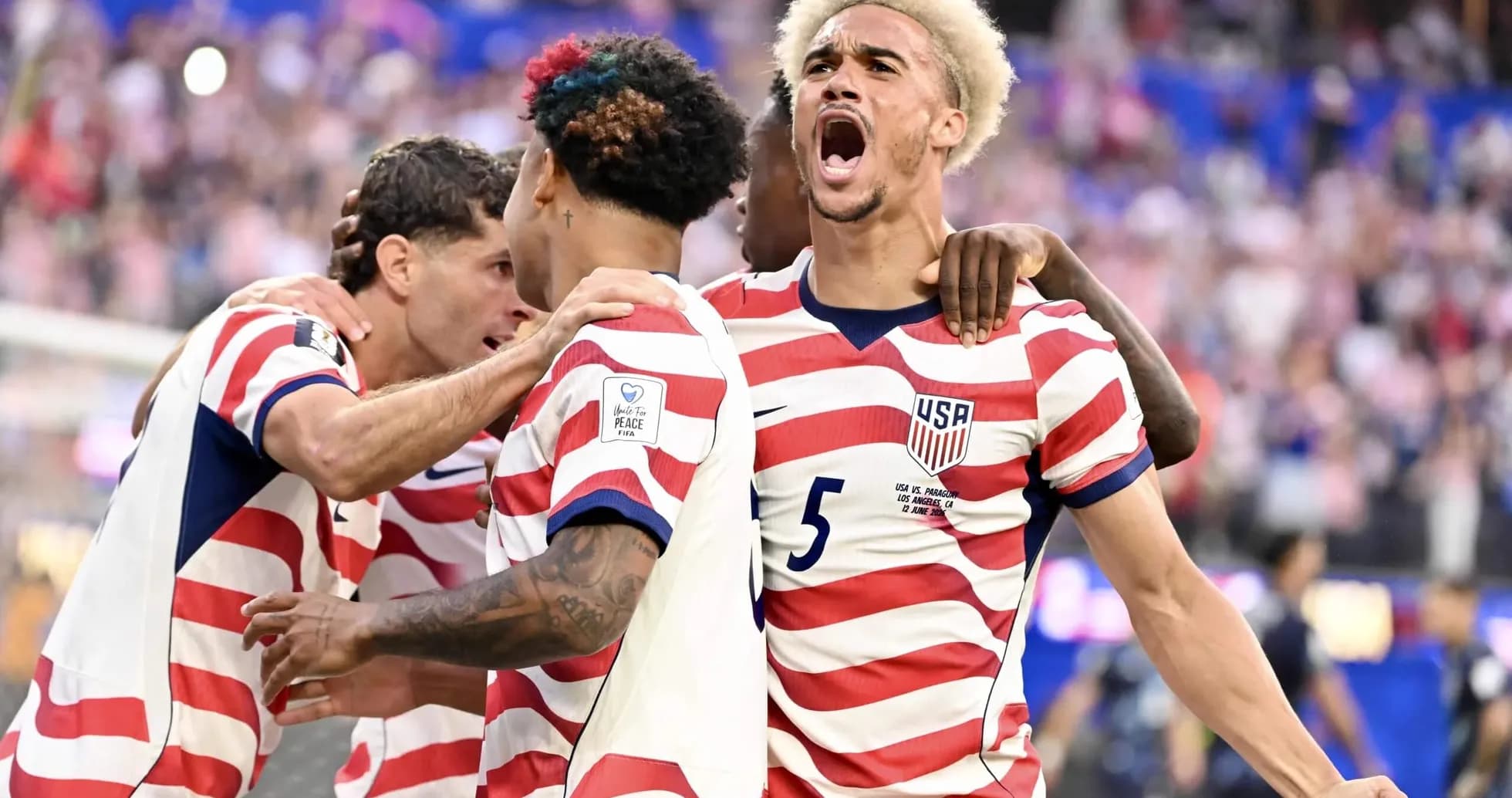
Under the lights of SoFi Stadium, USA announced themselves as early World Cup protagonists, dismantling Paraguay 4-1 in a Group Stage opener that felt more like a statement than a simple three points. Following this result, USA sit 1st in Group D with 3 points and a goal difference of +3, their 4-1 scoreline already listed as their biggest win at home in this campaign. Paraguay, beaten 4-1 on their travels, drop to 4th with a goal difference of -3, their form line a stark “L” against the hosts’ “W”.
Tactically, this was a clash of clear identities: Mauricio Pochettino’s 4-2-3-1, built on verticality and aggressive pressing lanes, against Gustavo Alfaro’s more orthodox 4-4-2, designed to compress space and spring counters through the lines. The scoreboard tells one story; the structural battle tells another. USA’s four goals at home, at an average of 4.0 per match overall, were not a product of chaos but of a carefully layered attacking scheme that repeatedly found cracks in Paraguay’s block.
The timing data underscores the narrative. Heading into this game, USA’s goals for distribution now shows a pronounced first-half punch: 66.67% of their goals have come between 31-45 minutes, with a further 33.33% arriving from 76-90. Paraguay’s defensive profile is almost a mirror image of that vulnerability: 66.67% of their goals conceded arrive in the 31-45 window, and 33.33% in the 76-90 stretch. On this evidence, USA did not just win; they hit Paraguay exactly where the data said they could be hurt.
Tactical Voids and Discipline
With no official absentees listed, both managers entered the fixture at full strength on paper. That made the structural choices even more revealing. Pochettino trusted a back four of A. Freeman, C. Richards, T. Ream and A. Robinson ahead of M. Freese, with T. Adams and M. Tillman forming the double pivot. Ahead of them, S. Dest, W. McKennie and C. Pulisic supported lone striker F. Balogun.
Paraguay’s back four of J. Alonso, O. Alderete, G. Gomez and J. Caceres shielded O. Gill, with a midfield line of M. Almiron, D. Bobadilla, A. Cubas and D. Gomez behind the front two A. Sanabria and J. Enciso. On paper, the 4-4-2 should have offered defensive width and compactness. In practice, the gaps between Paraguay’s midfield and defence became the void USA repeatedly exploited.
Disciplinary trends added another layer. USA’s season card map shows a single yellow, concentrated between 46-60 minutes (100.00% of their yellows in that band), suggesting a side that occasionally pushes the line early in second halves but otherwise remains controlled. Paraguay’s yellow distribution is more scattered and sustained: 20.00% of their yellows arrive in 0-15, another 20.00% in 46-60, 40.00% in 76-90, and 20.00% in 91-105. It paints a picture of a team that starts edgy, tires into late rashness, and continues to foul even into added time.
Individually, that profile is embodied by J. Caceres and M. Almiron. Caceres, who recorded 5 tackles and 3 fouls committed, took a yellow card while trying to stem the tide on USA’s right. Almiron, with 2 tackles and 1 foul committed, also found his name in the book. From the bench, A. Arce added another yellow, his 1 tackle and 1 foul committed underlining Paraguay’s reactive, last-ditch defending once the game had slipped away.
Key Matchups
No duel defined the night more than F. Balogun against Paraguay’s central pairing of G. Gomez and O. Alderete. Balogun, now the competition’s leading scorer with 2 goals, delivered a centre-forward clinic: 4 shots, 3 on target, 2 goals, and 10 duels contested with 5 won. His 9.2 rating reflects not just finishing, but the way his movement constantly stretched Paraguay’s last line.
That threat intersected brutally with Paraguay’s defensive pattern. On their travels, they now concede 4.0 goals per game, with 66.67% of those in the 31-45 window. USA’s own attacking surge in that same 31-45 band (66.67% of their goals for) turned that period into a killing zone. Balogun’s runs between Gomez and Alderete, often fed by Pulisic and Tillman, repeatedly forced the Paraguayan centre-backs to defend facing their own goal, a scenario they never truly solved.
In midfield, the contest between USA’s Adams–Tillman axis and Paraguay’s Cubas–Bobadilla pairing decided the rhythm. Tillman’s numbers are quietly dominant: 82 minutes, 38 passes at 78% accuracy, 3 key passes, 5 dribble attempts with 2 successes, 18 duels with 7 won, and 4 fouls drawn. He also added an assist, underlining his role as USA’s connective tissue between build-up and final third.
Opposite him, A. Cubas worked as the destroyer, while Bobadilla tried to shuttle possession. But Paraguay’s inability to compress space between the lines left them constantly half a step late. When Pochettino introduced G. Reyna, [IN] Reyna replaced an unnamed teammate, the tempo shifted again. In just 17 minutes, Reyna produced 1 shot on target, 1 goal, 8 passes at 100% accuracy, 3 duels with 2 won, and drew 2 fouls. His cameo underscored the depth and technical quality USA can now rotate into the “10” space.
For Paraguay, the bright spots were higher up. J. Enciso, with 25 passes at 80% accuracy, 1 key pass, 4 dribble attempts with 2 successes, and 14 duels with 8 won, was their most persistent outlet. Maurício, off the bench, brought precision: 1 shot, 1 goal, 20 passes at 70%, 2 tackles, and 3 duels won. Their combination hinted at a more fluid, ball-to-feet attacking structure that Alfaro may need to lean into in the next fixtures.
Statistical Prognosis
Following this result, the numbers sketch a clear early hierarchy. USA’s overall profile reads: 1 match played, 1 win, 4 goals for and 1 against, for a goal difference of +3. Their goals for average at home is 4.0, while goals against at home sit at 1.0. They have yet to keep a clean sheet, but the trade-off in attacking potency is obvious: all four of their thresholds up to 3.5 goals have gone “over”, and only the 4.5 line has stayed “under”.
Paraguay’s mirror is harsher: 1 match played away, 1 loss, 1 goal scored and 4 conceded, goal difference -3. Their goals for away average is 1.0, but they concede 4.0 on their travels. Every defensive threshold up to 3.5 goals conceded has gone “over”, with only the 4.5 line remaining “under”.
From an xG-style lens, even without explicit figures, the shot volume and chance quality implied by Balogun’s 4 shots (3 on target), Tillman’s 3 shots (2 on target), and Reyna’s clinical strike suggest USA generated a high expected goals total, comfortably outstripping Paraguay’s more sporadic efforts, largely channelled through Enciso and Maurício.
Projecting forward, USA’s offensive peaks in the 31-45 and 76-90 windows align almost perfectly with Paraguay’s defensive troughs in those same bands. Unless Alfaro can tighten the space between his lines and reduce the late-game fouling that currently spikes to 40.00% of their yellows in 76-90, Paraguay will remain vulnerable to precisely the kind of surges that Pochettino’s side are built to unleash.
The tactical verdict: USA emerge from SoFi Stadium not just with three points, but with a defined identity—vertical, technically secure, and devastating in key time windows. Paraguay leave with questions about their defensive structure, but also a blueprint for recovery built around Enciso and Maurício. On this evidence, the data and the eye test agree: USA are early favourites to control Group D, while Paraguay must evolve quickly if they are to rewrite the story of this World Cup campaign.