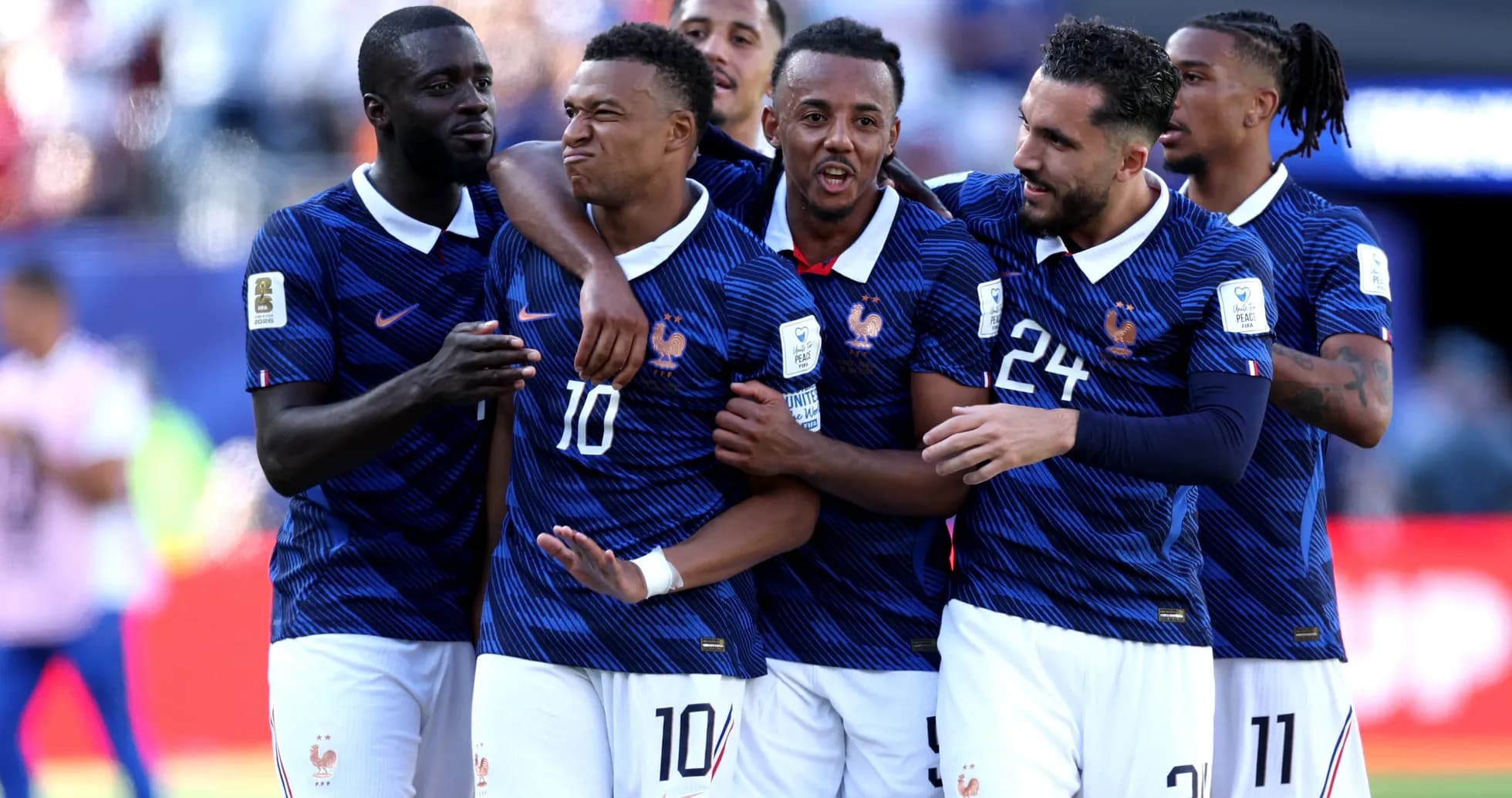
France's Tactical Mastery Over Senegal in World Cup Opener
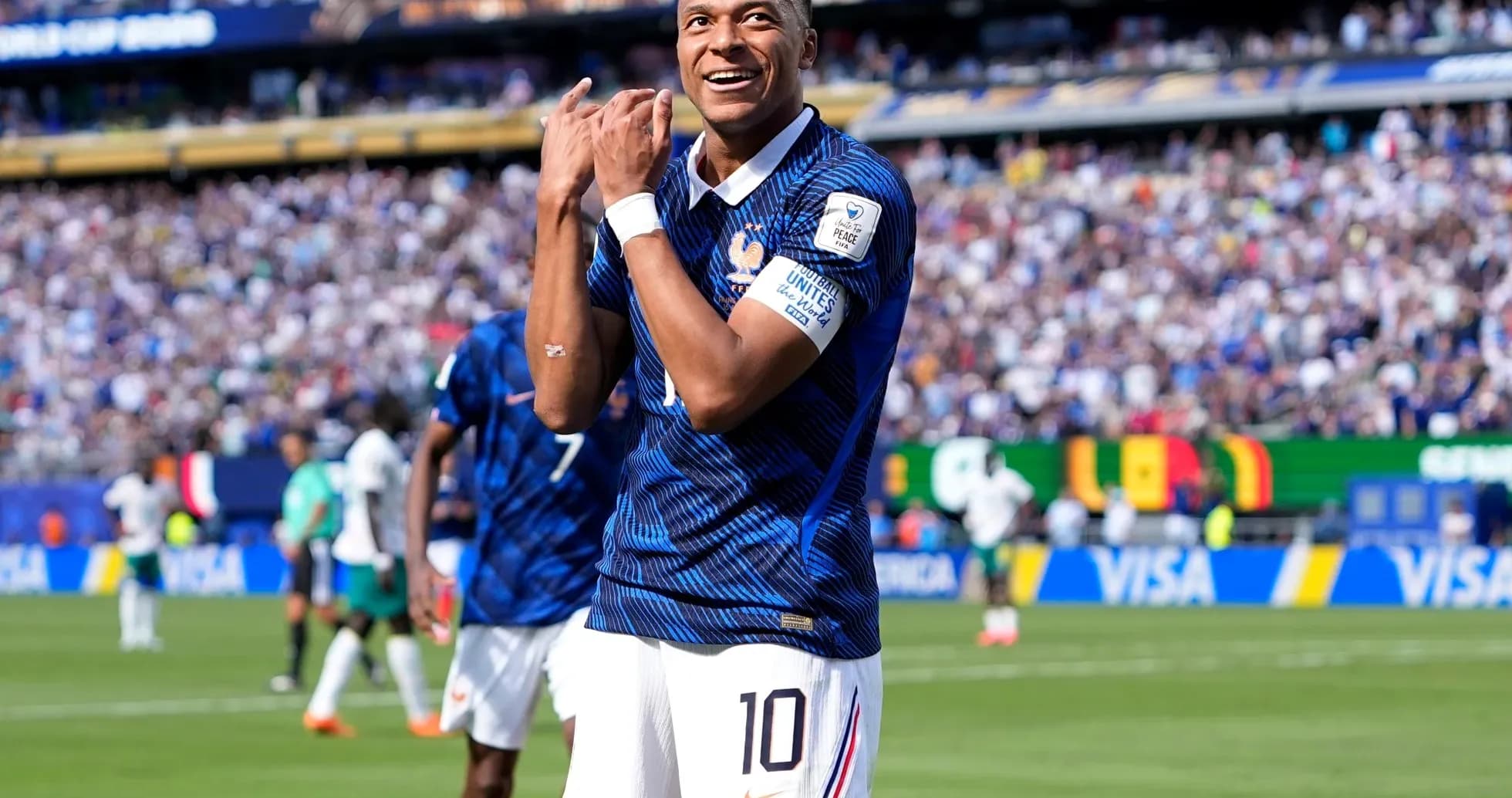
Under the New Jersey lights at MetLife Stadium, France’s 3–1 victory over Senegal felt less like an opening statement and more like a manifesto. In a World Cup Group Stage opener where both sides arrived with mirrored 4-2-3-1 structures, the difference lay in how each squad inhabited that shape – the fluency of France’s attacking layers against the raw, transitional threat of Senegal.
I. The Big Picture – structure, scoreline, and early hierarchy
Following this result, the standings snapshot is stark. France sit 2nd in Group I with 3 points from 1 match, a goal difference of +2 (3 goals for, 1 against). Senegal trail in 3rd with 0 points, their goal difference -2 (1 for, 3 against). The numbers across the campaign so far are brutally clear: at home, France have played 1, won 1, scoring 3.0 goals on average and conceding 1.0. On their travels, Senegal have played 1, lost 1, averaging 1.0 goal for and 3.0 against.
Both sides leaned into the same 4-2-3-1 on paper, but the interpretation diverged. Didier Deschamps built a high-control, vertical-possession France: Mike Maignan behind a back four of Jules Kounde, Dayot Upamecano, William Saliba and Theo Hernandez, protected by the double pivot of Aurelien Tchouameni and Adrien Rabiot. Ahead, a fluid band of three – Michael Olise, Ousmane Dembele, Desire Doue – orbited around Kylian Mbappe as the lone forward.
Bouna Thiaw Pape mirrored the shape but not the intent. Edouard Mendy anchored a back line of Krepin Diatta, Kalidou Koulibaly, Moussa Niakhate and Moussa Diouf. In front, Idrissa Gueye and Pape Gueye were tasked with screening, while Ismaila Sarr, Lamine Camara and Sadio Mane supported Nicolas Jackson. On their travels, Senegal’s 4-2-3-1 was less about sustained pressure and more about surviving France’s waves, then springing forward in bursts.
II. Tactical voids and discipline – what was missing, what was controlled
Injury and absence data offer no explicit red flags, so the tactical voids here are structural rather than personnel-driven. For France, the biggest latent risk inside this 4-2-3-1 is the space behind Theo Hernandez and Dembele on the left. Without a pure holding midfielder, Tchouameni must constantly slide across; any delay opens channels for Sarr and Jackson to attack diagonally. Senegal’s shape, meanwhile, asks a lot of Idrissa Gueye – at 31+ tournament minutes into his World Cup campaign, he remains the primary firefighter between lines.
Disciplinary records across the competition so far are surprisingly clean. The season statistics show no yellow or red card clusters in any minute range for either side; every time segment from 0–15 to 106–120 is listed without recorded totals. That hints at two disciplined, tournament-hardened squads, comfortable defending in blocks rather than relying on cynical fouls to break rhythm. In knockout or late-group scenarios, that restraint could matter: neither team has yet flirted with suspensions or card-induced selection crises.
III. Key matchups – Hunter vs Shield, Engine Room battles
Hunter vs Shield is defined by Kylian Mbappe against Senegal’s defensive core. Across this World Cup so far, Mbappe has 2 goals in total from 1 appearance, with 4 shots all on target and an 8.2 rating. His efficiency is chilling: 4 shots, 4 on target, 2 converted, backed by 93% passing accuracy. Senegal’s overall defensive record on their travels – 3 goals conceded in 1 match, an average of 3.0 – shows a back line that can be breached when exposed.
Koulibaly and Niakhate form a physically imposing shield, but the numbers tell a story of strain: Senegal’s goal difference overall is -2, with 3 conceded in their only away outing. The duel is not just Mbappe against Koulibaly; it is Mbappe plus the late-game punch of Bradley Barcola against a unit that has already shipped 3. Barcola’s cameo – 1 appearance, 10 minutes, 1 goal, 1 shot on target, 7 completed passes at 85% – underlines France’s ability to escalate the threat from the bench.
On the other side, Senegal’s own Hunter emerges from the substitutes list: Ibrahim Mbaye. In total this campaign he has 1 goal from 1 appearance, needing just 1 shot on target across 15 minutes to get on the scoresheet, with 87% passing accuracy. He offers a different profile to Jackson – more penalty-box efficient, less about volume. France’s all-competitions defensive record so far is 1 goal conceded in 1 home match, an average of 1.0. It is solid but not watertight; Mbaye’s impact hints that France’s back line can be troubled by late, direct running against tired legs.
The Engine Room matchup is equally decisive. For France, Tchouameni and Rabiot provide the platform that allows Olise, Dembele and Doue to drift and overload. Their job is to keep the game tilted, recycling second balls and preventing Senegal from launching Mane and Sarr in transition. For Senegal, Idrissa Gueye and Pape Gueye must compress that same space. Their challenge is twofold: deny Mbappe service between the lines and still have the legs to support counters.
From a creative standpoint, Senegal’s most important connector so far has been Iliman Ndiaye. In total this campaign he has 1 assist from 1 appearance, with 10 passes at 90% accuracy and 1 key pass. His introduction off the bench in this fixture offered a rare moment where France’s midfield block was punctured. If Senegal are to rebalance their -2 goal difference, Ndiaye’s ability to receive under pressure and feed runners like Mbaye is non-negotiable.
IV. Statistical prognosis – where the numbers point
With only one match of data for each side, any xG-based projection is more about patterns than precise decimals. Still, the contours are clear. France’s home attacking output – 3.0 goals on average – marries with a squad that features a ruthless top scorer in Mbappe and a high-impact finisher in Barcola. They have not failed to score at home this campaign (0 total failed-to-score matches) and have yet to keep a clean sheet, conceding 1.0 goal on average.
Senegal’s away profile is the mirror image: 1.0 goal scored on their travels, 3.0 conceded, no clean sheets, and no matches where they have failed to score. That suggests a side that will almost always offer a punch, particularly when Ndiaye and Mbaye step off the bench, but one that struggles to hold out under sustained pressure.
Overlaying those trends, the statistical prognosis leans toward France continuing to generate the higher xG share through volume and territory, while Senegal depend on lower-frequency, higher-impact moments. The Hunter vs Shield duel tilts blue: Mbappe’s 2 goals and flawless shooting accuracy so far against a defence already breached three times. The Engine Room battle is more balanced; if Idrissa Gueye and Pape Gueye can drag the tempo into their comfort zone, Senegal can keep matches within one moment.
Following this result, the broader tactical story is that France’s 4-2-3-1 has already proven scalable: starters set the platform, substitutes like Barcola and Ndiaye on the opposite side reshape the narrative late on. The margins in future group games will be defined not just by stars like Mbappe and Mane, but by how well each squad manages those structural voids – the spaces behind full-backs, the channels around the pivots – that this first chapter at MetLife so vividly exposed.