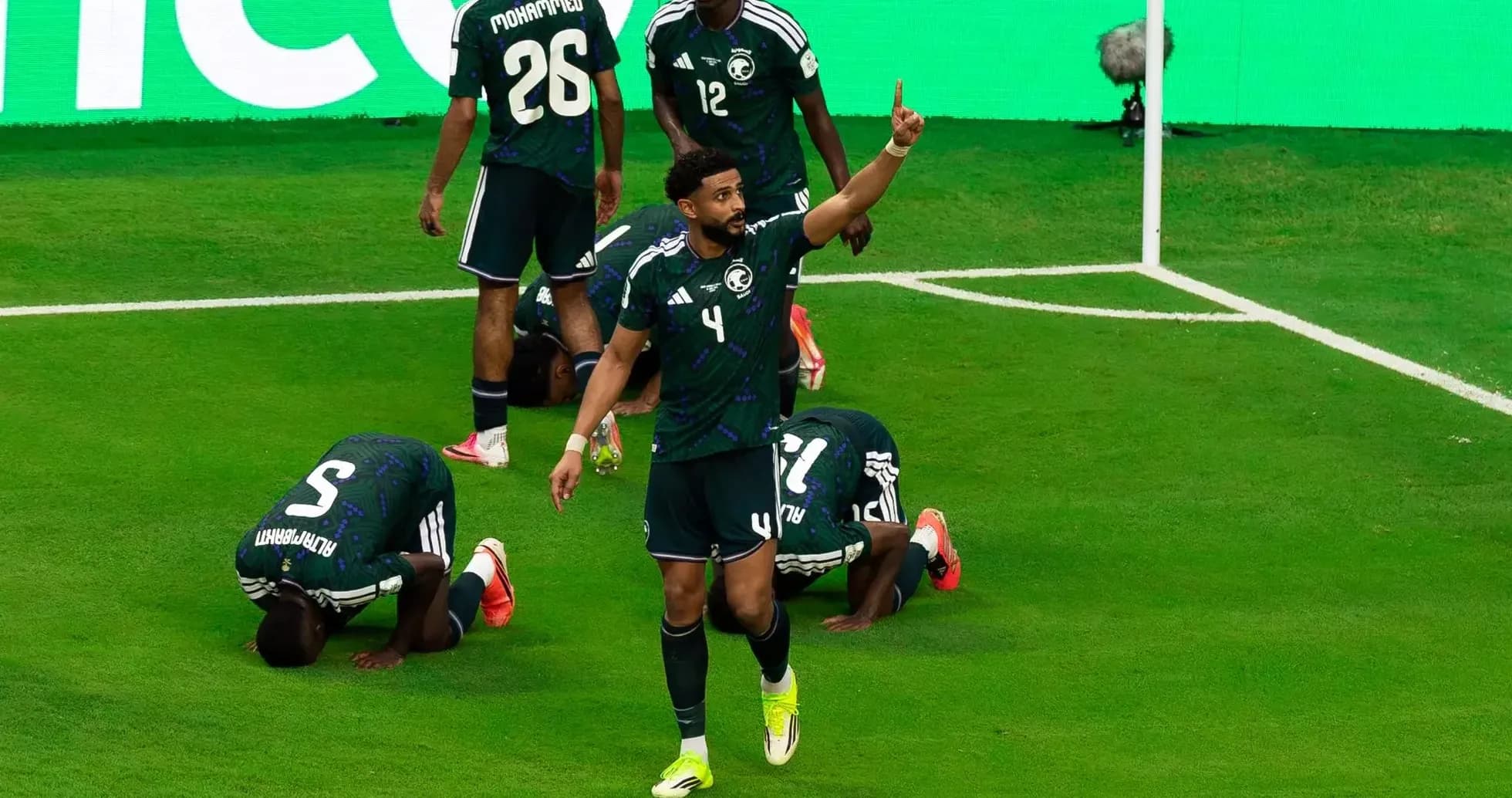
Saudi Arabia and Uruguay Draw 1–1: A Tactical Overview
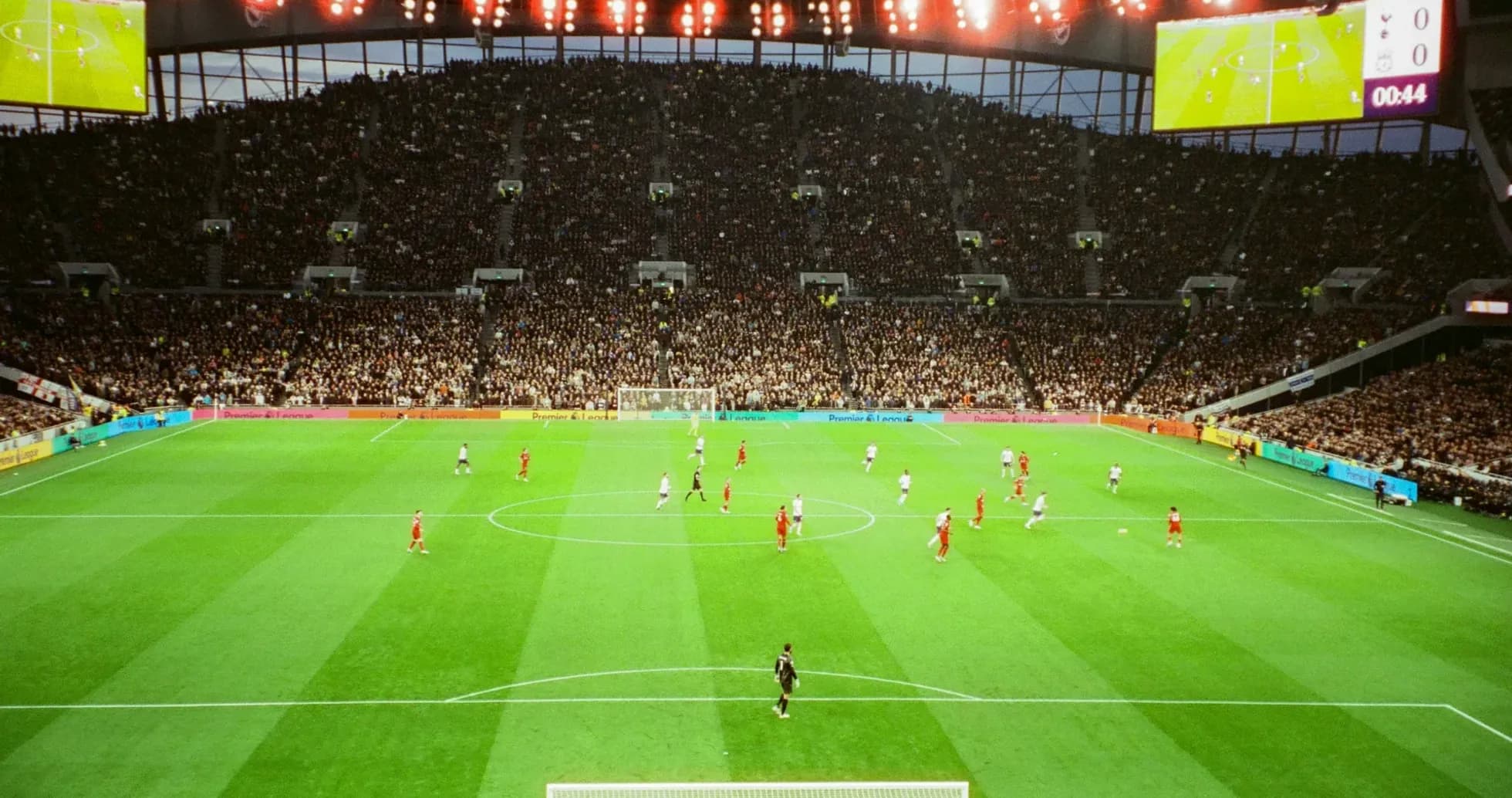
Under the Miami lights of Hard Rock Stadium, Saudi Arabia and Uruguay opened their World Cup 2026 journeys with a 1–1 draw that felt less like a settled verdict and more like the prologue to a tense Group H storyline. Following this result, both sides sit level on 1 point, Uruguay nominally top and Saudi Arabia second on identical goal difference (1 scored, 1 conceded), but the paths they took to that parity could hardly be more different.
I. The Big Picture – Two Identities, One Scoreline
Saudi Arabia arrived as nominal hosts on the night, lining up in a classic 4-4-2 under Georgios Donis. The structure was conservative on paper, but the intent was clear: compress the middle, protect the back four, and spring quickly through wide midfielders and mobile forwards.
Uruguay, ranked first in the early Group H table, stepped into the role of aggressor with Marcelo Bielsa’s 4-2-3-1. It was a shape built to dominate territory: double pivot for control, a line of three creators behind a lone striker, and full-backs ready to advance.
Heading into this game, the numbers were a blank canvas. Following this result, the canvas has its first strokes: Saudi Arabia, at home, have scored 1.0 goals on average and conceded 1.0, both totals entirely from this single fixture. Uruguay, on their travels, mirror that: 1.0 goals scored and 1.0 conceded away, with no clean sheets for either side. The symmetry in the statistics mirrors the scoreboard, but not necessarily the tactical stories behind them.
II. Tactical Voids and Discipline – Edges Left Unexplored
The squads were full; no absentees are listed, meaning both coaches had their full tactical decks available. Donis trusted his starting XI deeply, keeping his 4-4-2 intact from the first whistle, while Bielsa’s bench bristled with alternative profiles in every line.
From a disciplinary standpoint, the contrast is stark. Heading into this game, Saudi Arabia’s season data already shows a flash of volatility: their only yellow card so far has come in the 31–45 minute window, a 100.00% concentration of their cautions in that late first-half stretch. It suggests a team that tightens the screws emotionally as the interval approaches, when fatigue and pressure intersect. Uruguay, by contrast, emerge from this opener with a spotless card record across all time ranges; the data lists no yellow or red cards in any segment, a sign of controlled aggression or perhaps simply of a game they managed without needing to foul recklessly.
III. Key Matchups – Hunter vs Shield, Engine vs Engine
The duel between Saudi Arabia’s front two and Uruguay’s defensive structure framed much of the narrative. F. Al Buraikan and M. Al Juwayr were less a traditional big man–little man pairing and more a fluid tandem, dropping, drifting, and asking Uruguay’s centre-backs and double pivot to constantly hand them off.
For Uruguay, the “shield” was twofold: the central defensive pairing of S. Caceres and M. Olivera, and the screening work of M. Ugarte and R. Bentancur. With Saudi Arabia averaging 1.0 goals at home following this result and yet never failing to score, Bielsa’s back line did not quite manage to extinguish the threat, but they did prevent the game from becoming chaotic in transition.
Out wide, S. Abdulhamid and M. Al Harbi had to walk a tightrope. Their primary duty was to keep G. Varela and M. Vina from overloading the flanks, but any step forward from the Saudi full-backs risked leaving space for Uruguay’s line of three behind D. Nunez. F. Valverde, operating from the right half-space, was the game’s metronome in those zones, constantly probing between S. Al Dawsari and M. Al Harbi.
The true “Engine Room” battle, though, was central. For Saudi Arabia, M. Kanno and A. Al Khaibari formed the spine of Donis’s plan: one to step out and harry, one to hold and screen. Across from them, Ugarte and Bentancur were tasked with both starting Uruguay’s attacks and snuffing out Saudi counters. The result was a midfield trench war that neither side fully won. Saudi Arabia’s compact 4-4-2 line held well enough to keep Uruguay to just 1.0 goals on their travels, while Uruguay’s pivot limited Saudi forays to a single home goal.
Behind them, H. Tambakti and A. Al Amri quietly stitched together Saudi Arabia’s defensive resistance. With the team yet to keep a clean sheet, their work is unfinished, but in this match they ensured Uruguay’s attacking superiority on paper did not translate into a decisive scoreline.
Up front, D. Nunez was the spearhead of Uruguay’s “hunter” profile. Supported by F. Valverde, F. Vinas, and M. Araujo, he offered depth runs and physical duels that tested Saudi Arabia’s centre-backs. Yet with Uruguay’s goalsFor and goalsAgainst both at 1.0 away, the data suggests a side still calibrating their cutting edge as much as their defensive balance.
IV. Statistical Prognosis – A Draw That Feels Like a Warning
With no penalty attempts registered for either side this campaign and both teams showing 0% in penalties scored and missed, there is no cushion from set-piece efficiency to tilt tight games. Everything, for now, must come from open play and the tactical clarity of the structures.
Saudi Arabia’s season snapshot is that of a disciplined, resilient outfit: 1 match played, 1 draw, 1 goal scored, 1 conceded, 0 clean sheets but also 0 failures to score. Uruguay’s reflection is almost identical: 1 match, 1 draw, 1 goal for, 1 against, no clean sheets, no blanks. The goal differences for both are precisely 0, a numerical confirmation of how evenly poised this group feels after one round.
From an xG-style lens, even without explicit numbers, the patterns are suggestive. Uruguay’s 4-2-3-1, with its layered attacking structure, likely generated the higher volume and quality of chances, but Saudi Arabia’s compactness and organisation compressed those opportunities into crowded central zones. Conversely, Saudi Arabia’s 4-4-2 was designed to create fewer, more selective moments—quick breaks through S. Al Dawsari, vertical passes into F. Al Buraikan and M. Al Juwayr—sufficient to produce that single, vital goal.
Following this result, the prognosis is of two teams whose margins will be fine throughout the group. Uruguay’s ceiling looks higher if Bielsa’s side can sharpen their finishing without loosening their defensive screws. Saudi Arabia, meanwhile, project as a side built for suffering and seizing moments: they will rarely run away with a game, but they will make every minute a negotiation.
In a World Cup group where every detail counts, this 1–1 at Hard Rock Stadium reads less like equilibrium and more like a warning: neither Saudi Arabia nor Uruguay will be easily separated, and the next fixtures may be decided not by talent alone, but by which engine room wins the marginal battles and which hunter finally overwhelms the opposing shield.