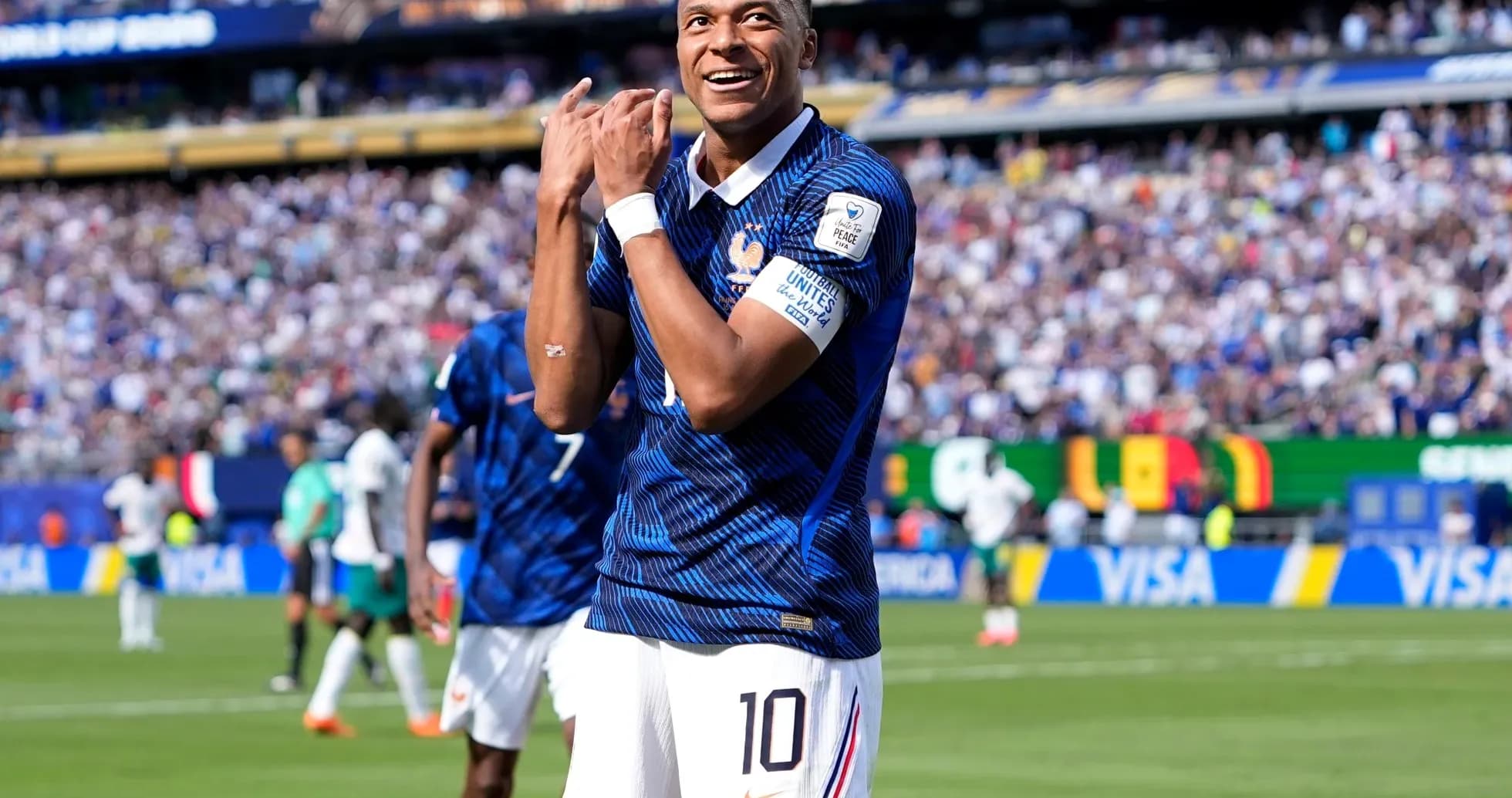
France Dominates Senegal 3-1 in Tactical Showdown
France’s 3-1 win over Senegal at MetLife Stadium unfolded as a controlled, structurally coherent performance built off a 4-2-3-1 base, superior shot quality, and a decisive final half-hour. Both teams mirrored formations, but France’s use of their attacking midfield line and full-backs created more consistent access to the half-spaces, gradually tilting the match after a balanced first half.
France’s 4-2-3-1 featured Mike Maignan (France) behind a back four of Jules Koundé, Dayot Upamecano, William Saliba and Theo Hernández. Aurélien Tchouaméni and Adrien Rabiot formed the double pivot, with Michael Olise and Ousmane Dembélé as wide playmakers, Désiré Doué between the lines and Kylian Mbappé as the nominal striker. Senegal mirrored the shape: Edouard Mendy (Senegal) in goal, a back four of Krépin Diatta, Kalidou Koulibaly, Moussa Niakhaté and El Hadji Malick Diouf; Idrissa Gana Gueye and Pape Gueye as a double pivot; Ismaïla Sarr and Sadio Mané flanking Lamine Camara behind Nicolas Jackson.
Early on, Senegal’s 4-2-3-1 pressed in a mid-block, with Jackson screening Tchouaméni and Pape Gueye stepping onto Rabiot. That initially forced France to build wider through Saliba–Koundé and Upamecano–Theo Hernández channels. However, France’s superior passing rhythm soon showed: 575 passes with 505 accurate (88%) against Senegal’s 502 and 430 accurate (86%). The French double pivot circulated quickly enough to pull Senegal’s midfield pair out of shape, particularly by dropping Tchouaméni between the centre-backs and freeing Rabiot to advance into the left half-space.
France’s possession edge (53% to 47%) was not overwhelming, but it was territorially more valuable. They generated 11 total shots to Senegal’s 6, with an 8–2 advantage in shots on goal. The shot map profile is reflected in xG: France at 1.79 versus Senegal’s 0.53. France’s 7 shots inside the box against Senegal’s 4 underline how often Mbappé and the attacking midfield trio managed to receive between lines and attack the last line.
Second Half
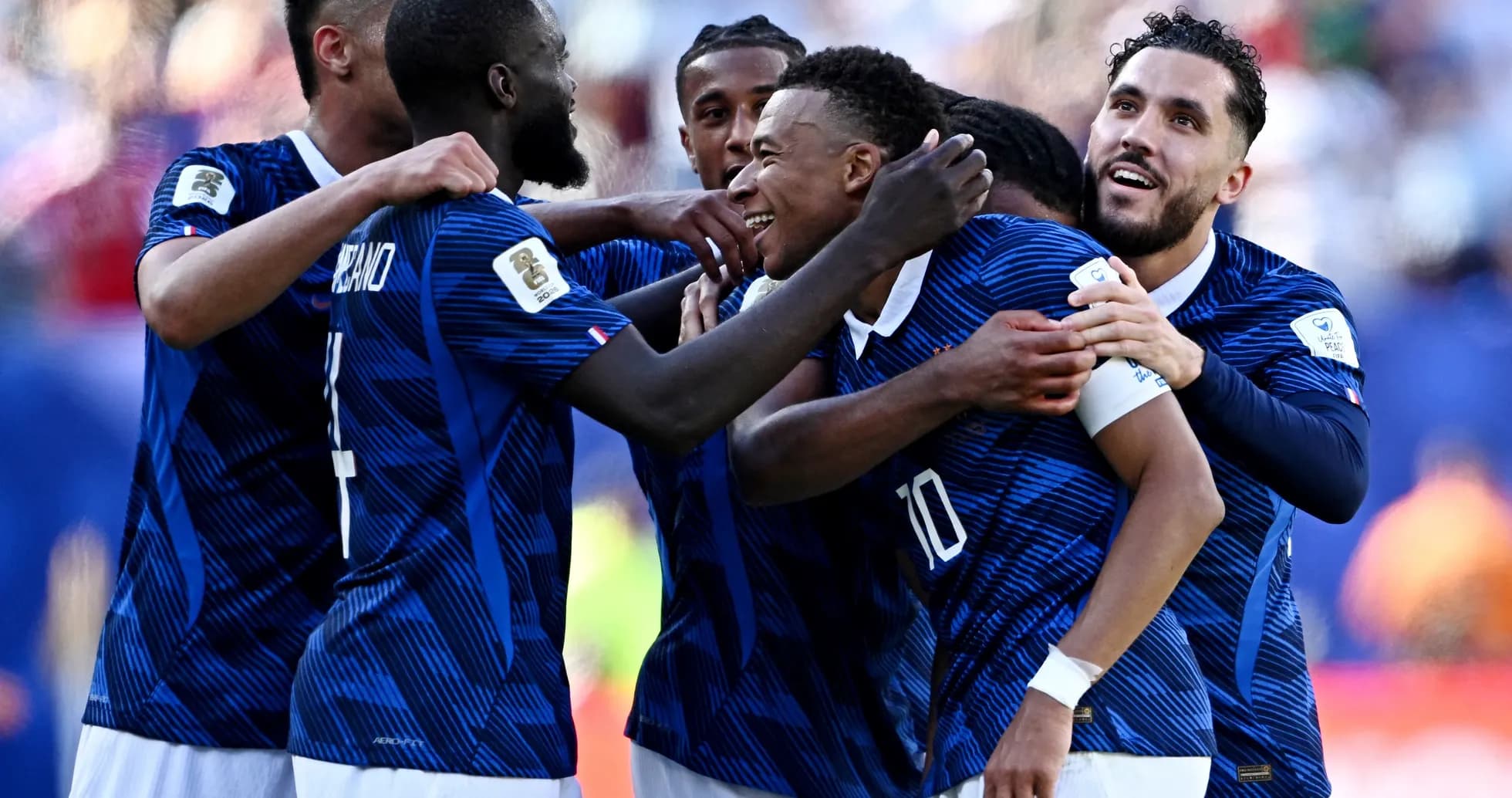
The second half was where structure and talent combined decisively. The turning point sequence began on 60 minutes, when a potential France penalty involving Mbappé was cancelled by VAR. Crucially, this did not disrupt France’s attacking rhythm; instead, it signalled how frequently they were now accessing the box. Six minutes later, the pressure converted into the opener: at 66', Mbappé finished from a Michael Olise assist. Tactically, this stemmed from Olise’s interior movement off the right: Koundé provided width, Olise drifted inside to receive between Senegal’s right-sided eight and winger, and Mbappé attacked the channel between Koulibaly and Diatta. The goal embodied France’s plan: use the 4-2-3-1 to overload central corridors, then release Mbappé into the blindside of the full-back.
Senegal’s response was to inject more vertical threat from the bench. At 75', Ibrahim Mbaye (IN) came on for Ismaïla Sarr (OUT), and at 76', Habib Diarra (IN) replaced Lamine Camara (OUT). These changes aimed to add direct running and fresh legs in the attacking midfield band. France, however, countered with a decisive attacking substitution of their own: at 80', Bradley Barcola (IN) came on for Ousmane Dembélé (OUT), adding a more direct, dribbling profile on the flank.
Barcola’s impact was immediate and structurally significant. With Senegal pushing higher, France began to exploit transition spaces. At 82', Barcola doubled the lead, finishing a move assisted by Rabiot. The pattern again underlined the importance of the French double pivot: Rabiot, advanced into the left half-space, could break Senegal’s lines with a forward pass or carry, while Barcola attacked the space behind a now more aggressive Diatta. The goal came from France’s ability to turn stable possession into vertical surges at precisely the moments Senegal expanded.
Senegal then made a double attacking switch at 83': Ahmadou Bamba Dieng (IN) for Nicolas Jackson (OUT) and Iliman Ndiaye (IN) for Pape Gueye (OUT), effectively tilting the structure towards a more front-loaded, risk-taking version of the 4-2-3-1. At 88', Pathé Ismaël Ciss (IN) replaced Idrissa Gana Gueye (OUT), further refreshing the midfield. France answered with Rayan Cherki (IN) for Désiré Doué (OUT) at 87', adding another ball-secure playmaker to manage transitions and counters in the closing phase.
The final minutes showcased both France’s attacking ceiling and a slight late-game looseness. In added time, Mbappé struck again at 90+6', a goal that reflected France’s capacity to break at pace even while protecting a lead. Yet Senegal also found a late reward: at 90+5', Ibrahim Mbaye scored from an Iliman Ndiaye assist, capitalising on France’s momentary defensive unbalance as they managed the closing stages. That Senegal’s goal came with their xG at just 0.53 underlines how few clear chances they created despite late pressure.
Defensively, France’s back four was largely secure. They conceded only 6 shots, with 2 on goal and 1 blocked. Maignan (France) made 2 saves, consistent with Senegal’s shots on target count, and his calm distribution supported France’s build-up, even though specific passing stats for him are not provided. At the other end, Mendy (Senegal) was heavily worked: France’s 8 shots on goal forced him into 5 saves. The fact that Senegal’s goalkeeper saves (5) sit alongside a goals prevented value of -0.94 suggests that, relative to shot quality, he conceded slightly more than the model would expect, while Maignan’s goals prevented figure of -0.94, combined with low shot volume, indicates that the one goal conceded came from a relatively favourable Senegal chance.
France’s overall form index from this match is strong: they combined controlled possession, high passing accuracy, and a clear attacking structure that converted into superior xG and shot volume. Their defensive index is equally positive: few fouls (5 to Senegal’s 9), limited shots conceded, and only one late goal allowed when the game state was already decided at 3-0. Senegal’s structure held for an hour, but their 4-2-3-1 could not consistently progress the ball into dangerous central zones, relying more on individual flares from Mané and wide players. Once France’s positional play began to dominate the half-spaces and their substitutions sharpened the transition threat, the tactical balance of the match shifted decisively in favour of Didier Deschamps’s side.