World Cup Thursday: Mexico vs South Korea and Key Storylines
The World Cup rolls into Thursday with four group games and no shortage of subplots. Mexico against South Korea is the marquee fixture, but it’s only one thread in a day that stretches from Atlanta to Guadalajara, from Golden Boot drama to African history in the making.
Thursday’s fixtures at a glance
The day starts in the heat of Atlanta:
- Czechia vs South Africa, Atlanta Stadium, Atlanta – noon (16:00 GMT)
- Switzerland vs Bosnia and Herzegovina, Los Angeles Stadium, Los Angeles – noon (19:00 GMT)
- Canada vs Qatar, Vancouver Stadium, Vancouver – 3pm (22:00 GMT)
- Mexico vs South Korea, Guadalajara Stadium, Guadalajara – 7pm (01:00 GMT Friday)
Four games, four continents, one long, rolling narrative.
Mexico vs South Korea: history on Mexico’s side
Mexico know this script. Two previous World Cup meetings with South Korea, two Mexican wins, including that tense 2-1 victory at Russia 2018. El Tri have built a reputation as reliable group-stage operators, and the numbers back them again.
Opta’s supercomputer ran the matchup 25,000 times. Mexico came out on top in 49.1 percent of those simulations. South Korea won 24.3 percent. The remaining 26.6 percent ended level.
Both sides opened with wins, both have one foot edging toward the knockouts. The difference is that Mexico walk into Guadalajara with history, data and home continent all nudging them forward. South Korea bring speed, discipline and the memory of past frustration against this opponent. One of them leaves with momentum. The other, with questions.
Czechia vs South Africa: contrasting memories
Czechia and South Africa barely know each other on this stage. Just one previous meeting between the two, and only scattered reference points to lean on.
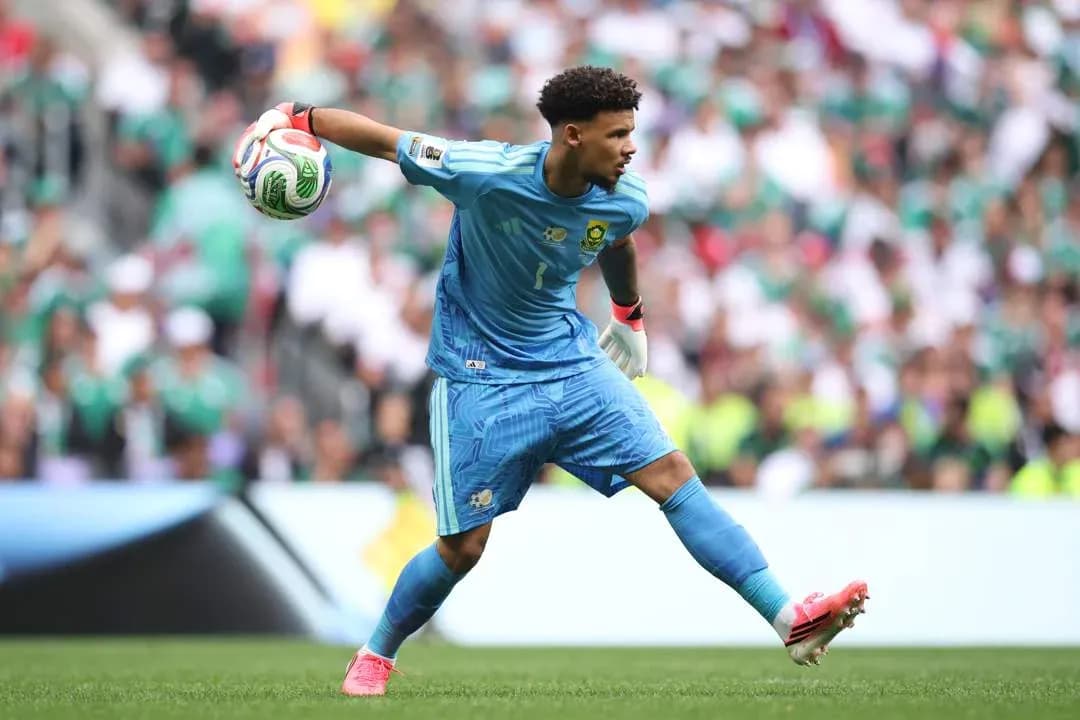
South Africa’s record against European opposition at World Cups is quietly respectable. Four games, only one defeat, and that famous 2-1 win over France in 2010 still glows in the national memory. They arrive in Atlanta knowing they can unsettle European sides, even if they lost 2-0 to Mexico in the tournament opener.
Czechia carry a different kind of baggage. Their only prior World Cup encounter with African opposition ended in a 2-0 loss to Ghana. Opta’s models still tilt heavily in their favour: 54.9 percent chance of a Czech win, 21.8 percent for South Africa.
So the numbers say one thing. The history whispers another. Atlanta might decide which voice is louder.
Switzerland vs Bosnia and Herzegovina: new rivalry, old reminder
Switzerland and Bosnia and Herzegovina have never met at a World Cup. Their only previous clash came in a 2016 friendly in Zurich, when Bosnia walked away with a 2-0 win, thanks to Edin Dzeko and Miralem Pjanic.
That result lingers, but it doesn’t define this meeting. Not according to the data.
In 25,000 simulations, Opta’s supercomputer handed Switzerland victory in 61.6 percent of scenarios. Bosnia and Herzegovina won just 17 percent, with 21.4 percent ending in a draw.
Switzerland arrive as the established tournament side, used to the grind of group stages and the expectation of progression. Bosnia bring that underdog edge, a memory of Zurich and the knowledge that they’ve already once silenced Swiss fans. Los Angeles now becomes the stage for a first competitive chapter.
Canada vs Qatar: hosts backed to roll on
History favours the hosts when they face Asian opposition at World Cups. Every time so far.
- Mexico beat Iraq in 1986
- France swept aside Saudi Arabia in 1998
- Russia dismantled Saudi Arabia again in 2018
Three host nations, three wins. Canada are expected to extend that streak.
Opta’s supercomputer gives them a commanding 72.9 percent chance of victory. A draw shows up in 16.5 percent of simulations. Qatar are left with just 10.6 percent to pull off the upset.
For Canada, this is the kind of fixture a host must win to build belief. For Qatar, it’s a chance to rip up the script everyone else has written for them.
Golden Boot race: Messi sets the early pace
The tournament’s first round has already lit the fuse on the Golden Boot race, and one name is out in front.
Lionel Messi sits on top with three goals, his hat-trick in Argentina’s opening win over Algeria sending a familiar warning across the competition.
A seven-strong chasing pack sits one goal behind:
- Kylian Mbappe (France)
- Erling Haaland (Norway)
- Folarin Balogun (USA)
- Kai Havertz (Germany)
- Yasin Ayari (Sweden)
- Elijah Just (New Zealand)
- Harry Kane (England)
It’s a roll call of elite finishers and emerging threats. The margins will shrink quickly. One good night, one ruthless 20-minute spell, and the leaderboard can flip.
DR Congo and Cape Verde: new chapters in African history
Some of the loudest roars of this World Cup have come from unexpected corners.
DR Congo finally etched their name onto the World Cup scoresheet. Yoane Wissa rose in Houston to head home the country’s first-ever World Cup goal, cancelling out Joao Neves’s opener in a 1-1 draw with Portugal, FIFA’s fifth-ranked team.
It was their first appearance on this stage in 52 years, their last coming when the country was still known as Zaire. One point, one goal, one moment that sent Congolese fans in the stands and across the globe into celebration. The Leopards are no longer just participants; they are disruptors.
Cape Verde delivered another jolt. A 0-0 draw with Spain in their first-ever World Cup match, a result that ranks as perhaps the biggest shock of the opening round. The Blue Sharks, tournament debutants, stood toe-to-toe with one of the favourites and refused to blink.
Add in Iran’s 2-2 draw with New Zealand, a result that surprised many who had pencilled in Iran as comfortable Group G winners, and the early pattern is clear. Reputation alone isn’t winning games.
Colombia back with a statement
Colombia missed the 2022 World Cup in Qatar. They have wasted no time reminding everyone what they bring.
In Mexico City, they beat newcomers Uzbekistan 3-1, a scoreline powered by the brilliance of Luis Diaz. The winger set up Daniel Munoz for the opener, then struck Colombia’s second after the interval. Uzbekistan briefly fought back through Abbosbek Fayzullaev, but Colombia reasserted control and closed it out.
It’s an early lift in Group K, and a reminder that Colombia expect to be part of the knockout conversation again, not watching it from home.
Ronaldo’s sixth World Cup begins with frustration
At 41, Cristiano Ronaldo has stepped into territory almost no one reaches. Six World Cups. Only Lionel Messi shares that distinction.
Yet the milestone came with an edge of frustration. Against DR Congo, Ronaldo had chances in the second half and failed to convert any of them. On a day when Messi, Mbappe, Haaland and Kane all found the net in their openers, Portugal’s captain walked away empty-handed and his team dropped points in a 1-1 Group K draw.
Portugal now face the unfamiliar tension of chasing, not cruising, in the group. Ronaldo’s next 90 minutes suddenly carry more weight.
Hydration breaks: protection or disruption?
One of the tournament’s new features is under the microscope already. FIFA introduced hydration breaks to help players cope with the summer heat across the US, Canada and Mexico. The intention is clear: protect player welfare.
The reality on the pitch is sparking argument.
In Houston, Curacao scored against Germany, then hit a mandated pause. By half-time they trailed and eventually collapsed to a 7-1 defeat. The break, some argued, shattered their rhythm. Former England striker Alan Shearer said the stoppage “killed their momentum”. Former Ireland captain Roy Keane compared the breaks to timeouts, saying they cut into the natural, relentless flow that defines football.
Critics also point to the space they create for tactical tweaks and extra broadcast time. FIFA stands by the policy. The debate is only just starting.
A record African presence – and real obstacles
Beyond the goals and shock results, this World Cup is carrying a deeper African story.
A record six sub-Saharan African nations are here, more than ever before. South Africa were the first to walk out, beaten 2-0 by Mexico in the opener, but they are far from alone.
Ghana’s Black Stars return with memories of a 2010 quarterfinal, matching Cameroon’s run in 1990 and Senegal’s in 2002. Senegal are back again. Ivory Coast have re-emerged after missing recent tournaments, now carrying the aura of two Africa Cup of Nations titles since 2014.
DR Congo and Cape Verde, though, are the tournament’s freshest African narratives. The Leopards are back for the first time since 1974, their squad heavily drawn from European-born players. Cape Verde’s team follows a similar pattern, a diaspora side that has already taken a point off Spain.
The journey has not been smooth. Some teams, officials and supporters have wrestled with travel and visa issues. One policy demanded many fans with African passports post $15,000 bonds to enter the United States, a rule later scrapped but, critics say, too late for many to rearrange plans.
Another symbol is missing: the vuvuzela. The plastic horn that turned the 2010 World Cup in South Africa into a constant, buzzing soundtrack has been banned this time. The noise now comes from voices, drums and flags, not plastic.
Yet with an African-born diaspora of more than three million spread across the US and Canada, the continent’s six representatives will not be short of backing. Every goal, every tackle, every upset will echo far beyond the stadiums.
Shared faiths, shared shirts
Look closely at many of these squads and a wider picture emerges. Teams such as England, France, Spain and Sweden are stitched together from different ethnic, cultural and religious backgrounds. Christian and Muslim players share dressing rooms, pressure and celebrations.
Spain’s teenage sensation Lamine Yamal and Sweden’s midfielder Yasin Ayari are among a growing number of Muslim players on the sport’s biggest stage. They line up alongside teammates from other faiths, scoring, praying, embracing.
For observers like Eboo Patel, president of Interfaith America, the image is powerful: players expressing their beliefs in different ways, then coming together in a single huddle, a single cause, a single shirt.
Four games await on Thursday. Mexico chasing another statement against South Korea. Hosts Canada trying to ride history. Switzerland, Czechia, Bosnia and South Africa all searching for a foothold.
The Golden Boot race is alive. Africa’s presence is louder than ever. Hydration breaks, visa rules and tactical tweaks swirl around the football itself.
The whistle will blow in Atlanta at noon. By the time the night ends in Guadalajara, this World Cup’s story will have twisted again. Who seizes it next?