Solbakken's Bold Decision After France Defeat: A No-Brainer
The scoreboard in Boston said 4-1 to France. The noise around Norway said something else entirely.
No Erling Haaland. No Martin Odegaard. No real shot at top spot. Just a heavily-rotated Norway side taken apart by one of the tournament favourites, and a head coach who insists he would do it all again tomorrow.
Stale Solbakken didn’t blink.
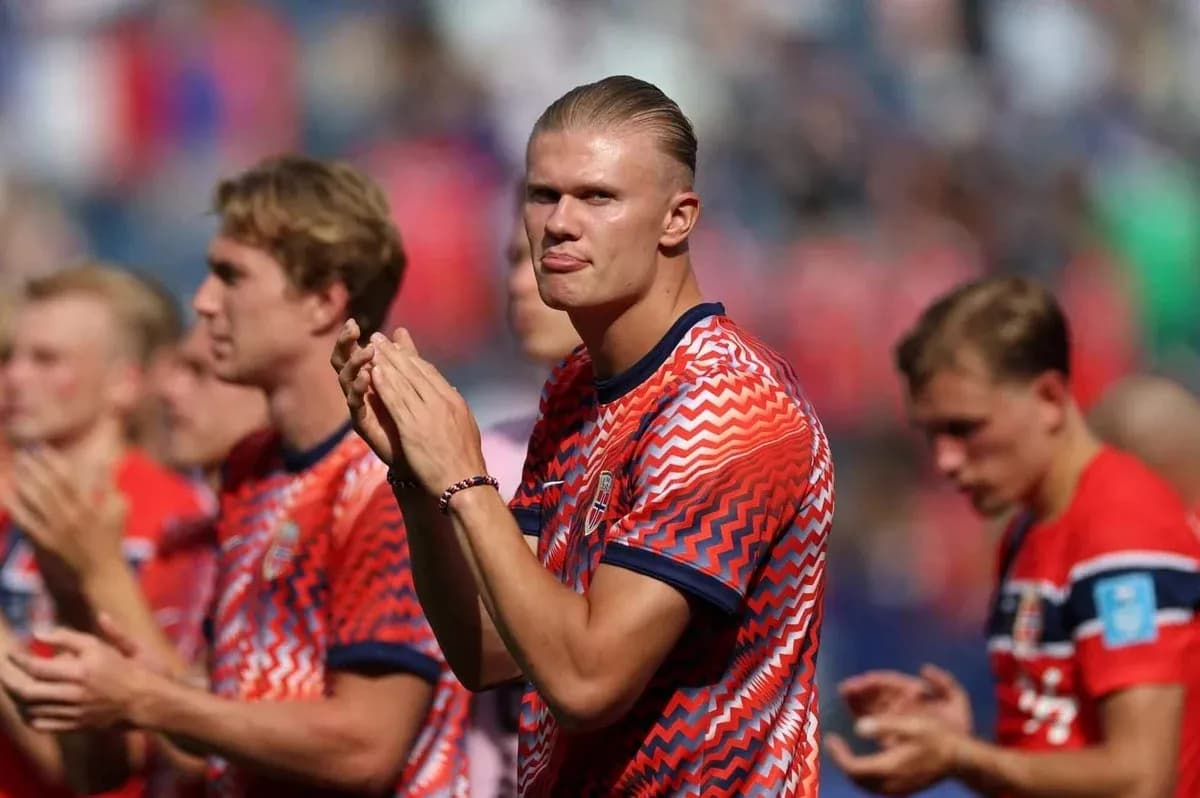
The 58-year-old made 10 changes from the dramatic 3-2 win over Senegal, ripped out the spine of his team, and left his two superstars sitting in bibs while a large travelling Norwegian support waited for the showdown they’d paid thousands to see: Haaland against Kylian Mbappe. It never came.
For Solbakken, it was never going to.
“This is simple,” he said afterwards, cutting straight through the emotion of the night.
Norway had already booked their place in the knockout rounds. A win over France would have secured first place in the group and a meeting with Sweden instead of Ivory Coast, but the coach had seen enough in the Senegal game to know the price of chasing that prize.
He talked about bodies, not names. About data, not dreams.
After Senegal, several players cramped badly. Five or six, he said, were “very affected”. By the 80th minute of that match, the entire back line and at least one or two midfielders were running on fumes. Norway also had the shortest turnaround in the group from that fixture to the France game. The warning lights were flashing.
So Solbakken, his physios and his medical staff went to work. Urine samples were taken, numbers came back, and the conclusion was brutal but clear: pushing his key men again to beat France might cost them the game that really matters — Tuesday’s round of 32 tie.
“It could have been that we were able to play a decent match today but we want to win,” he said. The key word was “we”. Not on the night in Boston, but in the tournament as a whole. “Bear in mind we might not have won, what about the next game then?”
That was the calculation. Risk a fatigued first XI to maybe edge France and avoid Ivory Coast, or protect the legs that will have to carry Norway deeper into the competition. For Solbakken, it “was a no-brainer… not a decision that took a long time to arrive at.”
He knew exactly what he was sacrificing. The spectacle. The storyline. The moment.
Thousands of Norwegians had come to see Haaland, to see Odegaard, to see their country’s new golden generation go toe to toe with Mbappe and France. Instead, they watched a second string stretched and exposed. Many coaches would have bowed to that pressure, if only for the optics.
Solbakken refused.
“The support has been very good and they want to see Erling and Martin,” he admitted. “So that is the only reason you can feel something about the way we lined up today.”
Then he pushed the conversation forward. If this gamble pays off, those same fans might get more nights to remember. “Hopefully because of that we can give them some good summer nights in the weeks ahead.”
That is his pitch: short-term pain, long-term gain.
Norway, he argued, cannot afford to be the “naive country who just play for fun.” The days of turning up, enjoying the ride and going home early are over. This team, in his eyes, is here to stay as long as possible, and that means making unpopular calls.
“I wouldn’t want to sit on the plane back knowing we didn’t do our best to go as far as possible,” he said. “It was an easy decision. Not even up for discussion.”
On the other side of the tunnel, France saw things very differently. Assistant coach Guy Stephan underlined how much first place meant to them — not only for pride, but for logistics. Top spot means a 45-minute flight to New York for their next match. Norway, finishing behind them, now face a far longer trip to Dallas.
The margins in tournament football rarely stop at the pitch. Travel, recovery, hotel changes, training windows — they all pile up. Norway now have only three days to reset before facing Ivory Coast, who beat Curacao on Thursday to book their own place in the last 32. Some see that as a clear advantage for the Africans.
Solbakken doesn’t, not after the choices he made.
“Not now because we did what we did today,” he said, pointing again to the calendar and the cramped schedule. Short gaps between games, train journeys, switching hotels, and one fewer rest day all fed into his thinking. That’s why Haaland and Odegaard stayed on the bench, why the rotation was so sweeping, why he accepted the risk of a heavy defeat to France.
There was, he admitted, one scenario where the script might have changed. Haaland and Odegaard were not completely ruled out; they were emergency options. “It would have had to be after the last hydration break,” he said. Only if Norway had been within touching distance of their target — top spot, or at least a realistic shot at it — would he have turned to them.
That moment never arrived. The plan stayed intact. The price was a 4-1 loss and a frustrated travelling support.
Now comes the real test of Solbakken’s conviction. His “no-brainer” will be judged not by the noise in Boston, but by what happens in Dallas — and by how long Norway can keep this tournament alive.