Sweden Defeats Tunisia 5-1 in World Cup Group F Match
Sweden 5-1 Tunisia at Estadio BBVA launches Sweden’s World Cup Group F campaign in emphatic style, moving them to 6 points with a goal difference of +8 and consolidating top spot and a Round of 32 trajectory. Tunisia remain bottom on 0 points with a goal difference of -8, their qualification hopes already under severe pressure after a second heavy defeat.
Match Report
The tone was set early. In the 7th minute Sweden struck first: Sweden goal — Yasin Ayari (unassisted), a solo effort that punished Tunisia’s failure to clear a second ball at the edge of the box and gave Sweden a 1-0 lead.
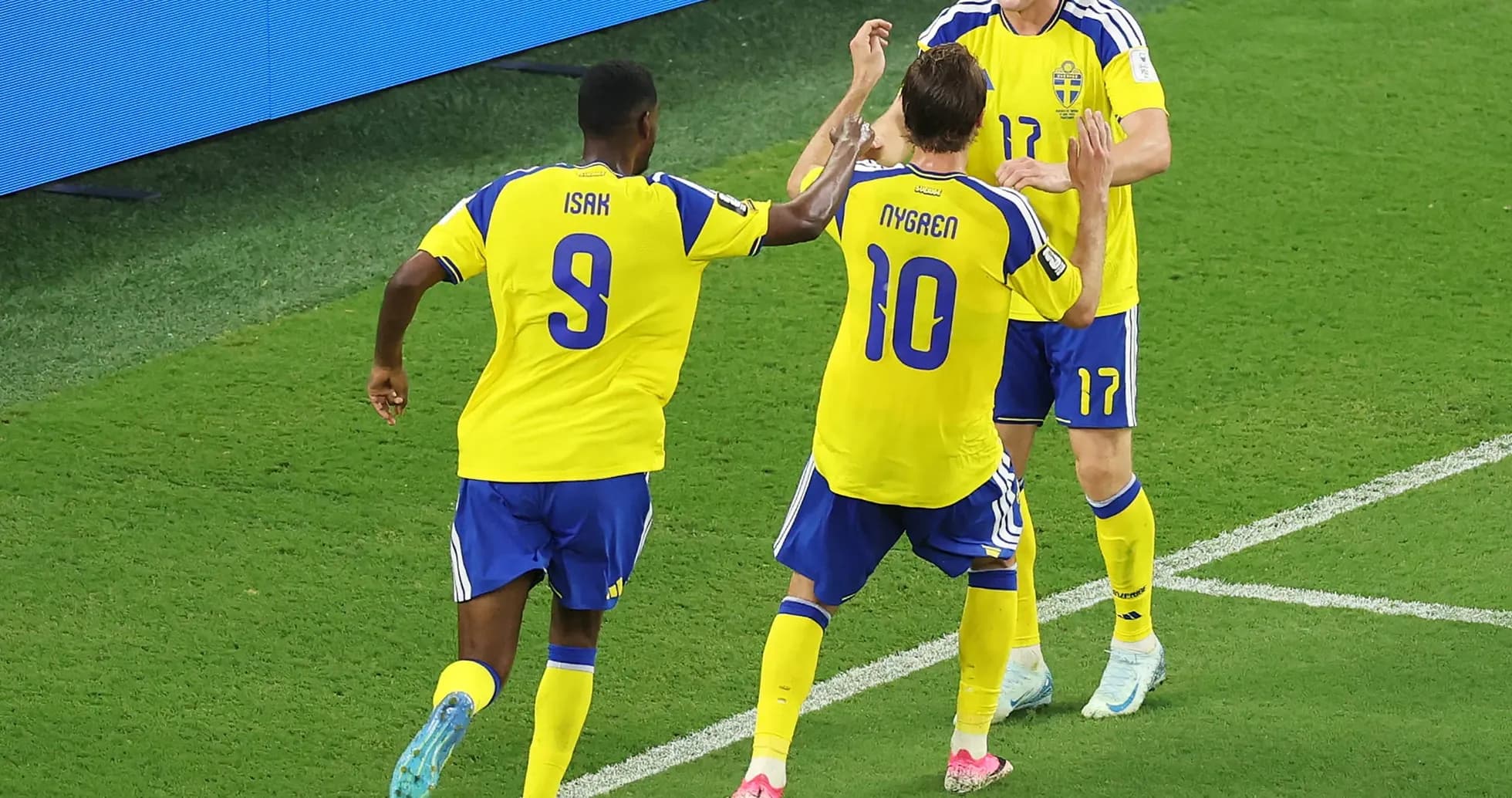
Sweden continued to find space between Tunisia’s midfield and back five, and the pressure told again on 30 minutes. Sweden goal — Alexander Isak (assisted by Viktor Gyökeres), with Isak timing his run to meet a low cross from the left and finish clinically for 2-0.
Tunisia responded before the break from a rare set-piece opportunity. In the 43rd minute, Tunisia goal — Omar Rekik (assisted by Hannibal Mejbri), as Mejbri’s delivery found Rekik attacking the near post to glance a header beyond Kristoffer Nordfeldt, cutting the deficit to 2-1 and briefly shifting momentum before half-time.
The second half began with Tunisia trying to push higher, but their aggression brought disciplinary trouble. On 54 minutes, Rani Khedira (Tunisia) — yellow card (Tripping), booked for halting a Swedish transition with a late challenge in midfield.
That warning sign was followed by a decisive Swedish counterpunch. In the 59th minute, Sweden goal — Viktor Gyökeres (assisted by Alexander Isak), as Sweden broke quickly, Isak slid a perfectly weighted pass into Gyökeres’ path, and the forward finished low across the goalkeeper to restore a two-goal cushion at 3-1.
Graham Potter then began to manage legs and tempo. In the 65th minute, Elliot Stroud replaced Gabriel Gudmundsson (Sweden), adding fresh energy on the flank. Simultaneously, Lucas Bergvall replaced Benjamin Nygren (Sweden), injecting creativity between the lines.
Tunisia responded with a triple change on 72 minutes to chase the game. Sebastian Tounekti replaced Elias Saad (Tunisia), offering more direct running up front. Mohamed Belhadj Mahmoud replaced Yan Valery (Tunisia), reshaping the defensive line, while Elias Achouri replaced Ellyes Skhiri (Tunisia) to add attacking thrust from midfield.
As Tunisia pushed, Sweden tightened control in the middle. In the 83rd minute, Ismael Gharbi replaced Rani Khedira (Tunisia), a further attacking substitution that left Tunisia lighter defensively. A minute later, on 84 minutes, Firas Chaouat replaced Anis Ben Slimane (Tunisia), committing even more bodies forward.
Sweden immediately exploited the stretched structure. Also in the 84th minute, Mattias Svanberg replaced Jesper Karlström (Sweden) and made an instant impact. Sweden goal — Mattias Svanberg (assisted by Alexander Isak), as Isak again linked play at the top of the box and laid the ball into Svanberg’s stride for a composed finish to make it 4-1.
In stoppage time, Potter protected his key forward and continued to rotate. At 90+1', Anthony Elanga replaced Alexander Isak (Sweden), removing Sweden’s chief creator after a decisive performance. At the same moment, Daniel Svensson replaced Alexander Bernhardsson (Sweden), shoring up the left side.
Sweden still had time for a final flourish. At 90+6', Sweden goal — Yasin Ayari (assisted by Lucas Bergvall), with Bergvall threading a pass into Ayari’s late run from midfield, and Ayari finishing confidently for his second of the night and Sweden’s fifth, sealing a commanding 5-1 victory.
Fixture Statistics & Tactical Audit
- xG: Sweden 1.36 vs 0.28 Tunisia
- Possession: Sweden 49% vs 51% Tunisia
- Shots on Target: Sweden 7 vs 2 Tunisia
- Goalkeeper Saves: Sweden 1 vs 1 Tunisia
- Blocked Shots: Sweden 3 vs 1 Tunisia
The 5-1 scoreline reflects Sweden’s superior shot quality and ruthlessness in the final third. Despite Tunisia edging possession (51%), Sweden generated more incisive attacks, leading 7-2 in shots on target and 1.36-0.28 in xG. Sweden’s finishing was highly efficient relative to their xG, turning limited but well-crafted chances into five goals, while Tunisia’s low xG underlined how rarely they were able to access high-value areas. Both goalkeepers faced few efforts (1 save each), highlighting that Sweden’s defensive structure largely kept Tunisia at arm’s length, and Tunisia’s back five failed to protect their box when Sweden broke through the lines.
Standings Update & Seasonal Impact
Sweden, who entered the round already on 3 points with 5 goals scored and 1 conceded, move to 6 points with 10 goals for and 2 against, giving them a new goal difference of +8 and reinforcing their position at the top of Group F and in the Round of 32 qualification zone. Tunisia, starting on 0 points with 1 goal scored and 5 conceded, remain on 0 points but now with 2 goals for and 10 against, worsening their goal difference to -8 and leaving them bottom of the group, facing a substantial gap both in points and goal difference to the qualification places.
Lineups & Personnel
Sweden Starting XI
- GK: Kristoffer Nordfeldt
- DF: Gustaf Lagerbielke, Isak Hien, Victor Lindelöf
- MF: Jesper Karlström, Alexander Bernhardsson, Benjamin Nygren, Yasin Ayari, Gabriel Gudmundsson
- FW: Viktor Gyökeres, Alexander Isak
Tunisia Starting XI
- GK: Abdelmouhib Chamakh
- DF: Yan Valery, Omar Rekik, Montassar Talbi, Amine Ben Hmida, Ali Abdi
- MF: Rani Khedira, Ellyes Skhiri, Hannibal Mejbri
- FW: Elias Saad, Anis Ben Slimane
Post-Match Verdict
Sweden delivered a clinical attacking performance (5 goals from 1.36 xG and 7 shots on target) built on sharp combinations between the front two and late runs from midfield. Their 3-1-4-2 allowed Isak and Gyökeres to consistently isolate Tunisia’s centre-backs, while Ayari and later Svanberg and Bergvall exploited space between Tunisia’s lines. Defensively, Sweden limited Tunisia to just 2 shots on target and 0.28 xG, reflecting a compact block that forced most Tunisian efforts from low-probability positions.
For Tunisia, this was a defensive collapse (5 goals conceded from only 7 shots on target and 1.36 xG against) rather than a territorial one. Despite having slightly more of the ball (51% possession), their 5-3-2 failed to control Sweden’s forwards, and repeated structural changes through substitutions only increased the gaps that Sweden attacked late on. Unless Tunisia can drastically tighten their box defending and generate more threatening chances than the 0.28 xG produced here, their World Cup campaign is likely to be short-lived, while Sweden look well-balanced and dangerous heading into the remainder of the group stage.