Las Vegas Lights vs FC Tulsa: Goalless Draw Highlights Tactical Discipline
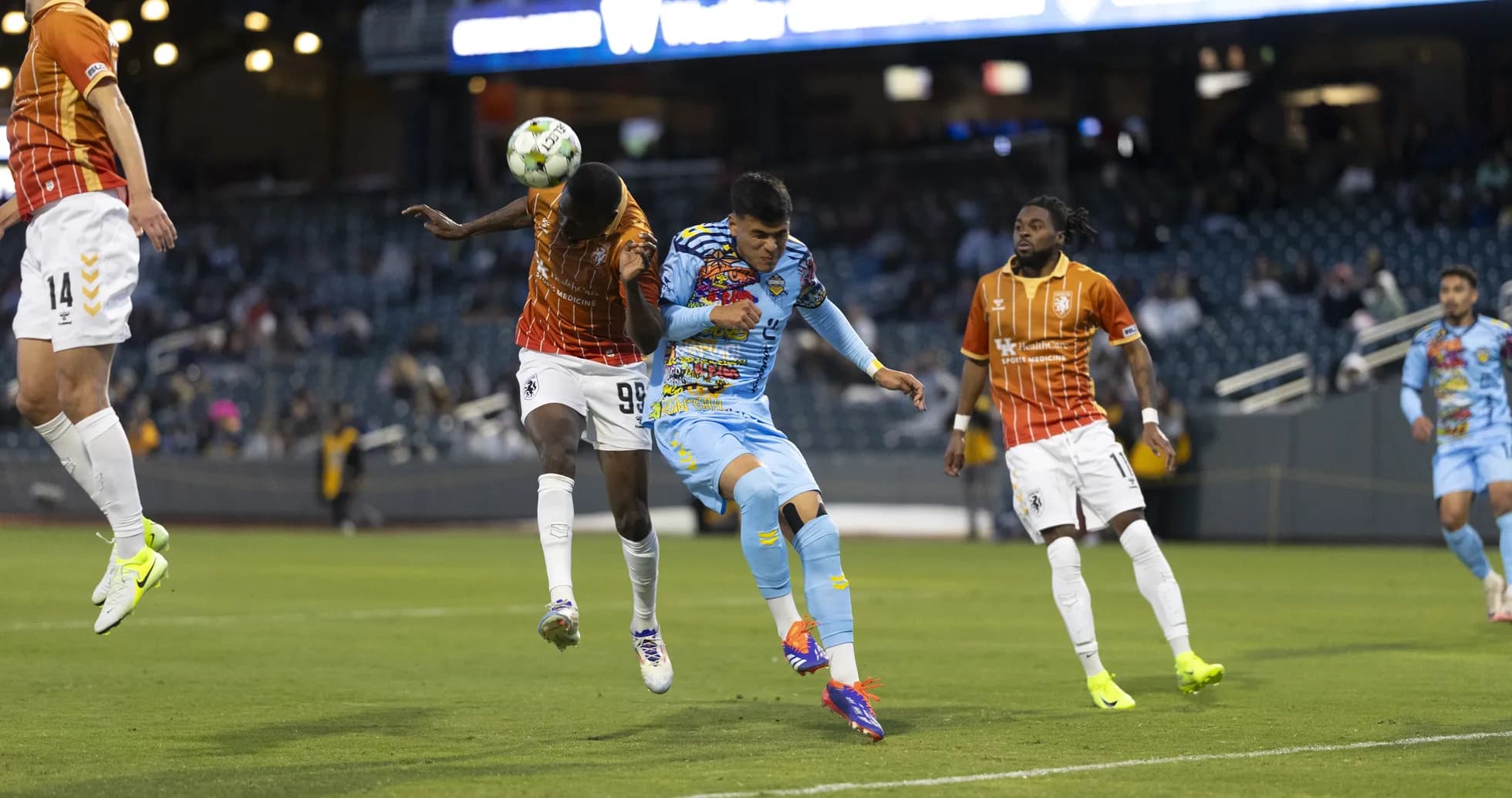
Under the Nevada night at Cashman Field, Las Vegas Lights and FC Tulsa closed out a tense USL Championship group-stage encounter with a goalless draw that said far more about structure and discipline than the scoreboard ever could. Following this result, the table tells a clear story: Las Vegas sitting 11th in USL 1 with 12 points and a goal difference of -3, Tulsa up in 3rd on 16 points with a goal difference of 4. One side is trying to prove its home form can anchor a playoff push; the other is quietly building the profile of a promotion contender.
For Las Vegas, the seasonal DNA is split between fortress and fragility. Overall this campaign they have played 11, winning 3, drawing 3 and losing 5, with 16 goals for and 19 against. At home, though, the picture sharpens: 5 played, 3 wins, 2 draws, 0 defeats, 6 scored and just 2 conceded. An average of 1.2 goals for and 0.4 against at home underpins an unbeaten record in the desert. On their travels, it is a different team entirely, with 0 away wins, 1 draw and 5 defeats, shipping 17 goals at an average of 2.8 per game. Cashman Field, then, is not just a venue; it is a shield.
FC Tulsa arrive with a steadier, more balanced profile. Overall they have played 10, winning 4, drawing 4, losing 2, scoring 13 and conceding 9. Their overall averages — 1.3 goals scored and 0.9 conceded — speak to a side that rarely gets blown away and rarely goes wild. Home and away are almost mirror images: 5 played in each, 2 wins, 2 draws, 1 defeat in both splits, with 7 goals for and 5 against on their travels at an away average of 1.4 scored and 1.0 conceded. It is the kind of statistical backbone that sustains a promotion campaign.
I. The Big Picture – Structure without shape
Neither coach declared a formation, but the lineups tell their own story. Devin Rensing’s Las Vegas XI is built around a spine of resilience. In goal, M. Stajduhar anchors a back line featuring B. Pope, N. Jones, A. Guillen and T. Antonoglou. In front of them, a midfield cluster of C. Pinzon, M. Ybarra, K. Scott and O. Anderson supports J. Rodriguez and the focal point, M. Arteaga.
The absence of explicit positional data turns this into a functional rather than schematic reading: Las Vegas lean on a compact central block and a hard-running supporting cast behind Arteaga. Their season numbers reinforce that identity: 3 clean sheets in total, all of them at home, and only 2 goals conceded in 5 home matches. They have failed to score at home only once, suggesting a side that may not be explosive but almost always finds a way to create something in front of their own fans.
Luke Spencer’s FC Tulsa mirror that balance with their own blend of structure and craft. A. Tambakis starts in goal, shielded by a defensive unit including L. Stauffer, Ian, A. Clarke and L. Batista. The midfield and attacking band — G. Robinson, B. Sparks, J. Webber, J. Kocevski, Bruno Lapa and N. Pierre — is rich with technical profiles and runners between the lines. Tulsa’s 3 clean sheets overall (2 at home, 1 away) and the fact they have failed to score 4 times this season show a team that can be patient to a fault, preferring control to chaos.
II. Tactical Voids – Discipline as a double-edged sword
With no official list of absentees, both squads appear at full nominal strength. The tactical voids, then, come from discipline rather than injury.
Las Vegas’ yellow-card profile is scattered but revealing. Across the campaign, 20.00% of their yellows arrive between 16-30 minutes, another 20.00% between 31-45, then 20.00% again from 61-75 and 76-90, with a further 15.00% between 91-105. This is a side that lives on the edge in almost every phase, and the red-card data is even starker: their only red has come in the 76-90 window, a late-game flashpoint at 100.00% of their dismissals. In tight contests, their aggression can easily become a liability.
Tulsa’s disciplinary curve peaks between 61-75 minutes, where 25.00% of their yellow cards are shown, with 21.43% from 76-90 and 17.86% in both the 16-30 and 46-60 windows. They grow more combative as matches wear on, often as they try to protect a lead or wrest back control. Crucially, they have no reds at all this season, suggesting a side that walks the disciplinary line but does not cross it.
III. Key Matchups – Hunter vs Shield, Engine Room vs Enforcer
The central narrative in this fixture is “Hunter vs Shield”: Las Vegas’ home attack against Tulsa’s away defence. At home, Las Vegas average 1.2 goals scored and have yet to lose; on their travels, Tulsa concede just 1.0 per game and have lost only once. With no individual scoring charts available, the collective becomes the protagonist.
M. Arteaga, leading the line for Las Vegas, is the natural reference point. His role is less about sheer volume of chances and more about occupying Ian and A. Clarke, forcing Tulsa’s central defenders to defend facing their own goal. Around him, the likes of J. Rodriguez, O. Anderson and C. Pinzon form the rotating cast that must find pockets between Tulsa’s lines. If Las Vegas are to crack a defence that has only allowed 5 away goals all season, Arteaga’s hold-up play and Rodriguez’s movement become the spearhead.
On the other side, Tulsa’s “Shield” is more collective than individual. A. Tambakis provides stability in goal, while L. Batista and L. Stauffer offer width and recovery speed. Their success away from home — 2 wins, 2 draws, 1 loss, with a goal difference of +2 on their travels (7 scored, 5 conceded) — comes from compressing space in their own third, then springing forward through the engine room.
That engine room is the second key matchup: “Engine Room vs Enforcer.” For Tulsa, J. Webber and J. Kocevski form the metronome and disruptor pairing, with Bruno Lapa drifting into half-spaces to connect midfield and attack. Against them, Las Vegas lean on M. Ybarra and K. Scott as the ballast. Ybarra’s role is to break up play and protect a back line that, overall, concedes 1.7 goals per game; Scott must shuttle, link and occasionally surge beyond the forwards.
If Tulsa’s midfield three can pin Las Vegas deep, they will tilt the match toward the visitors’ preferred rhythm: slow, controlled, and built on patient possession. If Ybarra and Scott can disrupt that flow, the game opens into transitions that suit Las Vegas’ home confidence.
IV. Statistical Prognosis – Margins, xG shadows and defensive solidity
We do not have explicit xG values, but the season data sketches the likely expected-goals landscape. Heading into this game, Las Vegas at home were a low-scoring, defensively solid outfit — 6 scored and 2 conceded in 5 matches suggests a typical home xG pattern of modest creation but excellent chance suppression. Tulsa’s away numbers — 7 scored and 5 conceded in 5 — hint at slightly more open contests, but still framed by control rather than chaos.
Combine those profiles and the prognosis leans toward a tight xG battle, perhaps shaded by Tulsa’s superior overall goal difference (13 for, 9 against, GD +4) versus Las Vegas’ (16 for, 19 against, GD -3). Tulsa’s capacity to manage games, fail to score in 4 but rarely concede heavily, suggests they are comfortable in low-xG environments, grinding out draws and narrow wins. Las Vegas, by contrast, rely heavily on home advantage to mask their broader defensive issues on the road.
Following this result, a 0-0 feels like the logical statistical convergence: Las Vegas’ home shield holding firm, Tulsa’s away structure absorbing pressure, both sides’ discipline flirting with danger but never tipping into chaos. In a promotion race defined by fine margins, FC Tulsa will quietly bank the point and the clean sheet; Las Vegas Lights, still unbeaten at Cashman Field, will see both reassurance and a warning in a night where their fortress held but their cutting edge never truly appeared.