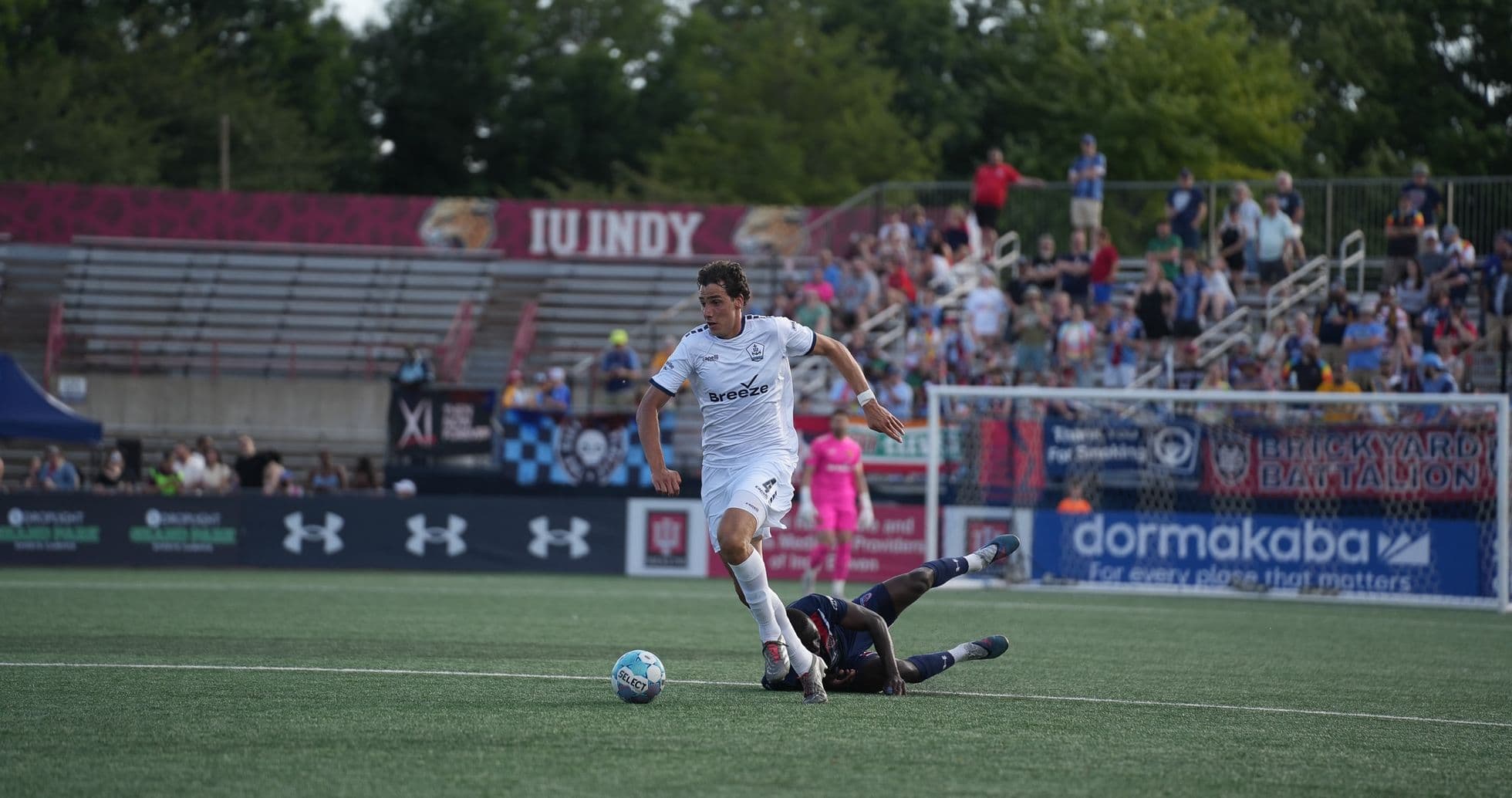
Indy Eleven Strengthens Home Fortress with 1–0 Victory over Rhode Island
Under the lights at Michael A. Carroll Stadium, Indy Eleven’s 1–0 win over Rhode Island felt less like a routine group-stage tick-box and more like a quiet statement from a side whose seasonal identity is hardening into something formidable. This was second in the USL 1 group against ninth, but the margins on the night were thinner than the table suggested, and the way both squads were deployed hinted at how each club sees itself heading into the heart of the USL Championship campaign.
I. The Big Picture – A home fortress vs. an ambitious newcomer
Heading into this game, Indy Eleven were already one of the division’s most reliable machines. Overall they had taken 18 points from 10 matches, with a goal difference of 5 built from 16 goals for and 11 against. At home, their profile is even sharper: 6 games, 5 wins, 1 draw, 0 defeats, with 12 goals scored and only 5 conceded. An average of 2.0 goals at home against just 0.8 conceded paints a picture of a side that expects to control Carroll Stadium.
Rhode Island arrived as a dangerous mid-table floater. Ninth in the group with 12 points from 10, their overall goal difference of 3 (17 scored, 14 conceded) underlines a team that can hurt you but is still learning to manage games. On their travels they had been volatile: 4 away fixtures, 1 win, 0 draws, 3 defeats, scoring 6 and conceding 8. An away average of 1.5 goals for and 2.0 against suggested they would come to Indianapolis needing to embrace risk to get anything.
The final 1–0 scoreline fits Indy’s broader seasonal DNA: pragmatic, economical, and ruthless at home. For Rhode Island, it was another narrow away defeat that keeps them hovering between promise and frustration.
II. Tactical Voids and Discipline – Edges in the margins
There were no listed absentees in the data, so both coaches, Sean McAuley and Khano Smith, effectively had full decks to play with. That made selection a pure tactical expression rather than a compromise.
McAuley’s Indy XI, with E. Dick in goal and a spine of L. Neidlinger, M. Rasheed, P. Craig, and A. Quinn behind the midfield pairing of C. Lindley and B. Rendon, looked built for control rather than chaos. J. O’Brien and J. Blake, along with N. Okello and E. Kizza, offered a blend of physical presence and technical security higher up the pitch. The bench – R. Charles-Cook, K. Williams, A. Mitrano, H. Barry, D. Sing, and T. Lowden – gave McAuley the option to either lock a lead down or chase extra goals without sacrificing structure.
Rhode Island’s setup mirrored their season: ambitious, front-foot, but carrying inherent risk. Koke Vegas in goal sat behind a defensive line including N. Scardina, K. Yao, G. Stoneman, and A. Sanchez, with C. Holstad and H. Bacharach Capdevila providing ballast in midfield. Ahead of them, J. Kwizera, A. Shapiro-Thompson, Leo Afonso, and J. Williams offered multiple ball-carriers and runners between the lines. From the bench, J. Castro, F. Nodarse, L. Dorsey, A. Rodriguez, Z. Herivaux, D. Atkinson, and N. Fuson gave Smith attacking variety but not necessarily the defensive steel to close a tight away match.
Disciplinary trends framed the emotional tone. Indy’s yellow cards this season have been most concentrated between 31–45 minutes, where 31.25% of their cautions arrive, and 76–90 minutes, at 25.00%. Rhode Island’s profile is even more volatile late: 34.78% of their yellows and 100.00% of their reds come in the 76–90 window. In a one-goal game, that tendency toward late indiscipline loomed over Rhode Island’s attempts to chase an equaliser; every aggressive press or tactical foul risked tipping them into self-destruction.
III. Key Matchups – Hunter vs Shield, and the engine room
Without individual scoring charts, the “Hunter vs Shield” dynamic has to be read through team profiles. At home, Indy average 2.0 goals for, while Rhode Island on their travels concede 2.0 per game. That symmetry framed the contest: Indy’s collective attacking patterns against a Rhode Island back line that tends to bend, and sometimes break, under sustained pressure.
The shield on Indy’s side is their home defensive record: 0.8 goals conceded per game at Carroll Stadium, against a Rhode Island attack that scores 1.5 away. On the night, E. Dick and his back four validated the numbers, preserving the clean sheet that has been so elusive for Indy overall (just 1 clean sheet in total before this game, and none away). At home, though, they have consistently been more secure, and this match extended that narrative.
In the engine room, C. Lindley and B. Rendon were the quiet governors of tempo. Indy’s season-long habit of not failing to score at home (0 failed-to-score games at Carroll) owes much to their ability to move the ball into advanced areas with control rather than chaos. Opposite them, C. Holstad and H. Bacharach Capdevila had to walk a tightrope: disrupt Indy’s rhythm without triggering the late-card spiral that has plagued Rhode Island, particularly in the 76–90 minute band.
Wide and between the lines, players like J. O’Brien, J. Blake, Leo Afonso, and J. Williams were tasked with exploiting any transitional space. For Rhode Island, whose biggest away win this season has been 1–3 and whose heaviest away loss was 4–2, the idea is always the same: accept that you will concede chances, but try to create more. Against Indy’s home form, that gamble was always going to be severe.
IV. Statistical Prognosis – Why 1–0 made sense
Indy’s overall averages heading into this game – 1.6 goals scored and 1.1 conceded per match – suggest a side that tends toward balanced, mid-scoring contests rather than shootouts. Rhode Island’s 1.7 goals for and 1.4 against overall tilt slightly more toward open games, but their away defensive average of 2.0 conceded was the red flag.
Blend those profiles and a narrow home win with moderate xG on both sides is the logical outcome. Indy’s home attacking average (2.0) versus Rhode Island’s away defensive average (2.0) points to the hosts reliably creating enough to score at least once, possibly twice. On the flip side, Indy’s home defensive average (0.8 conceded) against Rhode Island’s away attacking average (1.5) suggests the visitors would generate some danger but might struggle to convert it into more than a single clear-cut chance.
Following this result, the storylines crystallise. Indy Eleven deepen their identity as a playoff-bound side whose home is a fortress: unbeaten, stingy, and efficient. Rhode Island remain the league’s great “what if” on their travels – capable of scoring, capable of thrilling, but still lacking the defensive and disciplinary control to turn promising performances into points in hostile venues like Carroll Stadium.