Arsenal's Title Parade: A Celebration and Its Risks
The Premier League trophy finally came home to north London on Sunday – and with it came a city straining at the seams.
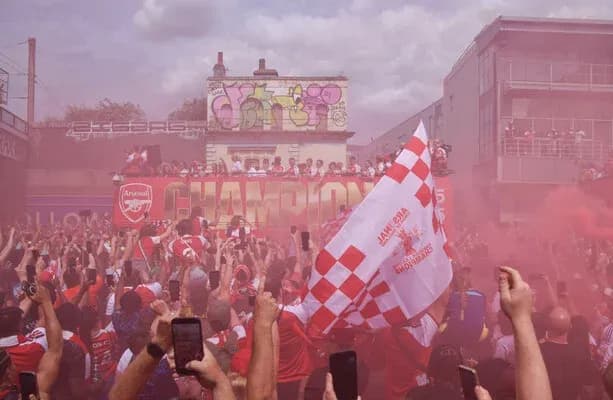
By mid-afternoon, the streets around the Emirates Stadium were a rolling sea of red. Thousands packed every inch of pavement and concrete, spilling into the roads, clinging to anything that offered a better view of the open-top bus. Trees, rooftops, traffic lights – nothing was off limits as Arsenal’s champions crawled through N5.
The atmosphere crackled. Flares spat red smoke into the sky, the air thick and acrid as the bus edged past. Chants bounced off the surrounding estates, a chorus that barely dipped as the parade wound on.
The joy came with a cost.
London Fire Brigade said crews had to rescue “approximately 75 people” from height during the celebrations, as fans perched on roofs and other precarious spots to catch a glimpse of their heroes. The message from the Brigade was blunt: stay off the rooftops.
Assistant commissioner Pat Goulbourne praised the spectacle but drew a sharp line under the risks. The scenes, he said, had been a “fantastic sight”, with the vast majority celebrating safely, yet his teams spent the day pulling supporters back from danger.
The fire service also dealt with a blaze at a nearby hotel, believed to have been sparked by a stray flare. The fire caused only minor damage to the exterior of the building, but it underlined the hazards that come with pyrotechnics in a dense urban crowd. Flares and smoke bombs are now stitched into the visual language of modern football fandom; on Sunday, they also set off fire alarms at several other locations around the parade route.
Goulbourne urged supporters heading home to ditch the pyrotechnics, especially in and around stations, and to keep them away from buildings and anything that might catch light. The party, he implied, did not need more fuel.
On the policing front, the numbers told their own story. The Metropolitan Police had more than 500 officers on duty for the parade. By 9pm, they had made 16 arrests in the area around the celebrations, for offences including drunk and disorderly behaviour, drugs offences, sexual assault and assaulting emergency workers.
As the light faded, the tone of the day shifted. Just after 8.30pm, officers were called to Hornsey Road to reports of a stabbing. Police, paramedics and an air ambulance attended. A man was taken to hospital, where his condition will be assessed, the Met said.
It was a grim intervention on a day meant to be about release and relief, a reminder of how quickly a carnival can turn.
Still, north London did not empty in a hurry. As evening bled into night, the streets around the Emirates were still thick with Arsenal shirts, flags draped over shoulders, voices hoarse but relentless. The trophy was gone, the players long since off the bus, yet the songs kept coming as fans drifted towards Tube stations and bus stops.
Underfoot, the hangover had already begun. Cans and bottles rolled in the gutters. Collapsed e-bikes lay abandoned on their sides. Red smoke stains clung to the pavement and walls, mingling with the usual city grime.
This was the raw edge of a title celebration: ecstatic, messy, occasionally dangerous. Arsenal’s name is back on the Premier League trophy. North London has made sure nobody will forget the day it came home – least of all the emergency services who had to keep the party from tipping over the brink.