Pittsburgh Riverhounds Defeat Miami FC 2–0 in USL Showdown
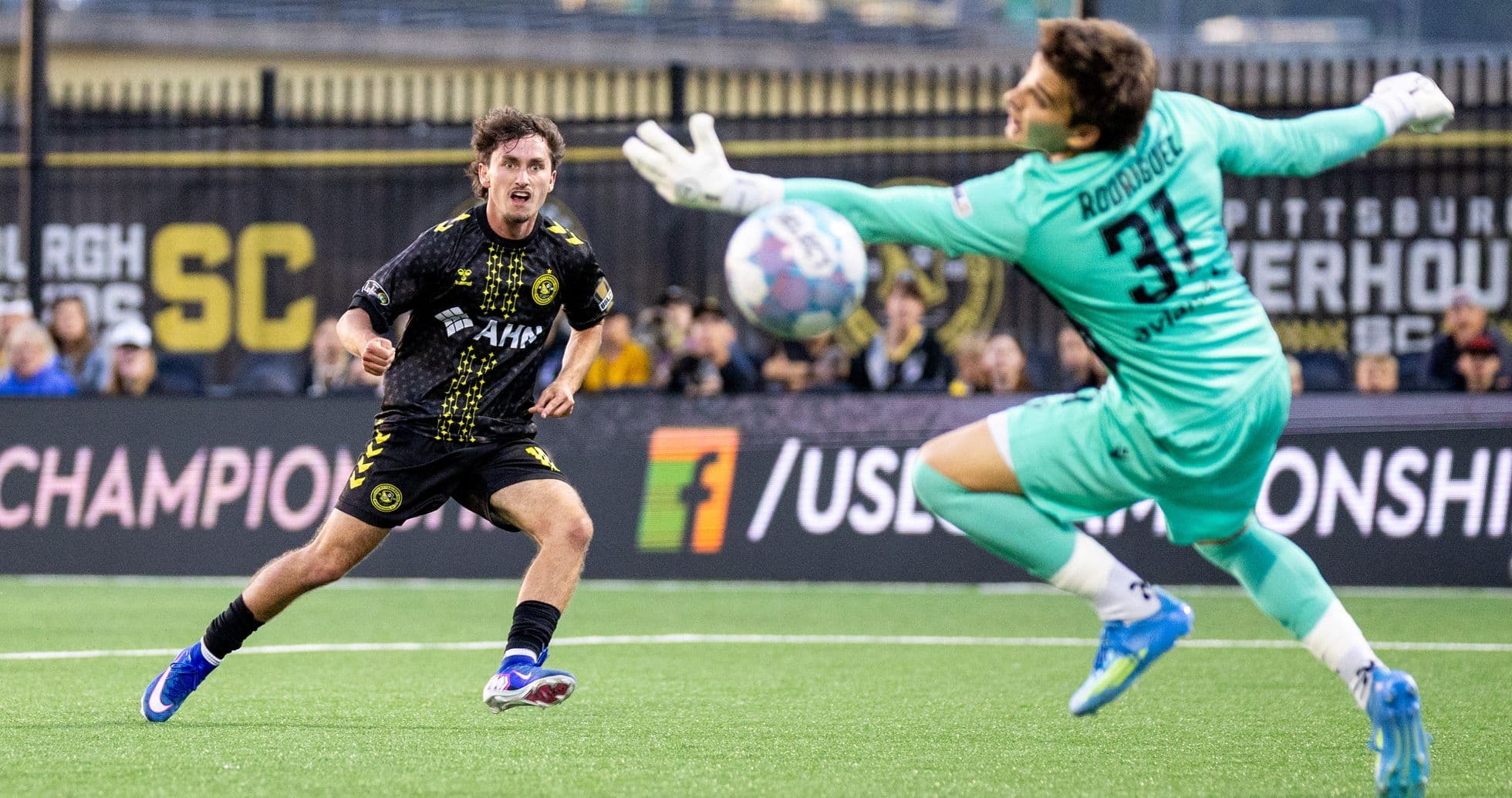
Highmark Stadium under the lights, a cool May evening on the banks of the Monongahela, and a Group Stage meeting that felt every bit like a playoff dress rehearsal. Pittsburgh Riverhounds versus Miami FC ended 2–0, but the scoreline only hints at the deeper story of two sides whose seasonal identities were already well defined before a ball was kicked.
Heading into this game, Pittsburgh were the archetypal USL grinder: fifth in USL 1 with 16 points from 10 matches, a narrow overall goal difference of 1 built on 14 goals for and 13 against. At home they had been ruthless, winning 3 of 4, scoring 7 and conceding only 4. Their attacking profile was quietly efficient: 1.8 goals at home on average, 1.4 overall, underpinned by a compact defensive block that allowed 1.0 goal per home game. This is a team that lives in tight margins and usually wins them.
Miami arrived as a more volatile proposition. Also on 16 points but seventh in the group, they had played 12 matches overall, scoring 15 and conceding 19 for an overall goal difference of -4. The contrast between their home and away selves was stark: at home they averaged 1.8 goals for and 1.8 against; on their travels that dropped to 0.9 goals for and 1.4 against. One away win in 7, with 3 draws and 3 defeats, painted a picture of a side that could frustrate but rarely dominate outside Florida.
The Riverhounds’ squad sheet reflected that pragmatism. N. Campuzano in goal formed the base of a defensive unit that leaned on the physical presence of V. Souza and the positioning of L. Kelp and O. Mikoy, with P. Barnes providing balance. In front, the engine was a blend of graft and guile: D. Griffin as the metronome, R. Mertz and C. Ahl linking lines, and the width and timing of runs from E. Goldthorp and S. Bassett stretching the pitch. At the tip, A. Dikwa carried the burden of turning territory into goals, a striker perfectly suited to a side that creates just enough and defends like every lead is a final.
Miami’s XI, set out by Gaston Maddoni, leaned into technical quality and midfield craft. F. Rodriguez in goal sat behind a back line of B. Ndiaye, D. Knutson and A. Calfo, with A. Milesi offering a hybrid role between defence and build-up. The midfield triangle of G. Diaz, R. Tori and J. Sonora promised ball circulation and progressive passing, while the attacking trio of R. Da Costa, M. Ndongo and A. Rocha were tasked with finding goals for a team that, away from home, had too often failed to score: 4 blanks in 7 away fixtures heading into this match.
If there was a tactical void for Miami, it lay precisely in that away attacking record. Averaging 0.9 goals on their travels against a Riverhounds side that conceded only 1.0 at home, they were always going to need efficiency. Pittsburgh’s defensive record was not spectacular overall, but at Highmark they were disciplined, and their season-long pattern of clean sheets (2 in total, split evenly home and away) suggested a team that knew how to lock down a lead.
On the disciplinary front, the pre-match numbers hinted at where the battle would be fought. Pittsburgh’s yellow cards were spread but with a clear spike in the 31–45 and 76–90 minute windows, each accounting for 25.00% of their cautions. That pattern speaks to a side that tightens the screws at the end of each half, willing to foul to protect structure or rhythm. Miami, by contrast, were serially combustible in the second half: 25.71% of their yellows came between 61–75 minutes and another 25.71% between 76–90, with a lone red card this season arriving in the 61–75 band. In other words, a team that can fray under sustained pressure as legs and concentration fade.
This is where the “Hunter vs Shield” dynamic tilted decisively towards Pittsburgh. The Riverhounds’ home attack, at 1.8 goals per game, was set against a Miami away defence conceding 1.4 per outing and already breached 10 times on their travels. Miami’s “shield” was not porous, but it was not elite either, and their inability to consistently impose themselves in hostile environments meant that once Pittsburgh found rhythm, the visitors were always likely to bend.
In the “Engine Room” duel, the contrast was more nuanced. Miami’s midfield trio of G. Diaz, R. Tori and J. Sonora offered more technical control on paper, the kind of unit that can slow a game and draw fouls—something borne out by Miami’s heavy yellow-card load in the middle and late phases of matches. Yet Pittsburgh’s central core of Griffin, Mertz and Ahl is built for USL trench warfare: second balls, counter-press, and quick vertical passes into Dikwa and the runners from wide. Over 90 minutes, that physical, direct engine aligned better with a home side that already thrived on Highmark’s dimensions and conditions.
From a statistical prognosis standpoint, the 2–0 full-time scoreline fit the pre-match trend lines almost perfectly. Pittsburgh’s home scoring rate of 1.8 nudged slightly upward but remained within expectation; Miami’s away attack, already unreliable, was shut out once more against a side conceding just 1.0 at home on average. With no penalties missed by either side all season—Pittsburgh perfect from 2 in total, Miami scoring their single attempt—there was no hidden edge from the spot to rescue the visitors.
Following this result, the story of the night reads like a confirmation rather than a twist. Pittsburgh Riverhounds leaned into their seasonal DNA: strong at home, defensively tight, and just sharp enough in the final third. Miami FC, meanwhile, remained the same riddle: capable of competing in the table, but away from home still searching for an attacking identity that can match their technical ambition. In a campaign defined by fine margins and playoff thresholds, this felt less like an isolated win and more like a statement that Highmark Stadium will remain one of the league’s hardest stops when the knockout rounds arrive.