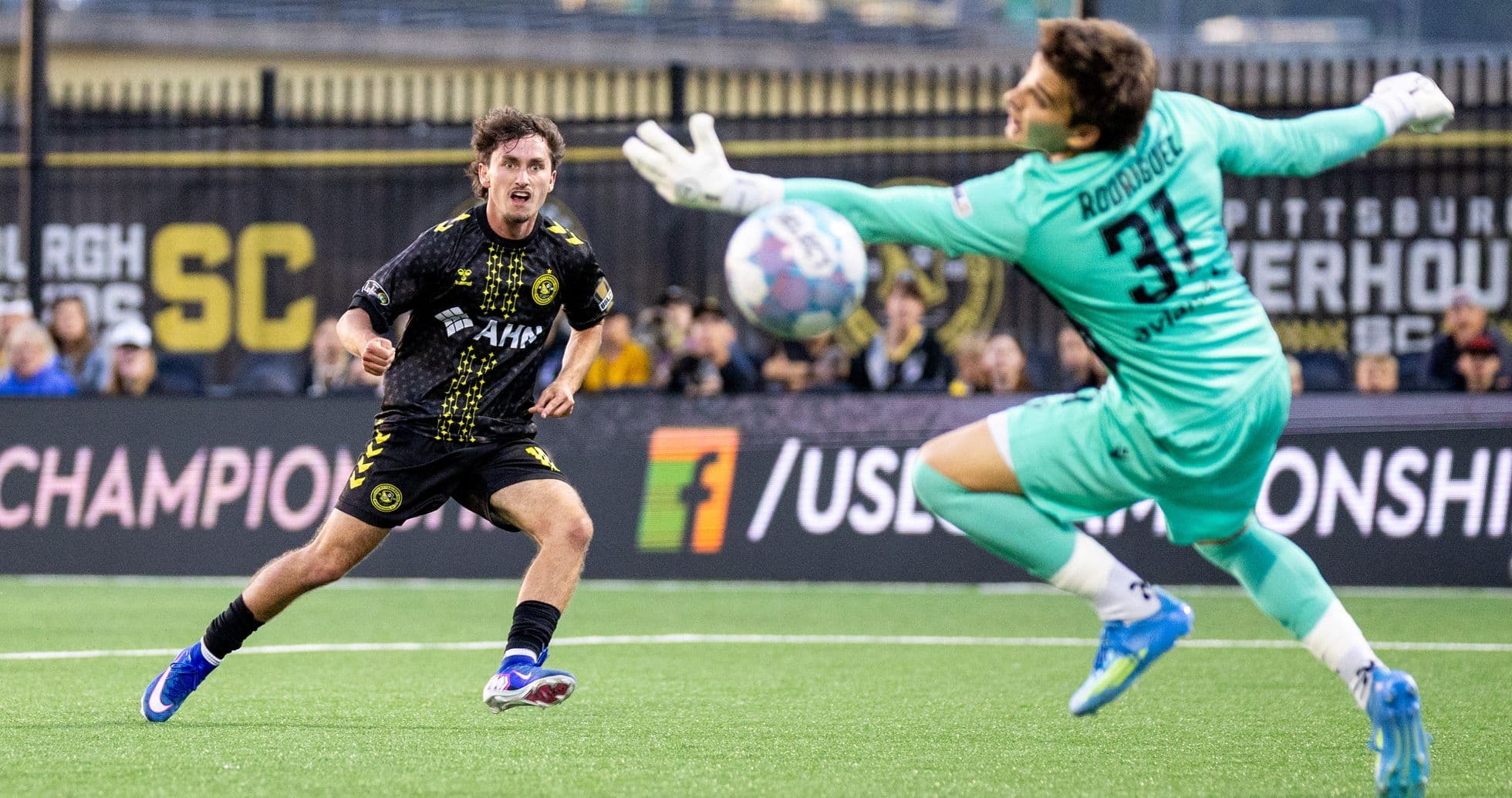

El Paso Locomotive vs Lexington: Tactical Analysis of a 4–1 Defeat
Under the El Paso lights at Southwest University Park, this USL Championship Group Stage tie was supposed to be a checkpoint for two evolving projects. Instead, it became a statement: Lexington walking out 4–1 winners, reshaping the narrative of both their season and El Paso Locomotive’s.
I. The Big Picture – Two Identities Collide
Heading into this game, the table framed the contest as a clash of contrasting profiles. El Paso Locomotive sat 6th in USL 1 with 14 points from 10 matches. Their overall goal difference was +1, built on 21 goals for and 20 against. The numbers underlined their dual personality: on their travels they had been efficient and composed, but at home they were fragile.
At home, El Paso had played 5, winning just 1, drawing 1 and losing 3. They had scored 9 and conceded 15, an average of 1.8 goals for but a bruising 3.0 goals against per game. Away, they looked like a different side: 3 wins, 1 draw, 1 loss, 12 scored and only 5 conceded, with a 2.4 goals-for and 1.0 goals-against average. This was a squad built to transition and counter, but still searching for a stable home blueprint.
Lexington arrived as the underdog on paper, 10th in the group with 12 points from 11 matches, their overall goal difference perfectly balanced at 0 (15 scored, 15 conceded). Their record was more conservative: at home, 2 wins, 1 draw, 2 losses with 8 goals for and 6 against; on their travels, 1 win, 2 draws, 3 defeats, scoring 7 and conceding 9. A side still assembling its identity, but with a defensive baseline that was steadier than El Paso’s at this venue.
The 4–1 full-time scoreline – after Lexington had already gone 2–0 up by half-time – felt like the logical extreme of those trends. El Paso’s home vulnerabilities were exposed; Lexington’s away caution gave way to ruthless exploitation.
II. Tactical Voids – Discipline, Risk and Structural Gaps
With no official absentees listed, both coaches had full decks to play with, and their choices told the tactical story.
Junior Gonzalez’s El Paso XI, with S. Mora-Mora in goal, leaned into technical profiles. A back line featuring A. Quezada, K. Twumasi, N. Dollenmayer and R. Ruiz was asked to build rather than simply clear. Ahead of them, E. Calvillo and G. Diaz offered control in midfield, while A. Mendez and Gabriel Torres were tasked with linking to the spearhead, D. Abitia.
The problem, as the season data hinted, was not El Paso’s ability to score. Overall, they averaged 2.1 goals for per game, had yet to fail to score in any fixture, and had converted all 4 of their penalties this campaign with 100.00% efficiency and no misses. The void was structural and psychological: a team that attacked with confidence but defended with anxiety, particularly at home where they had yet to keep a clean sheet.
Their disciplinary profile underlined a side that often ends up firefighting. Overall yellow-card timings showed a spread across the middle and late phases: 25.00% of yellows between 46–60 minutes, another 25.00% between 61–75, and 21.43% in both the 31–45 and 76–90 ranges. Red cards were not frequent but arrived at destabilising moments: 40.00% of reds between 16–30 minutes, 20.00% between 0–15, 20.00% between 46–60, and 20.00% between 61–75. It paints a picture of a team that can lose control just as games are settling.
Masaki Hemmi’s Lexington, by contrast, came built for structure. O. Semmle in goal was shielded by a back line of X. Zengue, K. Burks, A. Ordonez and J. Hafferty – a compact, physically honest unit. In midfield, B. Ferri and A. Molloy provided the double pivot, with L. Blessing and Nick Firmino as hybrid creators and pressers, while M. Epps and P. Goodrum offered vertical thrust.
Lexington’s disciplinary map is different. Their yellow cards spike late: 23.81% between 61–75 minutes, 28.57% between 76–90. This is a side that ramps up aggression to protect leads or chase games in the closing stages. The single red card this season came in the opening 0–15 minutes, a reminder that early lapses can still undercut them, but on the whole they manage risk better than El Paso.
III. Key Matchups – Hunter vs Shield, Engine Room vs Enforcer
Without individual scoring charts, the “hunter vs shield” lens becomes a clash of collective tendencies. El Paso’s attack at home, averaging 1.8 goals per match, ran directly into Lexington’s away defence conceding 1.5 on their travels. On paper, that suggested El Paso would find chances, but Lexington’s compact 4–2–3–1 shape, with Burks and Ordonez at its heart, was designed to funnel attacks into predictable zones.
The real battleground was the engine room. El Paso’s ability to progress play rested heavily on E. Calvillo’s passing rhythm and G. Diaz’s connective work between lines. They needed time and angles to play, especially with Gabriel Torres and A. Mendez drifting into pockets.
Lexington’s response was to crowd and disrupt. A. Molloy and B. Ferri acted as the enforcers, screening central zones and forcing El Paso wide, while L. Blessing and Nick Firmino pressed from the front. That four-man box around the ball turned El Paso’s build-up into a series of risky decisions. When the hosts tried to commit numbers forward to chase the game, Lexington’s front line – Epps stretching the flank, Goodrum attacking space – punished every loose touch.
On the flanks, the matchup between Quezada and Epps, and between Ruiz and Goodrum, tilted decisively toward the visitors once Lexington realised how much space existed behind El Paso’s full-backs. With no clean sheets at home all season, El Paso’s back line again found itself exposed in transition.
IV. Statistical Prognosis – xG Logic and Defensive Solidity
Even without explicit xG numbers, the season data points toward a clear expected-goals narrative. El Paso, with 21 goals from 10 matches and a 2.1 overall scoring average, are a high-volume, high-variance attack. But their 2.0 overall goals-against average – and particularly 3.0 conceded per game at home – suggest that for every attacking wave they create, they concede almost as much in quality the other way.
Lexington are more moderate: 1.4 goals for and 1.4 against overall, with a slightly tighter 1.2 goals conceded at home and 1.5 away. They do not overwhelm opponents, but they also rarely open the game up as recklessly as El Paso do at this stadium.
Following this result, the 4–1 scoreline does not feel like a freak event so much as the logical extension of those curves. In a match where El Paso again pushed numbers forward and again struggled to protect their own box, Lexington’s structured spine and late-game intensity – reflected in that 28.57% share of yellows in the final 76–90 minutes – translated into sustained pressure and ruthless counter-punching.
For El Paso, the story of this night is not about their ability to score; it is about a home defensive model that leaks chances at a rate no playoff aspirant can sustain. For Lexington, it is proof that their cautious statistical profile can, with the right opponent and game state, blossom into something far more emphatic.