Tottenham's Injury Crisis: Is the Pitch to Blame?
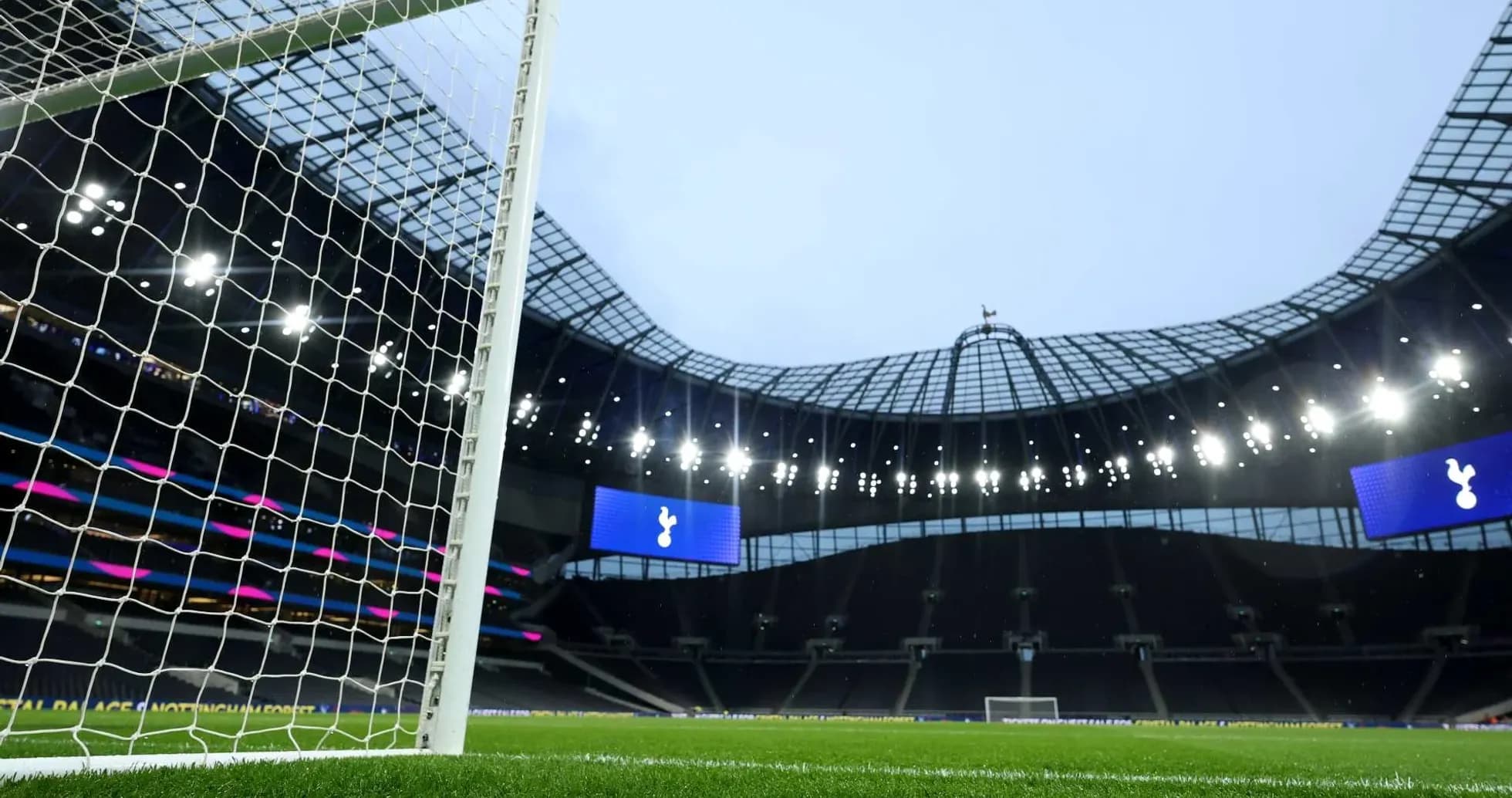
The Tottenham Hotspur Stadium was built as a statement. A gleaming arena, a sliding grass pitch that disappears to reveal an NFL-ready synthetic surface, a symbol of modern engineering and commercial ambition.
Now that same marvel is under the microscope.
According to Sky Sports, Spurs’ new performance director Dan Lewindon is leading a deep review into whether the stadium’s dual-surface technology is playing a part in a surge of serious leg and ligament injuries. Independent testing has already been carried out on the bounce and surface tension of the pitch. The data, so far, refuses to give a clear verdict. No smoking gun, no clean bill of health. Just questions. So the club is now comparing their home turf against other Premier League grounds in search of patterns that might explain why so many players are breaking down in N17.
The concern is not abstract. It has names and faces.
- Dejan Kulusevski
- Radu Dragusin
- Wilson Odobert
– all have suffered significant injuries at the Tottenham Hotspur Stadium. James Maddison partially tore his ACL at home against Bodo/Glimt, then went on to rupture it completely. Each incident has added another layer of unease around a surface once hailed as a benchmark for the sport’s future.
Spurs are not alone in their anxiety. Real Madrid are running their own investigation into a cluster of ACL injuries since installing a retractable pitch at the revamped Santiago Bernabeu. Two superclubs, two cutting-edge stadiums, one uncomfortable question: has progress come at a physical cost?
A Broken Structure Behind the Scenes
Lewindon’s work has not stopped at the grass. His three-month review has gone under the skin of Tottenham’s performance department and, according to reports, the findings are blunt.
The club believes structural flaws have taken hold. Medical and coaching teams have not been integrated enough, with too little shared decision-making and too many disjointed calls on training loads and player management. The result has been a cycle of recurring injuries, players returning, breaking down, and the squad never truly stabilising.
Spurs’ answer is a shift in philosophy. They plan to move towards a “small-team approach”: specific physios assigned to tight groups of six players, responsible for tailored training plans and closer daily oversight. The aim is simple – fewer generic programmes, more bespoke preparation, and a clearer line of accountability when things go wrong.
It is a model rooted in intimacy rather than scale. And Tottenham badly need that clarity.
Four Managers, One Exhausted Squad
The chaos has not been confined to the treatment room.
In a single year, four different head coaches – Ange Postecoglou, Thomas Frank, Igor Tudor and Roberto De Zerbi – have taken charge. Each arrived with his own methods, his own demands, his own idea of how hard, how often and how intensely this team should train.
For players, that constant tactical and physical whiplash has been brutal. One regime’s high pressing, another’s more controlled approach, then a new set of running patterns and conditioning blocks before the body has adjusted to the last. Within the club, there is a growing belief that this churn has significantly increased the physical risk to a squad already stretched thin.
The revolving door in the dugout has left its mark on the treatment table.
The Xavi Simons Flashpoint
The club’s medical staff have also been dragged into the spotlight. The flashpoint came at Molineux.
During a win at Wolves, Xavi Simons suffered what would later be diagnosed as a season-ending ACL rupture. On the pitch, he was treated with ice spray and allowed to continue before eventually being stretchered off. The images travelled quickly. So did the anger.
Supporters questioned how a player with such a serious injury could be sent back into a Premier League match. The club, though, has stood firm. Lewindon is understood to have been very satisfied with how the medical team handled the incident. Simons was desperate to carry on, and with an ACL test notoriously difficult to perform at pitchside in the heat of a game, the decision to let him try to continue has been defended internally as the correct call.
Crucially, Spurs insist his brief return did not worsen the damage.
For De Zerbi, who had barely settled into the job, the Simons episode was part of a grim initiation. Within his first three matches, Cristian Romero and Destiny Udogie also suffered serious injuries. The new head coach has responded by pushing for a more robust support network, including the appointment of a team psychologist to help improve communication and cohesion between performance and medical departments.
At Tottenham, the injury crisis is no longer just a physical issue. It is psychological, cultural, structural.
Maddison’s Reality Check
James Maddison has become the unofficial voice of the dressing room on the subject. His assessment has been as raw as his own rehab.
“Our situation with the injuries has been worse than any other club,” he said recently. “People try and say, ‘Oh, but we’ve got this and that’. But ours is astronomical, and we need to look at why that is.”
He rejects some of the wilder theories. Maddison points to pure misfortune in certain cases – his own ACL, Kulusevski taking a “horrendous knock” from Marc Guehi – as examples where neither the medical staff nor the pitch can realistically be blamed. “Sometimes that’s rubbish,” he says of the more extreme speculation.
Yet he is adamant about the impact. The sheer volume of absences, he believes, ripped the spine out of Spurs’ season and dragged them into a relegation fight that should never have involved this squad.
“We’ve been a bit unlucky,” he admitted. “But like I said, the big names that we’ve missed, it does affect you and you can’t just deny that. Myself, Kulusevski and Mohammed Kudus, and Rodrigo Bentancur missed three months and whatnot. If you had had them for the whole season, we wouldn’t have been in this situation, I strongly believe. That’s just not me being naive, that’s just a fact.”
The numbers back up the feeling inside the camp: too many key players, missing for too long, at the worst possible time. Yet in the middle of that storm, Maddison reserved his final words not for blame, but for those who remained standing. “It is the situation we find ourselves in, and I am just proud of the lads to dig deep today.”
A Superclub at a Crossroads
So Tottenham find themselves in an uncomfortable place. A state-of-the-art stadium under scrutiny. A performance department being rebuilt on the fly. A squad battered by injuries and by the constant reprogramming of new managers.
The club insists the pitch has not been proven guilty. The medical staff have been publicly and privately backed. A new structure is being designed to protect players better, physically and mentally.
But the questions linger over a season that veered far too close to disaster: was this simply a freak confluence of bad luck, bad timing and bad tackles, or a warning that something fundamental at Tottenham needs to change before the next campaign begins?