Argentina's Tactical Identity Under Scaloni: Control Over Chaos
In the dry Texas heat, with Group J finely poised, Lionel Scaloni found himself answering for Argentina’s soul as much as their style.
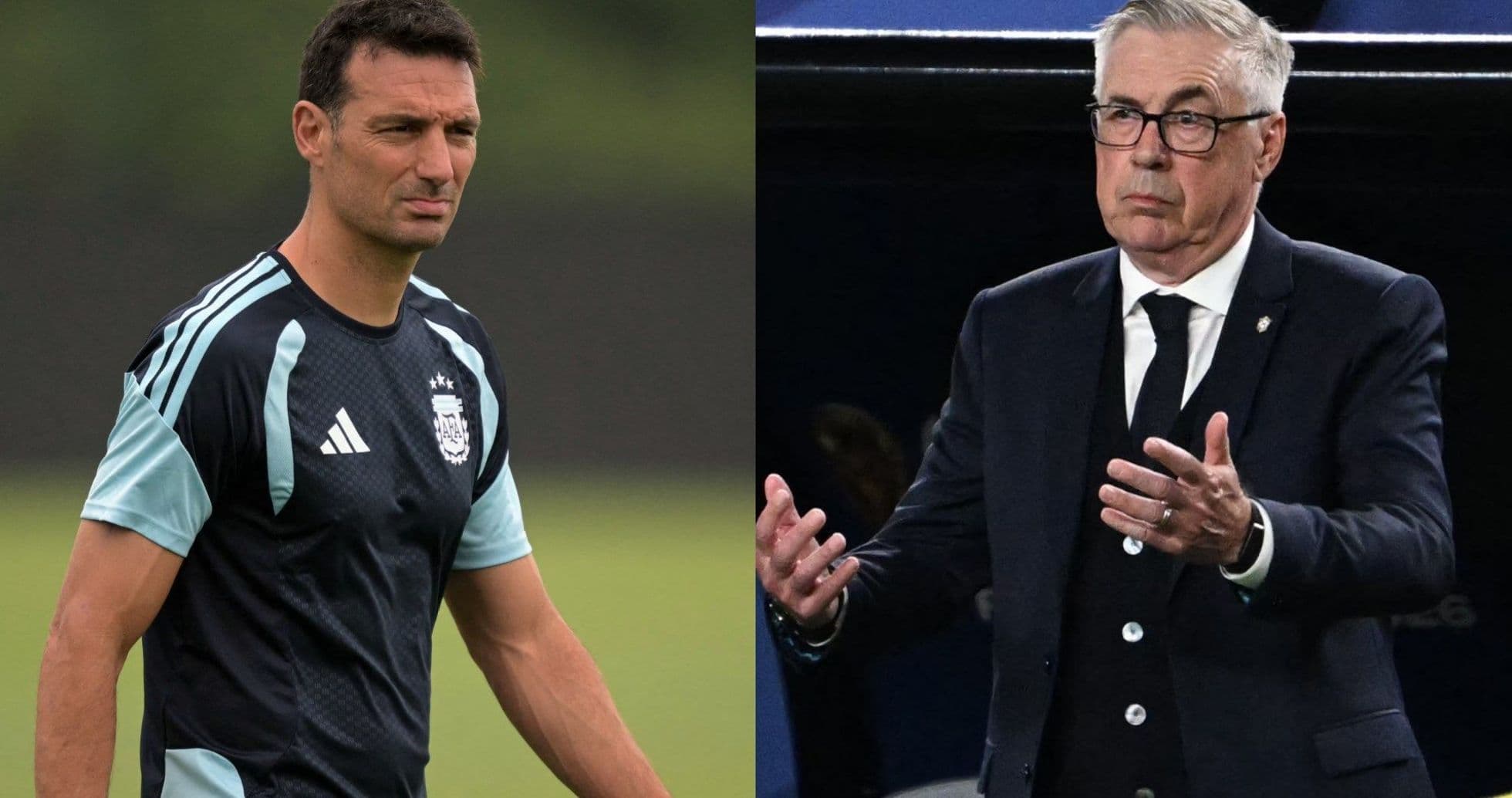
The world champions are in Dallas for their second group game, but the noise has drifted in from elsewhere. Carlo Ancelotti, speaking about Argentina’s approach, had noted that they are not a side built on relentless, high-octane pressing. In today’s numbers-obsessed football culture, that single observation was enough to trigger a debate over Argentina’s physical output and intensity.
Scaloni refused to let it turn into a storm.
“I take it in a good way. He spoke highly of us, he didn't speak badly,” the Argentina coach said, calmly dismantling the hint of controversy. Ancelotti’s comments came in a blend of Spanish, Italian and Portuguese, and Scaloni suggested the nuance might have been lost in translation. “I understood it as a compliment and not a criticism. I'm very sure of that.”
No feud. No war of words. Just a coach using the moment to explain what his Argentina actually are.
Scaloni’s Argentina: Control over chaos
Scaloni leaned into the tactical discussion, pushing back against the modern obsession with teams sprinting themselves into the ground.
He questioned the idea that intensity can only be measured in lung-busting presses and constant harassment of defenders. For him, there is another kind of intensity: one rooted in positioning, compactness, and how a team reacts when the ball is lost.
“You have to see what is understood by intensity,” he said. “When you don't have the ball, you have to try to ensure they don't hurt you. There aren't many who press you high and man-to-man. Teams become strong in the middle of the pitch and that's where the game is being defined.”
That line cuts to the heart of Argentina’s identity under Scaloni. They can attack with three forwards. They can defend with three or five at the back. The shape is flexible; the principle is not.
“Whether you win with three forwards or defend with three or five at the back, the reaction when losing the ball is what matters,” he added.
It is a vision built on control. Not chaos. On reading the game, not just running harder than the opponent. At a major tournament, in suffocating heat, that pragmatism is not a philosophical luxury. It is survival.
A champion side, quietly evolving
While the debate rumbled around their style, Scaloni steered the conversation toward something more important for Argentina’s future: how the squad has changed since they climbed the mountain in Qatar.
Three and a half years is a lifetime in international football. Teams age. Teams fade. Complacency creeps in. Scaloni insisted his group has resisted that drift.
He highlighted the integration of younger talents like Nico Paz and Giuliano Simeone, fresh profiles who give Argentina different options from the bench, especially when the game demands more direct, vertical attacking play.
“The team is on the right track even though three and a half years have passed,” he said. “They haven't shown signs of taking their foot off the gas and that’s why they are here. There is always room for improvement and they understood the message very well.”
The calendar has not been kind. Players arrive burdened by long club seasons, their legs heavy with minutes. Scaloni acknowledged that reality without using it as a shield.
“It is very difficult for everyone to arrive at 100 per cent because of the number of games played, but all 26 players are available and ready to play.”
That last detail matters. At this stage of a tournament, a fully available squad is a weapon. Especially for a coach who values tactical flexibility as much as raw emotion.
Austria next, and no margin for error
All of this theory now meets a very real test.
Argentina’s immediate task is brutally simple: beat Austria. Both sides sit on three points in Group J, and the fixture in Dallas has the feel of a hinge game. Win, and the world champions could effectively lock up top spot in the group. Slip, and the final matchday becomes a knife-edge.
Austria have impressed so far. They are organised, energetic, and comfortable disrupting more gifted opponents. They will not grant Argentina the luxury of a slow, comfortable rhythm. This is exactly the kind of match where Scaloni’s ideas about control, transitions and reactions without the ball will be exposed to the light.
Across the bracket, Brazil have already bought themselves a little peace. Ancelotti’s side brushed aside Haiti 3-0, a result that gives them breathing room and a clear equation: they need only a draw against Scotland to secure a place in the round of 32.
Argentina do not have that cushion. Not yet.
The champions talk about intensity in their own way, on their own terms. Dallas will show whether that definition still carries them through the tightest corners of a major tournament, or whether this era of control is about to face its sternest examination.