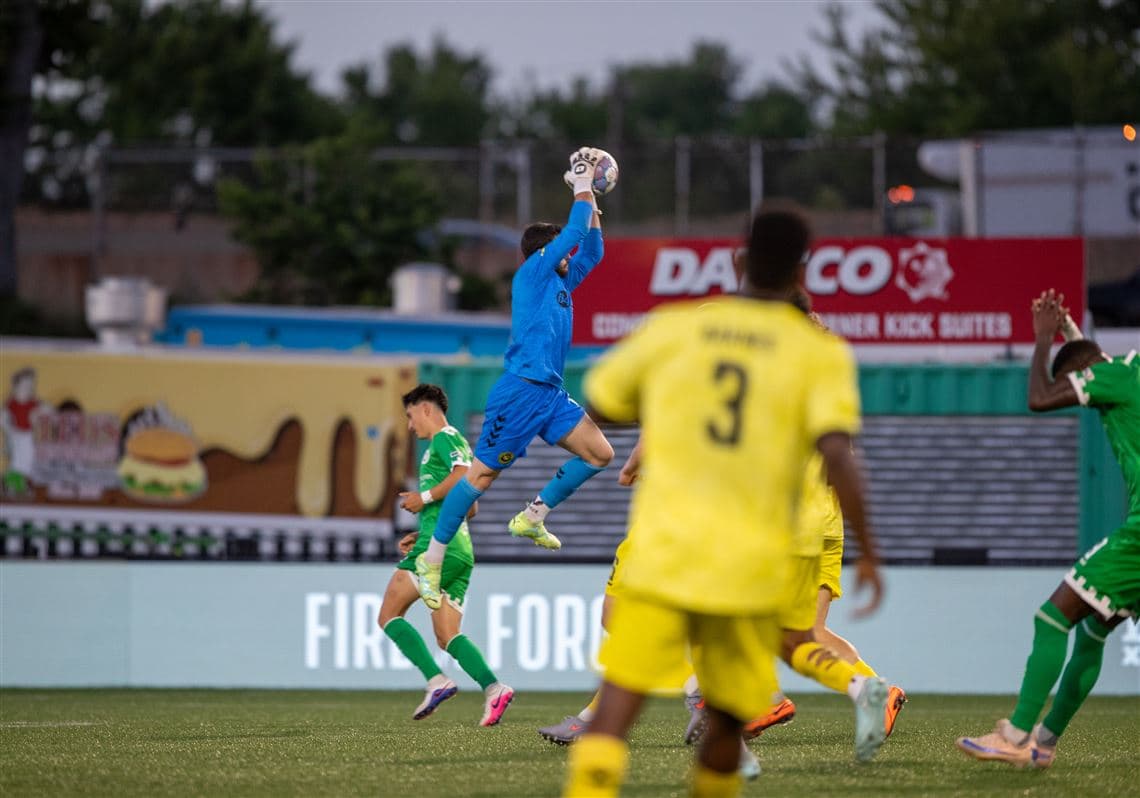
Hartford Athletic vs Pittsburgh Riverhounds: A Tactical Stalemate
On a cool night at Trinity Health Stadium, Hartford Athletic and Pittsburgh Riverhounds played out a stalemate that said as much about their seasonal identities as it did about the 0-0 on the scoreboard. This was USL Championship group-stage football with a play-off edge: seventh against fifth in the USL 1 section, both already tracking toward the “Promotion – USL Championship (Play Offs: 1/8-finals)” zone, both intent on proving their credentials as knockout operators.
Heading into this game, Hartford’s campaign had been defined by balance and narrow margins. Overall they had taken 18 points from 12 matches, with a goal difference of 0, built on 10 goals scored and 10 conceded. At home, though, they were more cautious and more fragile: only 4 goals scored and 7 conceded across 6 home fixtures, averaging 0.7 goals for and 1.2 against on their own turf. Trinity Health Stadium has been less fortress, more chessboard.
Pittsburgh arrived as a more volatile proposition. Overall, 20 points from 12, with 15 goals scored and 13 conceded for a goal difference of 2. On their travels they had split the difference between ambition and risk: 7 away goals and 9 conceded in 7 matches, averaging 1.0 for and 1.3 against. They score more freely than Hartford, but they live closer to the edge.
That clash of temperaments shaped the way the squads were set up. Brendan Burke’s Hartford XI was pragmatic and workmanlike. A. Siaha in goal provided the last line, protected by a defensive group headlined by S. Anderson, A. Diz, J. Scarlett and B. Fischer. In front of them, the spine of J. Moreira and S. Careaga suggested a double-pivot capable of both screening and recycling, with B. Coffey and E. Samadia tasked with knitting play between lines. Out wide, M. Ngalina offered direct running, while A. Williams carried the burden of leading an attack that, at home, has too often failed to ignite.
On the bench, Burke had a blend of energy and structural insurance: S. Anaku and A. Taofeek as fresh legs to stretch a game late, M. Real and B. Njie as defensive and positional cover, and E. Carvalho as the alternative in goal. It was a squad configured less for chaos and more for incremental control, in keeping with a side that had already kept 7 clean sheets overall but failed to score in 7 matches.
Across from them, Rob Vincent’s Pittsburgh side arrived with a more assertive profile. N. Campuzano anchored the back line, with a defensive unit of P. Barnes, V. Souza, O. Mikoy and L. Kelp that has been solid at home but more exposed away, as reflected in those 9 away goals conceded. The midfield triangle of E. Goldthorp, R. Mertz and D. Griffin hinted at a blend of passing range and pressing intensity, while M. Viera and C. Ahl offered creativity and half-space presence around the spearhead A. Dikwa.
Vincent’s bench underlined the Riverhounds’ flexibility: M. Sheridan in reserve between the posts; B. Etou and J. Walti to adjust the midfield’s balance; I. Osumanu and T. Amann to change the attacking angles; J. Garcia and A. Flowers-Gamboa as additional wide and forward threats. It was a squad built to chase or protect a result, even if their away numbers suggest that opening up often invites trouble.
Tactically, the “Hunter vs Shield” duel was less about a single star striker and more about systems. Pittsburgh’s overall scoring rate of 1.3 goals per game, and 1.0 on their travels, met a Hartford defense that concedes only 0.8 goals per match overall and just 0.5 away, but is more vulnerable at home at 1.2. Hartford’s shield is structurally sound over the season, yet at Trinity Health Stadium they have been susceptible to lapses, especially when stretched.
In the “Engine Room” battle, Hartford’s central pairing of Moreira and Careaga had to cope with the mobility and pressing of Mertz and Griffin. Pittsburgh’s season form line of “LWLWDLWLWWWD” tells of a side that thrives when the midfield can push high and turn games into transition battles. Hartford’s own form, “WDWDDLDWLDWD”, is that of a team comfortable in tight, controlled encounters. The goalless outcome reflected Hartford’s preference: compress the middle, deny vertical lanes into Dikwa, and accept that attacking risk will be limited.
Discipline and game rhythm were another layer. Hartford’s yellow-card distribution shows a clear pattern: 20.00% of their cautions in the 46-60 minute window, another 20.00% between 76-90, and a further 20.00% from 91-105. They also carry red-card risk late, with 50.00% of their reds between 76-90 and 50.00% between 91-105. Pittsburgh’s bookings are more evenly spread, with 18.75% of their yellows in both the 31-45 and 46-60 ranges, and another 18.75% between 76-90. This pointed toward a contest likely to grow more fractured after half-time, and especially in the final quarter-hour, as legs tired and tackles arrived a fraction late.
From an xG and probability perspective, the pre-match numbers tilted toward a low-scoring affair. Hartford’s overall scoring average of 0.8 goals per game, combined with Pittsburgh’s 1.1 goals conceded overall, suggests that the hosts’ expected output would sit below 1.0. On the other side, Pittsburgh’s 1.3 goals scored per match overall, facing a Hartford defense that allows 0.8, hinted at a marginal edge for the visitors, but not a flood of chances. The Riverhounds’ perfect penalty record this season (2 scored from 2, with 0 missed) offered one clear route to goal, yet Hartford’s season penalty tally remained at 0 taken, 0 missed, underlining how rarely their matches hinge on spot-kicks.
Following this result, the narrative is clear. Hartford remain the league’s great equilibrists: hard to beat, hard to break, but still searching for a way to turn control into consistent home goals. Pittsburgh, meanwhile, continue to wrestle with their away persona—dangerous enough to trouble anyone, yet not ruthless enough to turn marginal superiority into three points on the road.
If these two meet again in the 1/8-finals, this 0-0 will serve as a blueprint: Hartford will trust their structure and late-game discipline, even with their history of late cards, while Pittsburgh will need to find an extra layer of cutting edge to tilt the balance that their underlying attacking numbers suggest they should already own.