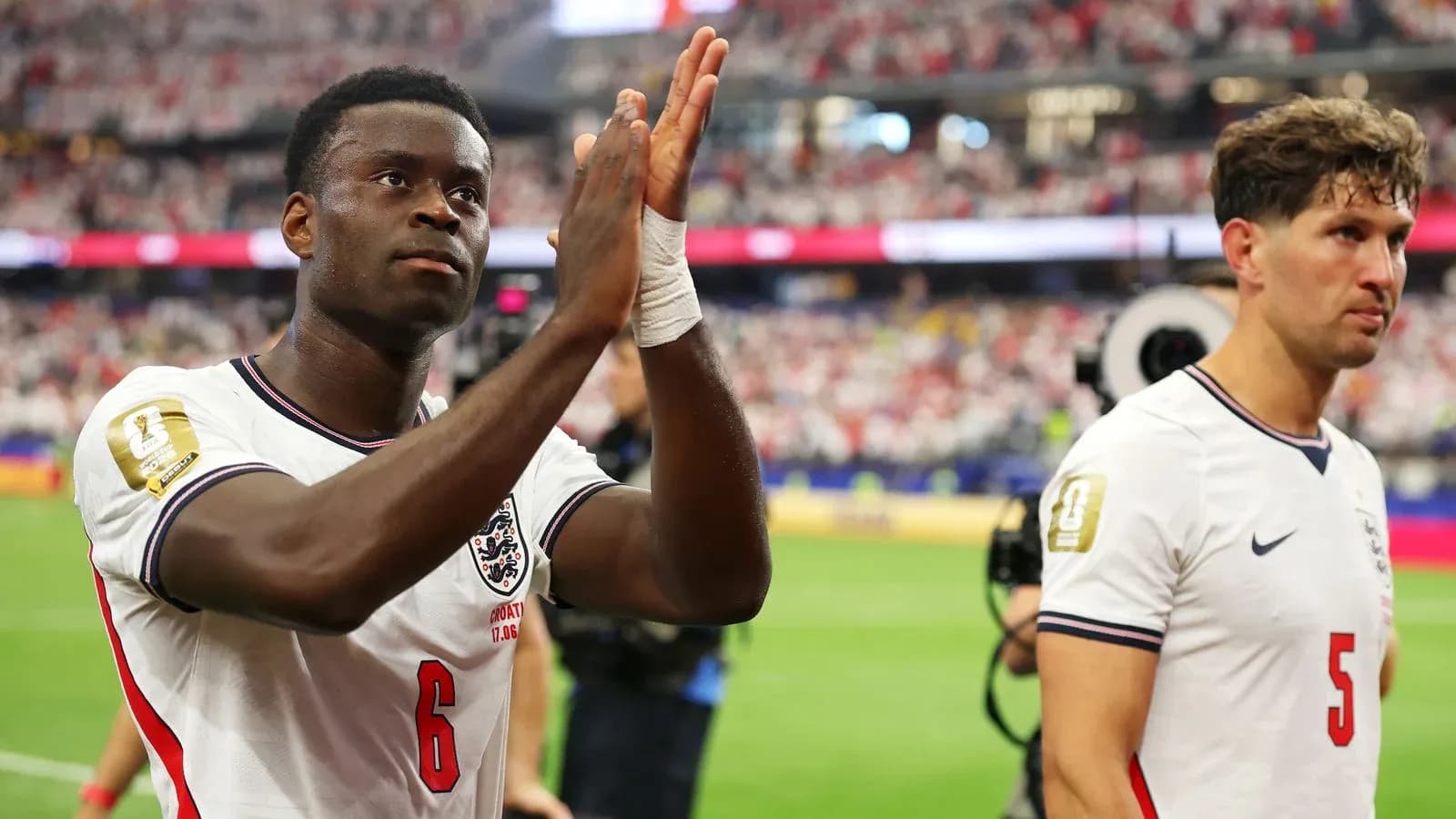
England's Defensive Dilemma: Tuchel's Tough Choices
England’s attack roared. Their defence whispered.
In the heat of Dallas, Thomas Tuchel’s side ripped through Croatia with a “full gas” second half that lit up their World Cup opener. Yet behind the fireworks, the questions that had circled before kick-off only grew louder around the centre of England’s back line.
A partnership under the microscope
Ezri Konsa and John Stones was the surprise pairing. Marc Guehi, the form defender of England’s Premier League contingent, sat on the bench. It felt like a calculated gamble. By half-time, it looked like a misstep.
Croatia’s first goal exposed the fault line. Stones went to ground too early, the kind of rash decision that elite tournament football punishes. For the second, Konsa misread a simple chipped pass, dragged out of position and punished again.
“Is Konsa and Stones a partnership that can win us the World Cup?” Gary Neville asked on ITV at the break, the question hanging in the air as replays rolled. His verdict on the midfield’s role was blunt: Declan Rice and Elliot Anderson, he said, would have to be “outstanding” to protect a back line that had looked anything but secure.
The nerves weren’t confined to the big moments. Croatia’s early high press rattled England’s build-up from deep. Stones and Konsa both coughed up possession in dangerous areas. By full-time, the passing accuracy numbers looked tidy enough on paper, but they hid a jittery first hour that better sides will seize upon.
The defensive stats told a harsher story. Stones, across 87 minutes, attempted one tackle. It didn’t come off. He made just one clearance, winning four of seven duels. Konsa fared worse: three of eight duels won, only one of five in the air, and not a single tackle or interception to his name.
Jamie Carragher didn’t sugar-coat it on Sky Sports News the next morning. “We probably lack something defensively to go all the way,” he said, pouring cold water on the optimism that England’s attacking display had generated.
The Guehi question
That’s where Marc Guehi comes in.
If Konsa and Stones looked like a pair still learning each other’s movements, Guehi has spent the past six months playing as if he’s been at the top level for years. Since swapping Crystal Palace for Manchester City in January, the 25-year-old has gone up a tier. Another FA Cup winners’ medal in May underlined his rise, but the numbers behind it are even more compelling.
From his Premier League debut for City in January to the end of the season, Guehi ranked among the division’s best both with and without the ball. He sat 10th for possession won in the defensive third, fourth for interceptions, sixth for forward passes and fifth for passes completed. Those are the figures of a defender who doesn’t just survive under pressure. He controls games from the back.
Crucially, his emergence has come at Stones’ expense. The City and England stalwart simply couldn’t get back into Pep Guardiola’s side ahead of him. Stones will leave City this summer when his contract expires, and he has been adamant he was fit and available during the run-in. Guardiola still chose Guehi.
That selection battle now echoes into the national team. If Guardiola trusts Guehi over Stones, should Tuchel do the same?
Tuchel’s dilemma
Tuchel is not blind to Stones’ qualities. He pushed to take him to this World Cup for his experience, leadership and composure in possession, even though the defender has barely played. Stones featured just five times for City in 2026 and started only five Premier League games over the past year. City lost four of those.
So did Tuchel make his first big mistake of the tournament not by picking Stones, but by where he put him?
To accommodate Konsa, who is used to operating on the right of a centre-back pairing, Stones started on the left against Croatia. Tuchel had trialled that combination against Costa Rica in the final warm-up game, but the experiment still jarred with the reality of Stones’ club career. Across the past three seasons, he has played only 371 minutes at left centre-back for City, compared with 1,151 on the right.
Guehi, by contrast, has spent much of his career on the left side, despite being right-footed. At Palace he often played on the left of a back three, and at City he has shown he can switch sides without losing rhythm. He, like Stones, can operate on either flank of a pairing, but the finer details matter at this level.
“When you have been playing on one side for a long time and you switch to the other side it can throw you off a little bit,” Guehi admitted to Sky Sports in December. His words felt like an accidental critique of what England tried in Dallas.
Reinstating Guehi on the left and shifting Stones back to his natural right side looks the cleanest route to restoring stability. It was that duo Tuchel chose for England’s first warm-up against New Zealand. It felt then like the template for this World Cup.
But that tidy solution creates a brutal problem.
What now for Konsa?
Under Tuchel, only Jordan Pickford and Harry Kane have played more minutes for England than Ezri Konsa. He has been a constant, trusted figure. Guehi has actually started more games alongside Konsa than with Stones in this era. Konsa isn’t some fringe option parachuted in for a one-off. He is a Tuchel regular.
Dropping him after one World Cup game – one England won – would be ruthless.
There is another way. Tuchel could pick all three.
Konsa has already shown he can step out to right-back in this system. Against Wales in October, he played there with Stones and Guehi in the middle. The shape suited Tuchel’s preference for a physically robust defender in that role. It also underlined a tactical truth: when given the choice, Tuchel has often favoured defensive solidity over the passing range of a more attacking full-back.
That approach has already squeezed out the likes of Trent Alexander-Arnold. It could now put Reece James under pressure.
James is, on paper, Tuchel’s first-choice right-back. He has started there five times under this manager, more than anyone else. His late cameo stepping into midfield against Croatia drew praise and showcased his versatility. But his injury record hangs over every selection meeting.
James has just started back-to-back games for England, against Costa Rica and Croatia. Before that, he hadn’t started consecutive matches for Chelsea since March. Managing his minutes early in a month-long tournament isn’t just sensible; it might be essential.
Tuchel could decide that Ghana is too big a test to rest him, with England’s qualification and Group L position still in the balance. The more pragmatic option might be to rotate against a weaker Panama side in the final group game. Yet if Tuchel wants Konsa, Stones and Guehi all on the pitch, the obvious sacrifice is James – and that decision would come now, not later.
The balance England must find
This World Cup will not be decided by how many goals England can score against open, ambitious sides like Croatia. The front line looks ready. The real examination will come when the margins tighten, when knockout games hinge on one duel, one clearance, one misjudged step.
Tuchel has the pieces to build a defence that can carry England deep into this tournament. Guehi brings form and bite. Stones offers calm and experience. Konsa adds athleticism and versatility. The challenge is no longer about who is good enough. It is about who fits where, and when Tuchel is prepared to be ruthless.
Ghana await next. So does a decision that could define England’s World Cup.