Jeremy Doku's Decision: Family First During World Cup
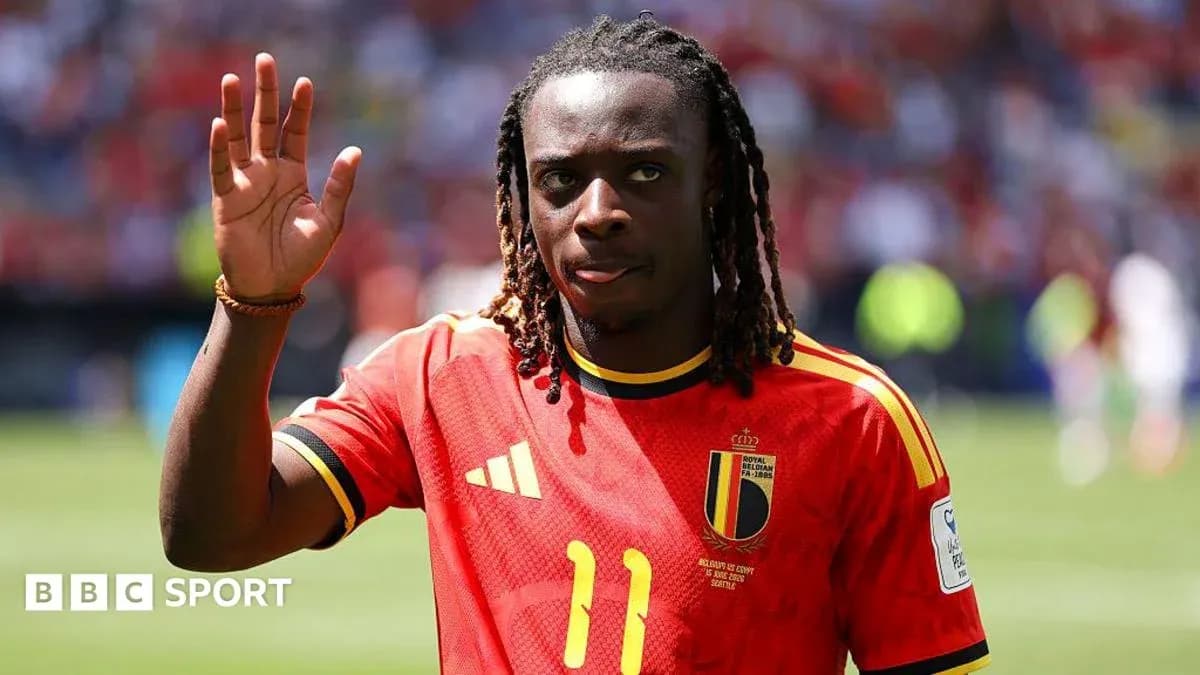
Jeremy Doku has already made his decision. Long before Belgium know whether they are still alive in this World Cup, the Manchester City winger has drawn his own line in the sand.
If his wife goes into labour, he’s leaving. No matter the stakes. No matter the stage.
“I don’t want to miss the birth of my first child,” he told Reuters. Twenty-four years old, at a World Cup, and yet crystal clear about what matters most.
That clarity has lit a fuse far beyond Belgium’s camp.
A TV rant, a swift backlash
The storm truly broke when L'Equipe presenter France Pierron described a father as “completely useless” at the birth and called the moment “disgusting”. It was a jarring, crude take on live television, and it detonated instantly.
L'Equipe moved quickly. The channel issued a statement calling her words “very far removed” from its values. Pierron apologised as well, and reports in France said she would not present her show on Monday.
By then, the damage was done – but so was the verdict from the football world. Across dressing rooms, unions and supporter bases, the reaction was almost unanimous: Doku was right to put family first.
Belgium’s winger, a looming choice
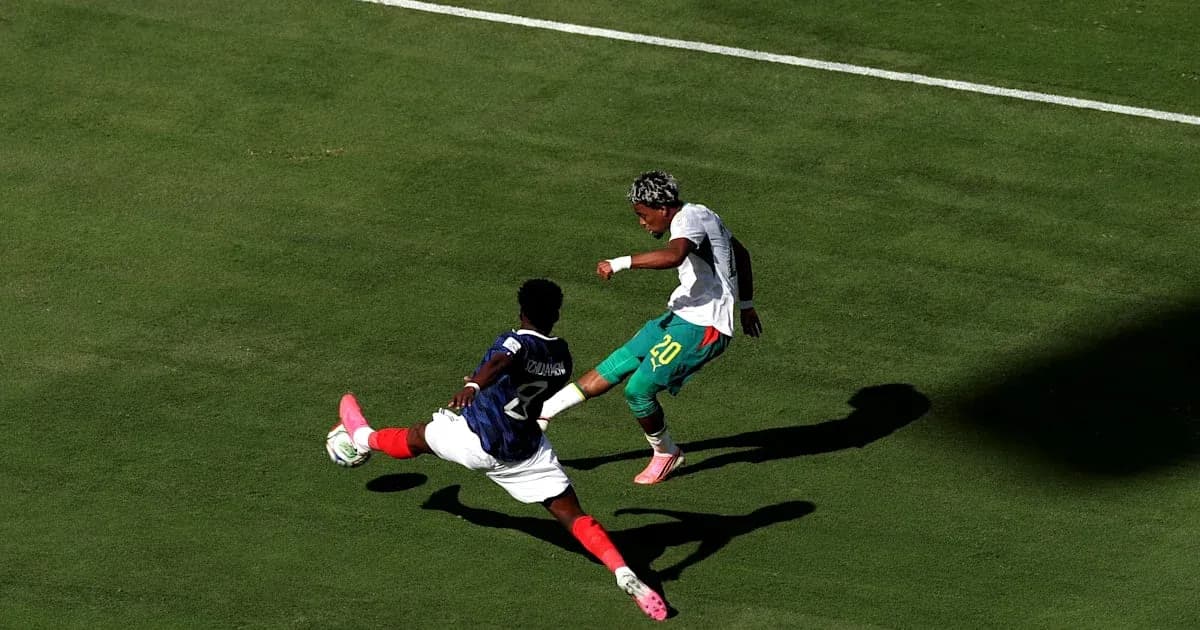
On the pitch, Doku has already played his part. He started Belgium’s World Cup with 86 minutes in the 1-1 draw against Egypt in Group G, his direct running again a key outlet. Illness then ruled him out of the 0-0 stalemate with Iran.
Off the pitch, the calendar is closing in.
His wife Shireen is due to give birth in the second week of July. If Belgium progress, that window collides almost perfectly with a potential quarter-final. The sort of game players dream of. The sort of moment that defines careers.
Doku knows it. And still, his stance hasn’t shifted.
“If you ask me what I want, my answer is that nobody wants to miss the birth of their first child,” he said. “But I also know that football involves many other considerations. I know the federation supports its players and understands their situations. We’ll see what we can do.”
The sentence hangs there: “We’ll see what we can do.” It is the sound of a modern footballer trying to reconcile two unforgiving calendars – one drawn up by Fifa, the other by life.
“It only happens once”
Among the first to back him publicly was someone who has already walked this road.
England striker Ollie Watkins, a father of two, did not bother with diplomacy when asked about the “disgusting” label.
“I think someone labelled it disgusting and I think for a start that’s not a way to label a birth,” he said. “I’ve seen what my wife had to go through and that was quite smooth sailing but I know family members and friends that haven’t had it that way.
“It only happens once – welcoming your first child to the world – and it is a blessing. There’s a lot of times where you’re away from family and friends during the season and it’s very difficult, so to miss that would be tough and I see where he’s coming from.”
There it is again: the grind of the season, the distance, the sense that football already takes enough.
Players, not gladiators
The Professional Footballers’ Association weighed in too. Their message was measured but firm.
Demands on players, they argued, should not come at the cost of “fundamental family moments”. A spokesperson stressed that players must be supported in balancing professional duties with life events, and that treating them as people – not just assets in boots – is central to a healthy working environment.
The Fatherhood Institute, an organisation devoted to backing men as active fathers and caregivers, went even further in its language.
“It makes me think of gladiators in the Colosseum,” deputy chief executive Jeremy Davies told BBC Sport. “We want these men to be these heroic figures who exist for our entertainment. They get paid lots of money but there are some things that are worth a lot more.”
The image is stark. A World Cup player, cheered and criticised in equal measure, yet still expected to step into the arena while life-changing moments unfold elsewhere.
A gap in the rulebook
Fifa’s regulations are clear and generous on one side of the game. For female footballers, maternity leave must be at least 14 weeks of paid absence, eight of those after the birth.
On paternity, the rulebook falls silent.
No minimum. No framework. Just an unspoken expectation that players and clubs will “work it out” between themselves. That gap leaves men in the game juggling late-night flights, standby cars and split loyalties.
One club, wary of the clock, once kept a car idling outside the ground so a player could sprint from the final whistle straight to the maternity ward. At a top-flight European side, a manager chose not to travel with his team at all, staying home as his wife prepared to give birth to their second child.
He watched the match on television, headset on, relaying instructions to his staff.
“I was on the earpiece to the bench and 10 minutes into the game she started getting labour pains,” said the manager, now working in the Championship. “We were 2-1 up at half-time but she was getting more into labour. I rang the hospital to say we were going to come in, but had to stop because we got a penalty.
“We scored, I knew we won the game, and we came right in. Our daughter was born two hours later.
“It’s less common with managers because they are typically older but the game doesn’t stop… you need to win the next game.”
The line could sit on any tactics board in the world. The game doesn’t stop. Life doesn’t either.
Doku is far from alone
If Doku does step away from Belgium’s camp, he will walk a path well-trodden by some of the sport’s most recognisable names.
In 2018, Fabian Delph briefly left England’s World Cup base in Russia to return home for the birth of his daughter. Pep Guardiola and the FA backed him, and Delph flew back to rejoin the squad once his family were settled.
That same year, David Silva missed two matches for Manchester City after his son was born prematurely. The club gave him space. His teammates understood instantly.
David de Gea received extended leave from Manchester United during the Covid pandemic when his partner Edurne gave birth to their daughter in 2021. Travel restrictions, quarantine rules and a young family combined to make football feel very small for a while.
Others, though, have watched their children arrive through a screen.
Just this weekend, Norway defender Leo Ostigard saw his son’s birth via FaceTime while on World Cup duty. No hospital corridor, no hand to hold – just a phone in a hotel room.
Ruben Neves lived a similar scene in January 2021. After a 1-0 defeat at Crystal Palace, the Wolves midfielder sat on the team bus and watched the birth of his third child on his phone. His wife had gone back to Portugal to be with her doctor. Neves planned to join her, but pandemic travel rules cut off the route.
These are not isolated stories. They are the reality of a sport that rarely pauses.
Not just football
The dilemma stretches far beyond the touchline.
Cricketer Jamie Smith missed England’s second Test defeat to New Zealand last week after the birth of his daughter. No controversy. No outrage. Just a player leaving a squad to be with his family.
In 2010, England’s record wicket-taker Sir James Anderson flew home between Ashes Tests in Australia to be at the birth of his second child, then returned to help reclaim the urn.
In the NBA, Anthony Edwards left at half-time of a game in 2024 so he could be present for the arrival of his daughter. One half of basketball, a lifetime of memories.
Tennis has its own example etched into the sport’s modern history. Ahead of the 2016 Australian Open, Sir Andy Murray made it plain: if his wife Kim went into labour, he would walk away from the tournament.
“I’d be way more disappointed winning the Australian Open and not being at the birth of the child,” he said then.
Not every athlete has chosen that route. In 2017, darts player Rob Cross missed the birth of his third child to secure qualification for the World Matchplay. For him, the decision tilted the other way. The stakes were professional, the opportunity too big to ignore.
A modern fault line
Strip away the noise around France Pierron’s words and what remains is a very modern fault line in elite sport.
Clubs, federations and broadcasters still treat the calendar as sacred. Matches are scheduled, tournaments fixed, broadcast slots sold. Players are expected to bend around that structure, to fit life into the gaps between kick-offs.
Doku’s stance pushes against that.
He is not asking for special treatment, not demanding a rewrite of the World Cup schedule. He is simply stating a priority: if his first child is arriving, he will be there.
The reaction to that choice – from Ollie Watkins’ empathy to the PFA’s support and the Fatherhood Institute’s gladiator analogy – suggests the dressing room has already moved on from the old codes.
The question is whether the rest of football is willing to follow.