England’s World Cup Defence: Doubts Amidst Attacking Brilliance
England’s attack has arrived at this World Cup with a roar. The defence, though, still clears its throat.
Thomas Tuchel’s side opened their campaign with a wild 4-2 win over Croatia in Arlington, Texas – a scoreline that flatters the forwards and exposes the back line in equal measure. Twice England led in the first half. Twice they were hauled back by an ageing but streetwise Croatia team before finally pulling away after the break.
The goals were flowing. So were the questions.
Attack purrs, doubts remain
On paper, England look watertight. They sailed through qualifying without conceding a single goal in eight matches, a statistic that usually screams control and cohesion.
Yet the first serious test on American soil told a different story. Croatia, hardly blessed with blistering pace these days, repeatedly found space and joy in transition. For 45 minutes, England’s back four looked exactly what it is: talented, but raw and patched together.
Gary Neville, watching on duty for Sky Sports, did not hide the unease that first half would have stirred inside the camp. He warned that the display will force Tuchel to rethink his protection of the defence and tweak his approach for the next fixtures. The message was clear: this can’t carry on against elite opposition.
And that elite opposition is coming. Quickly.
France, Spain, Argentina – all lie in wait deeper into this tournament, each armed with forwards who will not be as forgiving as Croatia’s veterans.
Experience left at home
Tuchel knew he was taking a risk before a ball was kicked. He chose to leave three of his most seasoned tournament defenders at home: Trent Alexander-Arnold of Real Madrid, and Manchester United duo Luke Shaw and Harry Maguire.
Then came another blow. Tino Livramento, a versatile option, was lost to injury before the tournament truly began, replaced by Trevoh Chalobah, who arrived with just a single cap to his name.
The numbers tell the story of the gamble. England’s nine defenders in this 26-man squad share only 191 caps between them. John Stones accounts for 90 of those on his own. Strip him out, and you are left with a group that has barely tasted international football at the sharp end.
Against Croatia, three members of the back four were feeling their way into a World Cup for the first time: the injury-hit Reece James, Ezri Konsa and 21-year-old Nico O’Reilly. All three carry obvious quality. None carry tournament scars.
That inexperience showed in the jittery opening. Positioning was off by half a yard, challenges were mistimed, and Croatia – for all their years – sensed weakness.
The Stones dilemma
Everything now circles around one central question: how does Tuchel set up his defence for the games that will define England’s tournament?
Stones is the fulcrum of that debate. The former Manchester City defender, who started only five Premier League games last season before leaving the club, remains highly valued by Tuchel for his calmness on the ball and his reading of the game. The German coach trusts him. Trust can carry serious weight in knockout football.
Yet outside the camp, the case for a different pairing grows louder.
Former England striker Chris Sutton has argued that Konsa and Marc Guehi should be the starting centre-backs, leaving Stones on the bench. His reasoning is blunt: he believes Stones no longer matches the athleticism of the two younger defenders, particularly in one-on-one duels.
“I think Konsa and Guehi have better attributes in terms of one-against-one situations than John Stones,” Sutton told the BBC, pointing to the kind of isolations England’s defenders will face against the very best forwards in the world. In those moments, recovery speed and agility matter more than experience.
Tuchel’s dilemma is as old as tournament football itself: do you lean into youth and mobility, or anchor the back line around a veteran who has seen it all?
Ghana on the horizon
There is no time for a gentle reset. Ghana await in Boston, a fixture that already carries a clear equation. If England beat the African side and Panama fail to beat Croatia, the Three Lions will top Group L and book their place in the last 32 with a game to spare.
The stakes are high, but so is the opportunity. A win would not just secure progress; it would buy Tuchel a little breathing room to fine-tune his back line before the knockouts.
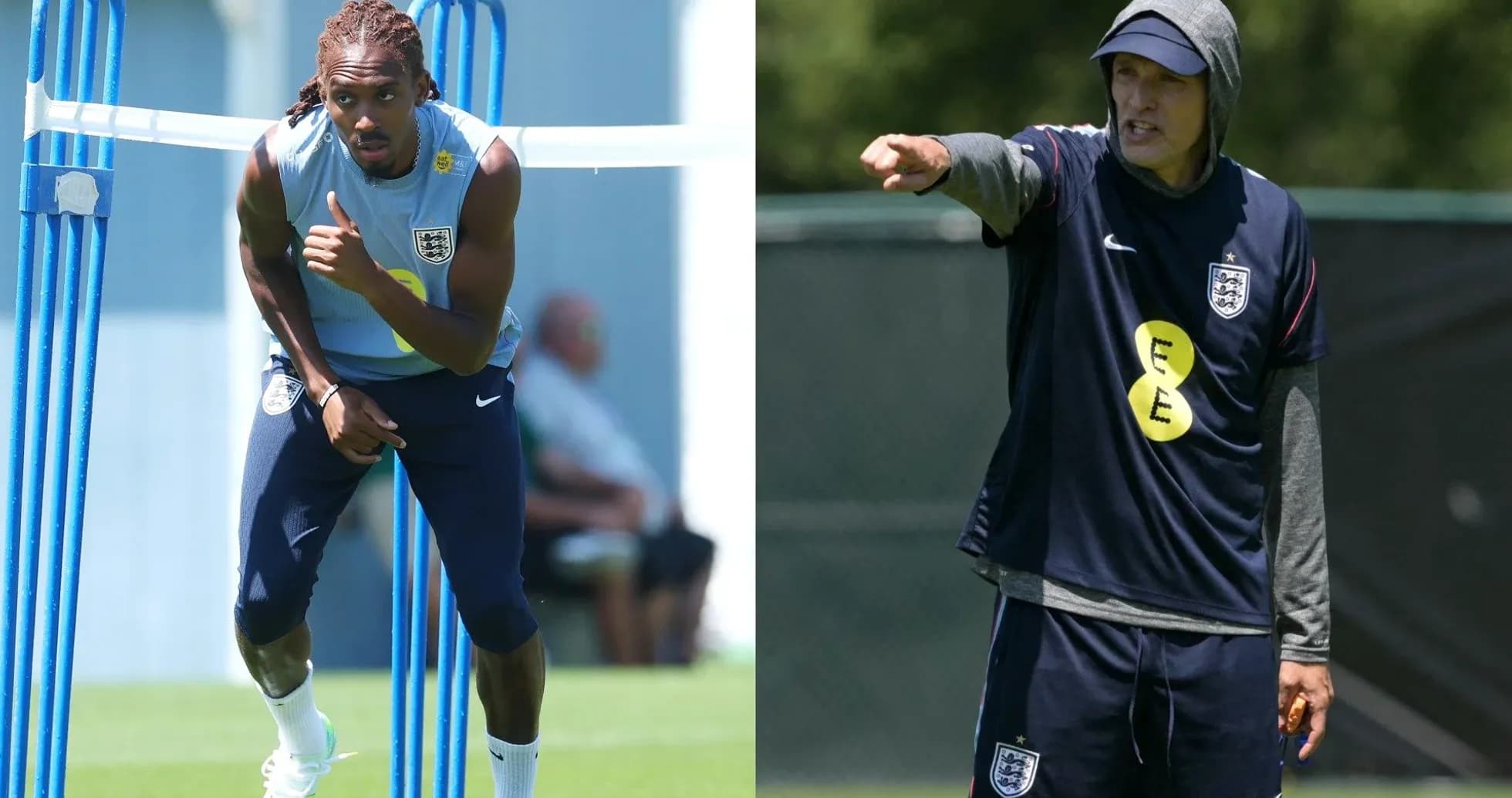
Inside the squad, the mood is far less anxious than the outside noise suggests. Ollie Watkins, speaking at England’s training base in Kansas City, brushed off the concerns around the defence. For him, the pedigree of the players involved still counts for more than one shaky half of football.
He pointed to the medals and the stages these defenders have already graced, insisting they remain “world-class players” who have “won major trophies and played at the highest level possible.” In Watkins’ eyes, the nerves that gripped England early on against Croatia were natural. Once they faded, he argued, the difference was obvious: “in the second half we absolutely blew Croatia away.”
That attacking surge is the template England want to carry into Boston. The question is whether Tuchel can find a defensive structure sturdy enough to let his forwards run free without leaving the back door open.
The World Cup rarely waits for defences to grow up. England must decide quickly: stick with the promise of Konsa and O’Reilly, lean harder on Stones’ experience, or roll the dice with a new partnership built on pure athleticism.
Ghana will provide the next verdict.