Scotland Tops Group C After Narrow Win Over Haiti
The night air over Gillette Stadium had barely settled when the Group C table snapped into focus. Following this result, Scotland walked away with a 1-0 win, three points, and top spot in the section, while Haiti were left rooted to fourth, their World Cup return marked by a narrow defeat and a reminder of the margins at this level.
I. The Big Picture – Two 4-4-2s, Two Different Stories
On paper, this was symmetry: both sides lined up in a 4-4-2, both trusted a conventional back four, a flat midfield band and a front pair. In reality, the shapes told very different tales.
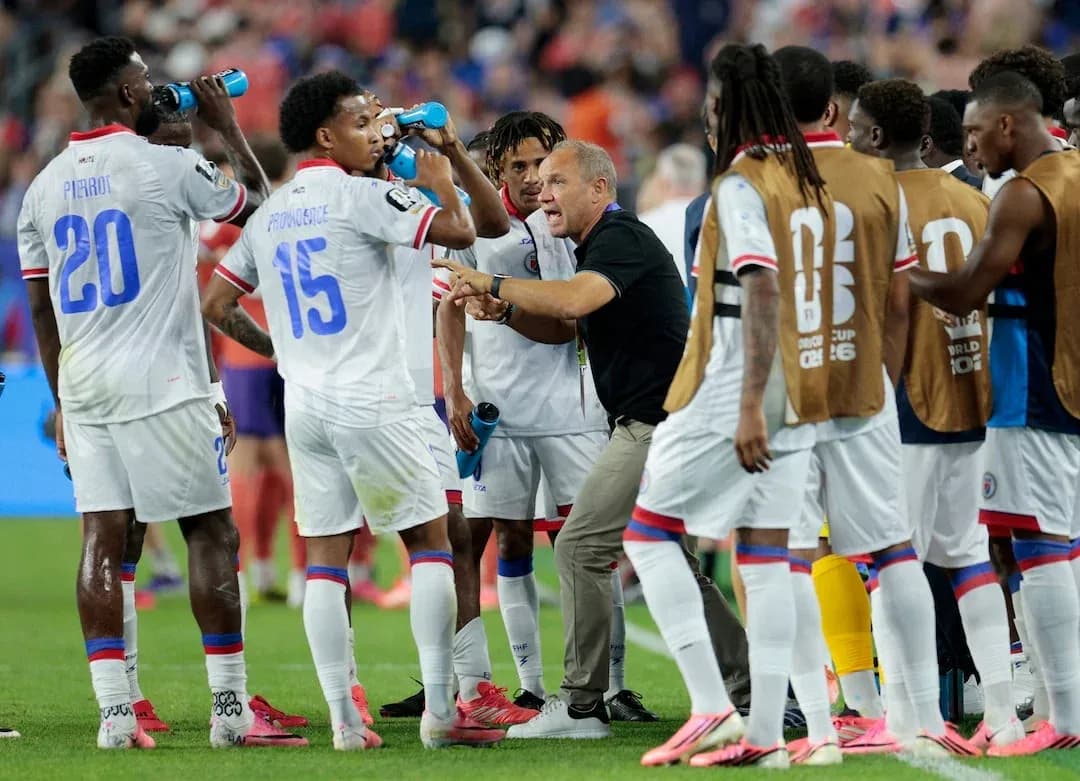
Haiti, under Sebastien Migne, leaned into resilience. With Johny Placide in goal and a back line of Carlens Arcus, Ricardo Adé, Hannes Delcroix and Martin Expérience, the intention was clear: compress space, stay compact, and allow the front two of Frantzdy Pierrot and Wilson Isidor to work off direct balls and transitions. The wide midfielders, Louicius Don Deedson and Ruben Providence, were asked to be both outlets and auxiliary full-backs, while Danley Jean Jacques and Jean-Ricner Bellegarde formed the central hinge.
Scotland, coached by Steve Clarke, mirrored the structure but not the philosophy. Angus Gunn was shielded by a back four of Aaron Hickey, Grant Hanley, Jack Hendry and Andy Robertson, with the full-backs encouraged to step high and act almost as extra midfielders in possession. Scott McTominay and Lewis Ferguson anchored the middle, John McGinn and Ben Gannon-Doak operated between the lines, and the front pairing of Lawrence Shankland and Che Adams offered contrasting profiles: Shankland as the penalty-box reference point, Adams drifting into pockets and channels.
Heading into this game, Haiti’s seasonal DNA was that of a side still feeling its way: in total this campaign they had played 1 match, losing it, with 0 goals scored and 1 conceded. At home, they had the same story: 1 played, 0 goals for, 1 against, an average of 0.0 goals scored and 1.0 conceded. Scotland arrived with a cleaner, more controlled profile: on their travels they had played 1, won 1, scored 1 and conceded 0, averaging 1.0 away goal for and 0.0 against. The 1-0 here simply extended the pattern – Haiti’s goal difference overall now -1 (0 scored, 1 conceded), Scotland’s +1 (1 scored, 0 conceded).
II. Tactical Voids and the Discipline Ledger
There were no formal absentees listed, so both coaches had the full breadth of their squads, yet the “voids” were more conceptual than personnel-based.
For Haiti, the main tactical gap was between midfield and attack. With Jean Jacques and Bellegarde tasked with screening and recycling, and the wide men pinned back by Scotland’s full-backs, Pierrot and Isidor were often left wrestling with two centre-backs without sustained support. Haiti’s statistics underline a side still searching for attacking rhythm: in total this campaign they have failed to score in their only match, and they have yet to keep a clean sheet.
Discipline also drew an early contour of their temperament. Haiti’s yellow-card profile this World Cup is concentrated in the 31-45 minute window, with 100.00% of their cautions coming just before half-time. That speaks of a team that, as pressure mounts before the interval, can be drawn into late or desperate challenges.
Scotland’s disciplinary map is more spread but equally telling. In total this campaign, they have seen yellow cards in two distinct bursts: 33.33% of their cautions arriving between 46-60 minutes, and 66.67% in the 91-105 window. The late spike hints at a side willing to foul to protect a lead or break rhythm in stoppage time. Individually, Aaron Hickey, Kenny McLean and Findlay Curtis all carry a yellow card in the tournament, with Hickey’s 75 minutes of combative full-back play marked by 2 fouls committed and 1 booking, while McLean and Curtis each came off the bench, committed a foul and were cautioned. Yet crucially, Scotland have not crossed the line into red-card territory; every red in the “Top Red Cards” feed is actually a statistical echo of those yellows, with 0 reds recorded.
III. Key Matchups – Hunter vs Shield, Engine Room vs Enforcer
The “Hunter vs Shield” duel here was more collective than individual. Haiti’s front two of Pierrot and Isidor were the nominal hunters, tasked with unsettling a Scotland defence that, heading into this game, had not conceded in their only away outing and maintained an overall average of 0.0 goals against. That solidity held. Hanley and Hendry, flanked by Hickey and Robertson, controlled the aerial zones and limited Haiti to half-chances and hopeful balls. Scotland’s clean-sheet record in total this campaign remains perfect: 1 match, 0 conceded.
On the other side, Scotland’s attacking thrust was multi-layered. Shankland’s movement between the centre-backs dragged Adé and Delcroix into awkward decisions, while Adams’ dropping movements pulled Jean Jacques and Bellegarde into dilemmas: step out and risk leaving space behind, or hold the line and allow Scotland to dictate from midfield. McTominay, who started as the deeper midfielder, was the quiet enforcer – the pivot through which Scotland recycled possession and re-pressed after turnovers.
The “Engine Room” contest between Haiti’s central duo and Scotland’s McTominay–Ferguson axis defined the rhythm. Haiti needed Jean Jacques to be the destroyer and Bellegarde to be the link, but too often both were forced into pure defensive work, collapsing close to their centre-backs. Scotland, by contrast, could rotate: McTominay sat, Ferguson alternated between pressing high and breaking lines with passes, while McGinn drifted inside to form temporary triangles. The result was territorial control, if not an avalanche of chances.
IV. Statistical Prognosis – Margins, xG Echoes and What Comes Next
We are not given explicit xG numbers, but the statistical skeleton allows a reasoned prognosis of how this match sat in expected terms. Scotland’s away profile – 1 goal scored and 0 conceded in 1 match, with an away average of 1.0 goals for and 0.0 against – suggests a side that creates enough to edge games and defends with discipline. Haiti’s home profile – 0.0 goals scored on average, 1.0 conceded – points to tight, low-scoring contests where any mistake is fatal.
The 1-0 here fits that mould. Scotland likely shaded the xG through territorial dominance, sustained pressure and more structured attacking patterns, even if they did not overwhelm Haiti. The Caribbean side, for their part, defended with courage and organisation but lacked the passing layers to turn regains into sustained attacks. Their failure to score in total this campaign is not yet a crisis – it is only 1 match – but it frames their next outing as a test of whether Pierrot, Isidor, Don Deedson and Providence can translate effort into end product.
From a defensive solidity standpoint, Scotland emerge as a quietly formidable unit. One match, one clean sheet, a back four that has already absorbed a physical test, and a midfield that can foul intelligently without tipping into chaos. Their yellow-card clusters around 46-60 and 91-105 minutes hint at a team that understands game management – tightening the screws just after half-time and again in stoppage time.
For Haiti, the prognosis is more nuanced. The structure is there: Placide as a vocal organiser, Adé and Delcroix with the frame to handle crosses, Jean Jacques screening, Bellegarde offering bursts forward. But the numbers – 0 goals for, 1 against, 0 clean sheets, and a disciplinary spike just before half-time – suggest a side that must sharpen both ends of the pitch. They will need more from their wide players in transition and more composure when the clock ticks toward the interval.
Following this result, Group C has its early hierarchy: Scotland on top with 3 points and a goal difference of +1, Haiti at the bottom with 0 points and -1. The story of this night in Boston is not of a gulf in class, but of a team that has learned how to win tight tournament games against one that is still learning how not to lose them.