Australia's World Cup Journey: From Underdogs to Contenders
Mike Grella wanted a lay‑up. He might have created a monster instead.
Days after dismissing Australia as a World Cup irrelevance, the former US international has become an unwitting mascot for a Socceroos side that has roared into the tournament and straight into the global conversation.
From punchline to fuel
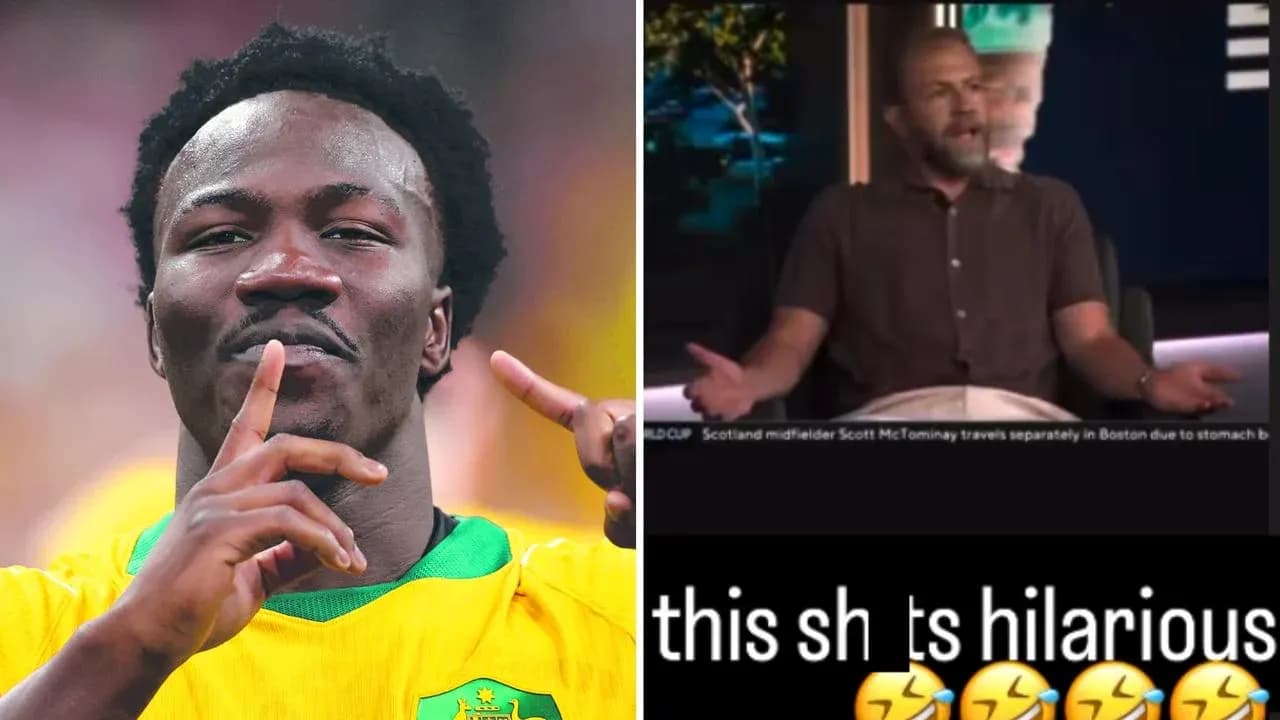
Grella’s now-viral clip has been everywhere this week. The CBS Sports Golazo pundit, asked about Australia’s prospects, didn’t bother with nuance.
“I’m not kidding though when I say this, what are they drinking over there because they have no shot of doing anything at the World Cup,” he said. “They are the weakest team in the group… There’s no shot Australia can compete with the US.”
It was supposed to be throwaway bravado. Instead, it’s become bulletin-board material for a nation.
Former AFL player Dan Gorringe reposted the clip with a blunt promise – “we’re gona f*** you up” – and Grella leaned into the back-and-forth, quote-tweeting with “Yo this sh*t’s hilarious” and “see you Friday”, dressed in crying-laughing emojis.
Nobody’s laughing in quite the same way now.
Vancouver shockwave
On Sunday in Vancouver, Australia tore up the script.
A 2-0 win over Turkiye, only the fifth World Cup victory in Socceroos history, didn’t just silence doubters. It turned heads across continents.
Nestory Irankunda, the 20-year-old Watford winger with a backstory made for prime time, struck with the kind of blistering pace and composure that jolts a tournament awake. Connor Metcalfe’s second, a thunderous finish, sealed it either side of half-time. Behind them, Patrick Beach, a goalkeeper most Australians would have walked past on the street that morning, delivered a debut so assured it instantly shifted his profile from unknown to national hero.
The performance carried a familiar Australian edge: organised, rugged, unapologetically pragmatic. But this time it came with a new, electric threat in transition. That blend has forced the football world to sit up and reassess.
Irankunda, from refugee camp to front pages
If Beach became a cult figure overnight, Irankunda became a headline.
In England, his story dominated coverage. The BBC’s Chris McKenna framed it as another step in “an incredible journey for the once refugee who, just a year ago, was learning from Harry Kane at Bayern Munich.”
The Sun pushed Australia and Irankunda to the top of their site, even above Scotland’s earlier win, with the line: “Watford star born in refugee camp scores historic World Cup goal.”
FourFourTwo went straight for the big comparison, asking: “The new Michael Owen?” after noting the eerie resemblance between Irankunda’s solo strike and Owen’s iconic goal against Argentina in 1998.
This wasn’t polite applause for a plucky outsider. It was recognition that something genuinely dangerous had arrived.
Ange’s approval and a nation’s belief
In the UK and Ireland, the Socceroos’ victory came with a distinctly Australian voice in the studio. Ange Postecoglou, on ITV’s panel, watched Irankunda’s sprint and finish with the eye of a former national coach and current Premier League manager.
“It doesn’t matter what level of football you play at, in the park or World Cup, that is fantastic speed,” he said. A “massive moment”, he called it, before pointing out the truth every breakout star dreams of hearing: a couple of weeks at a World Cup can change your life.
It may yet change Tony Popovic’s tournament as well.
The Athletic’s projections now give Australia an 85 per cent chance of escaping the group. That’s a stunning swing for a team supposedly making up the numbers. And it has not gone unnoticed in the United States, where Grella’s confidence has aged badly in record time.
US nerves and a pundit on the hook
On CBS Sports Golazo, Grella’s colleagues are already bracing for the backlash if the co-hosts slip up against Australia in Seattle on Saturday morning (5am AEST).
“Grella’s going to be hired as their motivational speaker at this point,” joked former US midfielder Benny Feilhaber. “He willed them to three points yesterday.”
Former defender Jimmy Conrad didn’t bother to dress it up. “Everybody keeps discounting Australia and that seems to be not the right thing to do,” he said. “So, thanks Grella. We appreciate that.”
Grella’s original assessment was brutal and simple.
“I look at their team and I don’t recognise any players in the team,” he said before the opener against Türkiye. “They have no shot of doing anything at the World Cup. They are the weakest team in the group.”
Now, with Australia sitting pretty and the US still to face them, those words hang over the fixture like a storm cloud.
‘Never underestimate true Australian grit’
The most detailed breakdown of Australia’s win hasn’t come from American analysts at all.
Simon Hughes, The Athletic’s senior football writer, was in Vancouver and then joined CBS Sports Golazo to explain how Popovic’s side had pulled off the upset.
“They were street wise,” he said. “Some of the darker arts in the game, they weren’t afraid to get involved in that side of it.”
In his post-match column, Hughes urged readers to “never underestimate true Australian grit” and expanded on that theme on air.
Australia, he argued, understood exactly who they were. They played to their limitations, squeezed every last drop from their strengths, and refused to be fooled by the numbers on the stats sheet.
“I think they deserved to win,” Hughes said. “The game isn’t always defined by who had the most shots and the most possession. Sometimes it can be quite misleading. I always felt like Australia had control of what was going on. Occasionally they needed the goalkeeper to step in and do his thing, but that’s what goalkeepers are there for. People forget this.”
What impressed him most, though, was the connection between team and supporters.
“I really felt in Vancouver yesterday that they really had the fans behind them. That’s a massive thing in World Cup football. A lot of nations’ fans turn up and want the team to do well, but Australia really, really believed they could effect this game and make an imprint on this tournament.
“I think they’re going to be quite difficult to stop. The US, if they underestimate them, might have a few problems.”
The world’s second team?
Scroll through social media and the pattern is obvious. Neutrals love this side.
The jokes have flown, of course. Comparisons to Arsenal’s title-winning defensive steel. Memes dubbing Popovic’s approach “Haram Ball” – the tongue-in-cheek label for ultra-defensive, “anti-football” tactics. But beneath the banter sits genuine admiration.
Fans have latched onto the contrast: granite at the back, lightning at the front. The sight of a back line that simply refuses to be bullied, paired with breakneck counters that rip up the pitch in seconds, has turned Australia into a guilty pleasure for supporters from other nations.
Comedian and football obsessive Trevor Noah captured that balance on the Men in Blazers podcast.
“Australia has giants at the back. You don’t just swing the ball in and hope for the best against Australia,” he said. “If there’s one thing the Socceroos know how to do, it’s compact their defence, make sure that nothing gets in. You score by keeping it on the floor against these boys and they didn’t pick that up.”
Then he switched to the other end of the pitch.
“Their new attack up top is completely different to what we’ve seen in years before from like the Cahill and Harry Kewell days. This was fast. It was like a lightning quick counter-attack and can I tell you, that boy Jordan Bos, number five. Yo, yo, I want to see which team he’s playing for next... that man is silky on the ball!”
That kind of talk matters. It signals that Australia are no longer just respected for effort. They’re being watched for entertainment.
A team that mirrors a country
Off the field, the Socceroos have quietly been building this image for months.
A pre-tournament video, now recirculating after the Turkiye win, shows players speaking about their backgrounds and how this squad reflects modern Australia. Different stories, different roots, one jersey. The line that has stuck: “our diversity is our strength.”
It’s more than a slogan when the squad sheet backs it up – a refugee-turned-World Cup star, a group drawn from leagues across Europe and at home, a team that looks like the country it represents.
That authenticity, married to the grit Hughes admired and the speed Postecoglou praised, is why Australia are suddenly being talked about as the feel-good team of this World Cup.
Grella called them a lay-up. Popovic’s players heard a challenge.
Now comes Seattle, the USA, and a chance for the Socceroos to turn one pundit’s punchline into a defining moment of their World Cup story.