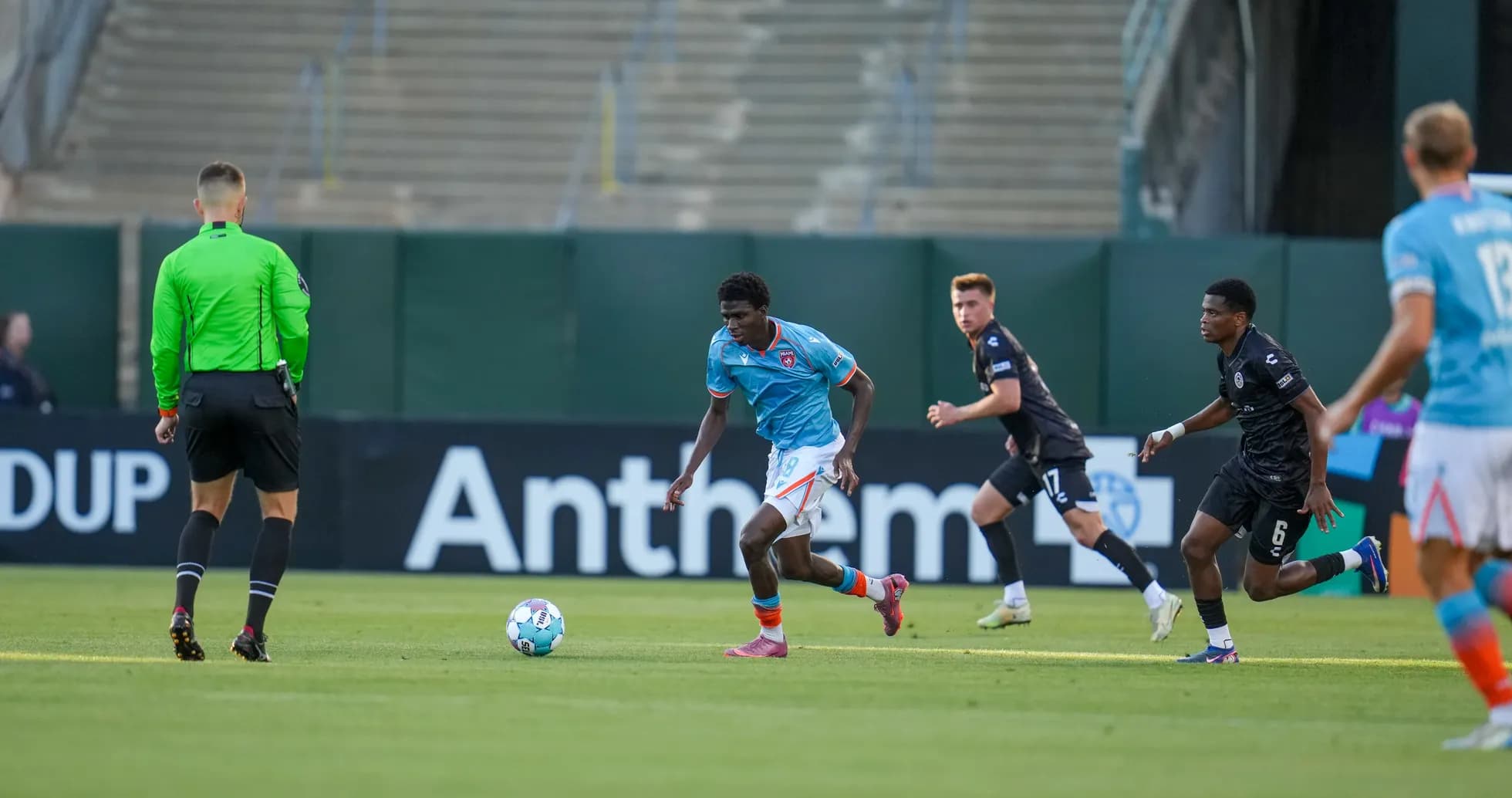
Oakland Roots and Miami FC End in Goalless Draw – A Tactical Analysis
Under the cool night lights at Laney College Football Stadium, Oakland Roots and Miami FC played out a goalless stalemate that said more about structure and caution than it did about cutting edge. Following this result, both sides remain locked on 17 points in USL 1, but their paths to that shared total could hardly be more different: Oakland sit 3rd with a positive goal difference of 2 (18 goals for, 16 against overall), while Miami occupy 8th with a goal difference of -4 (15 for, 19 against overall).
The Big Picture – Two Identities, One Scoreline
Oakland’s season-long profile is that of a balanced, slightly risk-averse contender. Overall they average 1.5 goals for and 1.3 goals against per game, with a clear split between a more conservative home approach and a looser, transition-heavy style on their travels. At home they score 1.3 and concede 1.0 on average, a profile that fits the 0-0 here: controlled, compact, and willing to take a point if the game state demands it.
Miami arrive as a contradiction. Overall they score 1.2 and concede 1.5 per match, but their away numbers are stark: on their travels they average only 0.8 goals for and 1.3 against. That away attacking bluntness was on full display in Oakland, where their build-up often stalled in the final third and the risk of over-committing seemed to weigh heavily on their decisions.
With both clubs carrying “Promotion – USL Championship (Play Offs: 1/8-finals)” status in the table, this felt less like a wild group-stage shootout and more like a playoff dress rehearsal: tight margins, few open doors, and a premium on not making the first mistake.
Tactical Voids and Discipline – Where the Edges Were Blunted
There were no officially listed absences in the data, but the tactical absences were clear. Oakland, under Ryan Martin, leaned into a cautious spine: K. McIntosh in goal behind a back line anchored by K. Tingey, M. Edwards and J. Bravo, with J. de Vicente giving them balance on the flank. In midfield, the trio of F. Valot, T. McCabe and F. Bettache, supported by the deeper presence of B. Byaruhanga, suggested a team built to control tempo rather than overload the box.
Miami’s coach Gaston Maddoni mirrored that pragmatism. With F. Rodriguez in goal, the defensive structure of B. Ndiaye, D. Knutson, A. Calfo and A. Milesi sat in front of him, while Tulu and R. Tori offered a double-screen that often dropped into a back six without the ball. Ahead of them, T. Musto, R. Da Costa, J. Sonora and M. Diallo had license to rotate, but always with one eye on rest defence.
Season-long disciplinary patterns framed how both benches managed the risk. Heading into this game, Oakland’s yellow card profile showed a clear spike between 61-75 minutes (26.32%) and a sustained aggression from 46-60 (21.05%) and 76-90 (21.05%), with late red cards split between 46-60 and 91-105 (50.00% each). Miami, by contrast, are serial late-booking candidates: 61-75 and 76-90 each account for 25.64% of their yellow cards, and their only red has arrived in the 61-75 window (100.00% in that range).
Those numbers explain the second-half tone: both teams compressed their lines, wary that a mistimed tackle in the decisive third quarter-hour could tilt a finely balanced contest. Neither side has missed a penalty this season (each is 1 from 1, 100.00%), but neither created the sort of high-leverage moment that would test that composure.
Key Matchups – Hunter vs Shield, Engine Room vs Enforcer
Without explicit top-scorer data, the “Hunter vs Shield” duel becomes collective rather than individual. Oakland’s home attack, averaging 1.3 goals, ran into a Miami away defence that, despite the club’s negative goal difference, has been relatively solid at 1.3 goals conceded per away match. The front trio of W. Prentice and B. Jacquesson working around the lines, supported by Bettache from midfield, repeatedly probed the channels between Miami’s full-backs and centre-backs. But the away back four, screened by Tulu and R. Tori, held their shape and kept the box clean.
On the other side, Miami’s away attack – only 6 goals in 8 away matches – faced an Oakland home unit that concedes just 1.0 per game. McIntosh’s command of his area, plus the positional discipline of Tingey and Edwards, meant that even when J. Sonora drifted between the lines or M. Diallo tried to stretch the defence, clear chances were rare. This was the “Shield” winning out on both sides.
The “Engine Room” battle was perhaps the game’s defining tactical story. Oakland’s central quartet of Valot, McCabe, Bettache and Byaruhanga looked to use short passing and controlled circulation to drag Miami’s block around. Miami responded with the physical presence of Tulu and the positional intelligence of R. Tori, while T. Musto and R. Da Costa stepped out selectively to press. The result was a congested central lane where second balls and micro-presses decided territory more than they decided chances.
Statistical Prognosis – What This 0-0 Really Says
Without match-specific xG, the season-long numbers provide the best lens. Oakland’s overall balance of 18 goals for and 16 against from 12 matches suggests a side that usually finds a way to score; failing to do so at home is notable, especially given they have only failed to score 3 times overall, with all 3 of those blanks coming at home. This result reinforces the idea that when Oakland cannot accelerate the tempo, their attack can stall.
For Miami, the draw fits their away-season narrative almost perfectly: 1 win, 4 draws and 3 losses on their travels, with only 6 goals scored. They are hard to beat, accumulate clean sheets away (4 overall), but rarely impose themselves in hostile environments.
From a predictive standpoint, this match nudges expectations in a clear direction. In a playoff-style, 1/8-final environment, Oakland will likely be the side trying to raise the game’s tempo, leaning on their overall 1.5 goals-per-match attacking baseline. Miami, with their away caution and late-card profile, look built for survival: absorb, frustrate, and hope that a single moment – a set piece, a counter, a penalty they have yet to miss – swings the tie.
Following this result, the story is not of two flawed attacks, but of two defensive structures rehearsing for knockout football, where 0-0 after 90 minutes is not failure but a strategic waypoint.