Saudi Arabia vs Uruguay: Match Report and Tactical Analysis
Saudi Arabia 1-1 Uruguay at Hard Rock Stadium leaves Group H finely balanced, with both sides moving to 2 points, 2 goals for and 2 against, and an unchanged goal difference of 0 after two draws each. Uruguay remain top of the group on rank, while Saudi Arabia stay second, both still firmly on course for the Round of 32 but without yet taking full control of qualification.
Match Report
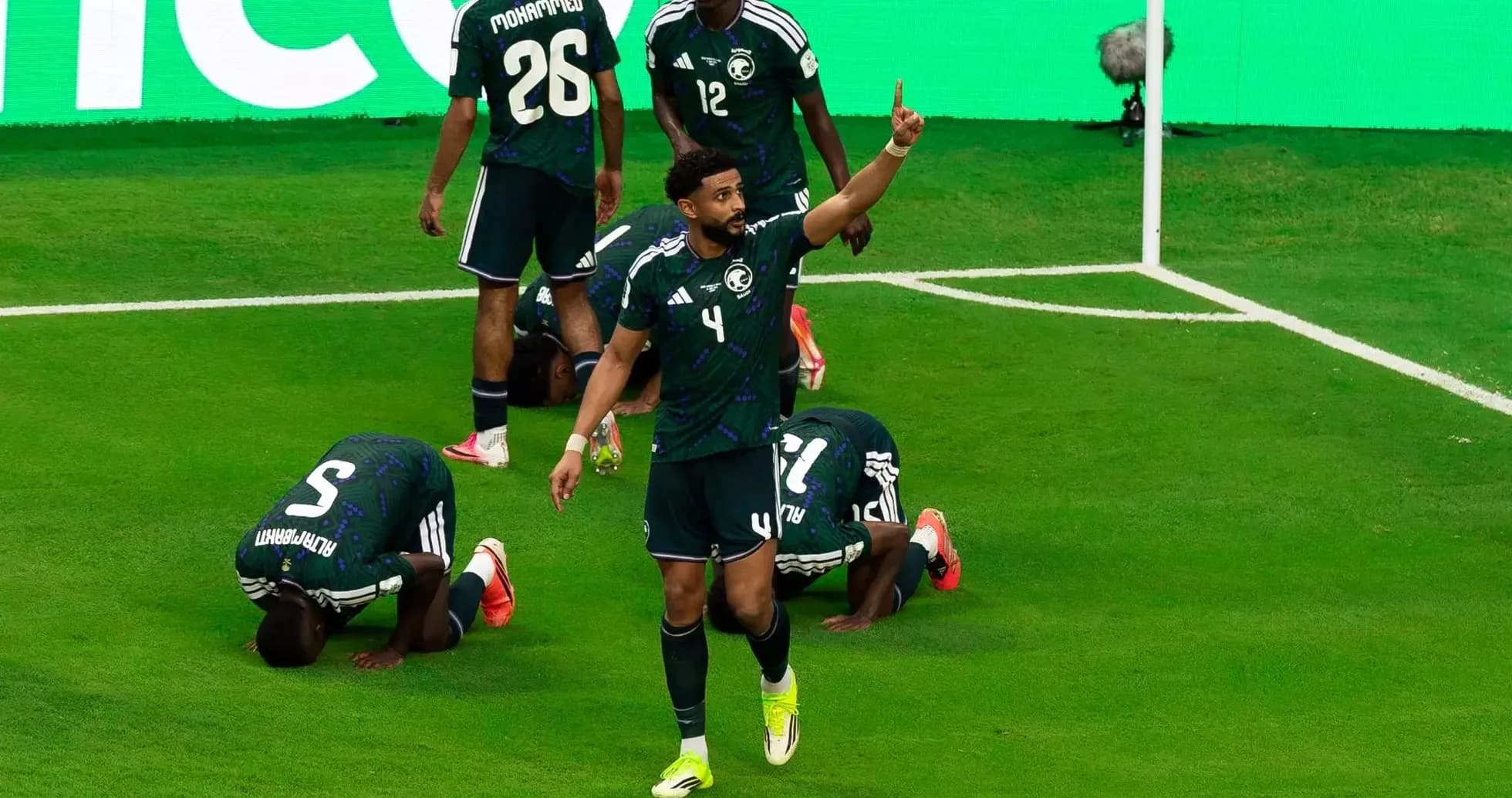
The game’s first major twist arrived on 41', when Saudi Arabia struck against the run of play. Saudi Arabia goal — A. Al Amri (unassisted) drove home from close range after a second-phase situation, giving the hosts a 1-0 lead despite Uruguay’s territorial dominance.
Just three minutes later, the goalscorer was in the book. On 44', A. Al Amri (Saudi Arabia) — yellow card (Roughing) was penalised for a robust challenge, underlining the intensity with which Saudi Arabia were defending their narrow advantage.
Uruguay reacted at half-time with a double change aimed at increasing width and energy. On 46', J. Sanabria replaced M. Vina (Uruguay), pushing a more attacking profile into the left side. In the same minute, A. Canobbio replaced D. Nunez (Uruguay), a like-for-like forward switch designed to refresh the front line and increase pressing intensity.
Saudi Arabia’s first substitution came on 63', as they sought fresh legs in attack to help relieve pressure. N. Al Dawsari replaced M. Al Juwayr (Saudi Arabia), adding work rate and ball-carrying ability from midfield to support counter-attacks.
Uruguay then adjusted their midfield structure on 72', looking for more line-breaking passing and creativity. N. de la Cruz replaced M. Ugarte (Uruguay), sacrificing a pure holding midfielder for a more progressive option to help unlock Saudi Arabia’s deep block.
The pressure finally told on 80', when Uruguay found their equaliser. Uruguay goal — M. Araujo (unassisted) arrived from the left side, cutting in and finishing a move that reflected Uruguay’s sustained attacking volume rather than a single moment of brilliance, bringing the score to 1-1.
Almost immediately after scoring, Uruguay managed the winger’s workload. On 81', B. Rodriguez replaced M. Araujo (Uruguay), maintaining width and dribbling threat on the flank while keeping intensity high in the closing stages.
Saudi Arabia responded on 81' with a second change to stabilise the right side and maintain defensive organisation. N. Boushal replaced M. Abu Al Shamat (Saudi Arabia), reinforcing the flank that had been under consistent pressure from Uruguay’s rotations.
As the game moved into the final minutes, Uruguay made a late attacking adjustment on 90', introducing a more traditional striker profile. R. Aguirre replaced F. Vinas (Uruguay), offering a penalty-box target for crosses and direct balls as they chased a winner.
Saudi Arabia used stoppage time to refresh their back line and centre-forward, aiming to see out the draw while retaining an outlet. On 90+3', A. Lajami replaced S. Abdulhamid (Saudi Arabia), adding fresh legs in defence. In the same minute, A. Al Hamdan replaced M. Al Harbi (Saudi Arabia), a like-for-like defensive change to preserve structure on the left. Also on 90+3', A. Hejji replaced F. Al Buraikan (Saudi Arabia), rotating the central attacking option to help press and hold the ball in the final seconds.
Fixture Statistics & Tactical Audit
- xG: Saudi Arabia 0.99 vs 1.48 Uruguay
- Possession: Saudi Arabia 35% vs 65% Uruguay
- Shots on Target: Saudi Arabia 3 vs 9 Uruguay
- Goalkeeper Saves: Saudi Arabia 8 vs 2 Uruguay
- Blocked Shots: Saudi Arabia 1 vs 5 Uruguay
The 1-1 scoreline broadly reflects the balance of chances, but the underlying numbers show a territorially dominant Uruguay (65% possession, 24 total shots) against a compact, low-block Saudi Arabia side that prioritised efficiency (3 shots on target from 7 attempts, xG 0.99). Uruguay’s higher xG of 1.48 and nine shots on target suggest they were more consistently dangerous, but Saudi Arabia’s defensive structure and the eight saves from Mohammed Al-Owais limited them largely to volume rather than clear-cut opportunities. Uruguay’s five blocked shots further underline how often Saudi Arabia got bodies in the way, turning what could have been a decisive statistical superiority into only a single goal.
Standings Update & Seasonal Impact
With the draw, Saudi Arabia move to 2 points from two matches, with new totals of 2 goals scored, 2 conceded and a goal difference of 0, keeping them second in Group H and still in the Round of 32 qualification zone described in the standings. Uruguay also advance to 2 points, now on 2 goals for, 2 against and a goal difference of 0, maintaining top spot in the group by rank. The result preserves a tight gap between the top two, setting up a decisive final round where both remain in control of their own path to the knockout phase but have left the door open for group rivals to apply pressure.
Lineups & Personnel
Saudi Arabia Starting XI
- GK: Mohammed Al-Owais
- DF: Moteb Al-Harbi, Hassan Altambakti, Abdulelah Al-Amri, Saud Abdulhamid
- MF: Salem Al-Dawsari, Abdullah Al-Khaibari, Mohamed Kanno, Mohammed Abu Al-Shamat
- FW: Musab Al Juwayr, Firas Al-Buraikan
Uruguay Starting XI
- GK: Fernando Muslera
- DF: Matías Viña, Mathías Olivera, Sebastián Cáceres, Guillermo Varela
- MF: Manuel Ugarte, Rodrigo Bentancur, Maximiliano Araújo, Federico Viñas, Federico Valverde
- FW: Darwin Núñez
Post-Match Verdict
Saudi Arabia delivered a disciplined, resilient performance built on defensive organisation and selective attacking (7 total shots, xG 0.99), maximising their limited possession with a set-piece-style goal and strong penalty-box protection (1 blocked shot, 8 saves). Uruguay were territorially dominant (65% possession, 24 shots, 10 corners) and repeatedly stretched Saudi Arabia’s block, but their finishing lacked ruthlessness relative to their 1.48 xG and nine shots on target. Tactically, Uruguay’s high-volume, wing-oriented approach eventually broke through via Maximiliano Araújo, yet the inability to convert pressure into a second goal turned a potentially commanding display into a shared point. For Saudi Arabia, the draw validates a compact game plan and keeps qualification hopes intact; for Uruguay, it underlines both the strength of their structure and the cost of not being more clinical in front of goal.