France vs Spain: A Tactical Showdown in the World Cup Semi-finals
The lights of Dallas Stadium have already dimmed on this World Cup Semi-finals clash, but the squads France and Spain sent into the Texan evening tell a vivid story of contrasting identities, converging at the sharpest end of the tournament.
I. The Big Picture – Two Perfect Machines, One Breaks
Heading into this game, both sides had carved near-perfect paths through the World Cup. France arrived as a ruthless, front-foot machine: 7 fixtures in total, 6 wins and just 1 defeat, with 16 goals scored overall and only 4 conceded. At home venues they had averaged 2.2 goals for and 0.6 against, while on their travels they were even more explosive, averaging 2.5 goals for and 0.5 against. A goal difference of 12 overall (16 scored, 4 conceded) underpinned their status as group winners and a side that had largely blown opponents away.
Spain, though, were the one team whose numbers whispered “unbreakable”. Across 7 fixtures in total they had not lost once, with 6 wins, 1 draw, and a defensive record bordering on surreal: just 1 goal conceded overall, an average of 0.1 per match, and 6 clean sheets. At home they averaged 2.3 goals for and 0.3 against; away from home they had been immaculate defensively, conceding 0.0 while still scoring 1.3 per game. If France were the tournament’s most devastating attack, Spain were its most watertight structure.
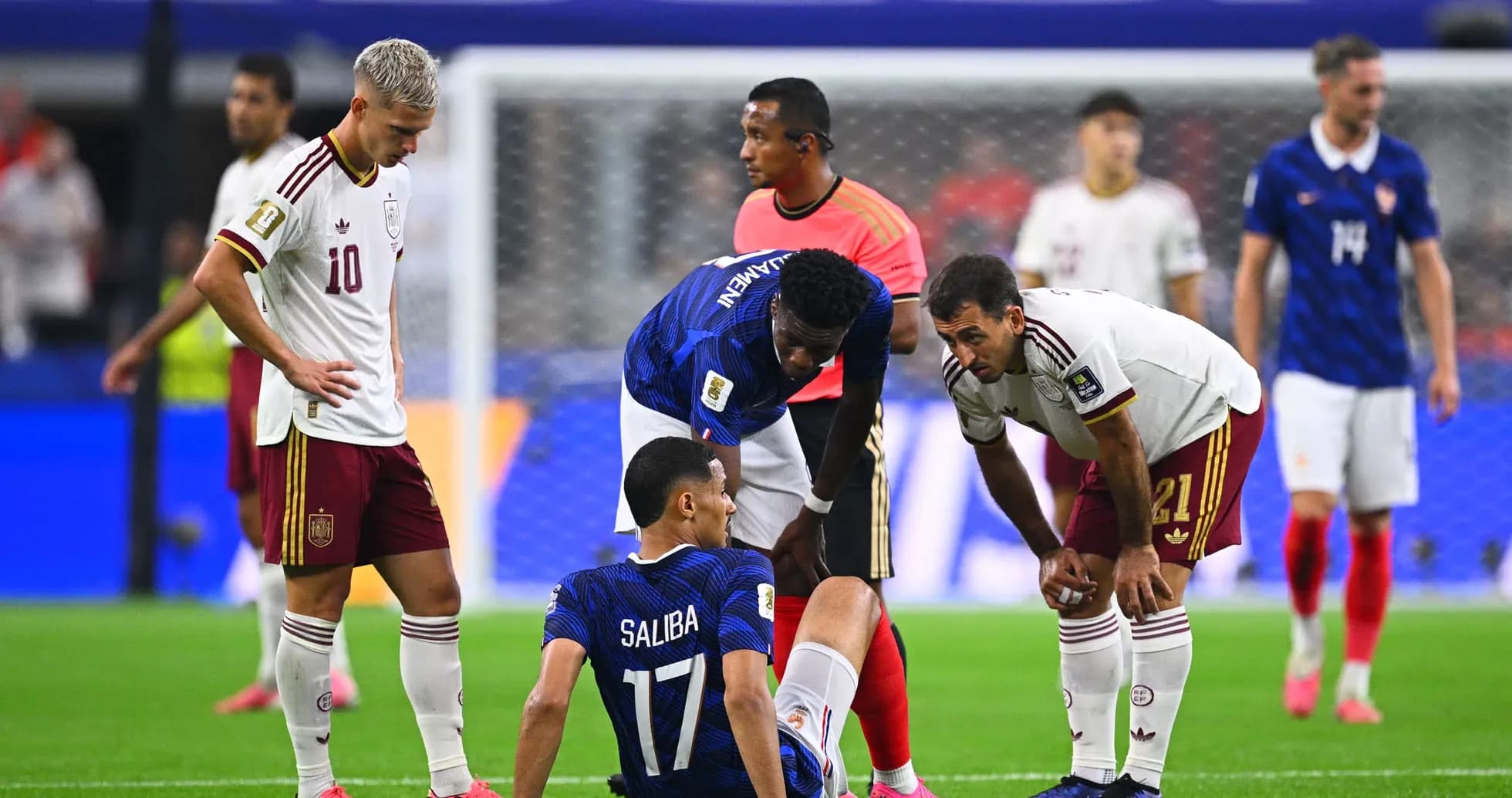
In Arlington, those identities met: France in their familiar 4-2-3-1 under D. Deschamps, Spain in Luis de la Fuente’s 4-1-2-3, a shape that has become the framework for their renewed dominance. The final scoreline – France 0–2 Spain – felt like the statistical collision made flesh: the only defence capable of suffocating France’s firepower did exactly that.
II. Tactical Voids – Where the Game Tilted
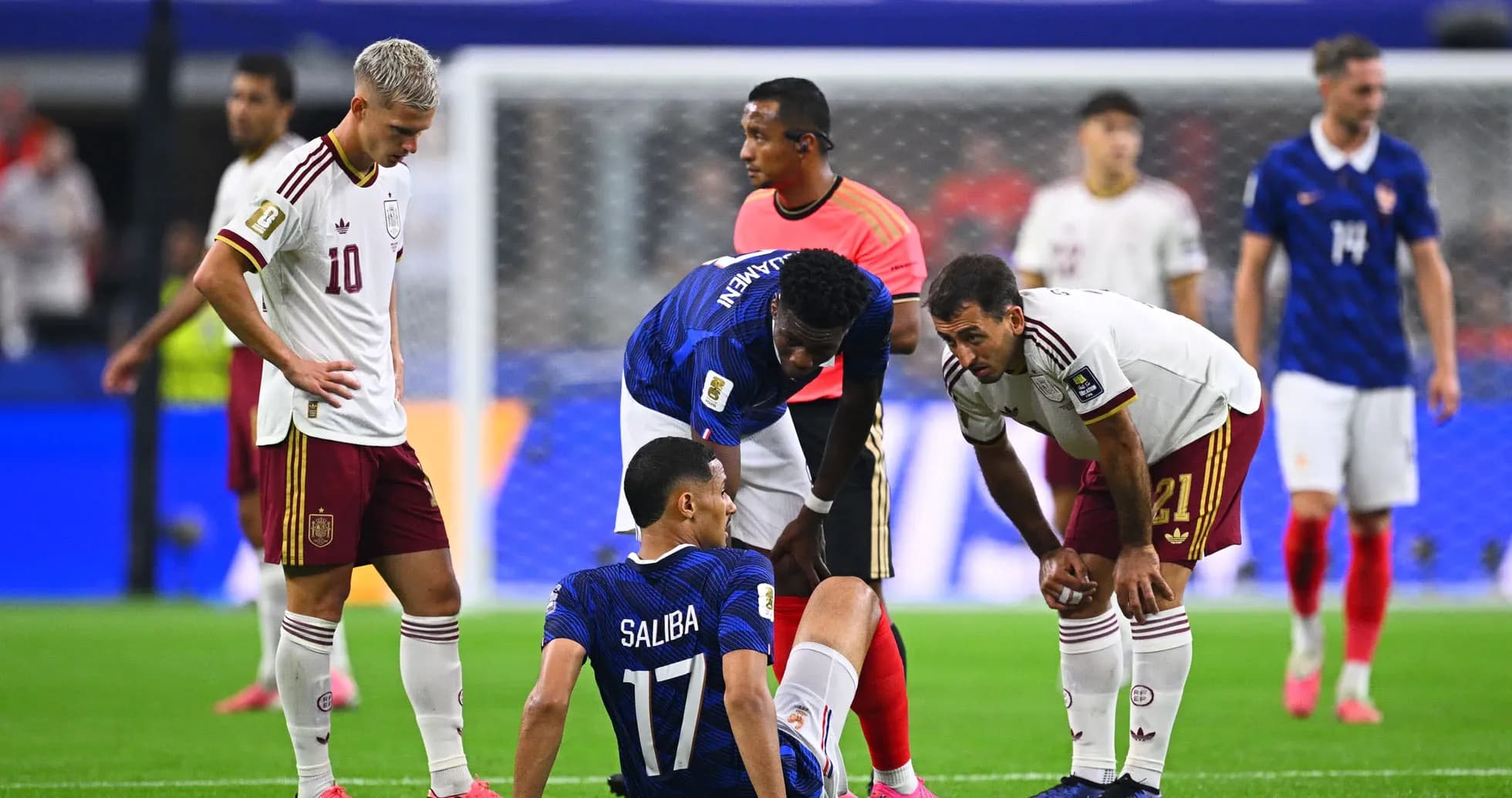
For France, the XI was as aggressive as the numbers suggested. Mike Maignan anchored the side behind a back four of Jules Koundé, Dayot Upamecano, William Saliba and Lucas Digne. In front of them, Aurélien Tchouaméni and Adrien Rabiot formed a double pivot designed to screen transitions and launch quick outlets into an attacking line of Ousmane Dembélé, Michael Olise, Bradley Barcola and Kylian Mbappé.
This was not a cautious France. Across the tournament, they had used the 4-2-3-1 in all 7 fixtures, scoring 16 and conceding just 4. But there was a subtle void: their disciplinary profile hinted at late-game nerves. France’s yellow cards had clustered late, with 33.33% arriving between 76–90 minutes and another 16.67% in the 91–105 window. In a tight semi-final, that tendency to become stretched and anxious late on risked opening small cracks for a patient opponent.
Spain’s line-up, by contrast, was all about control. Unai Simón behind a back four of Pedro Porro, Pau Cubarsí Paredes, Aymeric Laporte and Marc Cucurella; Rodri as the single pivot, with Dani Olmo and Fabián Ruiz as dual interiors; and a fluid front three of Lamine Yamal, Mikel Oyarzabal and Álex Baena. This was the same structural logic that had delivered 13 goals overall and conceded just 1, with Spain keeping 6 clean sheets.
There were no obvious absences listed, no enforced tactical compromises. Instead, the “void” in this semi-final came from France’s inability to bend Spain’s defensive block out of shape. France had failed to score in only 1 match overall before this; Spain had conceded in just 1. The semi-final became the rare scenario where France’s attacking rhythm simply never found its usual gears.
III. Key Matchups – Hunter vs Shield, Engine Room vs Engine Room
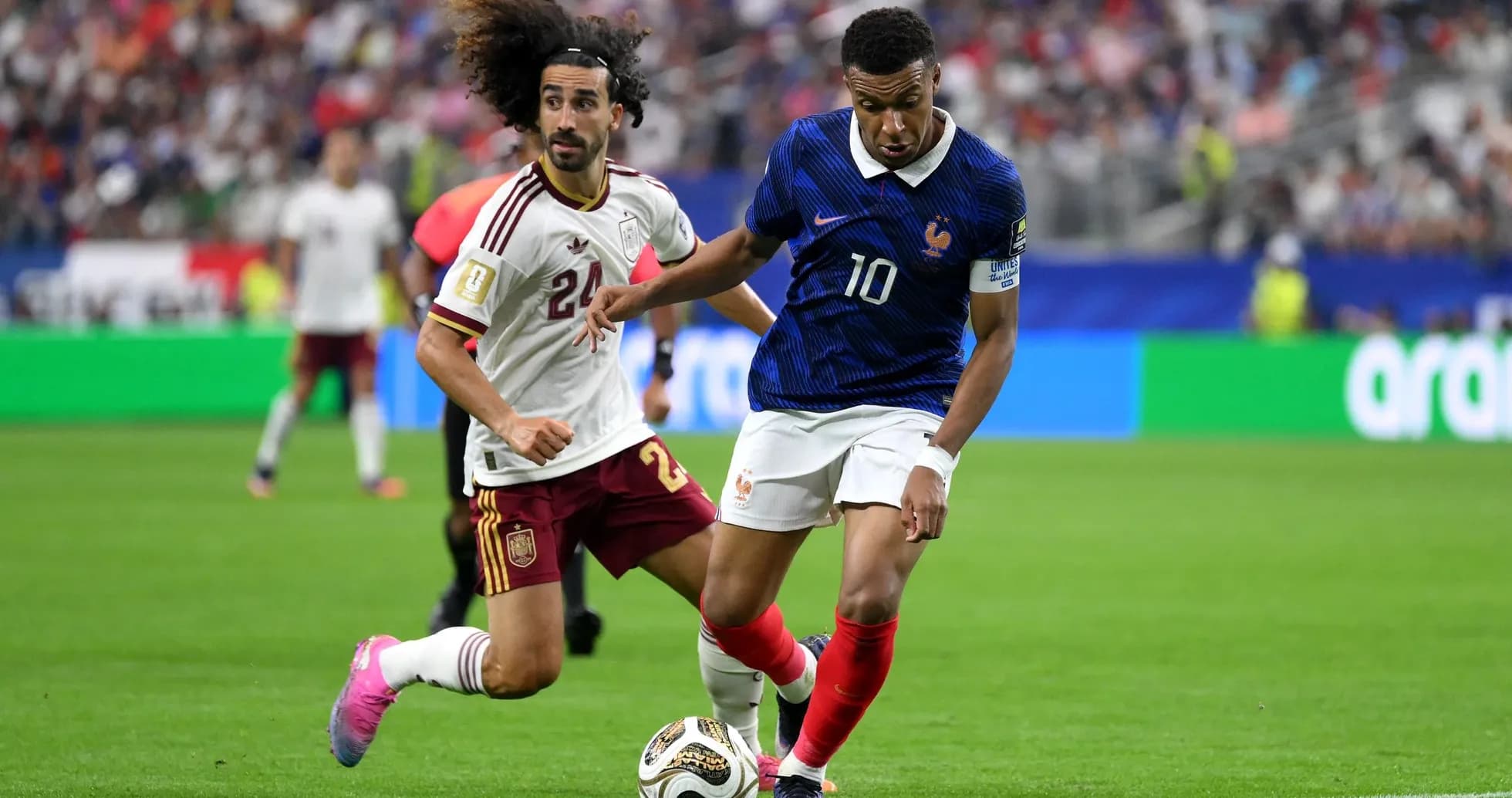
The headline duel was always going to be Mbappé against Spain’s defensive wall. Mbappé arrived as the tournament’s most devastating finisher: 8 goals and 3 assists in 7 appearances, with 30 shots (19 on target) and a rating of 7.96. He had already won and scored a penalty, but crucially had also missed one – France’s penalty record overall stood at 2 awarded, 1 scored and 1 missed, a 50.00% conversion rate. Against a side that concedes almost nothing, that margin for error shrinks to zero.
Spain’s answer was collective rather than individual. Laporte and Cubarsí Paredes formed a central pairing comfortable defending large spaces, while Rodri dropped into the back line when needed, effectively creating a back three in buildup and a reinforced central block out of possession. That triangle was built to deny Mbappé the vertical lanes he thrives on, and to track the half-space movements of Dembélé and Barcola.
On France’s right, Dembélé – 5 goals and 2 assists overall, plus 16 key passes – squared up against Cucurella, a duel of one-on-one dynamism. Yet Spain’s structure meant Dembélé was often facing not just his full-back but a shifting screen of Rodri and an inside-tracking interior. The French winger, usually a chaos agent, found his influence diluted.
The engine room battle was equally decisive. Tchouaméni and Rabiot are powerful in duels, but Spain’s trio of Rodri, Fabián Ruiz and Dani Olmo offered a different kind of dominance: angles, passing lanes, and the ability to keep the ball away from France’s pressing triggers. Michael Olise, France’s creative hub with 5 assists, 355 passes at 86% accuracy and 13 key passes, was often forced to receive with his back to goal or wide, away from the central zones where he can hurt teams most.
Up front for Spain, Oyarzabal – 5 goals and 1 assist overall – occupied Saliba and Upamecano with clever movement rather than sheer physicality. Around him, Lamine Yamal’s width and Baena’s drifting from the left created constant questions for Koundé and Digne. Spain’s attack did not need volume; it needed precision, and in this semi-final they found it twice.
IV. Statistical Prognosis – Why the Numbers Always Pointed to a Knife-Edge
Looking back through the season data, this semi-final was always likely to be decided by fine margins and defensive solidity. France’s overall average of 2.3 goals scored per game versus Spain’s 0.1 goals conceded set up a classic immovable-object-versus-irresistible-force narrative. Yet Spain’s ability to keep 6 clean sheets in 7 fixtures, including 3 on their travels, suggested they were uniquely equipped to withstand France’s surge.
France’s slight disciplinary tilt towards late yellow cards hinted at potential instability just when Spain tend to turn the screw in terms of control and game management. Add in France’s 50.00% penalty conversion, and the picture emerges of a side that creates and converts in volume, but is not flawless in the single, decisive moment.
Following this result, the story of the semi-final can be read as the triumph of structure over spectacle. Spain’s 4-1-2-3, anchored by Rodri and protected by an almost perfect defensive record, absorbed and then nullified the most explosive attack of the tournament. France’s stars – Mbappé, Dembélé, Olise – were reduced from headline acts to frustrated soloists.
In the end, the numbers had been warning us: in a match where one mistake could define a World Cup Semi-finals, the team that almost never makes one did what they always do. Spain advanced, France were silenced, and Dallas Stadium bore witness to a tactical victory as cold and clinical as the statistics that foretold it.