Spain vs France: Semi-Final Tactical Analysis
France and Spain mirrored each other structurally in a 4-2-3-1 at Dallas Stadium, but the semi-final was ultimately defined by Spain’s superior control of territory, timing of their pressure, and clarity in the final third. The 2-0 scoreline, built on a first-half penalty from Mikel Oyarzabal and a second-half strike by Pedro Porro, reflected a game where Spain’s possession (51%) and higher xG (1.63 to 0.3) translated into real threat, while France’s structure never quite converted into sustained, high-quality chances.
First Half
Both sides set up with double pivots, but the way they used them diverged sharply. For France, Aurélien Tchouaméni and Adrien Rabiot were primarily tasked with screening and recycling, sitting in front of the back four of Jules Koundé, Dayot Upamecano, William Saliba and Lucas Digne. Their 473 total passes with 396 accurate (84%) show France could circulate the ball, but the lack of vertical incision is underlined by just 4 shots inside the box from 10 attempts and a very low xG of 0.3. Much of France’s possession was in safer zones, moving side-to-side rather than breaking Spain’s lines.
Spain’s double pivot of Rodri and Fabián Ruiz, by contrast, was the platform for progression. Spain completed 500 passes with 428 accurate (86%), and this extra sharpness in circulation allowed them to connect more consistently with the advanced line of Lamine Yamal, Dani Olmo, Alex Baena and Mikel Oyarzabal. The balance of their shot profile – 5 shots inside the box from 10 total – and their xG of 1.63 show that they turned their slight edge in possession into significantly better shooting positions.
Out of possession, France’s 4-2-3-1 often flattened into a 4-4-1-1, with Ousmane Dembélé and Bradley Barcola (later replaced by Désiré Doué) dropping back alongside the double pivot. The intention was to funnel Spain wide and protect central spaces. However, the penalty at 22' for Spain – converted by Oyarzabal – highlighted France’s difficulty in managing Spanish rotations around the edge of the area. Spain’s front four frequently interchanged, pulling French defenders out of their zones and forcing reactive defending rather than proactive control.
Spain’s defensive game plan hinged on a well-organised mid-block that could spring into selective pressure. Their foul count (12 to France’s 11) and single yellow card for Marc Cucurella for “Foul” indicate a controlled aggression rather than reckless pressing. With only 1 corner conceded and 3 blocked shots, Spain limited France’s ability to generate chaos situations in the box. Crucially, they restricted France to just 3 shots on goal, all of which were handled by Unai Simón (Spain), who made 3 saves. That clean sheet was as much about collective structure as individual goalkeeping.
Second Half
The second half exposed France’s structural limitations even more clearly. Didier Deschamps’ substitutions were aimed at injecting energy and verticality. Maxence Lacroix (IN) came on for William Saliba (OUT) at 30', Manu Koné (IN) for Adrien Rabiot (OUT) at 46', Désiré Doué (IN) for Bradley Barcola (OUT) at 57', Theo Hernández (IN) for Lucas Digne (OUT) at 72', and Rayan Cherki (IN) for Michael Olise (OUT) also at 72'. These changes shifted France toward a more aggressive, risk-taking posture: Theo Hernández offered more overlapping thrust from left-back, Koné and Cherki more forward-facing passing and dribbling.
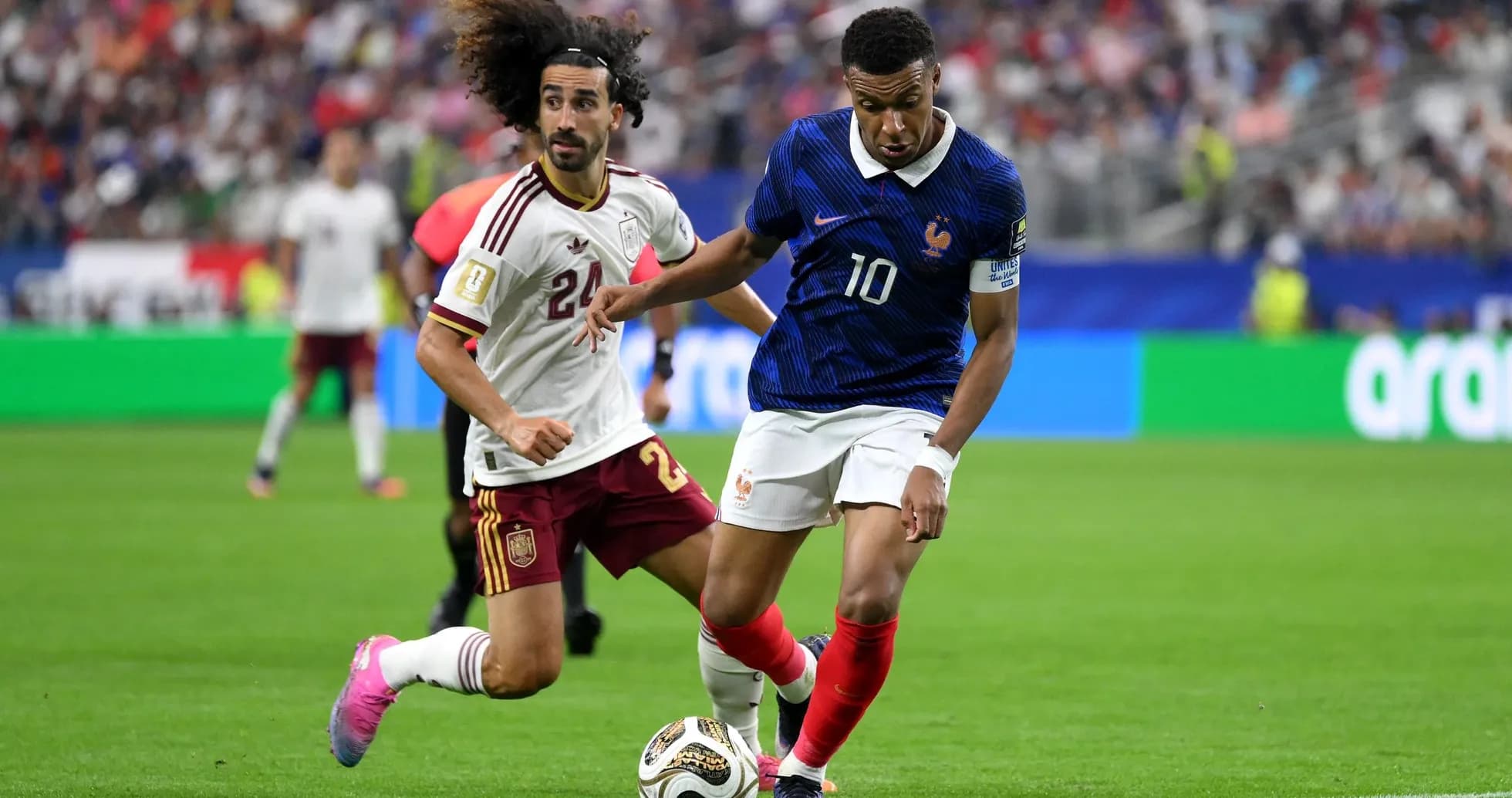
Yet the timing of Spain’s second goal at 58' – Pedro Porro finishing a move assisted by Dani Olmo – punished France just as they were trying to tilt the game. That strike, coming from Spain’s right-back stepping high, underlined Spain’s superior use of full-backs. Pedro Porro and Marc Cucurella alternated between staying in the line of four and inverting inside, helping Rodri create overloads in midfield. France’s wingers were repeatedly forced into deep defensive roles, blunting their counter-attacking threat.
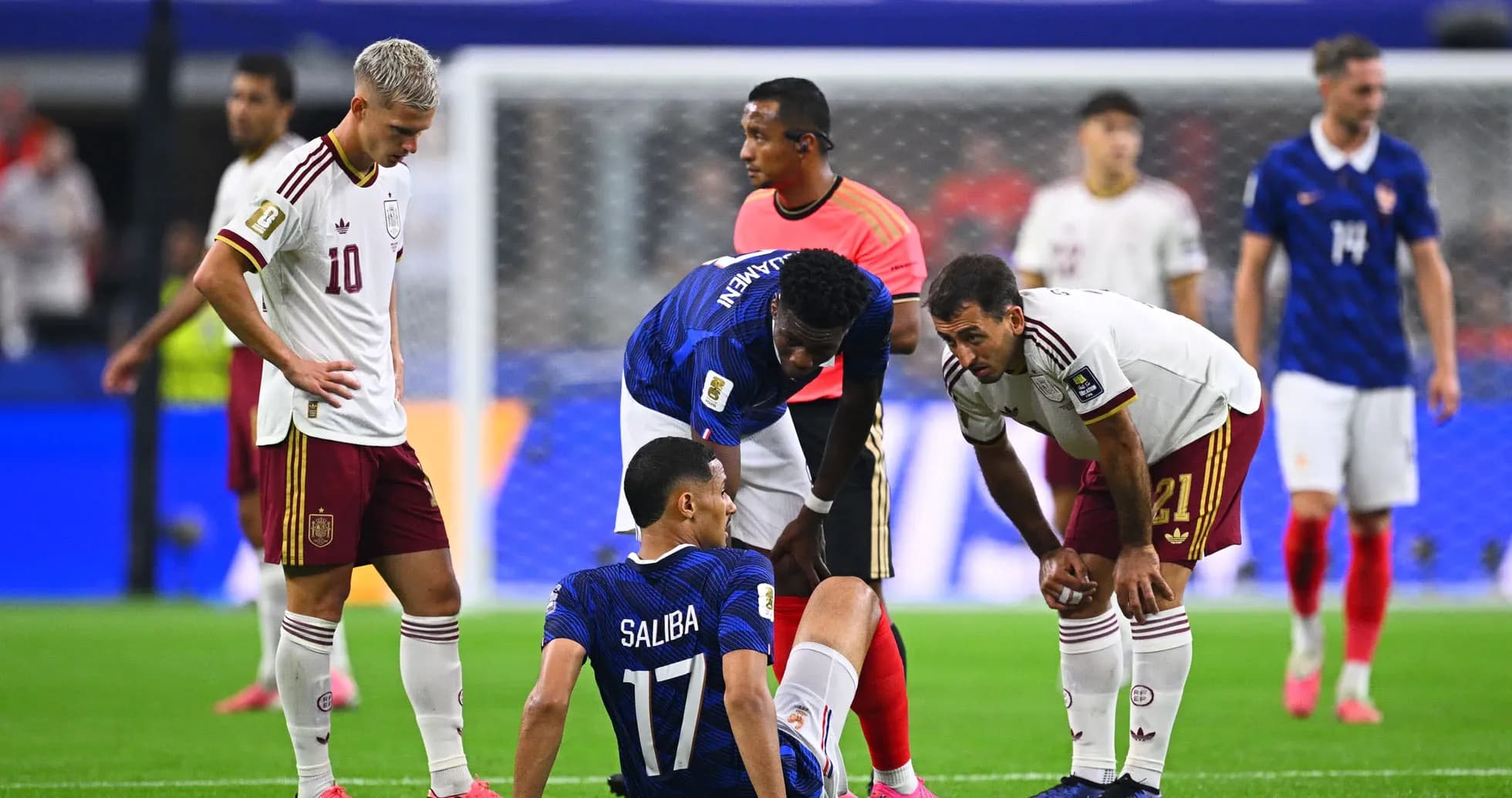
Defensively, France’s back line never fully settled. The early yellow card for Adrien Rabiot for “Foul” at 9' and the late yellow for Kylian Mbappé for “Violent conduct” at 86' framed a French performance that became increasingly frustrated. With 4 offsides, France’s attempts to exploit Mbappé’s runs in behind were often mistimed, a symptom of disjointed connections between midfield and attack. Their 7 corners did offer a potential route back, but Spain’s aerial organisation and 3 blocked shots ensured those dead-ball situations did not translate into high-quality chances.
Spain’s substitutions were more about game management and maintaining control than changing the game’s direction. Ferran Torres (IN) for Mikel Oyarzabal (OUT) at 74', Pedri (IN) for Fabián Ruiz (OUT) and Mikel Merino (IN) for Dani Olmo (OUT) at 78', followed by Marcos Llorente (IN) for Pedro Porro (OUT) and Nico Williams (IN) for Alex Baena (OUT) at 84', allowed Luis de la Fuente to refresh pressing intensity and ball retention without altering the underlying 4-2-3-1 structure. Each incoming player fit seamlessly into the existing positional framework, preserving Spain’s compactness between the lines and their ability to keep France away from central danger zones.
In goal, Mike Maignan (France) had no registered saves, which, combined with Spain’s 2 shots on goal and 2 goals, underlines how clear-cut Spain’s best chances were when they did arrive. His goals prevented figure of 0.07 suggests that the finishing he faced was efficient and well-placed. At the other end, Unai Simón (Spain) made 3 saves and also posted 0.07 goals prevented, an indication that while France did get a handful of efforts on target, they were generally of modest quality and from less dangerous positions.
Statistical Verdict
The statistical verdict reinforces the tactical story. Spain’s slight edge in possession (51% to 49%) belies a more significant edge in shot quality and control of key spaces. Both teams had 10 total shots, but Spain generated more shots inside the box (5 to 4) and a far higher xG (1.63 to 0.3). France’s 2 blocked shots to Spain’s 3 show that Spain were more willing and able to get bodies in front of efforts when defending a lead.
Passing metrics also underline Spain’s superiority in tempo control: 500 passes at 86% accuracy versus France’s 473 at 84%. That incremental advantage, coupled with Spain conceding only 1 corner and holding a 5-4 edge in offsides (reflecting France’s repeated attempts to break a well-held line), paints the picture of a side that dictated where the game was played. Disciplinary data – France’s 2 yellow cards to Spain’s 1 – aligns with the visual sense of a French side increasingly stretched and reactive.
Overall, the semi-final was decided not by volume of possession or shots, but by Spain’s clearer attacking mechanisms, better use of their full-backs and advanced midfielders, and a defensive structure that channelled France into low-probability attempts. France’s 4-2-3-1 never truly solved Spain’s positional play, and the numbers, from xG to passes and cards, all converge on the same conclusion: Spain controlled the tactical battle and deservedly advanced.