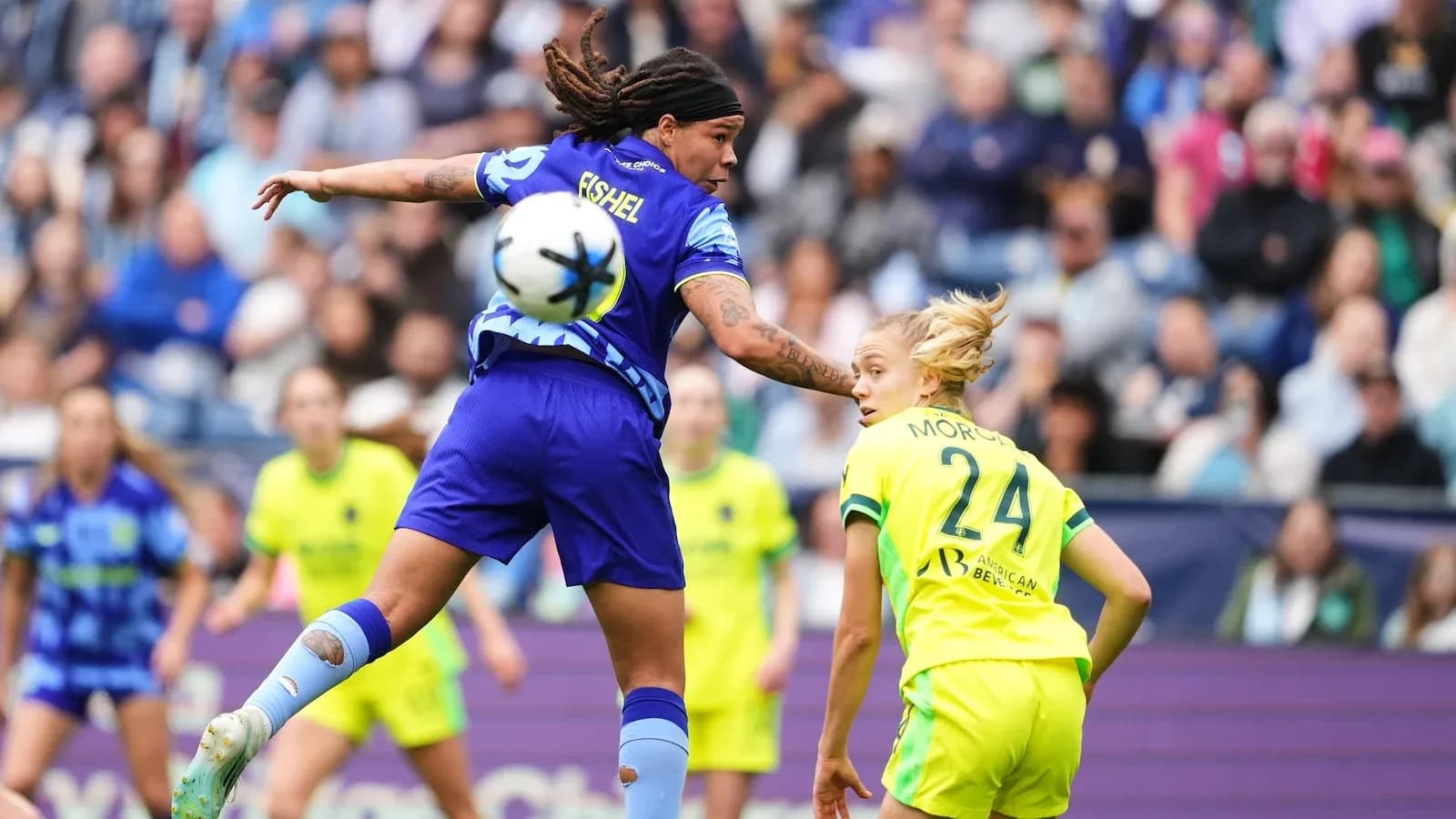
Utah Royals W Edge Denver Summit W in NWSL Clash
Under the lights at America First Field, this Group Stage clash in the NWSL Women felt less like a routine league fixture and more like a statement of hierarchy. Utah Royals W, top of the table and increasingly sure of their identity, edged Denver Summit W 2–1, a scoreline that captured both their control and Denver’s stubborn refusal to fold.
I. The Big Picture – A league leader under pressure, and a newcomer swinging back
Following this result, the table tells a clear story. Utah sit 1st with 23 points from 11 matches, built on a total goal difference of 8 (16 scored, 8 conceded). At home, they have been ruthless: 4 wins from 5, with 8 goals for and only 4 against. That home profile mirrors their broader season DNA – a side that averages 1.6 goals for at home and concedes just 0.8, built on defensive stability and controlled aggression.
Denver arrive from the opposite end of the spectrum. They are 12th with 12 points from 10 games, but their underlying numbers hint at a more dangerous side than the rank suggests. Overall they have scored 16 and conceded 13, for a total goal difference of 3, with a total scoring average of 1.6 goals per match and 1.3 conceded. On their travels, they have been surprisingly bold: 2 wins, 2 draws and 3 defeats from 7 away fixtures, scoring 11 and conceding 9. This is not a timid visitor.
The match itself followed the logic of those profiles. Utah’s 4-2-3-1, their most-used shape (10 league starts in that system), offered structure and width; Denver, listed without a formal formation, played more like a fluid 4-3-3/4-2-3-1 hybrid, leaning on individual quality in the front line to disrupt Utah’s rhythm.
II. Tactical Voids – Discipline, risk and the shadow of cards
There were no listed absentees, so both coaches could lean on their core. Yet the real selection tension came from discipline rather than injury.
Utah’s season-long card map shows a side that grows more combative as games wear on. Their yellow cards spike between 61–75 minutes at 27.78%, with another 22.22% between 46–60. They also own a single red card, shown in the 76–90 band – a late-game flashpoint that hovers over every tight finish. Players like Ana Tejada, with 3 yellows and a reputation for front-foot defending, embody that edge; Tatumn Milazzo, on the bench here, brings 2 yellows and a yellow-red in just 407 minutes, another reminder that Utah’s back line lives on the line between proactive and reckless.
Denver’s disciplinary profile is different but no less volatile. Their yellows cluster in the 46–60 window (44.44%), with further flares late (22.22% between 76–90 and 22.22% in added time). Crucially, they already have a red card on their ledger, shown between 16–30 minutes. That early dismissal – carried by a player like J. Beckie, who has 1 red this season – underscores how quickly their structure can unravel if they misjudge the tempo.
In a tight 2–1, those patterns matter. As Utah pushed to protect and then extend their lead after the break, the match moved into the exact zone where both sides are historically most combustible. The fact that this contest finished 11 v 11 is as much about game management and emotional control as it is about tactics.
III. Key Matchups – Hunter vs Shield, and the engine rooms in conflict
For Utah, the attacking “hunter” is less a single striker and more a trident of creators, with C. Lacasse at its tip. She entered this game with 3 goals and 3 assists in 11 appearances, plus 23 key passes and 9 shots on target. From the left side of the 4-2-3-1, Lacasse is both finisher and architect, drifting inside to combine with Minami Tanaka and the central 10.
Against Denver’s back line, the key duel was Lacasse versus the “shield” of K. Kurtz. Kurtz has been one of Denver’s most reliable defenders: 10 starts, 837 minutes, 13 blocked shots and 14 interceptions, with a passing accuracy of 89% from deep. She is the organiser who steps into the half-spaces to confront wide forwards cutting in. Every time Lacasse tried to drive diagonally off the flank, she ran into a defender who reads the game early and rarely panics.
Yet Utah’s attacking numbers at home – 8 goals in 5 matches, an average of 1.6 – suggest that even good shields eventually crack under sustained pressure. The 2–1 final, with Utah finding a way past despite Denver’s structured defending, fits that dynamic: Lacasse’s movement and Utah’s rotations pulled Kurtz and her line into uncomfortable zones just often enough.
In midfield, the game’s narrative revolved around two creators with very different profiles: Tanaka for Utah and Y. Ryan for Denver.
Tanaka, with 3 assists and 2 goals in 9 appearances, is Utah’s connector between the double pivot (anchored by players like A. Tejada Jimenez and N. Miura) and the forward line. Her 227 passes at 72% accuracy and 11 key passes show a player who thrives in pockets, receiving between the lines and turning quickly. In this match, operating as one of the three behind K. Palacios, she repeatedly looked to overload the half-spaces with Lacasse and C. Delzer.
Ryan, for Denver, is more of a tempo-setter. With 3 assists, 2 goals and 15 key passes in 9 games, she is the away side’s primary playmaker, tasked with threading passes into the front three of Y. Ryan herself, M. Kossler and N. Flint. Her 23 dribble attempts with 8 successes underline a willingness to carry the ball through pressure – vital against Utah’s aggressive mid-block.
The duel between Tanaka and Ryan was less about direct tackles and more about who could impose their rhythm. Utah’s defensive record – just 8 goals conceded in total, with a total average of 0.7 against – suggests they are better at suffocating opponents’ creators than Denver are at silencing theirs. Over 90 minutes, that superiority told: Utah managed to tilt the midfield battle just enough to limit Ryan’s influence while still giving Tanaka the platforms she needed to connect play.
IV. Statistical Prognosis – What this 2–1 really says
Following this result, the underlying numbers still frame Utah as the more complete side. They average 1.5 goals for and only 0.7 against overall, with 5 clean sheets and just 1 match in which they failed to score. Their penalty record – 3 taken, 3 scored, 0 missed – underlines a clinical edge in decisive moments.
Denver, meanwhile, remain a dangerous but inconsistent opponent. Their total average of 1.6 goals for and 1.3 against, plus 3 clean sheets, shows they can both score and shut games down, particularly on their travels where they have 11 goals in 7 matches. Their penalty record is also perfect so far (1 scored, 0 missed), but their defensive averages and disciplinary spikes hint at fragility under sustained pressure.
If we project this performance forward in Expected Goals terms, Utah’s compact defence and structured 4-2-3-1 should continue to keep opponents’ xG relatively low, especially at home, while their layered attack – led by Lacasse and Tanaka – consistently generates high-quality chances. Denver’s more open, transition-friendly style will continue to produce decent xG of their own, but unless they tighten the defensive phases around the 46–60 and 76–90 minute marks, close games like this will keep tilting towards the league leaders.
In Sandy, the scoreboard read 2–1. In the broader tactical story of the season, it read something else: Utah Royals W are exactly where their numbers say they belong, and Denver Summit W are still searching for a way to turn promise into points against the division’s elite.