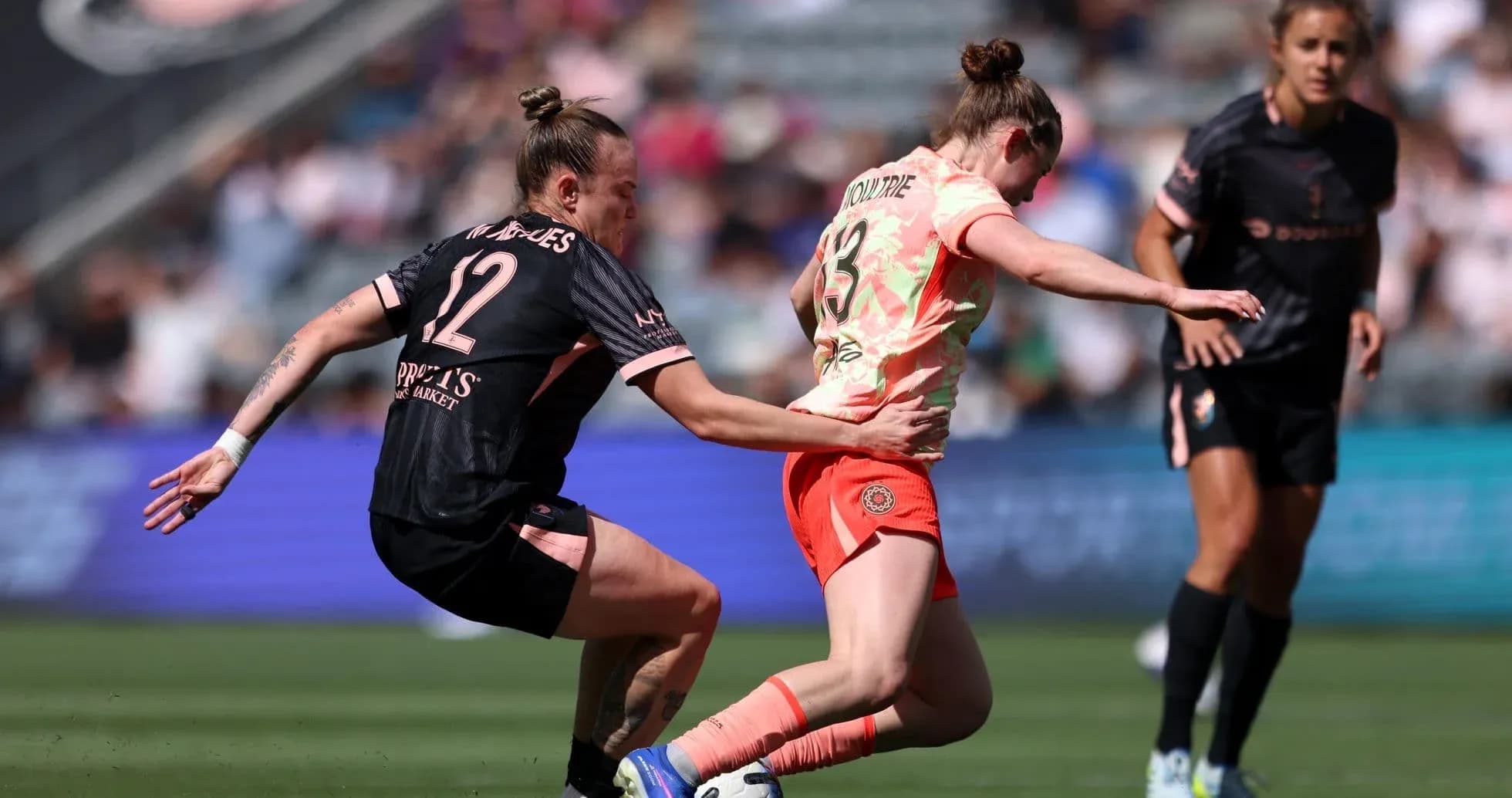
Portland Thorns W vs Utah Royals W: A Tactical Clash Ends in 2-2 Draw
Providence Park under the lights, a 20:00 kickoff and two top‑four contenders colliding: Portland Thorns W and Utah Royals W delivered a 2‑2 draw that felt less like a group-stage formality and more like a playoff dress rehearsal. Following this result, the table still shows Utah in 2nd on 24 points and Portland 3rd, also on 24, separated only by Utah’s superior overall goal difference of 8 to Portland’s 6. Over 90 minutes, the match became a vivid expression of each side’s seasonal DNA: Portland’s ruthless home edge against Utah’s balanced, quietly relentless machine.
Heading into this game, the numbers framed it as a clash of complementary strengths. Portland had been almost untouchable at home: 6 league fixtures at Providence Park, 4 wins, 2 draws, 0 defeats, with 10 goals scored and just 2 conceded. That home defensive record – an average of 0.3 goals against at home – is the platform for their aggressive 4‑2‑3‑1. Utah, though, arrived with the profile of a complete side. Overall they had 7 wins, 3 draws and only 2 defeats from 12 matches, with 18 goals for and 10 against; on their travels, they had gone 3‑3‑1 with 10 scored and 6 conceded, an away goals‑against average of 0.9 that speaks to real resilience.
Both coaches leaned into their preferred structures. Robert Vilahamn set Portland up in a 4‑2‑3‑1 with M. Arnold in goal behind a back four of R. Reyes, I. Obaze, S. Hiatt and M. Vignola. In front of them, the double pivot of J. Fleming and C. Bogere was tasked with both initiating play and protecting central spaces. Higher up, the creative trio of M. Muller, O. Moultrie and P. Tordin floated behind lone forward S. Wilson.
Jimmy Coenraets mirrored the shape for Utah. M. McGlynn anchored the side in goal, with a back line of M. Moriya, K. Del Fava, K. Riehl and N. Rabano. Ahead of them, N. Miura and A. Tejada Jimenez formed the central screen, while C. Delzer, M. Tanaka and C. Lacasse supported striker K. Palacios. It was a selection that placed technical, pressing forwards like Lacasse and Tanaka in the half-spaces, designed to disrupt Portland’s build-up from full-back and pivot.
The tactical voids were less about absences – there were no listed injuries or suspensions – and more about discipline and risk management. Portland’s season-long card profile shows a team that tends to live on the edge late in games: 25.00% of their yellow cards have arrived between 61‑75 minutes and another 25.00% between 76‑90, with an additional 16.67% in the opening 0‑15. They have also seen red twice overall, with dismissals concentrated early (0‑15) and just after the break (46‑60). Utah, in contrast, accumulate their cautions in the middle stretch: 27.27% of their yellows come between 46‑60 and another 27.27% between 61‑75, with a late spike in disciplinary jeopardy shown by a red card arriving in the 76‑90 window. In a match that finished level, both benches had to weigh the temptation to chase a winner against the risk of a decisive dismissal.
Within that framework, the “Hunter vs Shield” battle lines were clear. For Portland, O. Moultrie is the beating heart of their attack. Across the season she has 5 goals and 4 assists, with 15 shots (10 on target) and 24 key passes from 301 total passes at 77% accuracy. Listed as an attacker, she drifts between the lines, receiving in pockets where Utah’s double pivot can be turned. Her ability to both finish and supply – underlined by her joint-leading assist tally in the league – makes her the primary hunter in Vilahamn’s structure.
Behind her, P. Tordin adds another layer of threat: 3 goals and 4 assists from 984 minutes, 223 passes with 21 key passes and a willingness to duel (115 duels, 53 won). Together, Moultrie and Tordin form a creative axis that, heading into this game, had helped Portland average 1.7 goals for at home and 1.5 overall.
The shield facing them was Utah’s collective defensive record. Overall, Utah had conceded just 10 goals in 12 matches, an average of 0.8 per game. On their travels, that rose only slightly to 0.9, underlining a back line that travels well. K. Del Fava and K. Riehl’s central pairing is buttressed by the defensive work of A. Tejada Jimenez, whose 21 tackles, 2 blocks and 11 interceptions show why she tops the league’s yellow card charts with 4 cautions: she lives in the collision zone where Portland’s 10s and wingers like to operate.
The “Engine Room” duel ran straight through that axis. For Portland, J. Fleming and C. Bogere were the metronomes and disruptors. Bogere in particular is a pure ball-winner: 35 tackles, 2 blocks and 12 interceptions, with 295 passes at 77% accuracy. She has also drawn 2 yellows and a yellow‑red this season, a reminder that her aggression is both a weapon and a potential liability. Fleming’s calmer distribution complements her, allowing Moultrie to push higher and receive cleaner service.
Utah’s answer lay in the interplay between Miura, Tejada Jimenez and Tanaka. Tanaka has quietly become one of the league’s most influential creators: 4 assists, 2 goals, 14 shots (10 on target) and 258 passes at 72% accuracy, with 14 key passes. She also competes fiercely without the ball, with 7 tackles, 1 block and 6 interceptions, and has drawn 27 fouls – a magnet for contact that can relieve pressure and tilt the field. If Bogere is Portland’s enforcer, Tanaka is Utah’s all‑action conduit, turning second balls into structured attacks.
On the flanks, C. Lacasse provided Utah’s cutting edge. With 4 goals and 3 assists, 14 shots (10 on target) and 24 key passes, she mirrors Moultrie’s dual-threat profile from wider zones. Her 26 tackles and 9 interceptions underline Utah’s commitment to defending from the front; she is as much a first defender as a final-third finisher, though her 3 yellow cards and presence on the red‑card leaderboard reflect how fine that line can be.
Statistically, the draw felt like the meeting point of two well-matched profiles. Portland’s overall goal difference of 6 (20 scored, 14 conceded) and Utah’s 8 (18 scored, 10 conceded) suggest that, heading into this game, both sides were used to controlling margins rather than blowing teams away. Portland’s 7 clean sheets overall, including 5 at home, collided with Utah’s 5 clean sheets, 3 of them away, in a contest where neither attack was likely to run riot for long stretches.
In xG terms – even without the raw model – the pattern is clear. Portland’s home scoring average of 1.7 against Utah’s away defensive average of 0.9 points to a narrow home edge in chance creation, while Utah’s away scoring average of 1.4 versus Portland’s home defensive average of 0.3 hints that the Royals would need to be ruthlessly efficient to keep pace. The 2‑2 scoreline, therefore, reads like a game where both sides slightly outperformed their typical defensive baselines, perhaps through set pieces, transition moments or individual brilliance from the usual suspects: Moultrie, Tordin, Tanaka, Lacasse.
Following this result, the tactical prognosis for any future meeting between these sides is finely balanced. Portland will trust that their 4‑2‑3‑1, driven by Moultrie’s creativity and Bogere’s bite, can still tilt tight games at Providence Park. Utah, with their compact away record and the Tanaka‑Lacasse axis, have shown they can come to one of the league’s most hostile venues and trade blows without losing their structure.
If the knockout rounds serve up a rematch, expect the story to hinge on the same intersections: Moultrie attacking the seams around Tejada Jimenez, Tanaka trying to drag Bogere into uncomfortable wide channels, and Lacasse testing Reyes and Vignola in the spaces where Portland’s full-backs step forward. The margins will be small, the discipline thresholds tight, and the xG likely close. On this evidence, neither side will be able to simply impose their will; they will have to out-think as much as outplay the other.