Pochettino Reflects on USMNT's Loss to Turkiye Despite Group Victory
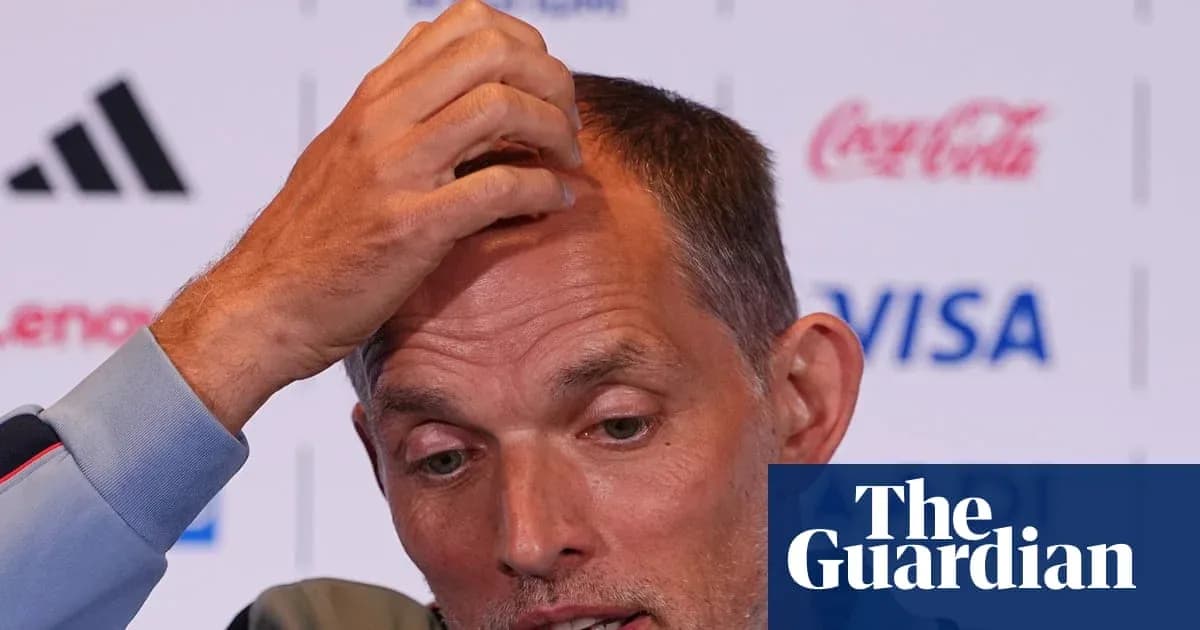
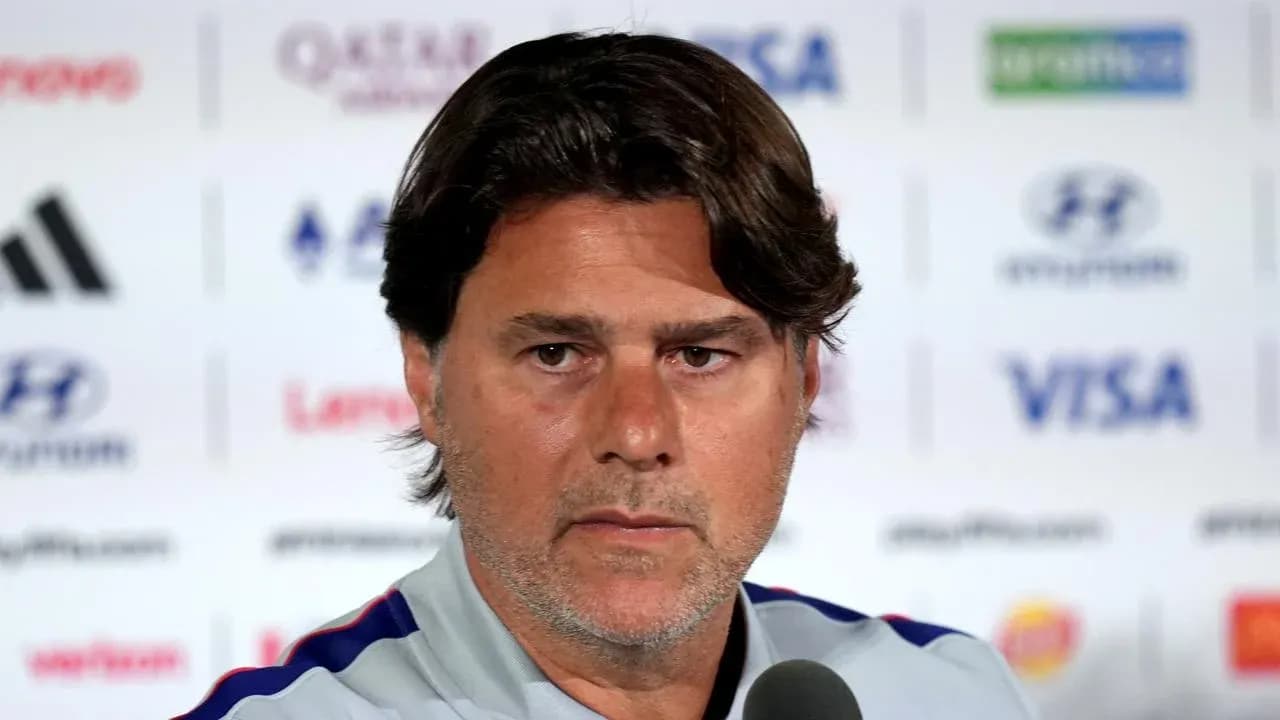
Mauricio Pochettino walked into the press room having just lost 3-2 to Turkiye and looked less like a coach whose team had topped their World Cup group, and more like one on the brink of elimination.
He didn’t bother hiding it.
“The mood is like we [are going] home tonight and Turkey is staying,” he snapped. “I need to [remind] you and everyone that we won the group. Sorry guys, we won.”
No one had congratulated him. No one had praised the achievement. The questions came thick and fast about momentum, about the danger of drifting into the knockouts on the back of a defeat, about whether the United States Men’s National Team had just squandered something important.
Pochettino bristled. The former Chelsea and Spurs manager had heard enough of the moral victories and small milestones.
“Making history is winning the World Cup,” he said. “It’s not winning three matches only within the World Cup. I don’t really understand. It’s a little bit petty if you will — you’re thinking a little too small. You’re telling me you could make history — what does it mean to win three matches if you lose the next one?”
He had gone into the game saying he wanted another win, a statement to close out the group. On the teamsheet, though, he rolled the dice. Nine changes from the XI that beat Australia, a side built from the bench, a clear nod to the bigger picture rather than a clean sweep of the group.
If the USMNT had found a way past Turkiye, it would have been a slice of program history: three wins from three at a World Cup for the first time. Pochettino was unimpressed by that kind of landmark. His gaze stayed fixed on the only one that matters in July 2026.
The defeat, he argued, sat in context. He pointed to Germany, who had fielded many of their regulars just hours earlier and still been turned over by a desperate Ecuador. Rotation, he insisted, wasn’t the villain.
What did matter to him was how his team navigated the situation, and on that front he saw positives. Chief among them: Christian Pulisic back on the pitch. The AC Milan forward had missed the win over Australia with a calf issue, the same problem that forced him off at half-time in the victory over Paraguay. Getting him minutes, and getting him through them, ranked higher on Pochettino’s checklist than a perfect group-stage record.
The group is won. The knockout path is set. The coach has drawn his line in the sand: don’t talk to him about mini-milestones and neat statistics.
Judge him now on what happens when the real World Cup starts.
Arnold’s Iraq hammered, and left with questions
In Toronto, Graham Arnold stood in a very different place. His Iraq side had just been thrashed 5-0 by Senegal, their World Cup run ending with a brutal scoreline and a clouded future.
A red card after 13 minutes to Rebin Sulaka, with Senegal already 1-0 up, ripped the game away almost before it had started.
Arnold didn’t sugarcoat it. He called it a “stupid red card” and admitted the moment shattered his players mentally. Against a team of Senegal’s quality, he said, mistakes are punished every time.
He then laid bare a damning statistic: of the 12 goals Iraq conceded across their three matches, nine came directly from individual errors. At this level, that is fatal.
“I told the players after the match that we conceded 11 goals at this World Cup, and nine came from our own individual mistakes. We have to learn from that,” he said, slightly miscounting but not missing the point.
By the second half, Iraq had nothing left. Legs went, energy drained, and Arnold turned to his bench. He admitted he made changes to give more players the chance to feel what it means to represent Iraq on this stage, and he took full responsibility for that choice.
Group I was always going to be unforgiving. France and Norway, plus a Senegal side with power and pedigree, left Iraq staring up at a steep climb from the moment they qualified as the last team into the tournament.
Arnold, though, reminded everyone where they had come from. He had dragged Iraq through an intercontinental playoff to reach a World Cup for the first time in 40 years. For two of the three games, he argued, they had performed “very well.”
“Everyone in Iraq should be proud of the fact that we made it here and we performed very well in two out of the three games,” he told reporters.
Pride, however, sits alongside uncertainty. Arnold’s contract expires at the end of the tournament. On the eve of the Senegal game he confirmed as much, and now the question lingers: will he stay to lead Iraq into an Asian Cup group that includes a reunion with his old team, the Socceroos, in Saudi Arabia next year?
“I’ve just asked them to leave it until after World Cup, then we can have a chat then,” he said.
For Iraq, the World Cup is over. The decision on Arnold’s future might shape whether this campaign is remembered as a one-off return or the start of something more permanent.
Panama’s flashpoint that pleased the coach
Across the Atlantic, Panama’s World Cup is also effectively done, but the fire hasn’t gone out.
Already eliminated after back-to-back 1-0 defeats to Ghana and Croatia in Group L, Panama are playing for pride against England in New Jersey. Training on Friday brought a spark that lit up the session: a confrontation between Cecilio Waterman and Jose Luis Rodriguez.
Some coaches would panic at the sight of teammates clashing days after elimination. Thomas Christiansen welcomed it.
“What happened today in training, this is a normal situation,” he said. “I would’ve liked to see these situations more often, that means the team is alive. They are willing to do a good effort... to be in the first XI for the game.
“If this happens another time, it’s a good sign that they are alive.”
Panama have never earned a point at a World Cup. Five games, five defeats, including that 6-1 hammering by England in 2018. Now they get another crack at the same opponent, and Christiansen, out of contract after the tournament, sees a chance to close this chapter with something more dignified.
“Now we have the last game against England, a good way to finish a World Cup if it goes our way,” he said. He insists Panama have changed since that rout eight years ago. Now they must show it.
“It will be a tough one but I’m thinking that the team will be able to compete and do a good game.”
For Panama, it’s one last swing at history and a first point. For Christiansen, it might be the final audition for his next job.
France win big amid grief and confusion
France swept past Norway 4-1, a scoreline that underlined their status among the tournament’s heavyweights. Yet their coach, Didier Deschamps, was thousands of kilometres away, back home for his mother’s funeral.
On the pitch, his players delivered. Around it, the day was marked by awkward administrative missteps.
The French squad wanted to wear black armbands in tribute to Deschamps’ mother. The French Football Federation (FFF) said FIFA denied the request. The symbolism they hoped to carry into the game never appeared.
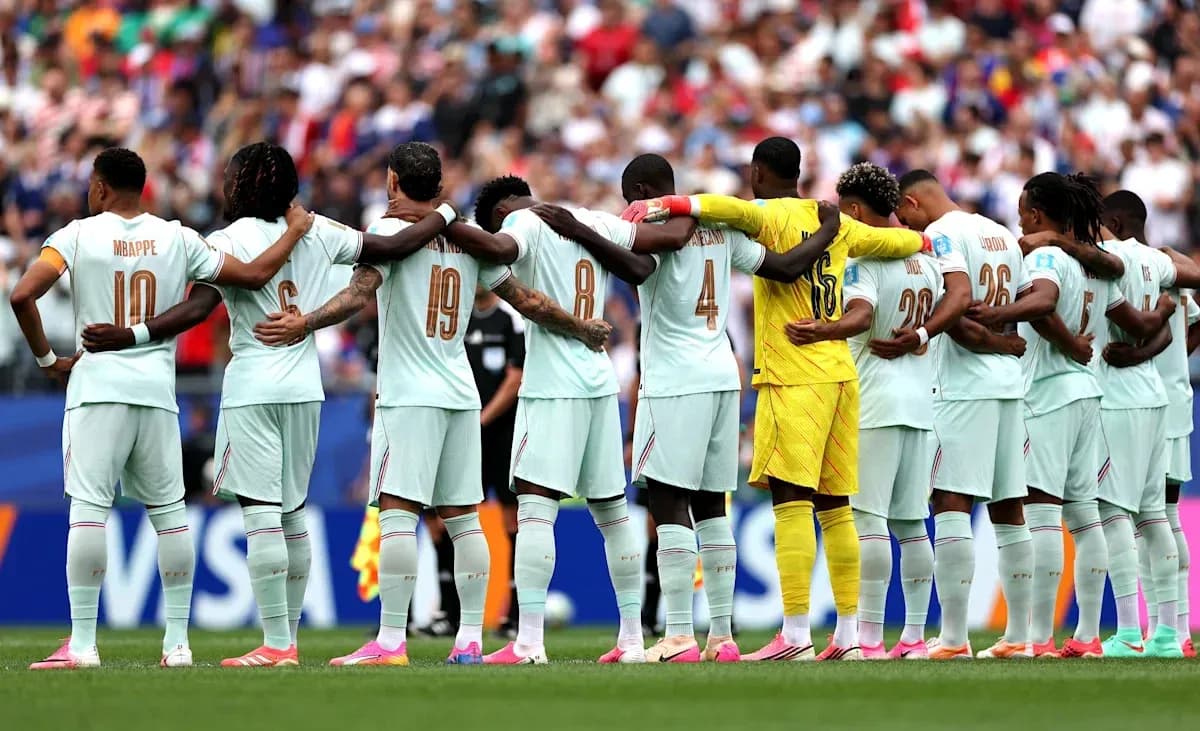
Confusion also swirled around a planned pre-match minute’s silence. It was initially briefed that it would honour Deschamps’ mother. The FFF later clarified that the silence was instead held for the victims of the Venezuelan earthquake.
FIFA have been contacted but have yet to respond publicly.
France move on with a statement win and a squad good enough to chase the trophy with or without their head coach on the touchline. The question now is not whether they can handle turbulence around them.
It’s who, if anyone, can stop them when the stakes rise and Deschamps returns to the dugout with grief still fresh and another title in his sights.