Tottenham Secures 1-0 Victory Over Everton in Tactical Clash
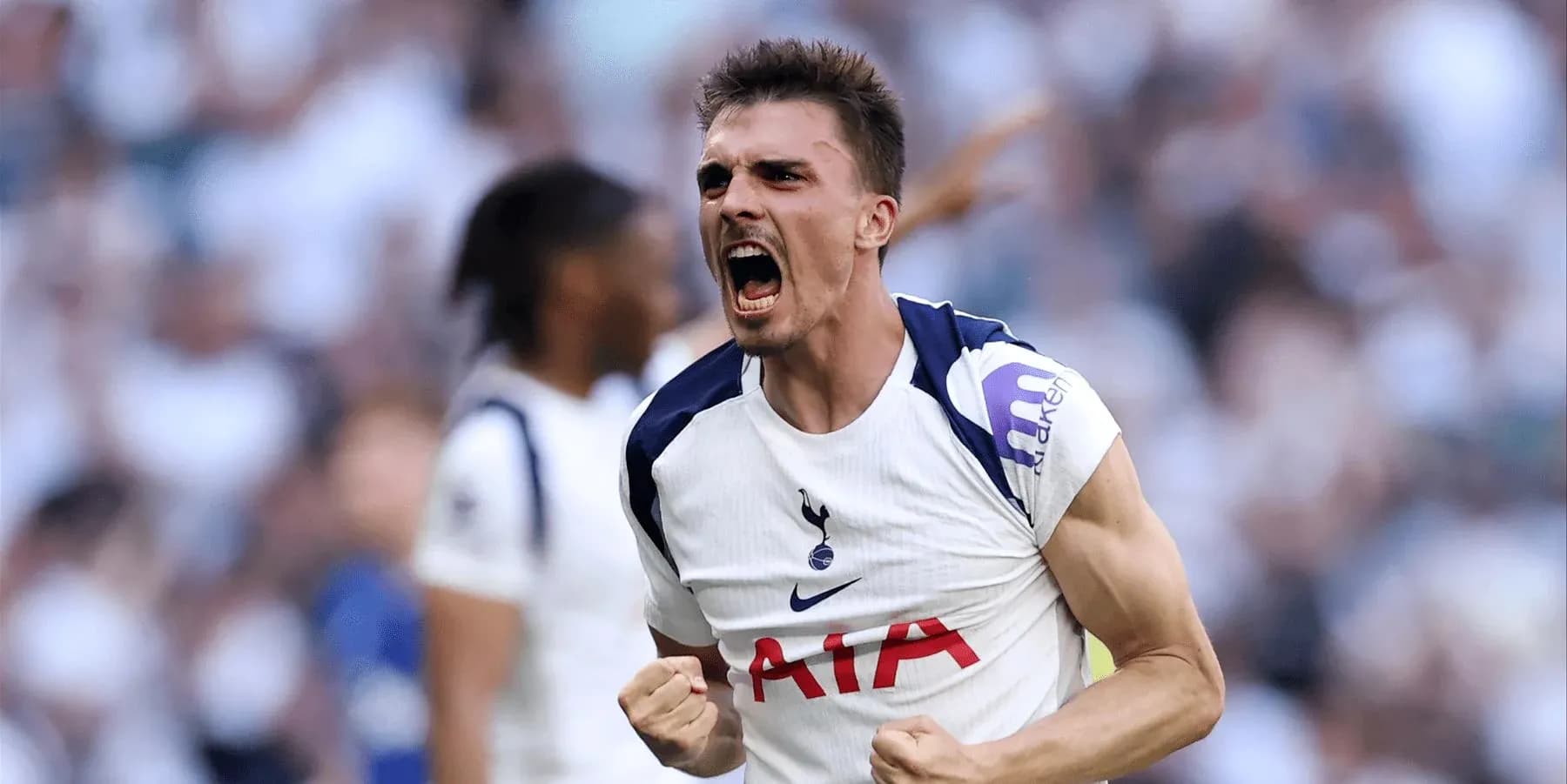
Tottenham edged a tight tactical contest 1-0 against Everton at Tottenham Hotspur Stadium, closing their Premier League season with a controlled, system-driven performance rather than attacking fireworks. Both sides lined up in a mirrored 4-2-3-1, and the data underlines how evenly balanced the game was: 50% possession each, 20-9 in total shots for Tottenham but only 2-1 in shots on goal, and identical 7-7 returns on corners. The difference was Tottenham’s ability to create the one clean opening that mattered, finished by João Palhinha just before half-time, and then manage the game structure efficiently through their double pivot and back four.
Tactical Approach
Tottenham’s 4-2-3-1 under Roberto De Zerbi was built on a clear territorial plan. With 20 total shots and 15 from inside the box, their approach was to consistently pin Everton deep and work the ball into central finishing zones. The full-backs Pedro Porro and Destiny Udogie held advanced positions to create width, allowing the three behind Richarlison to operate in the half-spaces. The shot profile tells the story: only 5 attempts from outside the box versus 15 inside, showing a preference for patient circulation over speculative efforts.
Control in Midfield
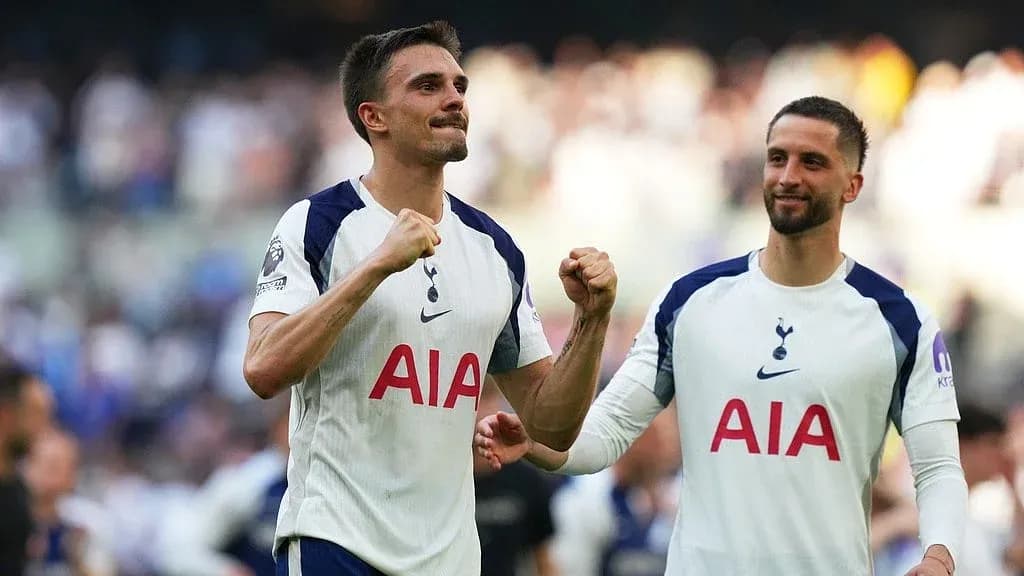
Central to that control was the double pivot of Rodrigo Bentancur and João Palhinha. Tottenham completed 373 passes with 317 accurate at 85%, a strong technical base for a side that only had half of the ball in raw possession terms. They did not dominate time on the ball, but they used their spells more aggressively. Palhinha’s goal on 43 minutes came as the culmination of sustained pressure: Tottenham had already forced Everton into a deep, reactive block, with nine of their shots blocked overall. Everton’s back four and double pivot were constantly asked to defend the edge of the box, and Palhinha’s late run and finish exploited that accumulated stress.
Defensive Structure
Out of possession, Tottenham’s structure was compact and disciplined. They conceded just 9 shots and only 7 from inside the box, with many of Everton’s efforts coming under pressure as indicated by the 3 blocked shots for the visitors. The foul count (15 for Tottenham) reflects a willingness to break up Everton’s transitions rather than sustained defensive scrambling. The late yellow card for João Palhinha for Handball on 87 minutes fits that profile of an aggressive, interventionist holding midfielder managing the defensive line.
Goalkeeping Performance
In goal, A. Kinsky (Tottenham) was largely protected by the block in front of him, needing to make only 1 save. The underlying numbers show Tottenham allowing just 0.34 xG, a testament to the effectiveness of their defensive structure more than to high-volume shot-stopping. The goals prevented metric at -0.32 suggests that the one chance Everton did get on target was slightly above what would normally be saved, but Kinsky’s single intervention was enough to preserve the clean sheet.
Everton's Approach
Everton, under Leighton Baines, mirrored the 4-2-3-1 but with a more cautious, counter-attacking tilt. They matched Tottenham’s possession at 50% and completed 377 passes (314 accurate, 83%), yet generated significantly less attacking volume: 9 total shots, only 1 on goal, and just 2 from outside the box. This indicates that while they were capable of circulating the ball, they struggled to progress through Tottenham’s mid-block into dangerous areas. The front four of T. Barry, I. Ndiaye, K. Dewsbury-Hall and M. Rohl could not consistently find pockets between the lines, and too many attacks stalled before the final third.
Goalkeeping and Defensive Resilience
Jordan Pickford (Everton) also faced only 2 shots on goal, making 1 save. Tottenham’s xG of 0.99 underlines that, despite their 20 shots, the majority were either blocked or from less-than-ideal angles. Everton’s back line, particularly James Tarkowski and Michael Keane, absorbed pressure in the box, reflected in Tottenham’s 9 blocked shots. However, the same compactness that produced blocks also left them pinned back, limiting their ability to spring counters with Barry or Ndiaye.
Disciplinary and Substitution Patterns
The disciplinary and substitution patterns reinforce the tactical story. Everton’s early yellow card for Jake O’Brien for Foul on 13 minutes hinted at the strain their right side was under against Tottenham’s left-sided rotations. Later, Tarkowski’s yellow for Foul on 89 minutes came as Everton pushed higher and were forced into riskier defensive interventions. Tottenham’s bookings were tied to game management: Pape Matar Sarr’s Simulation on 80 minutes and Palhinha’s Handball on 87 minutes occurred as they protected the lead and disrupted rhythm.
Both benches were used to adjust energy rather than shape. Everton’s triple change on 84 minutes, bringing on Beto, Carlos Alcaraz and Seamus Coleman for T. Barry, K. Dewsbury-Hall and Tim Iroegbunam respectively, was an attempt to add directness and crossing threat, but the underlying numbers did not shift meaningfully in their favour. Tottenham’s introductions of R. Kolo Muani, Pape Matar Sarr, A. Gray, James Maddison and Radu Dragusin for Richarlison, Mathys Tel, Bentancur, Conor Gallagher and Udogie were about fresh legs to sustain the press and lock down the flanks rather than chasing another goal.
Statistical Summary
Statistically, the verdict is of a narrow but deserved home win. Tottenham’s 0.99 xG to Everton’s 0.34 aligns with the 1-0 scoreline: they created the higher volume and better quality of chances, even if they were not ruthlessly efficient in front of goal. Both goalkeepers made 1 save, both sides shared possession and corners, and each collected 2 yellow cards, underscoring how fine the margins were. Yet the combination of Tottenham’s superior shot volume, territorial control, and the decisive midfield contribution from João Palhinha tilted the tactical balance just enough to secure the three points.