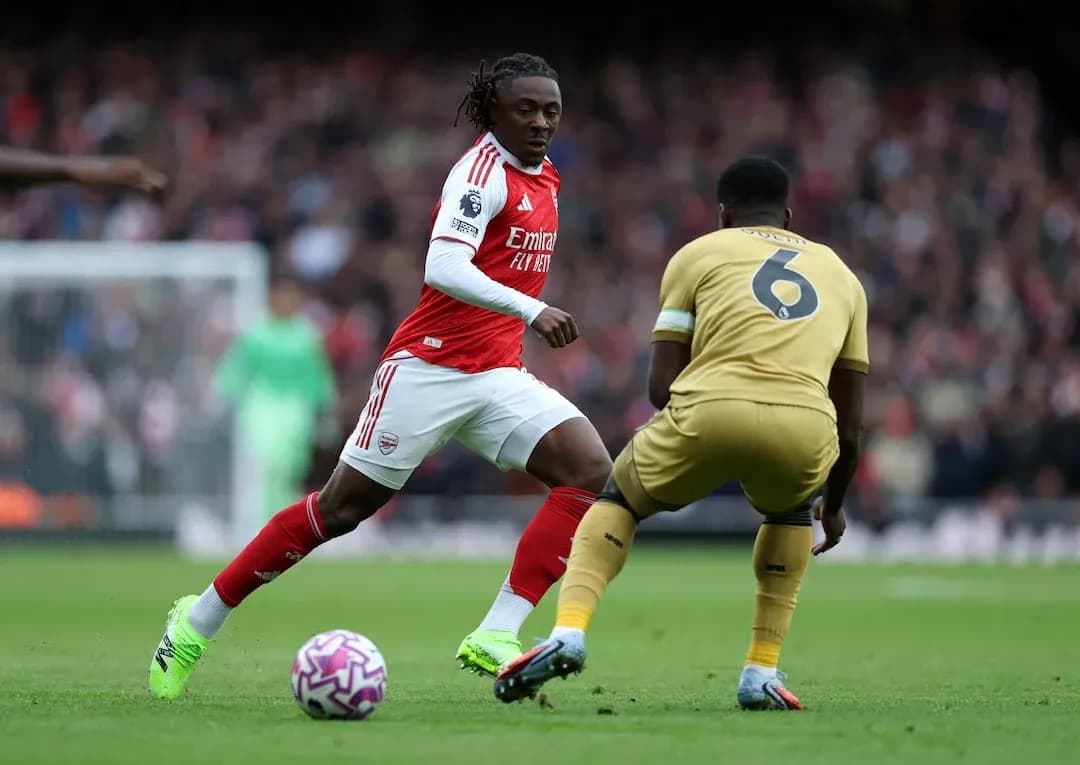
Crystal Palace vs Arsenal: Season Finale Analysis
Selhurst Park’s final act of the 2025–26 Premier League season ended with a narrow 2–1 defeat for Crystal Palace against champions Arsenal, a result that neatly reflected the broader realities of their campaigns. Following this result, Arsenal finished top with 85 points and a formidable overall goal difference of +44 (71 scored, 27 conceded), while Palace closed in 15th on 45 points, their overall goal difference a more fragile -10 (41 scored, 51 conceded).
I. The Big Picture – Contrasting Blueprints
This was a meeting of two very different footballing identities. Palace, under Oliver Glasner, leaned again into the 3-4-2-1 that has been their seasonal backbone, a shape they used in 33 league matches. It is a system built on structural density, wing-back aggression and vertical breaks. At home this campaign they were cautious but competitive: in total at Selhurst Park they played 19 league games, winning 4, drawing 9 and losing 6, scoring 19 and conceding 23. That translates to 1.0 goals for and 1.2 goals against at home on average – the profile of a side that often keeps games tight but struggles to tilt them decisively in their favour.
Arsenal arrived as a fully-formed machine. Heading into this game, on their travels they had played 19, winning 11, drawing 5 and losing just 3, with 30 away goals scored and 16 conceded – an away average of 1.6 goals for and 0.8 against. Mikel Arteta’s men shifted from their more common 4-3-3 to a 4-2-3-1 here, but the underlying logic stayed the same: control through structure, suffocating pressing and a high defensive line underpinned by a miserly defence that, overall, conceded just 0.7 goals per game.
II. Tactical Voids – Absences and Discipline
Both managers had to navigate notable absences. For Palace, the long-term loss of C. Doucoure (knee injury) continued to hollow out the base of midfield. Without his ball-winning and screen, Glasner again repurposed J. Lerma as the central figure in a back three, sacrificing some bite in midfield for extra stability in the first line of build-up. The injuries to C. Richards (ankle) and B. Sosa also removed rotation options on the left side of the defence and wing-back lane, forcing continuity rather than tactical flexibility.
Arsenal were without J. Timber (ankle) and B. White (knee), two key components of Arteta’s usual backline. Their absence opened the door for a back four of M. Zubimendi, C. Mosquera, P. Hincapie and R. Calafiori – a technically secure but relatively new combination. The fact that Arsenal still closed the season with 19 clean sheets overall (11 at home, 8 away) underlines how system-first their defensive identity has become.
From a disciplinary perspective, the underlying season data hinted at a subtle psychological battle. Palace’s yellow cards are spread across the game, but there is a clear spike between 31–45 minutes and 46–60 minutes (each 18.42%), periods where their intensity can tip into desperation. Arsenal, by contrast, show a late-game disciplinary edge: 25.49% of their yellows arrive between 76–90 minutes, suggesting that when they are forced to protect a lead, they are willing to foul to break rhythm. In a match that ended 2–1, that pattern feels entirely in character.
III. Key Matchups – Hunter vs Shield, Engine Room vs Enforcer
The narrative duel of the day lived higher up the pitch. For Arsenal, V. Gyökeres has been the season’s headline hunter: in total this campaign he scored 14 league goals, with 1 assist, from 36 appearances. His profile is that of a relentless reference point – 41 shots, 22 on target, 234 duels contested with 74 won, and 31 fouls drawn. Even though he began this match on the bench, his presence on the teamsheet shaped Palace’s defensive thinking. The back three knew that at any point Arteta could deploy a physically dominant striker to attack tired legs and aerial gaps.
On the other side, Palace’s own penalty-box specialist, J. Mateta, started among the substitutes. Across the season he produced 12 league goals, with 56 shots (32 on target) and 292 duels contested, winning 110. His ability to occupy centre-backs and attack crosses offered Glasner a powerful second-half lever against an Arsenal defence that, in total, conceded just 27 goals all season. Mateta’s perfect penalty record – 4 scored from 4, no misses – also made him the obvious designated taker had Palace earned a spot-kick.
The “engine room” duel was subtler but just as decisive. Palace’s midfield four of D. Munoz, W. Hughes, D. Kamada and R. Cardines had to balance wing-back thrust with central compactness. Without Doucoure, Hughes and Kamada were tasked with orchestrating both the first pass under pressure and the counter-press when possession was lost.
Arsenal’s double pivot of C. Norgaard and M. Lewis-Skelly was built for control rather than chaos. Norgaard’s positional discipline allowed the full-backs, particularly Calafiori, to step into midfield lines, while Lewis-Skelly’s energy helped close the half-spaces where Kamada and J. Devenny tried to operate. Higher up, the creative weight on M. Ødegaard – 6 assists and 40 key passes in 24 league appearances – made him the natural “lock-picker” when introduced, dovetailing with the direct running of N. Madueke and G. Martinelli.
IV. Statistical Prognosis – Why 2–1 Felt Inevitable
Following this result, the scoreline mirrored the season-long statistical gravity. Palace, overall, scored 41 and conceded 51, averaging 1.1 goals for and 1.3 against per game. They are a side that usually needs the match to stay within one moment either way, and here they again found themselves living on that knife-edge.
Arsenal’s overall attacking average of 1.9 goals per match, combined with their defensive average of 0.7 conceded, made a narrow away win the most probable outcome. Even without explicit xG numbers, the structural patterns are clear: Arsenal generate sustained territory and volume of chances, while limiting opponents to low-quality looks; Palace rely on transitions, set-pieces and isolated moments of quality from forwards like I. Sarr or a late cameo from Mateta.
The late-game card distributions added a final layer to the tactical forecast. Arsenal’s tendency to accumulate yellows between 61–90 minutes (a combined 47.06% in those final 30 minutes) suggested that if they edged ahead, they would be prepared to foul to manage the game. Palace’s inability, in total, to convert home draws into wins – 9 stalemates at Selhurst Park – hinted that chasing from behind against the league’s best defence would likely fall just short.
In the end, 2–1 to Arsenal was not just a scoreline; it was the logical intersection of two season-long stories: a champion’s control versus a mid-table side still learning how to turn structure into ruthlessness.