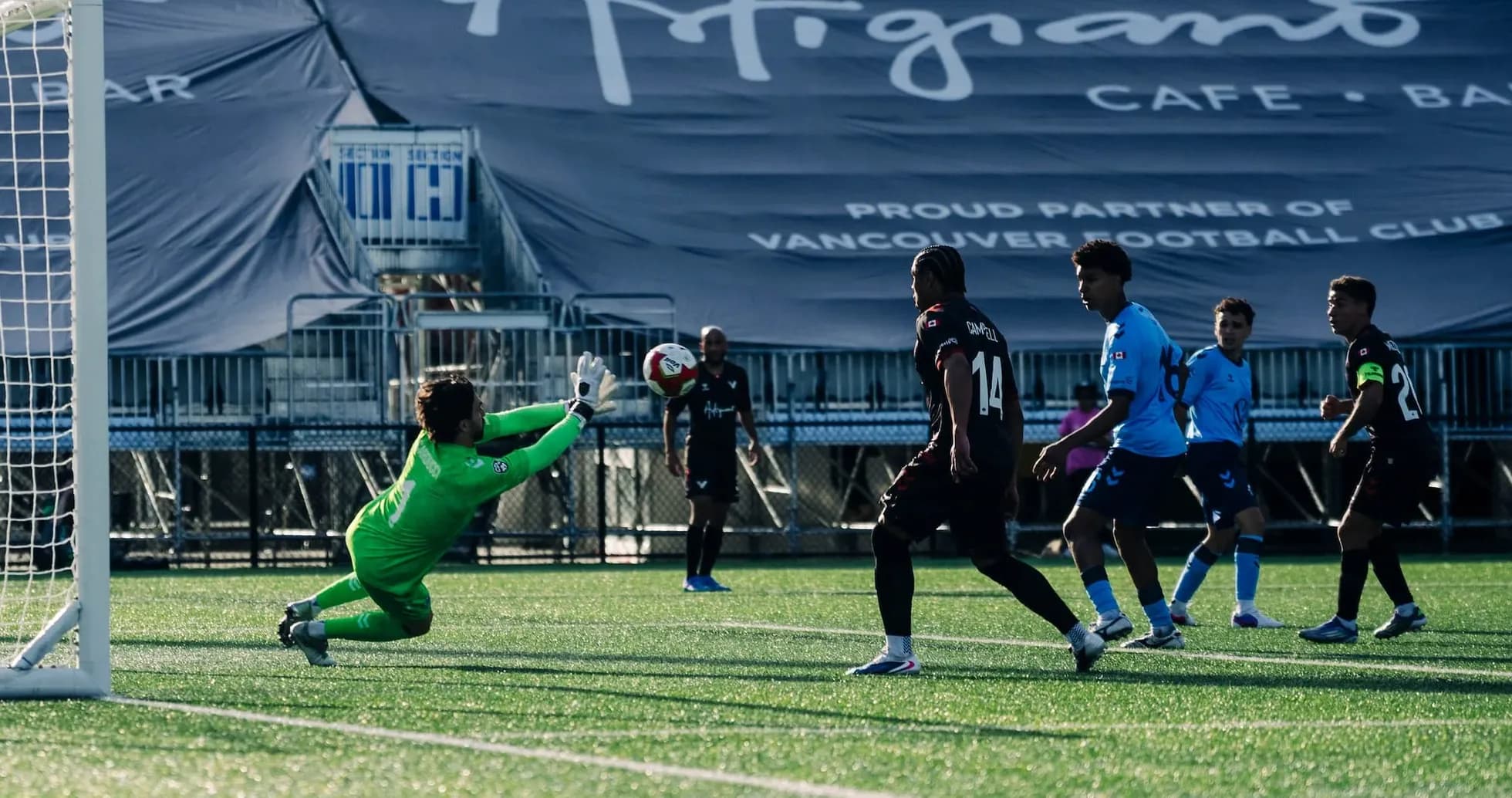
Vancouver FC and Supra du Quebec Battle to 1–1 Draw in CPL Clash
Under the lights at Willoughby Community Park Stadium, Vancouver FC and Supra du Quebec closed out a tense Canadian Premier League group-stage night with a 1–1 draw that said as much about their evolving identities as it did about the table. Following this result, Vancouver remain in the lower half of the standings in 7th with 5 points and a goal difference of -3, while Supra stay in 5th on 7 points with a goal difference of -1. Both sides once again showed why they have yet to keep a clean sheet this season: structure in moments, vulnerability in others.
I. The Big Picture – Two imperfect projects, one shared ceiling
Vancouver’s season-long numbers paint a team still searching for a reliable attacking pattern, especially at home. At Willoughby, they have played 4 league games, failed to win any (0 home wins, 1 draw, 3 defeats), and scored just 1 home goal while conceding 5. That translates to a meagre 0.3 home goals scored per game against 1.3 conceded. On their travels they are far more liberated, with 4 away goals at an average of 1.3, but that freedom has not yet migrated back to Langley.
Supra arrive with a slightly more balanced, if equally flawed, profile. Overall this campaign they have scored 6 goals and conceded 7 across 6 matches, averaging 1.0 goals for and 1.2 against. On their travels, they mirror Vancouver’s away output: 4 away goals at 1.3 per game, but they also leak 1.3 away goals on average. This is a matchup of two sides who can punch, but rarely without leaving their chin exposed.
The 1–1 scoreline fits that story: neither side has yet registered a clean sheet in total this season, and neither has solved its late-game management. Both teams’ disciplinary profiles hint at chaos in the closing stages rather than control.
II. Tactical Voids – Fragile discipline and missing control
There is no explicit injury list, but the tactical voids here are less about absentees and more about structural gaps.
For Vancouver, the biggest hole is psychological and positional in the final third. Despite starting with a clear attacking trident of E. Bah, E. Fotsing and top scorer M. Amissi behind or alongside T. Campbell, the numbers say the home side still struggle to turn possession into chances. Overall this campaign they have scored just 5 goals in 7 matches, and they have already failed to score in 4 of those. The lack of a secondary scoring threat beyond Amissi makes them predictable when chasing games.
In midfield, Vancouver lean heavily on the industry and aggression of M. Polisi. He is their heartbeat and their hazard: 7 appearances, 146 passes at 86% accuracy, 7 tackles and 1 blocked shot, but also 4 yellow cards and a place atop the league’s disciplinary chart. His presence is essential for ball-winning and tempo, yet every challenge carries the risk of tilting the match’s emotional balance.
Supra’s tactical void is different. They have more variety between the lines but lack a true defensive anchor and a calm late-game temperament. Their yellow-card distribution is telling: 25.00% of their cautions arrive between 31–45 minutes, another 25.00% between 46–60, and another 25.00% from 76–90. They then spike with a red card in the 91–105 range, courtesy of Alessandro Biello earlier in the campaign. This is a side that grows increasingly stretched as the match wears on, often chasing instead of managing.
III. Key Matchups – Hunter vs Shield, Engine Room vs Enforcer
Hunter vs Shield: Amissi and Vancouver’s faltering home attack versus Supra’s away back line.
Mohamed Amissi, with 1 goal from 5 shots (4 on target), is Vancouver’s sharpest attacking blade. His 8 dribble attempts with 4 successes and 3 key passes show a player who wants to carry and combine rather than simply finish. Around him, Morey Doner’s overlapping threat is crucial: 126 passes at 87% accuracy, 8 key passes and 8 duels won out of 34 underline his role as the team’s creative full-back.
Standing across from them is a Supra defence that is technically secure but statistically porous. On their travels, Supra concede 1.3 goals per game, and their best individual defender, M. Chretien, is both shield and secret weapon. Chretien’s season – 1 goal, 108 passes at 91% accuracy, 4 tackles, and notably 4 blocked shots – marks him as the man most likely to step into shooting lanes when Amissi or Campbell pull the trigger. If Vancouver can drag Chretien out of the central lane with rotations involving Bah and Fotsing, they may expose the spaces Supra’s away record suggests are there.
Engine Room: Polisi vs the Supra creators
In midfield, the duel is subtler but just as decisive. Polisi’s job is to disrupt the rhythm of Sean Rea and Safwane Mlah. Rea has quietly become Supra’s creative compass, with 5 key passes, 1 assist and 70 passes at 84% accuracy in just 119 minutes. Mlah adds verticality and balance: 1 goal, 1 key pass, 90% pass accuracy and 3 interceptions show a midfielder who can both carry and break up play.
The question is whether Polisi can impose himself without tipping into reckless territory. Vancouver’s yellow-card distribution shows a late-game surge at 76–90 minutes, where 26.67% of their cautions arrive. That window overlaps with the period where Rea and Mlah like to find half-spaces and drive transitions. If Polisi is booked early, his ability to step into those lanes diminishes, and Vancouver’s already fragile home defensive record could be further exposed.
On the flanks, Diyaeddine Abzi versus Doner and Bah is another narrative thread. Abzi’s 3 yellow cards, 5 tackles and 17 duels (11 won) show a committed, front-foot defender. Against Doner’s overlapping runs and Bah’s directness, he must walk the tightrope between aggression and another booking.
IV. Statistical Prognosis – Margins, xG shadows and late drama
We do not have explicit xG numbers, but the statistical fingerprints are clear. Two teams averaging 1.0 goals scored in total this campaign, both conceding more than they score (Vancouver 5 for, 8 against; Supra 6 for, 7 against), and neither with a single clean sheet, are built for narrow scorelines decided by fine margins rather than blowouts.
Vancouver’s home output of 0.3 goals scored per match suggests their xG at Willoughby is modest; they rely on moments, set pieces, or individual quality from Amissi and Doner rather than sustained pressure. Supra’s away average of 1.3 goals for hints at a more efficient counter-punching threat, especially when Rea finds runners like L. A. Kwemi or the wide players in transition.
Defensively, both sides are vulnerable enough that any sustained spell of pressure is likely to be rewarded. Supra’s late yellow-card spikes and previous red in stoppage time suggest that as the match tilts into its final quarter-hour, their defensive structure frays. Vancouver’s own late-card surge implies they are no better at closing out games calmly.
Taken together, the statistical prognosis is of a contest that will live in the 1–1 or 2–1 band rather than explode into a rout. The “xG shadow” here points toward parity: both sides creating enough to score once, both shaky enough to concede once. In that landscape, the decisive edge may come not from a model but from a single duel – Polisi timing one more tackle correctly, Chretien blocking one more shot, or Amissi turning one more half-chance into the goal that finally bends Vancouver’s home narrative in their favour.