U.S. Men's National Team Kicks Off 2026 World Cup Against Paraguay
INGLEWOOD, Calif. — The World Cup is back in the United States, and this time there are no training wheels.
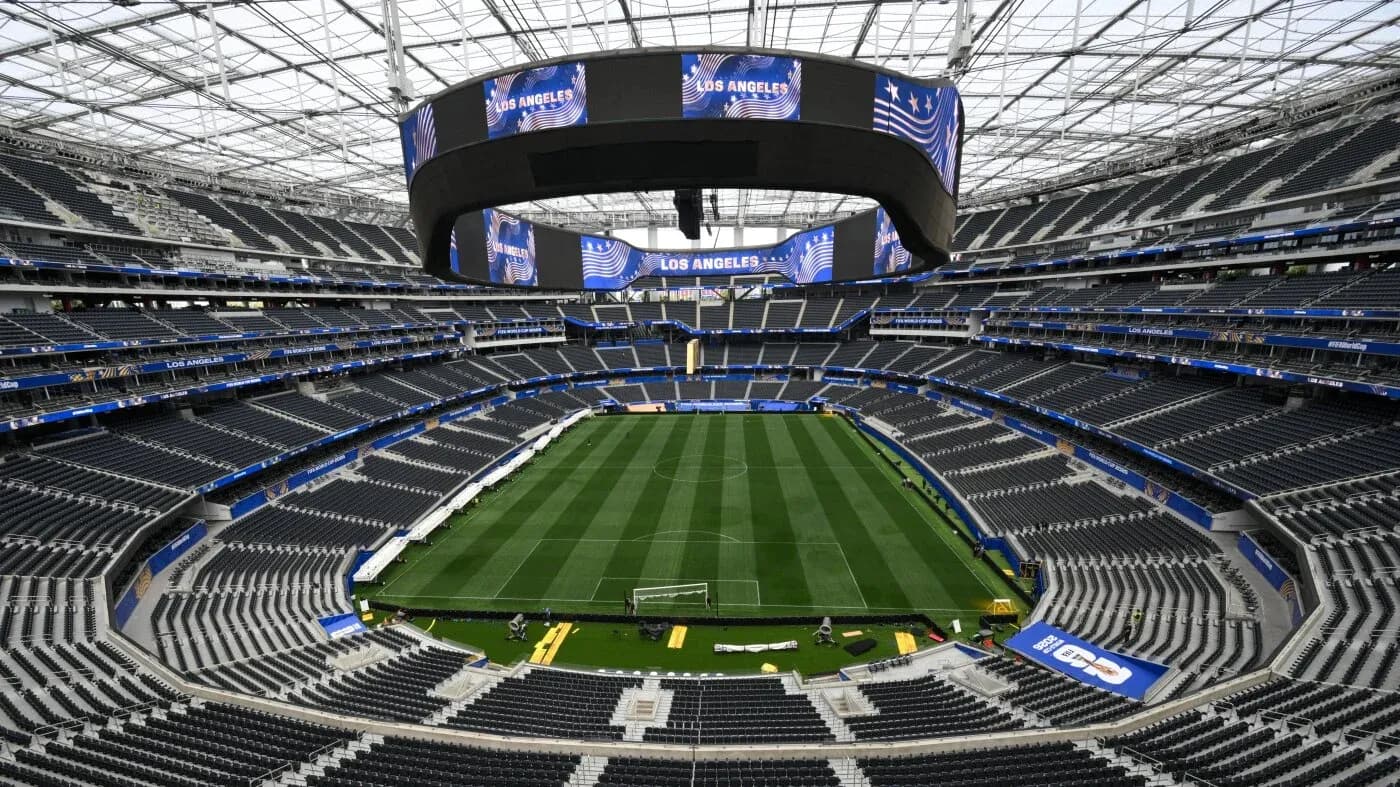
On Friday night in Southern California, the U.S. men’s national team walks into a stadium and a moment it has been chasing for nearly a decade, opening its 2026 World Cup campaign against Paraguay. The tournament has not been on American soil since 1994. Back then, the U.S. was a curiosity. Now it is expected to act like it belongs.
For U.S. Soccer, this World Cup has been the red circle on every calendar, the fixed point on every long-term plan. The chance not just to host, but to change the conversation. To move on from the old storylines about plucky underdogs, about a country that loves sports but never quite cracked the global game.
History still hangs over this team. The modern benchmark remains that 2002 run to the quarterfinals, a surprise surge that has never truly been matched. Since then, the U.S. has managed only three wins across all World Cups combined, a record that underlines the gap between American ambition and the reality at the sport’s sharp end.
This group believes it can close that gap. Not with slogans, but with resumes.
For the first time, the national team’s core is built almost entirely from players who start and matter in Europe’s biggest leagues. Tyler Adams anchors a midfield forged in the Premier League’s intensity. Chris Richards and Antonee Robinson defend every week against some of the world’s most dangerous forwards in England. Weston McKennie has become a trusted piece at Juventus, a club that measures seasons in trophies. Christian Pulisic, once the teenage face of American promise, is now 27 and the attacking heartbeat of AC Milan.
“This is for me the biggest opportunity to grow the game, to inspire people, to show that American players are at the level of the rest of the world,” Adams said on Thursday. It was not a boast. It sounded more like a mission statement.
First, though, comes a test that could turn awkward if taken lightly.
A bruising opener
Paraguay, ranked No. 40 in the world, arrives as a dangerous underdog and a familiar one. The sides met in a feisty friendly last November, a 2-1 U.S. win that descended into a stoppage-time scuffle. The scoreline told one story; the mood told another. This will not be a gentle welcome-home party.
“We know that they’re gonna be super, super aggressive, so we’re going to have to match that. We saw that the last time we played them,” U.S. forward Tim Weah said. He has felt that edge up close. So has the rest of the American front line.
There is a twist to this rematch. Paraguay might be without its brightest young talent, 22-year-old midfielder Julio Enciso, who was stretchered off in the first half of the team’s final warm-up match last week. His potential absence strips some creativity and spark from the South Americans, but it does not change their identity: combative, compact, and happy to drag the game into a fight.
For the U.S., that might be the real examination. Not whether this team can trade passes with elite opponents — its players do that every weekend in Europe — but whether it can impose its style in a World Cup match that threatens to turn chaotic.
The stakes are immediate. Win on Friday and the Americans seize control of a group that also features Australia and Turkey. Drop points and the margin for error shrinks before the tournament has even settled into its rhythm.
Australia awaits next week, a side that has made a habit of being awkward in major tournaments. Turkey follows on June 25 to close out the group stage, a final hurdle that could decide whether this home World Cup surges into the knockout rounds or stalls at the first fence.
The World Cup has come back to America. Now comes the harder question: is this the moment America finally catches up to the World Cup?