Spain's Tactical Dominance in World Cup Final Victory
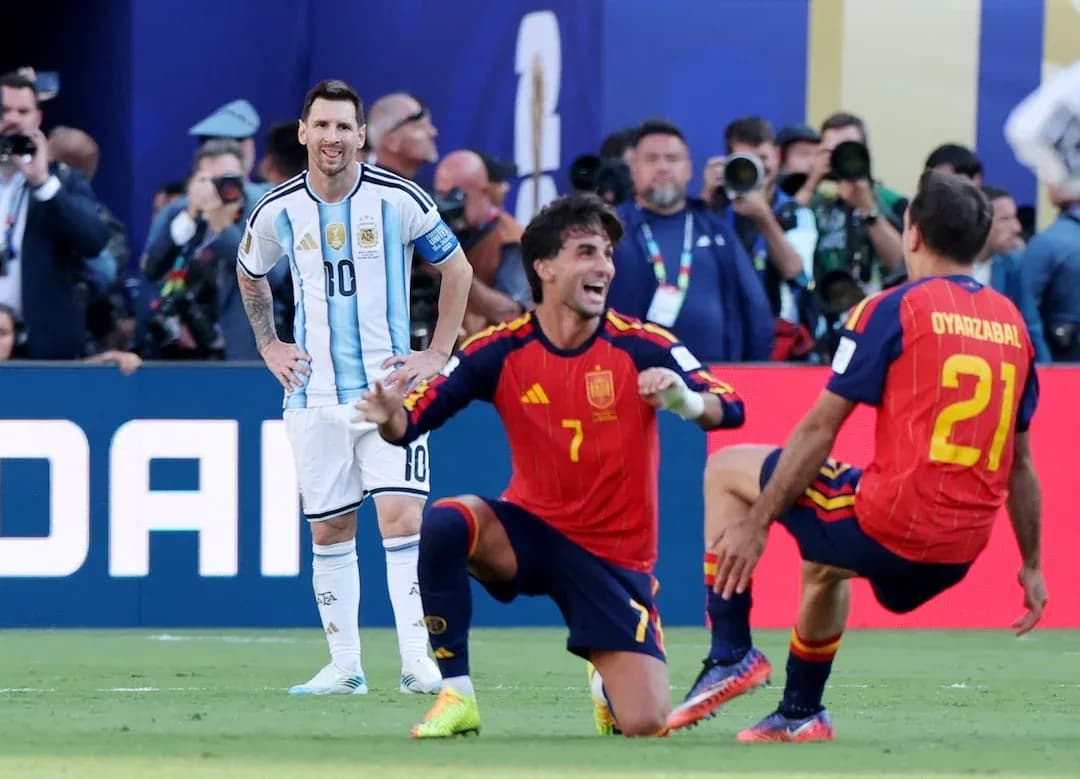
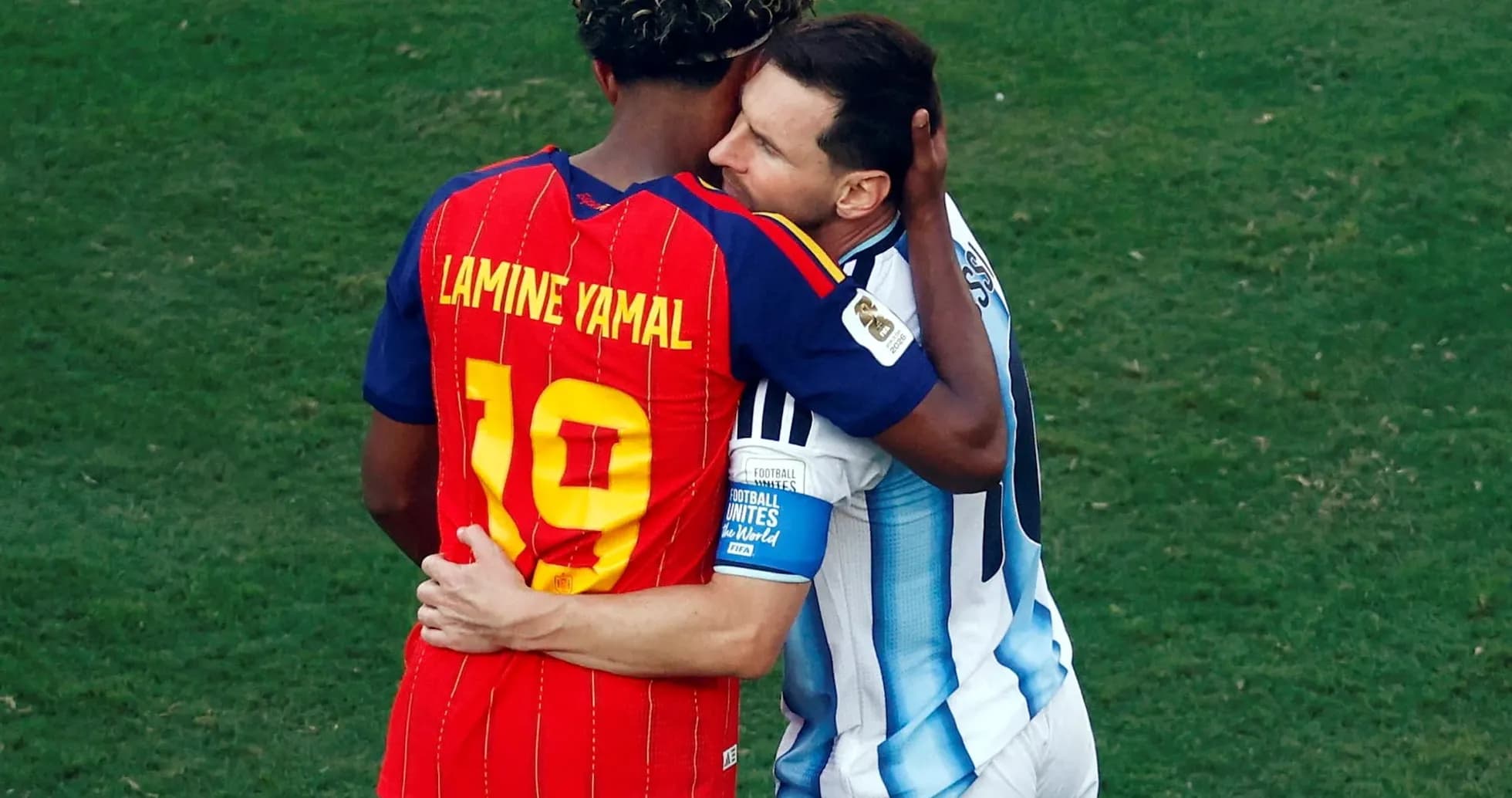
Spain’s 1–0 extra‑time win over Argentina in the World Cup Final at MetLife Stadium was a tactical domination disguised by the narrow scoreline. Luis de la Fuente’s 4‑2‑3‑1 monopolised the ball, pinned Argentina deep and eventually broke them in extra time, while Lionel Scaloni’s 4‑4‑2 slid from controlled compactness into a desperate low block once Spain’s territorial pressure and Argentina’s disciplinary collapse converged.
Executive Summary
Across 120 minutes Spain produced 20 shots to Argentina’s 2 and held 65% possession, reflecting a game where structure and control were almost entirely Spanish. The decisive moment came in extra time, when Ferran Torres finished from a Nico Williams assist, capping a performance in which Spain generated 1.94 xG to Argentina’s 0.22. Argentina never registered a shot on target, relying on deep defending and Emiliano Martínez’s shot‑stopping to stay alive, but a late red card for Enzo Fernández left them defending the box with 10 men and almost no counter‑threat.
Scoring Sequence & Disciplinary Log
With the match goalless at 90 minutes, the only strike arrived in extra time:
106' Ferran Torres (Spain) — assist Nico Williams → Spain 1–0 Argentina
Card chronology (team totals: Spain 0, Argentina 6 yellow, 1 red; total 7 cards):
- -5' Cristian Romero (Argentina) — Argument
- 41' Lisandro Martínez (Argentina) — Foul
- 52' Leandro Paredes (Argentina) — Unsporting behaviour
- 83' Enzo Fernández (Argentina) — Argument
- 90+3' Enzo Fernández (Argentina) — Foul (second yellow)
- 90+3' Enzo Fernández (Argentina) — Foul (Red Card following the second yellow)
- 111' Alexis Mac Allister (Argentina) — Foul
The early booking for Cristian Romero before kickoff signalled Argentina’s emotional edge, and the accumulation on Enzo Fernández and Alexis Mac Allister later on reflected a midfield increasingly stretched and reactive as Spain accelerated the tempo and circulation.
Tactical Breakdown & Personnel
Spain’s 4‑2‑3‑1 was built on a double pivot of Rodri and Fabián Ruiz, with Lamine Yamal, Dani Olmo and Alex Baena supporting Mikel Oyarzabal. The structure aimed to create constant overloads between the lines against Argentina’s flat 4‑4‑2. With 852 total passes and 762 accurate (89%), Spain used circulation as a defensive tool as much as an attacking one, denying Argentina transitions and forcing their forwards to defend deep.
Progression hinged on Rodri’s positioning in the left half‑space and Fabián Ruiz’s ability to drop and form a three with Pau Cubarsí and Aymeric Laporte. This gave Pedro Porro and Marc Cucurella license to push high and pin Argentina’s wide midfielders. As the match wore on, substitutions sharpened the attacking line: Pedri for Fabián Ruiz and Ferran Torres for Mikel Oyarzabal at 62' added vertical running and more aggressive occupation of the box; Nico Williams for Alex Baena at 75' injected direct 1v1 threat on the flank. Martín Zubimendi’s introduction for Rodri at 99' maintained control at the base, while Eric García for Laporte at 99' preserved freshness in the first line for defensive restarts.
Spain’s pressing was measured rather than frantic. The front four screened passes into Enzo Fernández and Alexis Mac Allister, forcing Argentina to play long or wide. With only 35% possession and 463 passes (357 accurate, 77%), Argentina struggled to string sequences together. Julián Alvarez and Lionel Messi were often isolated, dropping into congested zones where Spain’s midfield box could swarm them.
Argentina’s 4‑4‑2, with Nicolás González and Rodrigo De Paul nominally wide, was clearly designed to be compact and narrow. Early on, Lisandro Martínez and Cristian Romero held a high enough line to keep Spain away from the box, but Spain’s patience gradually pushed Argentina deeper. The substitutions told the story: Nicolás Otamendi for Lisandro Martínez at 44' and Nahuel Molina for Gonzalo Montiel at 58' refreshed the back line; Leandro Paredes for Nicolás González at 46' thickened central protection but further blunted the counter; Facundo Medina for Cristian Romero and Giuliano Simeone for Rodrigo De Paul at 70' tilted the side towards pure containment and sporadic counters through fresh legs up front.
Discipline became a structural issue. Repeated fouls and Arguments from Enzo Fernández and others were not just emotional flashes but the product of being consistently second to the ball. Once Enzo Fernández received his second yellow and subsequent red at 90+3', Argentina’s 4‑4‑1 retreated even deeper, with the last out‑ball essentially limited to hopeful clearances towards Messi or the substitutes.
In goal, Unai Simón (Spain) was almost a non‑factor in shot‑stopping terms, with 0 Goalkeeper Saves recorded, underlining Spain’s territorial dominance and the protection from the back four and double pivot. His role was primarily in build‑up, offering an extra man to circulate under minimal pressure. Emiliano Martínez (Argentina), by contrast, was central to Argentina’s survival: he made 11 Goalkeeper Saves, matching Spain’s 12 shots on goal minus the single strike that beat him. His 1.81 goals prevented aligned with Spain’s 1.94 xG, illustrating how his interventions kept the scoreline narrow long after Argentina’s structure had been bent back into their own box.
The Statistical Verdict
The raw numbers underscore how one‑sided the final was. Spain’s 20 total shots, with 12 on goal and 3 blocked, against Argentina’s 2 total shots (0 on goal, 1 blocked), mirror the xG gap: 1.94 for Spain versus 0.22 for Argentina. Spain’s 9 corner kicks to Argentina’s 4 reflected sustained pressure and territorial encampment around Argentina’s area.
Possession (65% to 35%) and passing volume (852 vs 463) were not sterile; they were the platform for wave after wave of structured attacks, particularly once Ferran Torres and Nico Williams were on the pitch. Argentina’s 25 Fouls and 7 cards (including a red) contrasted with Spain’s clean sheet in disciplinary terms, and that imbalance was tactical as much as temperamental: Argentina were constantly making recovery challenges and last‑ditch interventions in zones where Spain had engineered overloads.
Ultimately, this final was decided by the interaction of control and resistance. Spain’s system, substitutions and technical security produced overwhelming territorial and chance superiority; Argentina’s compactness, Emiliano Martínez’s shot‑stopping and individual defensive grit delayed the outcome but could not overturn the underlying tactical pattern that Spain imposed from the first whistle to the 120th minute.