Spain vs Argentina: A World Cup Final Analysis
MetLife Stadium in East Rutherford has already witnessed the ending: Spain 1–0 Argentina after extra time, a World Cup final that stretched to 120 minutes and never reached a shootout. But to understand how these two sides arrived at that narrow separation, you have to start with their seasonal DNA and the way their squads were built for this night.
I. The Big Picture – Two Perfect Machines, One Tiny Gap
Heading into this game, Spain and Argentina had carved near-flawless paths through the tournament. In the group stage, Spain topped Group H with 7 points, a goal difference of 5 built on 5 goals scored and none conceded across 3 matches. Argentina were even more ruthless in Group J: 9 points from 3 wins, 8 goals scored and just 1 conceded, a goal difference of 7.
Over the entire World Cup campaign, Spain’s profile was that of a control-obsessed machine. Overall they played 8 matches, winning 7 and drawing 1, without a single defeat. In total they scored 14 goals and conceded just 1. That yields an overall average of 1.8 goals scored per match and 0.1 conceded. Seven clean sheets in eight fixtures underline a defensive structure that rarely bent, let alone broke.
Argentina’s season, by contrast, was that of a high-wire act powered by star quality. Overall they also played 8 matches, with 7 wins and just 1 loss. In total they scored 19 goals and conceded 8, averaging 2.4 goals scored and 1.0 conceded per game. They could overwhelm anyone, but they lived with more defensive exposure and only 2 clean sheets in total.
The formations chosen for the final reflected those identities. Luis de la Fuente doubled down on Spain’s positional play with a 4-2-3-1: Unai Simón behind a back four of Pedro Porro, Pau Cubarsí, Aymeric Laporte and Marc Cucurella, shielded by Rodri and Fabián Ruiz. Ahead of them, Lamine Yamal, Dani Olmo and Álex Baena supported Mikel Oyarzabal as the lone forward. It was a shape designed to dominate the ball, squeeze territory and wait for the one decisive opening.
Lionel Scaloni answered with a classic Argentina 4-4-2: Emiliano Martínez in goal, a back line of Gonzalo Montiel, Cristian Romero, Lisandro Martínez and Nicolás Tagliafico; a midfield four of Rodrigo de Paul, Enzo Fernández, Alexis Mac Allister and Nicolás González; and a front two of Lionel Messi and Julián Álvarez. On paper, it was a structure that could morph between a 4-4-2 block without the ball and a 4-2-3-1 with Messi drifting into the hole.
II. Tactical Voids – Discipline, Fatigue and the Edges of Control
Neither side entered the final with confirmed absences, so the voids were tactical rather than personnel-driven. For Spain, the main risk was cumulative fatigue in a side that had relied heavily on its core structure and on long spells of pressing and possession. Their yellow-card timing across the tournament hinted at a team that sometimes had to foul to maintain control late in games: 33.33% of their yellow cards came between 31–45 minutes and 50.00% in the 91–105 window. That extra-time spike suggested that as matches stretched beyond 90 minutes, the emotional and physical load could drag them into risky challenges.
Argentina’s disciplinary profile was even more volatile. Across the World Cup, their yellow cards were scattered but with a clear late-game surge: 13.33% between 31–45, another 13.33% between 46–60, 13.33% between 76–90, and then a heavy 33.33% between 91–105 and 20.00% between 106–120. They even picked up a red card in the 91–105 range. In a final that ultimately went to extra time, that pattern mattered: Argentina were always likely to walk the disciplinary tightrope as legs and tempers frayed.
On the penalty front, Spain came in with a spotless record: 1 penalty in total, 1 scored, none missed. Argentina’s story was the opposite. In total they had taken 3 penalties, scoring only 1 and missing 2. Crucially, Lionel Messi himself had missed 2 penalties over the tournament. That meant that if this final drifted towards spot-kick psychology – even without reaching a shootout – Spain carried a quiet mental edge.
III. Key Matchups – Hunter vs Shield, Engine Room vs Enforcer
The most obvious “Hunter vs Shield” duel was Lionel Messi against Spain’s defensive wall. Messi arrived as the tournament’s most devastating all-rounder: in total 8 goals and 4 assists, with 28 shots (18 on target), 348 completed passes at 81% accuracy, 26 key passes and 27 successful dribbles from 38 attempts. He had drawn 20 fouls and won 60 of 102 duels. Everything Argentina did in the final third flowed through his gravity.
Spain’s answer was systemic rather than individual. Overall they had conceded just 1 goal in 8 matches, with an overall average of 0.1 goals against per game and 7 clean sheets. Pau Cubarsí and Aymeric Laporte formed a centre-back pairing comfortable stepping into midfield, while Rodri and Fabián Ruiz provided a double pivot that could both screen Messi’s pockets and recycle possession. The plan was clear: deny Messi the half-spaces between lines, force him wide or backwards, and trust the collective rather than a single marker.
In the “Engine Room” duel, Enzo Fernández and Alexis Mac Allister faced Rodri and Fabián Ruiz. Enzo had quietly been one of Argentina’s most influential players: across the tournament he completed 512 passes at 93% accuracy, made 11 tackles, 1 block and 5 interceptions, and contested 66 duels. Yet his disciplinary record – 12 fouls committed and a yellow plus a yellow-red – hinted at a player who could be dragged into rash moments under pressure.
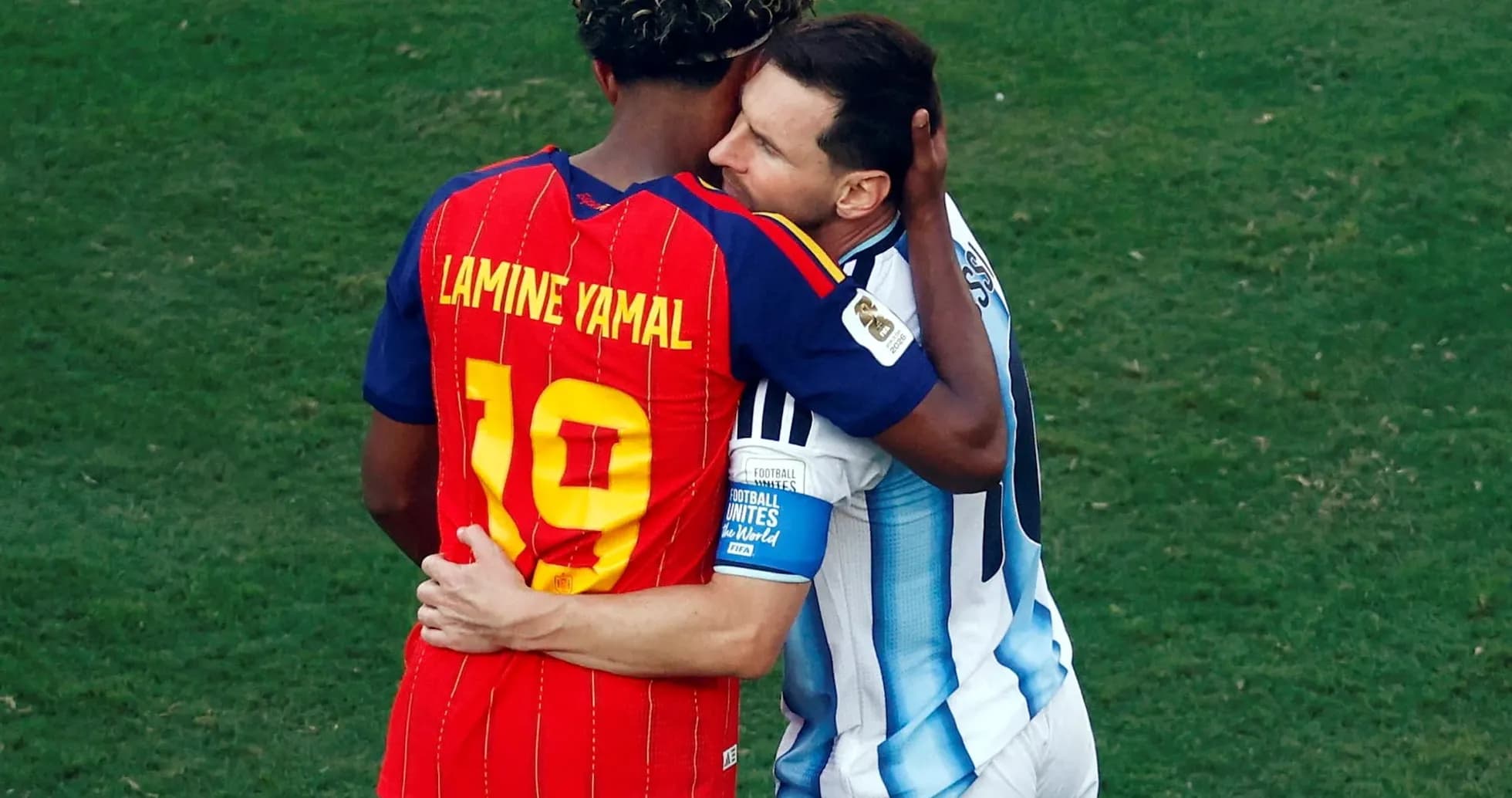
Rodri, by contrast, epitomised Spain’s control. With Spain’s overall form reading DWWWWWWW, his role as the metronome in front of the back four allowed Lamine Yamal and Dani Olmo to stay higher and threaten between the lines. Lamine Yamal’s presence on the right, supported by Pedro Porro’s overlapping runs, pinned Nicolás Tagliafico and Nicolás González deep, limiting Argentina’s ability to spring quick counters down that flank.
Up front, Mikel Oyarzabal represented Spain’s cutting edge. Across the tournament he had 5 goals and 1 assist in total, from 21 shots (12 on target), and had been substituted out 6 times in 8 appearances – a sign of how often he emptied the tank with off-ball running. His duel with Cristian Romero and Lisandro Martínez was brutal and constant: Oyarzabal’s movement across the line dragged Romero into wide channels and forced Lisandro to make decisions about stepping out or holding the line.
Argentina’s secondary hunter, Lautaro Martínez, lurked on the bench. He had also scored 8 goals and provided 4 assists in total, mirroring Messi’s output, and his introduction later in games had often tilted the balance. In this final, though, Spain’s control of central spaces and their almost immaculate defensive record meant even a double-striker threat found few clear sights of goal.
IV. Statistical Prognosis and How It Played Out
On paper, the numbers suggested a knife-edge final. Argentina’s overall 2.4 goals per game against Spain’s 0.1 goals conceded per game framed the night as an irresistible force versus an immovable object. Spain’s attack, averaging 1.8 goals overall, faced an Argentina defence conceding 1.0 per match – solid but not impregnable.
Discipline and penalties tilted the underlying probabilities slightly towards Spain. Argentina’s heavy concentration of yellow cards and that single red in extra-time periods, combined with Messi’s 2 missed penalties in total and Argentina’s 2 missed penalties overall from 3, hinted at a side vulnerable to psychological swings in the final stretch. Spain, with 7 clean sheets overall and a perfect penalty record, looked better equipped to stay calm if the match tightened.
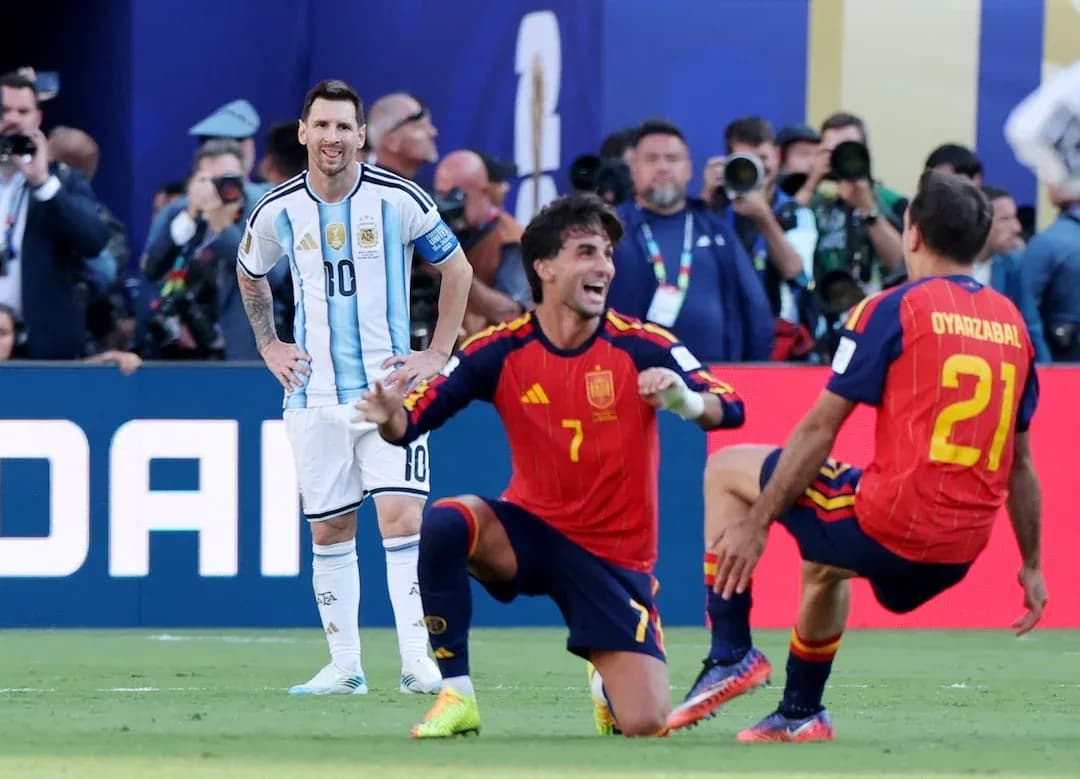
In the end, the story followed the numbers more than the reputations. Spain’s 4-2-3-1 smothered Argentina’s 4-4-2, the double pivot of Rodri and Fabián Ruiz blunting Messi’s influence between the lines, while Lamine Yamal and Dani Olmo stretched the Albiceleste back four. As the clock ticked beyond 90 minutes into the extra-time window where Argentina’s card profile was most volatile, Spain’s structure and serenity held.
The decisive moment came in extra time, fittingly in a phase of the match where Spain’s season-long defensive assurance and Argentina’s late-game disciplinary strain intersected. A single Spanish goal in that period – 1-0 in extra time, with the full-time score still 0-0 – was enough to crown a campaign in which Spain had been almost perfect statistically.
Following this result, the numbers will tell a simple story: Spain, unbeaten, with just 1 goal conceded across the entire tournament, found one more moment of clarity in the 120th minute chaos. Argentina, powered by Messi’s brilliance and an attack that had averaged 2.4 goals per game overall, finally ran into a defence that refused to break. On the biggest stage, the shield outlasted the hunters.