Spain Crowned World Champions After 1-0 Win Against Argentina
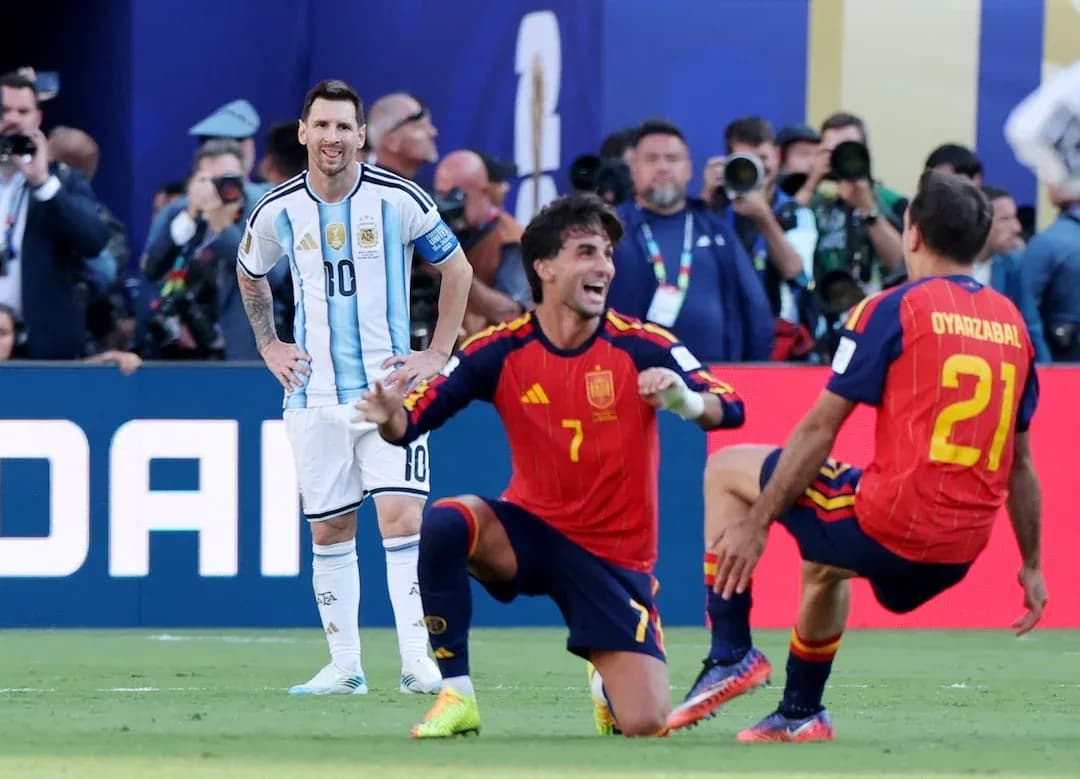
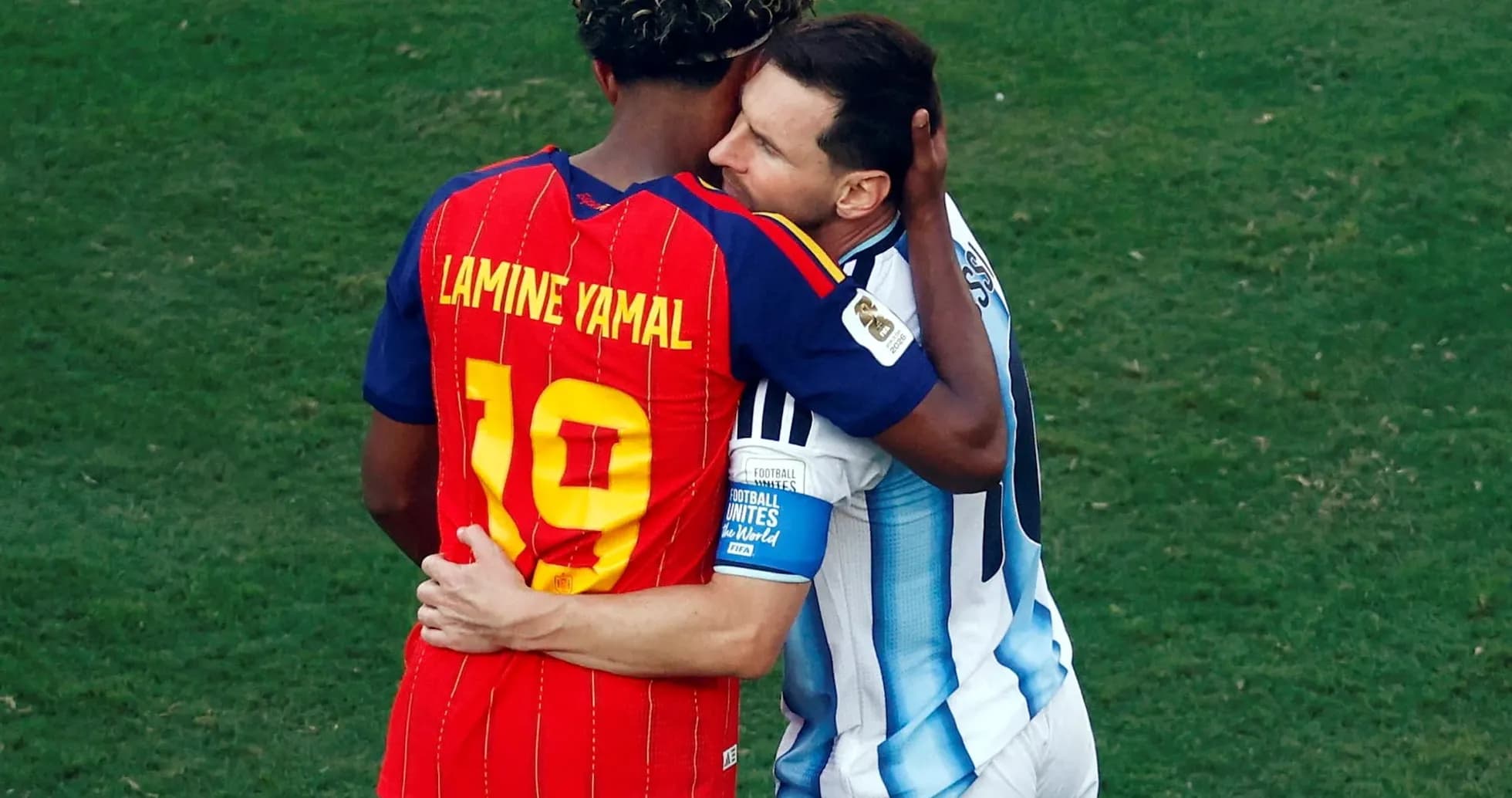
Spain 1-0 Argentina (after extra time) at MetLife Stadium crowns Spain as world champions, decided by Ferrán Torres’ extra-time strike. Both sides came into the final as group winners from the Round of 32 phase, but Spain’s dominance of territory and chances was finally rewarded, adding three more goals to their tournament tally and maintaining a perfect defensive record across this match.
Match Report
The final opened in cagey fashion, with Spain controlling possession but struggling to break through Argentina’s compact 4-4-2 block. The first major disciplinary flashpoint came on 41', when Lisandro Martínez (Argentina) was booked — yellow card (Foul) — after stepping out aggressively to halt a Spanish attack.
Argentina reacted quickly to protect their back line. On 44', Nicolás Otamendi replaced Lisandro Martínez (Argentina), a like-for-like change that preserved their defensive structure while removing a booked centre-back under sustained pressure.
As the first half ticked into its final minute, Lionel Scaloni sought more control in midfield. On 45', Leandro Paredes replaced Nicolás Iván González (Argentina), shifting Argentina towards a more conservative shape with an extra passer in central areas.
Early in the second half, the tension rose. On 52', Leandro Paredes (Argentina) — yellow card (Argument) — was booked after protesting a decision, underlining Argentina’s growing frustration without the ball.
Scaloni continued to adjust his full-back profile. On 58', Nahuel Molina replaced Gonzalo Montiel (Argentina), offering more energy on the right flank to cope with Spain’s wide rotations.
Spain’s first attacking reshuffle came on 62'. Ferrán Torres replaced Mikel Oyarzabal (Spain), adding more direct running in behind. In the same minute, Pedri replaced Fabián Ruiz (Spain), injecting extra creativity and line-breaking passing from midfield.
Argentina then refreshed their central defence and midfield legs. On 70', Facundo Medina replaced Cristian Romero (Argentina), and Giuliano Simeone Baldini replaced Rodrigo De Paul (Argentina), moves that aimed to sustain intensity in duels and pressing as Spain’s circulation continued to stretch them.
Spain answered with further attacking tweaks on 75'. Nico Williams replaced Alejandro Baena Rodríguez (Spain), bringing one‑v‑one threat from wide areas, while Mikel Merino replaced Daniel Olmo Carvajal (Spain), adding late runs from midfield to attack Argentina’s box.
Argentina’s discipline continued to fray under pressure. On 82', Enzo Fernández (Argentina) — yellow card (Dissent) — went into the book after protesting, and on 90+2', Cristian Romero (Argentina) — yellow card (Dissent) — followed for similar remonstrations, reflecting a side increasingly pinned back and aggrieved.
As extra time began, Spain rotated their base of possession. On 99', Martín Zubimendi replaced Rodrigo Hernandez Cascante (Spain), offering fresh defensive cover and simple distribution in front of the back four, while Eric García replaced Aymeric Laporte (Spain) to bring new legs into central defence.
Argentina made another change on 102', but this time in a surprising role swap: Marcos Senesi replaced Julián Álvarez (Argentina), effectively sacrificing a forward for a defender and signalling a clear intent to hold out and reach a penalty shootout.
The touchline tension boiled over on 104', when Lionel Sebastián Scaloni (Argentina coach) — yellow card (Dissent) — was booked, emblematic of Argentina’s frustration at being forced deeper and deeper.
The decisive moment arrived on 106'. Spain goal — Ferrán Torres (assisted by Nico Williams). Williams attacked from the flank and delivered the crucial final ball, with Torres finishing clinically from close range to make it 1-0 and finally translate Spain’s territorial dominance into a lead.
Argentina’s attempts to respond were limited and increasingly desperate. On 111', Alexis Mac Allister (Argentina) — yellow card (Foul) — was cautioned after a late challenge, another sign of a side chasing shadows rather than constructing sustained attacks. Spain then managed the remaining minutes with composure, closing out a 1-0 extra-time win without further major incidents.
Fixture Statistics & Tactical Audit
- xG: — not provided for either team
- Possession: Spain 65% vs 35% Argentina
- Shots on Target: Spain 12 vs 0 Argentina
- Goalkeeper Saves: Spain 0 vs 11 Argentina
- Blocked Shots: Spain 3 vs 1 Argentina
Spain’s performance was dominant (65% possession and 20 total shots to Argentina’s 2) and relentlessly territorial. Although explicit xG values are not listed, the shot volume and profile — 12 shots on target for Spain against none for Argentina — strongly support the fairness of the 1-0 scoreline. Emiliano Martínez’s 11 saves underline how much Argentina relied on last-ditch goalkeeping and blocking (1 blocked shot plus repeated penalty-box interventions) rather than structured attacking. Argentina’s two attempts, with only one from inside the box and none on target, reveal a reactive game plan that never translated into genuine threat. Spain’s high pass completion (762 accurate passes from 852 total) allowed them to recycle pressure, pinning Argentina back and making the eventual breakthrough in extra time a statistical inevitability rather than a smash-and-grab.
Standings Update & Seasonal Impact
Spain came into the knockout phase as Group H leaders on 7 points with a goal difference of +5 (5 scored, 0 conceded). This 1-0 win adds three more points in their overall World Cup campaign context, taking them to 10 points, with 6 goals for and still 0 against, and a new goal difference of +6. It confirms a flawless defensive run through this stage and secures the ultimate prize: the World Cup title.
Argentina, who had cruised through Group J with 9 points and a +7 goal difference (8 scored, 1 conceded), finish the tournament beaten by the narrowest margin in the final. They remain on 9 points in their campaign ledger, now with 8 goals for and 2 against, and a reduced goal difference of +6. The defeat ends their bid for back-to-back global crowns at the final hurdle, underlining how their previously free-scoring attack was neutralised when faced with Spain’s possession-heavy, pressing structure.
Lineups & Personnel
Spain Starting XI
- GK: Unai Simón
- DF: Pedro Porro, Pau Cubarsí Paredes, Aymeric Laporte, Marc Cucurella
- MF: Rodri, Dani Olmo, Fabián Ruiz, Álex Baena
- FW: Lamine Yamal, Mikel Oyarzabal
Argentina Starting XI
- GK: E. Martínez
- DF: G. Montiel, C. Romero, Lisandro Martínez, N. Tagliafico
- MF: R. De Paul, E. Fernández, A. Mac Allister
- FW: N. González, L. Messi, J. Álvarez
Post-Match Verdict
Spain delivered a clinical performance (12 shots on target from 20 attempts, 65% possession) built on structured pressing and patient circulation. Their 4-1-2-3 shape consistently overloaded Argentina’s midfield, with Rodri anchoring and the interiors rotating to create free men between the lines. The wave of second-half and extra-time substitutions — Ferrán Torres and Nico Williams in particular — translated territorial dominance into decisive penetration, culminating in the 106' winner.
Argentina’s display was deeply vulnerable in attacking terms (0 shots on target from just 2 total attempts) and overly reliant on defensive heroics. Emiliano Martínez’s 11 saves kept them alive far longer than the underlying numbers suggested they should have been, while repeated yellow cards for dissent and fouls (five bookings for players plus one for coach Scaloni) reflected a side under constant stress. The late shift to an even more defensive configuration, with Marcos Senesi replacing Julián Álvarez, underlined their primary objective of surviving to penalties rather than contesting open play. Ultimately, Spain’s control of the ball, chance creation, and game tempo made the extra-time victory not only deserved but an accurate reflection of the tactical balance of the final.