Portugal vs Croatia: World Cup Round of 32 Clash
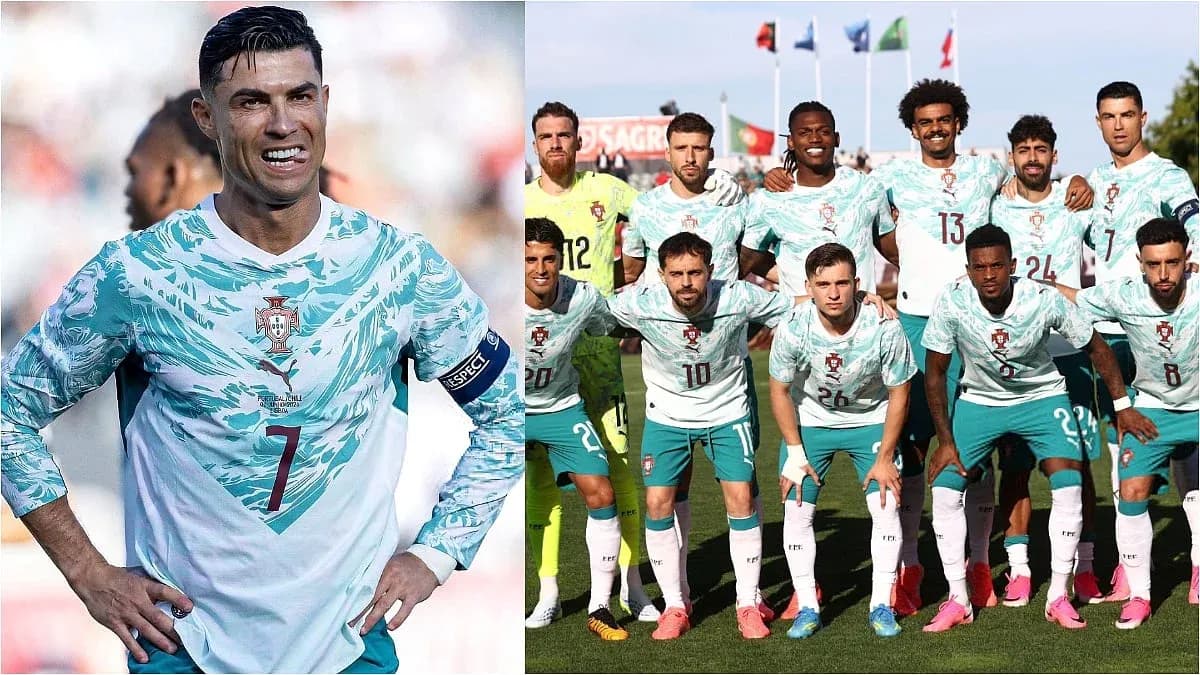
Under the lights of BMO Field in Toronto on 2 July 2026, two generations of European contenders collide as Portugal and Croatia step into a World Cup Round of 32 that could redefine their tournaments. Portugal arrive with the weight of expectation and a squad stacked with elite talent, knowing that anything less than a deep run will feel like failure. Croatia, hardened by years of knockout football and still driven by the craft of L. Modric and the steel of J. Gvardiol, see another chance to punch above their weight on the biggest stage.
Season Context
Portugal come into the knockout phase from Group K with 5 points from 3 matches, scoring 6 goals and conceding just 1 (goal difference +5). With 1 win and 2 draws and a place already confirmed in the Round of 32 (description "Round of 32"), they have shown control rather than chaos, building their campaign on a tight defence and bursts of attacking quality (6 goals in 3 games).
Croatia emerge from Group L in a similar position of strength but via a different route: 6 points from 3 matches, with 2 wins and 1 defeat, and a perfectly balanced goal record of 5 scored and 5 conceded. Their status is also locked as "Round of 32", but their path has been more volatile (5 goals scored and 5 conceded in 3 matches), suggesting a side capable of both cutting opponents open and leaving space to be punished.
Form & Momentum
Portugal’s form line of "DWD" paints the picture of a team that is hard to beat and increasingly assertive. Across their 3 matches, Portugal have averaged 2.0 goals scored per game and just 0.3 conceded (6 for, 1 against in 3), underlining a balanced side that is both dangerous going forward and extremely solid at the back. That blend justifies describing them as controlled and efficient (goal difference +5 from 3 games).
Croatia’s "WWL" sequence tells of a side that started strongly before being checked. They average 1.7 goals scored and 1.7 conceded per match (5 for, 5 against in 3), making them more open and less predictable than Portugal. The two wins show they are capable of seizing momentum (2 victories in 3), but the equal goals for and against tally highlights a vulnerability when games become stretched (goal difference 0 from 3 games).
Head-to-Head Patterns
Recent competitive history between these sides has been rich and finely balanced, especially in the UEFA Nations League. On 18 November 2024, Croatia and Portugal shared a tense 1-1 draw at Stadion Poljud in Split (1-1, UEFA Nations League, season 2024, November 2024), with Croatia as the home side and Portugal as the visitors.
Earlier that same Nations League campaign, Portugal edged Croatia in Lisbon at Estádio da Luz, winning by a single goal in a tight contest (2-1, UEFA Nations League, season 2024, September 2024). Portugal were the home team in that match and converted their attacking edge into a narrow but significant victory.
Going further back in competitive play, the Nations League meeting at Stadion Poljud on 17 November 2020 produced another high-stakes encounter, with Portugal overturning Croatia on their own turf (2-3, UEFA Nations League, season 2020, November 2020). Croatia were at home that night but were outscored in a five-goal game that underlined Portugal’s ability to strike decisively away from home.
Tactical Preview
Portugal’s statistical profile in this World Cup points towards a structured, possession-oriented side built on a 4-2-3-1 base (formation 4-2-3-1 used in 3 matches). With 6 goals scored and only 1 conceded across 3 games, their average of 2.0 goals for and 0.3 against reflects a team that can dominate territory while limiting clear chances at the other end. The defensive core likely revolves around Rúben Dias at the back, protected by midfielders such as Rúben Neves, Joāo Neves or Matheus Nunes (all listed as midfielders), allowing creative figures like Bruno Fernandes and Bernardo Silva (both midfielders) to operate between the lines. Out wide, the pace and direct running of Rafael Leão and Pedro Neto (both midfielders in the squad listing) can stretch Croatia’s back line, while Cristiano Ronaldo and Gonçalo Ramos (both attackers) offer penalty-box presence. The clean sheet record in 2 of their 3 games in the wider data set (cleanSheet total 2 across 3) supports the idea of a compact block that concedes very few high-quality chances (1 goal against in 3 from standings).
Croatia, by contrast, have alternated between a 4-2-3-1 and a 3-4-2-1 (4-2-3-1 played 2 times, 3-4-2-1 once), reflecting tactical flexibility but also a certain instability. Their 5 goals scored and 5 conceded in 3 matches (1.7 for and 1.7 against per game) suggest a more open structure, particularly when they shift into a back three. The presence of J. Gvardiol, M. Pongracic and M. Erlic (all defenders) gives them the tools for either system, while the midfield remains anchored by the intelligence and passing range of L. Modric and M. Kovacic (both midfielders). Further forward, A. Kramaric (midfielder in the listing but often used in advanced roles), A. Budimir and P. Musa (attackers) give Croatia options to attack crosses and exploit transitions. However, their defensive average of 1.7 goals conceded per game (5 against in 3 from standings) and a single clean sheet in the broader data (cleanSheet total 1 across 3) underline a susceptibility when pressed high or forced to defend wide areas.
The comparison model leans towards Portugal, with an overall comparison index of 66.5% versus 33.5% for Croatia, and a defensive index that heavily favours the Portuguese (defence index 83% for Portugal vs 17% for Croatia). Portugal’s attack index of 55% against Croatia’s 45% also indicates a slight edge in chance creation, while the Poisson index of 84 vs 16 points to Portugal generating the more favourable scoring profile in the underlying model. Croatia’s marginal advantage in the form index (55% vs 45%) reflects their two group-stage wins, but the broader numbers still tilt the tactical balance towards Portugal’s more controlled approach.
Statistical Snapshot
- Competition: World Cup, season 2026 — 2 July 2026.
- Venue: BMO Field, Toronto.
- Prediction: Win or draw — Double chance : Portugal or draw.
- Win Probabilities: Home 45% / Draw 45% / Away 10%.
- Model: Portugal 66.5% — Croatia 33.5%.
Betting Verdict
The prediction model backs Portugal on a "win or draw" angle, and both the numbers and recent head-to-heads support that stance. Portugal’s defensive record (1 goal conceded in 3 matches) and superior overall comparison index (66.5 vs 33.5) contrast sharply with Croatia’s more porous profile (5 goals conceded in 3). The head-to-head pattern in competitive games also leans Portugal’s way, with away wins in Split and a home victory in Lisbon cited above. With home odds for Portugal ranging roughly between 1.73 and 1.81 (implied probability around 55–58%), and Croatia out at roughly 4.15 to 5.24 (implied probability around 19–24%), the safer value aligns with the advised double chance on Portugal or draw, trusting their stronger defence and deeper attacking options to carry them through this Round of 32 clash.