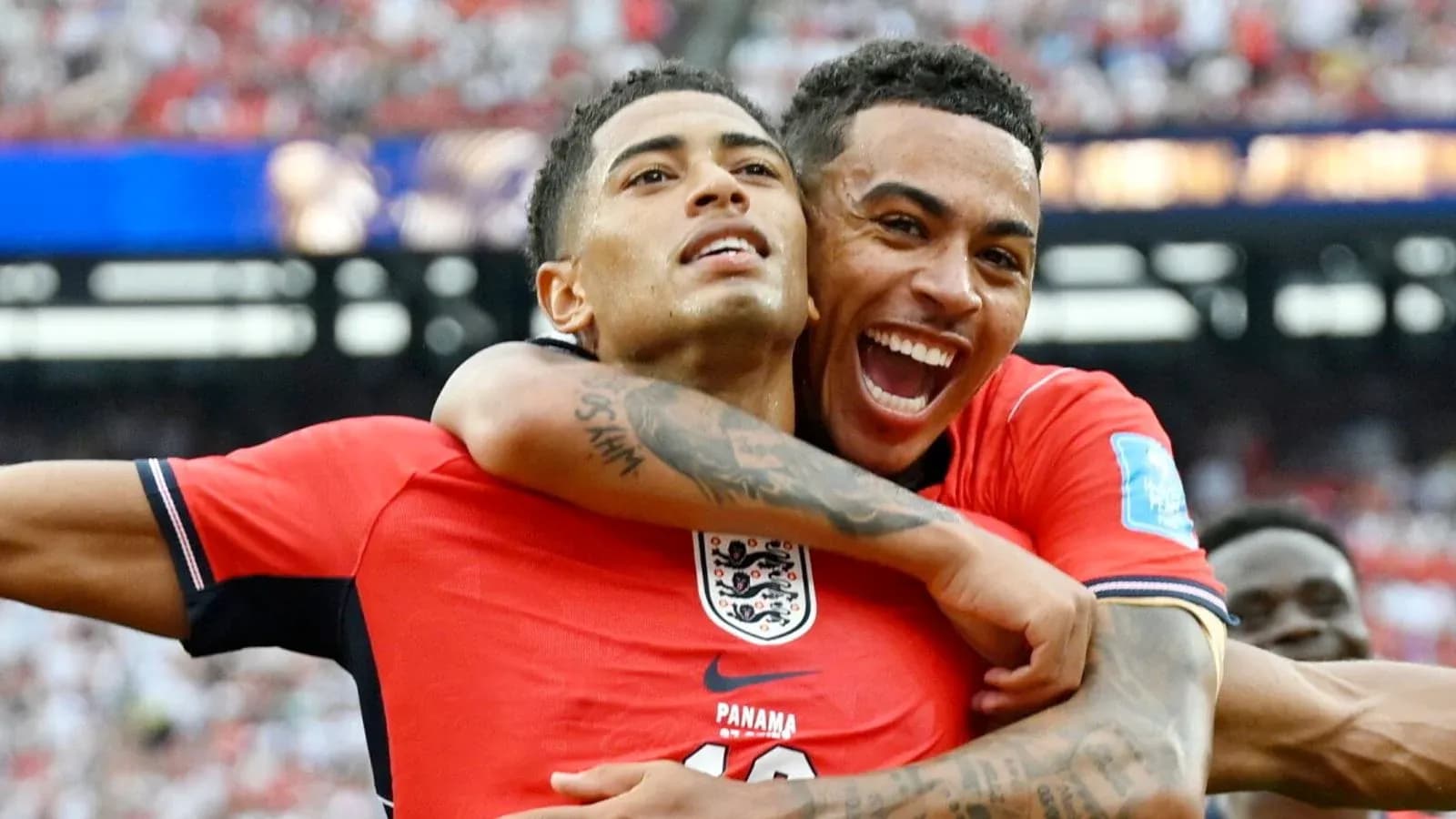
Bellingham's Midfield Impact in England's Win Over Panama
Thomas Tuchel walked away from England’s 2-0 win over Panama with the victory he needed – and a midfield problem he probably didn’t want.
Jude Bellingham caused it.
Deployed deeper alongside Elliot Anderson, the 21-year-old ran the game, scoring one, creating another and dictating the tempo in a way that turned a routine group fixture into a tactical question for the knockout rounds. Declan Rice is expected to return for Wednesday’s last‑32 tie against DR Congo. Rice plays if he’s fit. Everyone knows that.
So where does that leave Bellingham?
Bellingham changes the picture
Paul Merson watched Bellingham’s display and saw a conundrum forming for the England manager. The position Bellingham occupied against Panama is normally Rice territory, but the Real Madrid midfielder looked liberated, constantly on the ball, driving from deep, impossible to pin down.
That, Merson argues, is the point.
From deeper, Bellingham arrives rather than waits. He ghosts past markers instead of being crowded out between the lines. Against Ghana, stationed higher as a No 10, he kept showing but rarely received the ball, suffocated by a low block and bodies in front of him. Morgan Rogers suffered the same fate in that role against Panama, barely getting a touch as the game swirled around him.
The No 10 space is a cul-de-sac when teams sit in. The deeper role gives Bellingham a runway.
Tuchel now has to decide whether that runway can coexist with Rice’s presence, or whether one of his midfield stars has to sacrifice their preferred zone for the balance of the team.
Rice is non-negotiable – so who moves?
For Merson, there is no debate about Rice. When the opposition gets stronger, Rice becomes essential. He screens, he senses danger, he plugs gaps others don’t even see. Against the very best, England need that.
So the question isn’t Rice or Bellingham. It’s how to fit both without blunting England’s cutting edge.
Pairing them as a double pivot feels harsh on Anderson, who has quietly impressed. It also throws up another issue: what happens to the No 10? Rogers did not seize his chance against Panama, but Bellingham also struggled there against Ghana. The role is crucial, yet no one has truly made it theirs.
England still haven’t worked out how to feed that creative hub. Whoever plays between the lines must see the ball early and often. At the moment, that conduit isn’t functioning. Too many touches at the back, too much sideways traffic, not enough risk into central pockets.
Merson’s point is clear: England must decide not just who plays in those advanced midfield roles, but how they actually get the ball.
Let Bellingham run the game
What Bellingham showed against Panama is that he can solve that problem from a different angle. He wants the ball, demands it even, and plays with the restless energy of a schoolboy who refuses to be left out of the game.
It brings back memories for Merson of Wayne Rooney – everywhere, all the time, desperate to influence every phase.
From deeper, Bellingham can collect from the centre-backs, turn, and surge. He can break lines with his running, not just his passing. He can arrive in the box instead of waiting there, easier to track, easier to smother. For a side facing another deep, disciplined block in DR Congo, that movement from behind could be priceless.
But if Tuchel pushes him back up to No 10 again, the same problem looms. DR Congo are likely to sit in, just as Ghana and Panama did, with 10 behind the ball, closing off that central lane. England then risk their most influential midfielder being reduced to a decoy, marked by space rather than opponents.
The solution isn’t just positional. It’s psychological. Argentina give Lionel Messi the ball in tight spaces because they trust him to sort it out. England, Merson argues, need that same instinct with Bellingham: when in doubt, find him. Let him deal with the traffic.
Wide men stuck in second gear
Out wide, England are still waiting for ignition.
Against Panama, the ball went to the flanks quickly and often, but the end product never truly arrived. Marcus Rashford saw plenty of the ball in the first half and justified the calls for him to start over Anthony Gordon in one sense – he was involved – but he never really hurt Panama.
Bukayo Saka, meanwhile, looks short of his usual spark. Whether he is carrying a minor issue or simply searching for rhythm, only the England camp will know. Merson’s view is blunt: Saka has to play. In the biggest games, you want him on the pitch, even if he is not yet at his explosive best.
The positive spin? None of England’s four wingers have hit top form. So far, Merson rates them a six out of 10. That sounds underwhelming, but it also hints at upside. If they climb even a couple of notches as the stakes rise, they could tilt tight knockout ties on their own.
While Harry Kane has his goals, the defence steadied itself against Ghana and Bellingham took centre stage versus Panama, the wide players remain England’s dormant weapon. If they wake up, this team suddenly looks very different.
A seven out of ten – with room to grow
Merson scores England’s group stage as a collective seven out of 10. Efficient, controlled, but not yet convincing enough to scare the rest of the tournament.
They did what they had to do against Croatia, Ghana and Panama. No more, no less. There have been reality checks in both the Ghana and Panama games – spells where England looked predictable, a little flat, a little too easy to defend against.
That won’t be enough against the heavyweights.
France carry frightening firepower. Spain are Spain – technically supreme, always in control, but they often leave opponents alive in games that should be buried. Colombia have caught Merson’s eye too: pace, energy, and an intimate knowledge of the conditions. They look built for this tournament.
The field feels wide open. So many sides have match-winners who can flip a game in a moment. On any given day, anyone with a bit of quality and conviction has a shot.
England are in that group. But they will have to climb from seven out of 10 towards something closer to perfection as the rounds tick by. You can’t just flick the switch in a quarter-final and hope it works.
The headache Tuchel will welcome
So Tuchel walks into the DR Congo tie with a problem in midfield and questions out wide – but also with something more valuable: options.
He knows Rice must anchor his side when the opposition improves. He has seen Bellingham dominate a game from deeper. He understands the need to unlock the No 10 channel, to give his most gifted players the ball in the most dangerous areas, not just the safest ones.
England are still in the tournament. While they are, Merson believes, they have a chance to win it. That belief is fragile, always one bad performance from collapse, but it remains.
The task now is simple and brutal: reproduce the authority and clarity they showed against Croatia, sharpen the edges that dulled against Ghana and Panama, and solve the midfield puzzle that Bellingham has thrown on Tuchel’s desk.
If they get that right, this World Cup won’t just be about hope. It will be about how far that midfield can carry them.