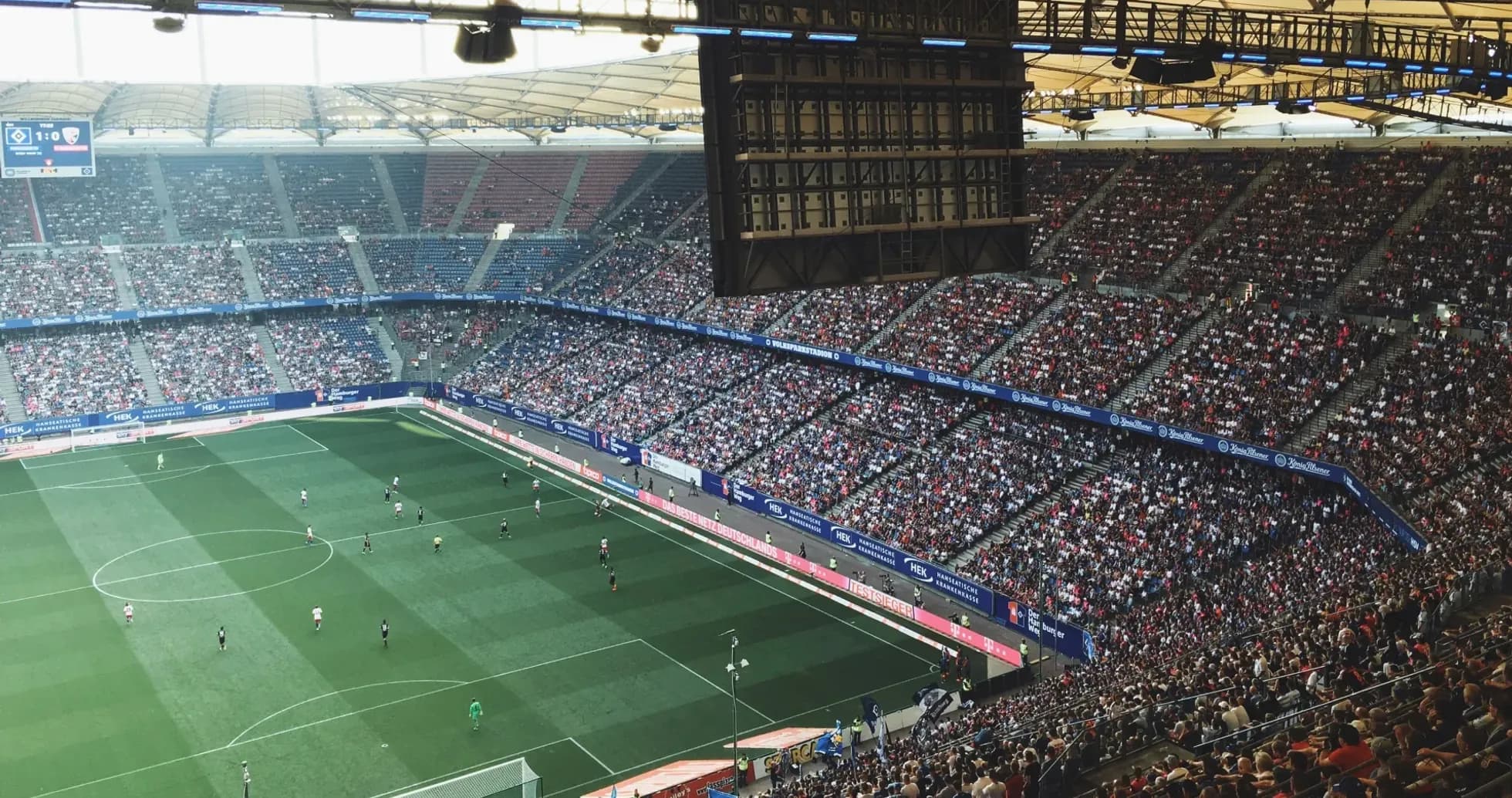
Phoenix Rising vs Oakland Roots: A Seven-Goal Thriller
Under the desert lights of Wild Horse Pass Stadium, Phoenix Rising and Oakland Roots produced a seven-goal thriller that felt more like a knockout 1/8-final than a group-stage clash. The scoreboard read 3–4 at full time, but beneath the chaos lay two very different squad identities colliding at full tilt.
I. The Big Picture – Two Playoff Contenders, One Wild Night
Heading into this game, Phoenix arrived as a volatile contender: 6th in USL 1 with 17 points, their overall record finely balanced at 4 wins, 5 draws, and 5 defeats. Their goal difference stood at 0, with 19 goals scored and 19 conceded overall – a team living permanently on the knife-edge. At home, they had been slightly more assertive: 7 matches, 2 wins, 3 draws, 2 losses, with 12 goals for and 10 against.
Oakland Roots, by contrast, travelled as one of the conference’s pacesetters. Sitting 2nd with 21 points from 14 matches, they had carved out 5 wins, 6 draws, and only 3 defeats overall. Their goal difference of 3 was built on 23 goals scored and 20 conceded. On their travels, they were dangerous: 6 away matches, 2 wins, 3 draws, 1 loss, and a striking 13 goals scored against 12 conceded. The away average of 2.2 goals for and 2.0 against underlined their identity: open, aggressive, and willing to trade chances.
The 4–3 away win slotted perfectly into that profile. Oakland extended their reputation for high-scoring away fixtures, while Phoenix’s season-long pattern of narrow margins and defensive exposure was brutally reaffirmed.
II. Tactical Voids and Discipline – Edges of Control
With no official list of absentees, both managers leaned heavily on their core groups. Pa-Modou Kah’s Phoenix side leaned on continuity, but their season-long card profile hinted at a structural issue: they accumulate yellow cards most heavily between 46–60 minutes (32.61%) and 76–90 minutes (23.91%). Those are precisely the phases when tactical focus and physical freshness should be highest; for Phoenix, they are instead pressure points.
Oakland’s disciplinary curve is more evenly spread, but still spikes after the interval: 26.92% of their yellows arrive between 46–60 minutes and 23.08% between 61–75 minutes. Both teams, then, are prone to losing control in the second half – a key reason why this fixture always felt primed to become stretched and chaotic.
Red cards tell a similar story of emotional volatility in critical windows. Phoenix’s reds this season are concentrated at 31–45 minutes (66.67%) and 91–105 minutes (33.33%), suggesting late-half flashpoints. Oakland’s reds peak at 46–60 minutes (33.33%) and 91–105 minutes (66.67%), pointing to a side that can overstep in transition-heavy, frantic phases. Even without a dismissal here, the underlying temperament of both squads fed into a contest that rarely felt under full control.
III. Key Matchups – Hunter vs Shield, Engine Room vs Engine Room
The “Hunter vs Shield” duel in this tie was less about one single striker and more about collective attacking tendencies. Phoenix, at home, average 1.7 goals scored and 1.4 conceded per match. Oakland, away, come in with 2.2 goals scored and 2.0 conceded. When you overlay those profiles, you get a high-likelihood scenario: Phoenix’s willingness to commit numbers forward against an Oakland side that embraces risk and trusts its ability to outscore opponents.
For Phoenix, the front line built around D. Gomez, D. Rivera, and I. Sacko is constructed to be direct and vertical. G. Rivera offers a connective thread between midfield and attack, while JP Scearce and J. Moursou provide the energy and ball-winning to sustain high pressure. Behind them, the defensive unit of C. Smith, P. Mar Boye, A. Pelayo, and L. Biasi in front of goalkeeper P. Rakovsky has been good enough at home to keep their goals against to 10 in 7 matches, but not watertight.
Oakland’s answer was a balanced, technically assured spine. K. McIntosh in goal anchored a back line featuring T. Gibson, M. Edwards, N. Hackshaw, and J. de Vicente – a group more comfortable defending space than sitting deep. In midfield, B. Byaruhanga and T. McCabe formed the “Shield” in front of the defence, with F. Valot and B. Jacquesson adding creativity and width. Up front, the pairing of D. Trejo and P. Wilson offered constant movement and finishing threat, perfectly suited to exploiting the gaps Phoenix leave when they chase games.
The “Engine Room” battle between Phoenix’s central trio and Oakland’s Byaruhanga–McCabe axis was decisive. Phoenix’s season-long form line – LDDDLWWWDLWLDL – reveals a team that can go on short winning streaks but struggles for sustained control. Oakland’s steadier sequence – WWDLDDWDWLLDDW – is that of a side able to absorb pressure, bend without breaking, and then strike.
IV. Statistical Prognosis and Tactical Verdict
From an analytical standpoint, the 4–3 scoreline was not a freak event but the logical intersection of both teams’ season-long trends. Phoenix, overall, average 1.4 goals scored and 1.4 conceded per match. Oakland sit at 1.6 scored and 1.4 conceded overall, but their away profile is far more extreme. When a home side that leans into attack meets an away team that lives for transition and accepts defensive risk, Expected Goals models typically project a high-variance contest.
Phoenix’s penalty record – 6 taken, 6 scored, 100.00% overall – underlines their clinical edge from the spot, but it also hints at how often they force chaotic moments in the box. Oakland, with 2 penalties scored from 2 taken (100.00%), share that ruthlessness when chances arise. In a game where both defences concede more than 1 goal per match in their respective contexts, xG would almost certainly have forecast multiple goals at both ends.
Following this result, the tactical takeaway is stark. Phoenix’s attacking DNA remains potent, especially at home, but their inability to manage game states – especially in those card-heavy second-half windows – keeps dragging them into shootouts they cannot consistently win. Oakland, meanwhile, reaffirmed their identity as one of the league’s most dangerous travelling sides: not because they shut games down, but because they embrace the chaos and back their frontline and midfield engine to tilt the xG balance just enough in their favour.
In a playoff-style 1/8-final scenario, this match serves as a warning and a blueprint. Phoenix must tighten their structure without blunting their attack; Oakland can lean into this high-risk, high-reward model, but know that one bad night in front of goal could flip a 4–3 win into a 3–2 exit.