Ghana vs England: Tactical Dilemmas for the Black Stars
Ghana escaped. That is the only honest way to describe their World Cup opener.
Ranked 73rd in the world, 39 places below Panama, the Central Americans were supposed to be the underdogs. On the pitch, they were anything but. Ghana’s Black Stars laboured, suffered, and survived, clinging to a 1-0 win that owed as much to Carlos Queiroz’s in-game adjustments and sheer willpower as to any coherent plan.
Now comes England. Tournament favourites. Group heavyweights. A different sport entirely.
Ghana and England have met only once at senior level, a 1-1 friendly at Wembley in March 2011. Tuesday will be their first competitive clash. If Queiroz is to turn that into a contest rather than a procession, he has major decisions to make.
The Jordan Ayew question
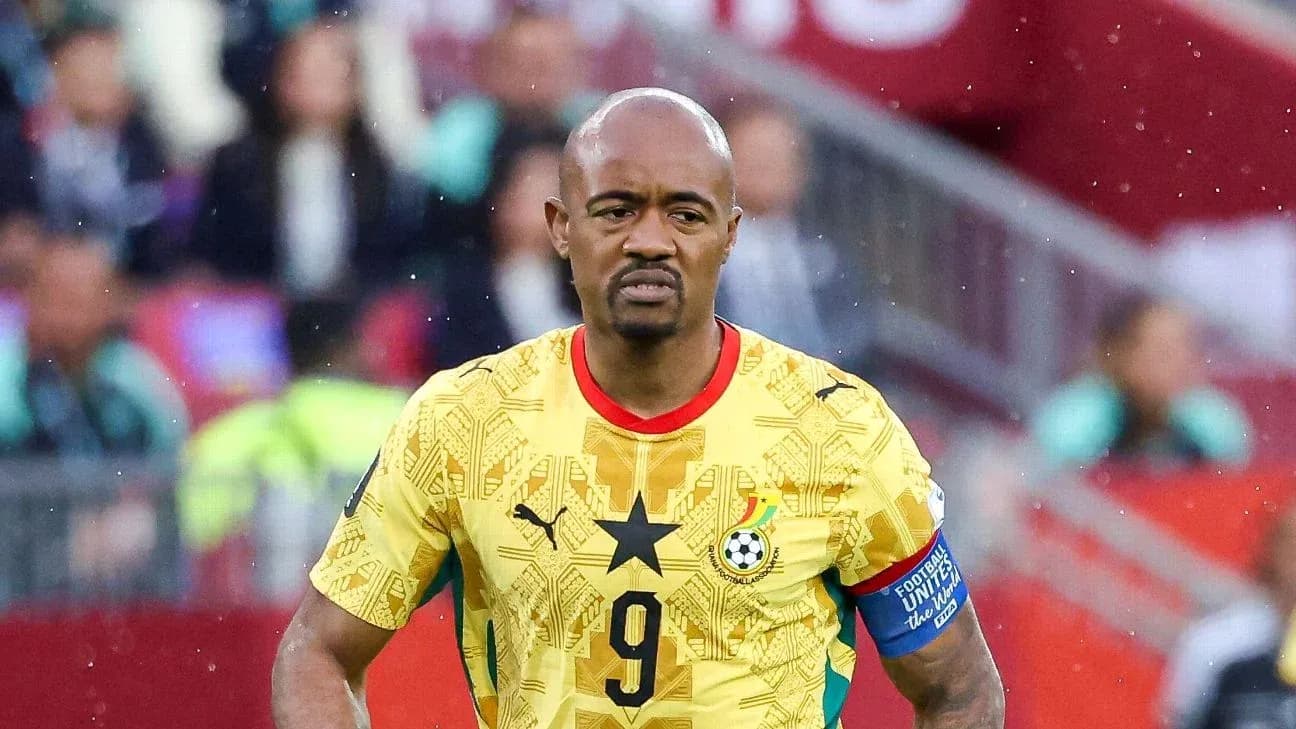
Jordan Ayew is the heartbeat of this squad. He is the captain, the most experienced player, the man who has lived every version of the Black Stars for more than a decade. More than 100 caps, three World Cups, and the weighty surname of Abedi Pele’s son give him a unique authority.
When he led the team out against Panama, he joined a select group of Ghanaians to appear at three World Cups after his outings in 2014 and 2022. On paper, he is untouchable.
On the grass, he was a problem.
Ayew looked off the pace for long stretches. His lack of speed was ruthlessly exposed, and when he did get on the ball, his decisions often slowed Ghana’s attacks rather than sharpening them. One moment summed it up: Antoine Semenyo slipped him a pass with space ahead. Semenyo burst into the channel, waiting for the return. Ayew had time and options. He chose neither, dribbling straight into traffic and surrendering possession.
Panama could not punish those errors. England will.
A static centre forward against this England defence is an invitation to be swallowed whole. Brandon Thomas-Asante, who created Caleb Yirenkyi’s winner, offers pace and aggression but not Ayew’s experience. He plays in England, yes, but has not yet stared down the kind of stars Gareth Southgate—or in this case Thomas Tuchel—will unleash.
So Queiroz faces a delicate balance. Bench the captain in your biggest group game? Risky, and potentially destabilising. Persist with him as a lone striker? Tactically reckless.
The compromise is obvious and logical: move Ayew deeper.
When he dropped into advanced midfield areas against Panama, Ghana suddenly looked more coherent. He linked play, found pockets between the lines, and stopped trying to win footraces he could never win. In that role, his lack of pace is less of a liability, his vision and experience far more of an asset.
Ayew floating underneath Semenyo and one of Thomas-Asante or Abdul Fatawu gives Ghana something different. Runners in behind. A brain in the middle of it. England’s fullbacks and half-spaces are vulnerable; Ghana need speed to attack those zones, not a captain stranded against centre-backs he cannot outrun.
Ayew’s leadership stays on the pitch. His responsibilities change. That is how Queiroz solves the Ayew dilemma without tearing up the hierarchy in his dressing room.
Partey’s return to the engine room
If one decision feels non-negotiable, it is this: Thomas Partey must start.
Elisha Owusu struggled badly against Panama. He was overrun, often isolated, and exposed by a first-half shape that left him chasing shadows rather than screening danger. Yirenkyi shone, but he cannot be asked to shoulder the entire midfield burden against one of the best units in the tournament.
England’s midfield, led by Jude Bellingham and Declan Rice, dismantled Croatia 4-2 in their opener. They dictate tempo, drive through lines, and suffocate teams that cannot keep the ball.
Partey changes that equation.
With Partey alongside Yirenkyi, Ghana gain a platform. They can put a foot on the ball, string passes together, and resist the urge to simply retreat and absorb pressure. Both midfielders can sit, read danger, and clog the channels Bellingham loves to surge into. They can also drag Rice into deeper defensive work, limiting his ability to step into midfield and launch attacks.
If Ayew operates ahead of them, Ghana suddenly have a spine: Partey and Yirenkyi holding, Ayew linking, runners stretching. That is a structure that can survive long spells without the ball and still threaten when it is won back.
Without Partey, Ghana risk spending 90 minutes as spectators.
Where England can be hurt
England beat Croatia, but they did not look invincible. Far from it.
They conceded twice and flirted with more. The most glaring weakness sat out wide. Reece James was criticised for losing his man on one Croatian goal. On the other side, Nico O’Reilly impressed going forward but remained raw defensively, “a work in progress” at left back.
This is the crack in the armour.
Semenyo’s direct running can pin those fullbacks back and force them into uncomfortable one-on-ones. Thomas-Asante brings raw pace and physicality, the kind that drags defenders into duels they do not want. Fatawu and Ernest Nuamah, attacking from wide areas, can stretch England’s back line and drag their centre-backs into the channels.
Croatia caused chaos whenever they attacked quickly before England’s defence could reset. Ghana have the tools to copy that blueprint: speed, strength, and enough craft to turn loose balls into chances.
The key is conviction. Win it, play forward, run. No hesitation, no safety-first sideways passing that allows England to recover their shape.
The tempo trap
Against Panama, Ghana started slowly and paid for it in suffering.
For almost an hour, the Central Americans controlled the ball, dictated rhythm, and created the better chances. Ghana reacted instead of imposing themselves, only seizing control after Queiroz pushed Semenyo into the middle and freshened the press with second-half substitutions.
That kind of passivity will be fatal against Tuchel’s England.
Croatia showed that England wobble when pressed aggressively. In the first half of their opener, they forced mistakes in midfield and at the back, scored twice, and repeatedly exposed the Three Lions’ defensive structure. England still found two goals before the break, a reminder of their ruthlessness.
If Ghana sit deep as they did against Panama, there will be no gentle settling-in period. Harry Kane and his supporting cast will not wait. They will strike early, and by the time Queiroz reaches for his first tactical tweak, the damage could already be irreparable.
The Black Stars must start at the intensity they finished with against Panama—and sustain it. Turn the game into a physical contest, a running battle, a mental grind. Make England uncomfortable, force them into a fight rather than a showcase.
Ghana cannot out-glide this England side. They can out-scrap them.
Surviving England’s deadliest weapon
Open play is only half the battle. The other half comes from a dead ball.
On the World Cup’s opening matchday, England recorded the highest non-penalty expected goals and most shots on target from set pieces. Kane’s second against Croatia came from a Rice corner and an unforgivable lapse in marking, leaving the striker free to nod home.
Ghana cannot afford that kind of lapse.
There is already uncertainty in goal. Lawrence Ati-Zigi’s fitness is in doubt after he was withdrawn at halftime against Panama following a collision, leaving Benjamin Asare as a possible starter. Whichever goalkeeper gets the nod, the message is the same: every corner, every wide free-kick, every long throw must be treated as a crisis.
Queiroz knows it. After the Panama win, he spoke about the need to “suffer,” about how a result at this World Cup “is very expensive” and his players being ready to pay that price. That suffering starts with discipline.
Do not concede cheap free-kicks around the box. Do not leave the same holes in central defensive zones that appeared against Panama—holes Partey is uniquely qualified to plug. Do not dive into reckless tackles inside the area.
If a penalty does come, the goalkeepers must be ready for Kane’s mind games. The England captain studies keepers, adjusts his run-up, and waits for the slightest tell. Asare and Ati-Zigi must study him in return.
Ghana escaped once. Against England, there will be no such generosity. The margin for error is gone; the price of every mistake has just gone up.