Hellas Verona vs AS Roma: A Season Finale of Inevitability
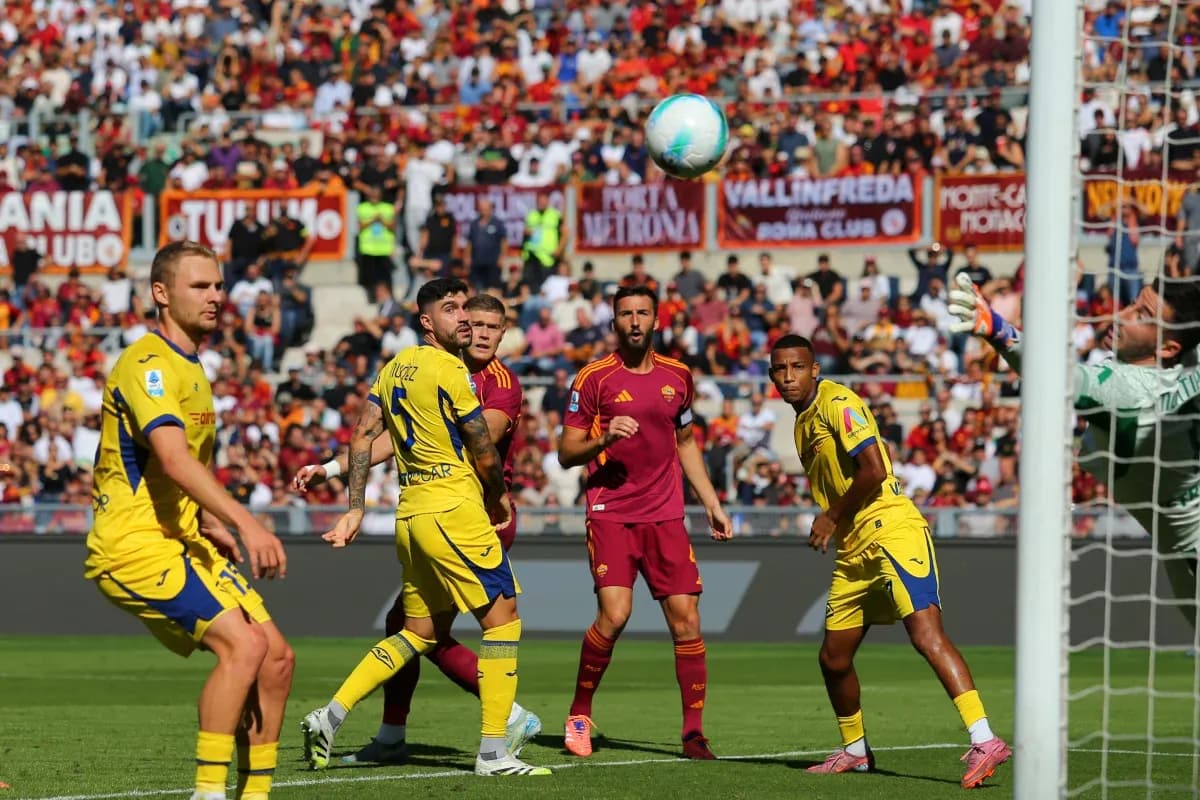
Under the fading spring light at Stadio Marcantonio Bentegodi, the final act of Hellas Verona’s Serie A season unfolded with a harsh kind of clarity. The table had already drawn its verdict: Verona, 19th with 21 points and a goal difference of -36, heading for Serie B; AS Roma, 3rd on 73 points with a goal difference of 28, striding into the Champions League. Following this result, the 0-2 scoreline felt less like a twist and more like a confirmation of the season’s underlying script.
I. The Big Picture – Systems that tell the story
The formations alone captured the gulf in footballing confidence. Paolo Sammarco doubled down on Verona’s seasonal identity with a 3-5-2, the structure they used in 26 league matches. It is a shape designed to crowd the middle, protect a fragile back line, and hope that transitions can compensate for a chronic lack of firepower. Across 38 games, Verona scored only 25 goals overall, with just 12 at home. At home they averaged 0.6 goals for and 1.5 against, a bleak return that framed this finale.
Piero Gasperini Gian’s Roma arrived in their familiar 3-4-2-1, a system that has become their default (30 league matches in that shape). It allows them to compress space without the ball, then explode through the lines with their front three. Overall this campaign, Roma scored 59 goals and conceded 31; away from home, they still managed 26 goals on their travels, averaging 1.4 goals for and 1.1 against. It is the profile of a side comfortable suffering without the ball, then punishing in moments.
On the pitch, the lineups reflected those identities. Verona’s back three of N. Valentini, A. Edmundsson and V. Nelsson shielded L. Montipo, with wing-backs M. Frese and R. Belghali tasked with an almost impossible dual brief: contain Roma’s width and provide Verona’s rare attacking outlets. The central trio of J. Akpa Akpro, S. Lovric and A. Harroui had to be both screen and springboard, while T. Suslov and K. Bowie formed a lightweight but mobile front pair.
Roma, by contrast, looked balanced and ruthless on paper. M. Svilar behind a back three of M. Hermoso, D. Ghilardi and G. Mancini; Z. Celik and D. Rensch as aggressive wing-backs; B. Cristante and N. Pisilli anchoring the middle. Ahead of them, the creative axis of P. Dybala and M. Soule floated behind D. Malen, one of the league’s most efficient finishers with 14 goals overall and 3 penalties scored despite one miss.
II. Tactical Voids – Absences and discipline
If Verona’s season has been about limitations, this match underlined them. Their most combative midfielder, R. Gagliardini, was suspended through yellow card accumulation – a player who had collected 10 yellows overall and embodies their bite in midfield. Without him, the defensive workload fell even heavier on Akpa Akpro, who already came into this game with 9 yellows overall, and on Frese, who had 8. Both are high-contact, high-risk profiles; the yellow-card data for Verona this season shows a notable spike between 31-60 minutes (21.35% in 31-45 and 24.72% in 46-60), often when games begin to stretch and they are forced into recovery tackles.
Injuries to D. Mosquera, D. Oyegoke, J. Peci and S. Serdar further thinned Sammarco’s options, particularly in defensive rotation. It left the bench heavy with youth and fringe players like Isaac, L. Szimionas and I. Vermesan, more about potential than proven reliability.
Roma had their own absences – E. Ferguson, E. Ndicka, L. Pellegrini, K. Tsimikas and B. Zaragoza all missing, while Wesley Franca served a red-card suspension after a campaign marked by 1 straight red and a yellow-red overall. Yet Gasperini Gian’s squad depth softened the blow. The spine remained intact: Cristante to control rhythm, Hermoso and Mancini to marshal the line, Dybala and Soule to create.
Disciplinary trends tilted the psychological balance Roma’s way. Verona’s red-card profile shows a worrying late-game volatility, with 40.00% of reds coming in 46-60 and another 40.00% in 76-90, a sign of a team that frays under pressure. Roma, by contrast, concentrated their red risk between 46-75 but largely kept their composure in closing stages.
III. Key Matchups – Hunter vs Shield, Engine Room vs Enforcer
The headline duel was always going to be D. Malen against Verona’s defensive block. Overall this season, Verona conceded 61 goals, an average of 1.6 per match; at home they leaked 28. Their back three is built more for emergency defending than proactive control, and that played into Malen’s strengths. With 49 shots overall, 31 on target, and 3 penalties scored, he thrives on space behind and half-chances inside the box.
Mancini and Hermoso, meanwhile, were Roma’s “Shield” against Verona’s sporadic counters. Both arrive here among Serie A’s leading card collectors – 9 yellows each overall – but also as high-output defenders: Mancini with 52 tackles, 14 successful blocks and 49 interceptions, Hermoso with 36 tackles, 6 blocks and 29 interceptions. Against a Verona attack that failed to score in 11 home matches overall, their job was less about last-ditch heroics and more about suffocating transitions at source.
In the engine room, Roma’s B. Cristante and N. Pisilli faced Akpa Akpro and Lovric. Cristante’s passing volume and stability allowed Dybala and Soule to receive between the lines, where Verona’s structure is at its most fragile. Dybala, with 6 assists overall and 55 key passes, repeatedly drifted into the right half-space, dragging Frese and Harroui into uncomfortable zones. Soule mirrored that on the opposite side, bringing his 6 goals and 5 assists overall into play with constant diagonal dribbles.
Without Gagliardini’s 73 tackles, 13 successful blocks and 54 interceptions overall, Verona lacked a true enforcer to step out and break Roma’s rhythm. Akpa Akpro worked tirelessly – his 44 tackles and 7 blocks overall speak to his willingness – but he was often outnumbered, especially when Rensch and Celik pushed high to form a line of four or five attackers.
IV. Statistical Prognosis – xG in all but name
There is no explicit xG data in the snapshot, but the structural numbers point in one direction. Heading into this game, Verona were a side that had failed to score in 20 matches overall, with just 6 clean sheets. Roma, by contrast, had 18 clean sheets overall and had failed to score only 7 times. On their travels, Roma’s defensive average of 1.1 goals against per match and 7 away clean sheets suggested they were well-equipped to manage a relegated side’s last stand.
The 0-2 outcome fits that statistical logic. Roma’s attacking pattern – 1.6 goals per match overall, 1.4 on their travels – intersected with Verona’s defensive frailty and lack of cutting edge. Malen’s season profile, with 14 goals and a penalty record that includes 1 miss, underlines a forward who consistently gets into high-value positions. Around him, Dybala and Soule’s creative volume ensured that Roma would generate enough quality chances over 90 minutes.
Following this result, the table, the trends and the tactics all align. Verona’s 3-5-2, stretched by absences and undermined by a season-long scoring drought, simply could not resist Roma’s 3-4-2-1 machine. The narrative of the night at the Bentegodi was not one of surprise, but of inevitability: a relegated side bowing out, and a Champions League-bound Roma confirming, one last time, the ruthless efficiency that defined their campaign.