Hartford Athletic Upsets Tampa Bay Rowdies 1-0 in USL Championship
Al Lang Stadium under the lights, a Group Stage night in the USL Championship, and a meeting between the league leaders and a rising contender ended with a narrow but telling scoreline: Tampa Bay Rowdies 0–1 Hartford Athletic. Following this result, the table still says Tampa Bay are the benchmark, but Hartford have quietly announced themselves as a side built for tight margins and away‑day ambushes.
Heading into this game, Tampa Bay’s seasonal profile was that of a front‑runner with balance. They sat 1st in USL 1 on 28 points from 13 matches, with a goal difference of 13, built from 21 goals for and 8 against overall. At home they had been imposing: 7 matches, 4 wins, 2 draws, 1 defeat, with 14 goals for and 6 against. An average of 2.0 goals for at home against only 0.9 conceded painted the picture of a side comfortable dictating tempo at Al Lang Stadium, used to breaking opponents down over 90 minutes.
Hartford arrived as a different animal: 7th in the same group, but with a profile that screamed “awkward opponent.” Their overall goal difference was 0, with 10 goals for and 10 against in 11 matches. Yet on their travels they were far more dangerous than at home: 6 away games, 3 wins, 2 draws, 1 loss, with 6 goals scored and only 3 conceded. An away average of 1.0 goals for and 0.5 against made them one of the league’s more stubborn road units, leaning on defensive structure and opportunism rather than volume.
That contrast in seasonal DNA framed the contest: Tampa Bay as protagonists, Hartford as counter‑punchers. Dominic Casciato’s starting group – A. Pack, S. Cruz, B. Schaefer, N. Dossantos, I. LeFlore, L. Perez, Pedro Becker, E. Conway, M. Micaletto, Mattheus and M. Myers – looked built to control the ball through the middle and attack in waves. Without an explicit formation provided, the personnel hints at a flexible, possession‑oriented shape: M. Micaletto and Mattheus as creative links, E. Conway and L. Perez able to stretch wide areas, and M. Myers as the primary reference point up front.
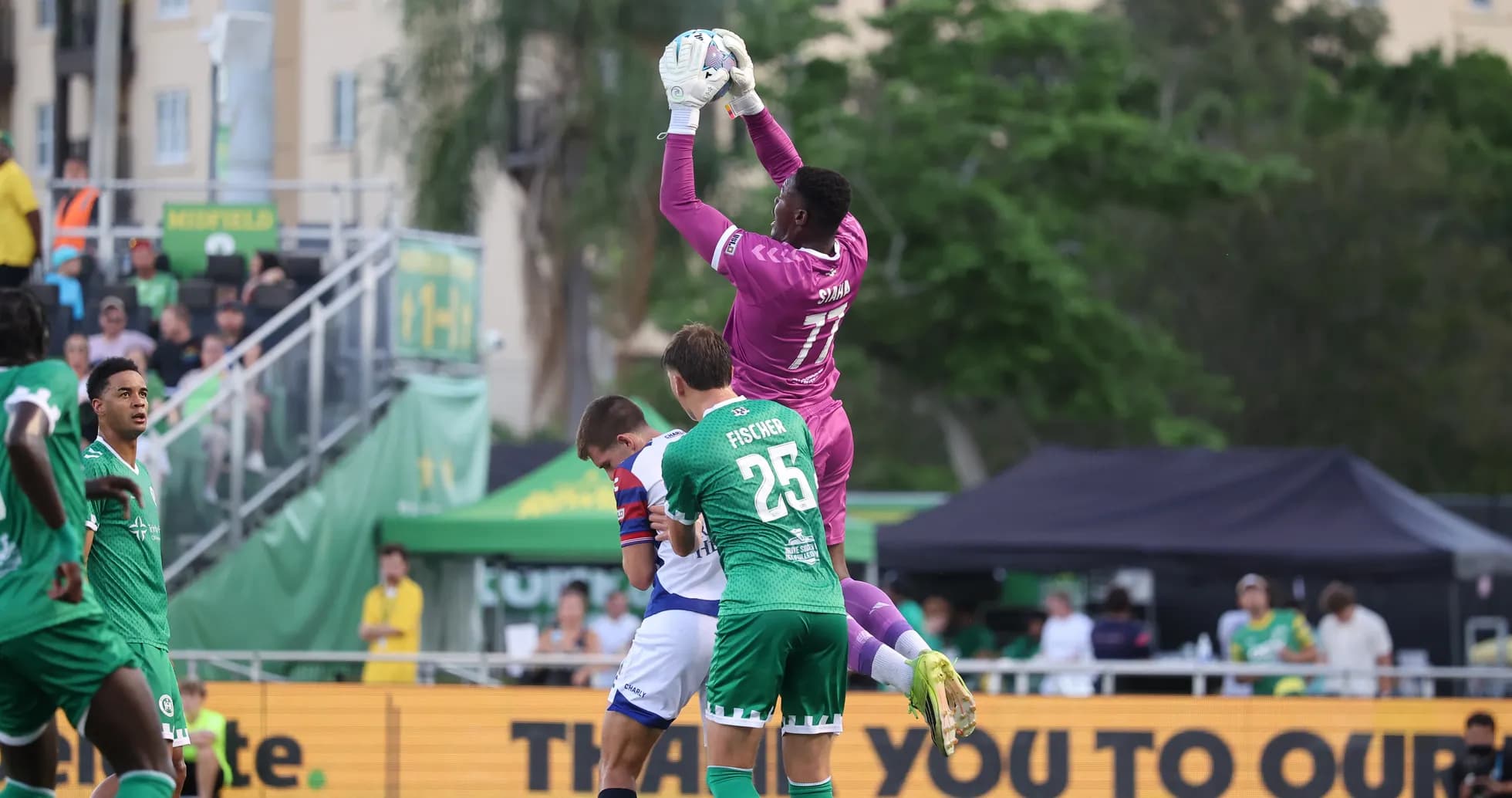
Across from them, Brendan Burke’s Hartford selection signalled compactness and vertical threat. A. Siaha in goal behind a defensive spine of A. Diz, J. Scarlett, B. Fischer and B. Njie provided the platform, while J. Moreira and S. Anderson offered work‑rate and coverage in the lanes. Higher up, S. Careaga and B. Coffey gave Hartford technical security and pressing intensity, with E. Samadia and M. Ngalina primed to attack space when Tampa Bay’s lines stretched.
The tactical voids in this fixture were less about missing names – there is no recorded list of absentees – and more about how each side managed discipline and game state. Tampa Bay’s season‑long yellow card distribution shows a clear late‑game spike: 24.32% of their cautions arrive between 76–90 minutes, with another 10.81% from 91–105. They are a team that often pushes to the edge in closing stages, chasing results or defending leads. Hartford’s profile is similar in intensity but more scattered: 21.43% of their yellows between 46–60, another 21.43% from 76–90, and a striking 21.43% from 91–105. They are comfortable in chaotic second halves, where transitions and tactical fouls become part of the tool kit.
In this match, Hartford’s early breakthrough – reflected in the 0–1 half‑time score – allowed them to lean into that identity. Protecting a lead against a side that averages 2.0 goals at home is a test of concentration and structure, and Hartford’s away record suggested they were built for it. With 4 away clean sheets overall and only 3 goals conceded on their travels heading into this game, the blueprint was clear: score first, then compress the pitch.
The “Hunter vs Shield” duel emerged most starkly between Tampa Bay’s collective attack and Hartford’s away defence. Tampa Bay’s overall scoring average of 1.6 goals per match, powered by a home output of 14 goals in 7 games, usually forces opponents to open up. Hartford, however, arrived having conceded only 0.5 goals per away match, with their heaviest road defeat just 2–0. On the night, the Shield won: Hartford held Tampa Bay scoreless, handing the Rowdies only their second overall failure to score this season, after entering with just 1 such blank in total.
In the “Engine Room,” the battle was subtler but decisive. For Tampa Bay, players like Pedro Becker and M. Micaletto were tasked with threading passes through a congested central block, while Mattheus floated to find half‑spaces. Hartford’s response, anchored by S. Careaga and B. Coffey, was to deny vertical lanes and force Tampa Bay wide, trusting J. Scarlett, B. Fischer and B. Njie to deal with crosses and one‑v‑one situations. A. Siaha’s presence behind them completed a defensive triangle that, across Hartford’s season, has been good enough to secure 6 clean sheets overall.
From an xG‑style perspective, the statistical prognosis before a ball was kicked would have leaned Tampa Bay’s way. A home side averaging 2.0 goals for and 0.9 against at Al Lang Stadium, with an overall defensive record of just 0.6 goals conceded per match and 7 clean sheets in total, usually grinds out at least a point, often three. Hartford’s overall attack, at 0.9 goals per match, is modest, and their total of 6 failures to score suggested that if Tampa Bay struck first, the contest might tilt heavily.
Instead, Hartford flipped the script. Their early goal allowed them to transform the match into the kind of controlled, attritional battle they prefer. Tampa Bay’s late‑game card tendencies hint at a side willing to take risks and commit bodies forward in pursuit of an equaliser; Hartford’s resilience in those same phases – backed by a low away goals‑against average and a history of grinding out narrow wins such as their 0–3 and 2–0 scorelines – saw them through.
Following this result, Tampa Bay remain a heavyweight with a robust defensive platform and a proven attack, but this 0–1 at home will serve as a tactical warning: against compact, counter‑oriented visitors like Hartford, the margin for error is thinner than the standings suggest. Hartford, meanwhile, leave Al Lang Stadium with more than three points. They depart with confirmation that their away‑day identity – disciplined, efficient, and unafraid of the league’s elite – can carry them deep into the playoff picture when the knockout rounds arrive.