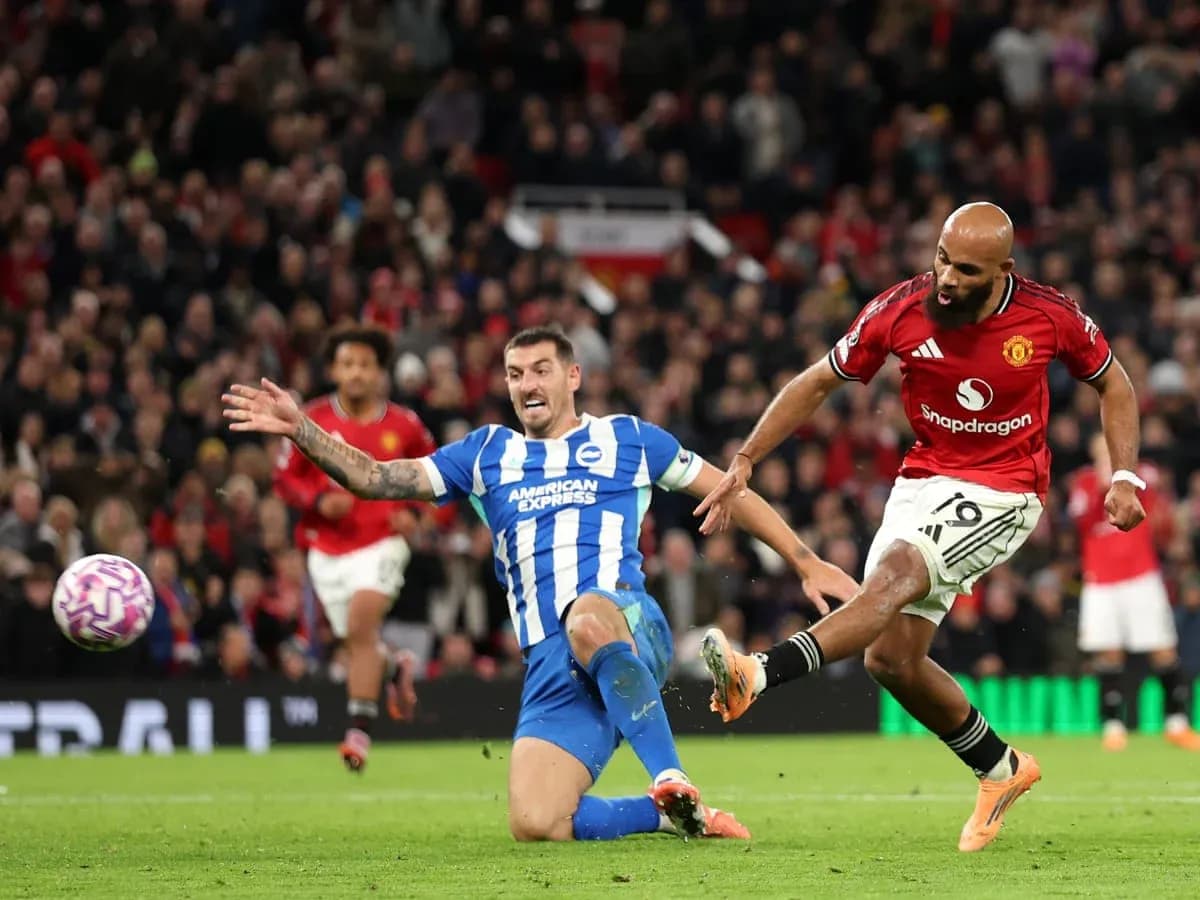
Brighton vs Manchester United: Tactical Analysis of the Season Finale
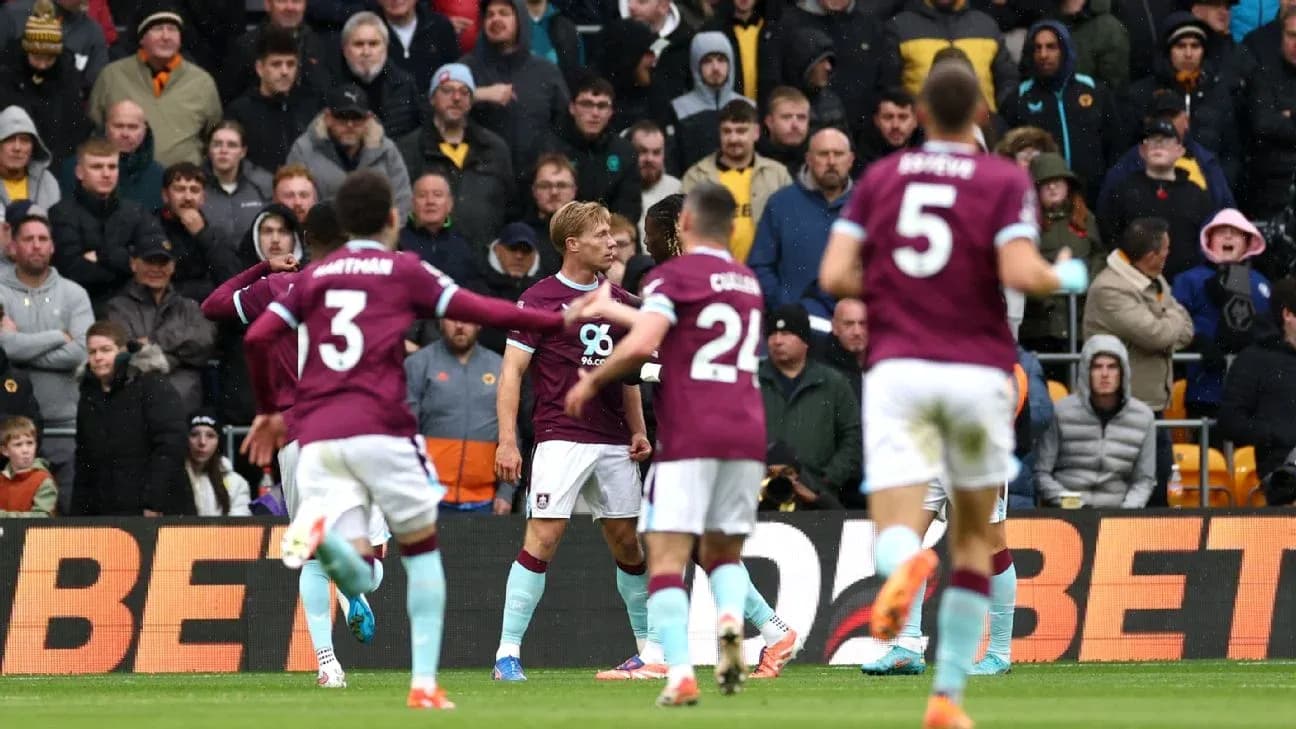
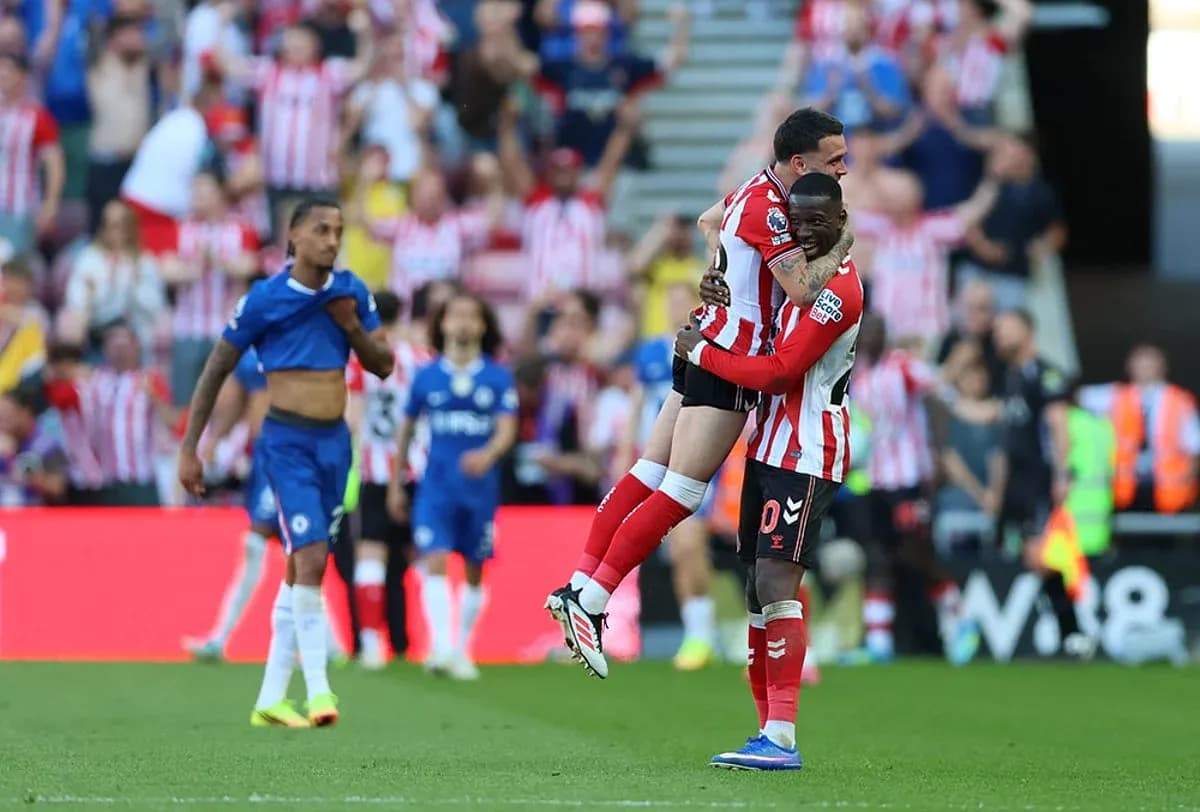
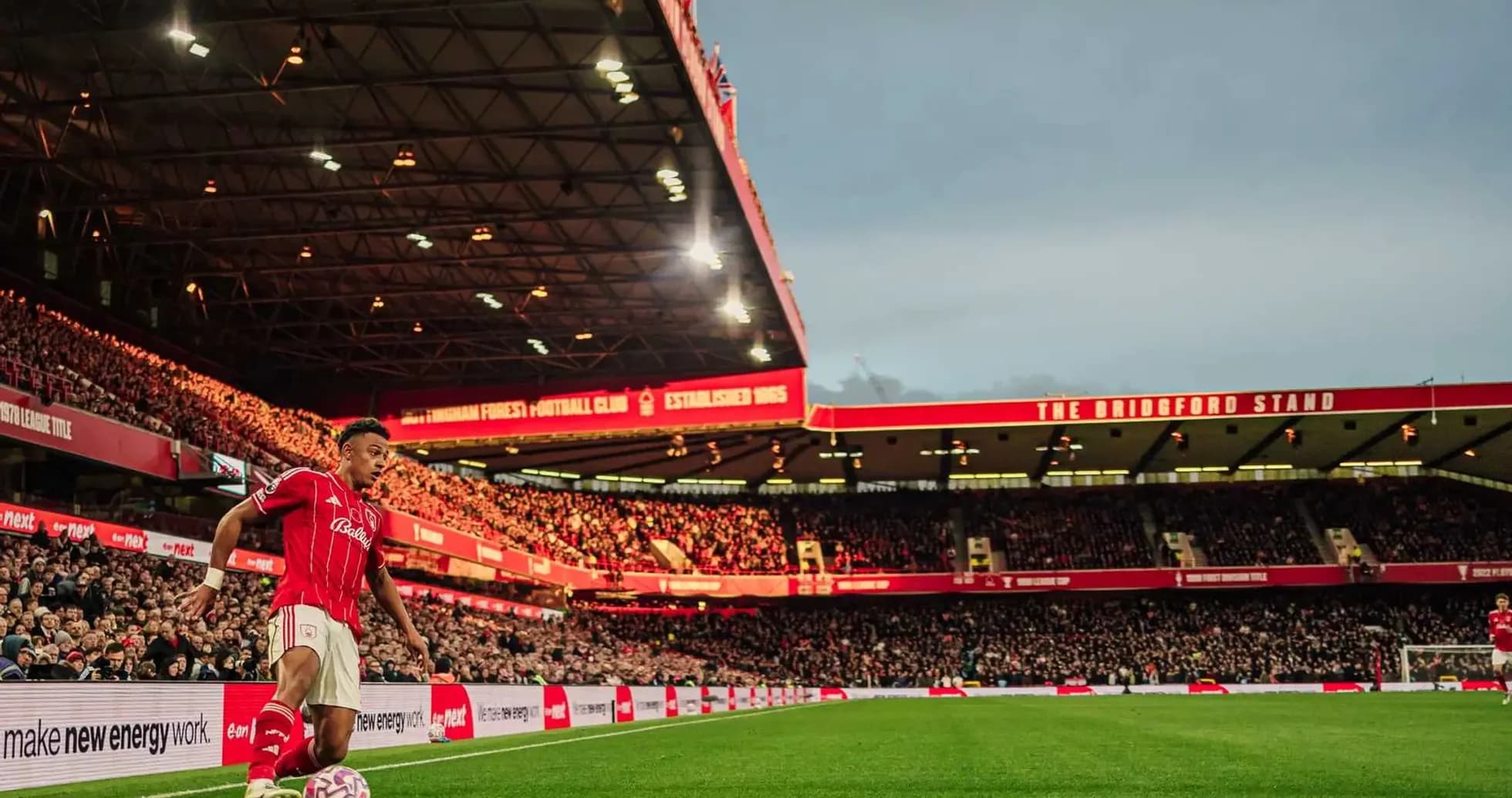
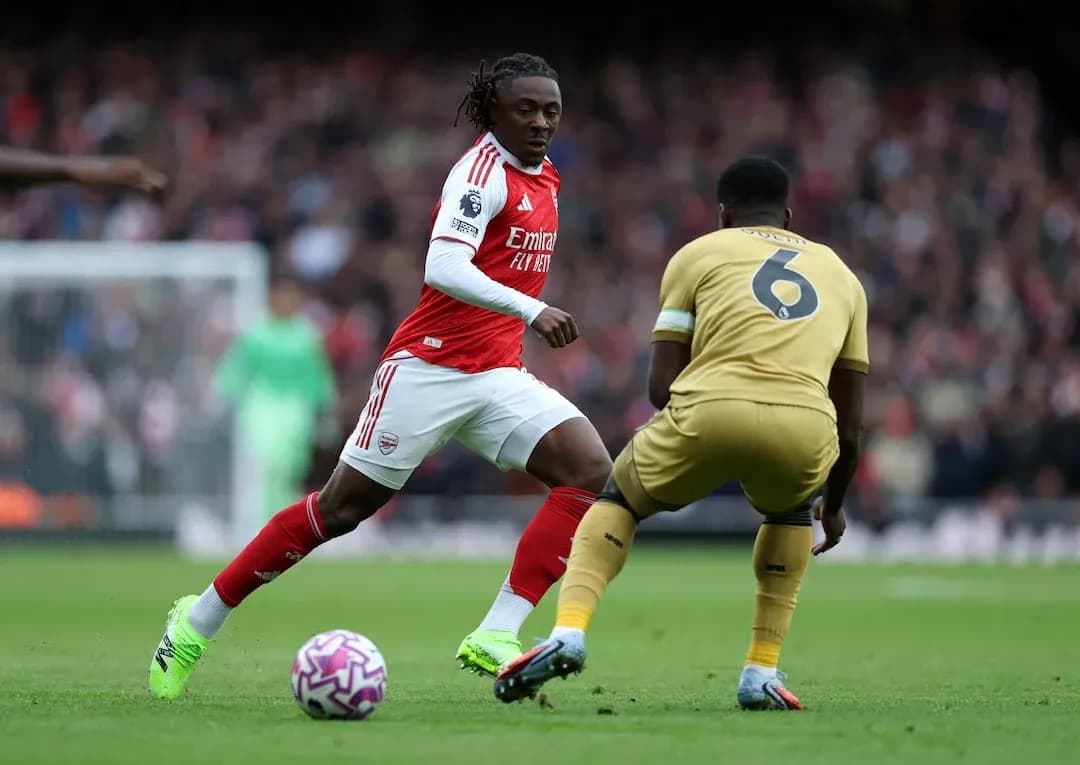
The Amex Stadium closed its Premier League season under grey skies and a red tide. Following this result, Brighton’s 3-0 home defeat to Manchester United sealed an eighth-place finish for the hosts and third for the visitors, a neat encapsulation of the campaign’s hierarchy: Brighton adventurous but brittle, United imperfect but far more ruthless.
I. The Big Picture – Structures and Seasonal DNA
Both sides lined up in a mirrored 4-2-3-1, but the symmetry ended there. Brighton, under Fabian Hurzeler, leaned again into the structure that has defined their season: building from the back, double pivot, and a fluid line of three behind a lone striker.
In total this campaign, Brighton averaged 1.4 goals per game, with 1.6 at home and 1.2 on their travels. Their overall goalsAgainst average sat at 1.2 (1.1 at home, 1.4 away), yielding an overall goal difference of +6 (52 scored, 46 conceded). That profile—marginally positive but never secure—was written across this match. They saw plenty of the ball, but when the game tilted, they lacked the defensive armour to hold.
Manchester United arrived with a more explosive attacking profile: 1.8 goals per game overall, built on 2.1 at home and 1.6 away. Across the season they scored 69 and conceded 50, an overall goal difference of +19. That attacking edge, married to a pragmatic away record (7 wins, 8 draws, 4 defeats on their travels), underpinned the authority they showed once they got in front.
At half-time the scoreline read 0-2, and United never looked back, adding a third to complete a controlled away performance befitting a side that finished third and secured Champions League league-phase football.
II. Tactical Voids – Absences and Discipline
The absences on the teamsheet quietly reshaped the contest. Brighton were without K. Mitoma, S. Tzimas and A. Webster, stripping Hurzeler of a direct wide threat and a key centre-back option. Without Mitoma’s verticality, the left side had to be reimagined through M. De Cuyper’s movement from midfield and F. Kadioglu’s overlaps from full-back, both tidy but less explosive in one‑v‑one situations. Webster’s absence kept the defensive responsibility squarely on L. Dunk and J. P. van Hecke, with Dunk once again the organiser rather than the aggressor stepping out.
For United, the spine was altered but not weakened. Casemiro, B. Šeško and M. de Ligt were all missing. On paper, that removed a destroyer, a penalty-box finisher and an aerially dominant centre-back. In practice, Michael Carrick’s solution was to lean on mobility and passing: K. Mainoo and M. Mount as a double pivot, with L. Martinez and H. Maguire anchoring the back four.
Across the season, Brighton’s disciplinary pattern has a clear warning light: 27.91% of their yellow cards arrived between 46-60 minutes, with another 15.12% in the 76-90 range and 15.12% in 91-105. United’s own yellow-card curve spikes at 46-60 (21.88%), 76-90 (20.31%) and 91-105 (17.19%), while their few red cards clustered in the second half (66.67% between 46-60, 33.33% between 76-90). This match stayed within the lines, but those trends explain why both teams spent long spells managing risk rather than accelerating chaos once the second half began.
III. Key Matchups – Hunter vs Shield, Engine Room
Hunter vs Shield was defined by the centre-forwards. For Brighton, D. Welbeck entered as their leading scorer in the league with 13 goals in total and 1 penalty scored but 2 missed. That penalty record matters: Brighton are perfect from the spot as a team this season (3 penalties in total, 3 scored, 0 missed), but Welbeck himself has not been. United’s defensive unit, which conceded 26 goals away (1.4 per away game), were therefore able to play aggressively in the box, knowing Welbeck’s individual record from the spot was imperfect.
On the other side, B. Mbeumo led the line for United. His 11 league goals and 3 assists in total this season came from a high-volume shot profile (59 shots, 32 on target), supported by robust duel numbers (265 total duels, 86 won). Against a Brighton defence that conceded 20 at home (1.1 per game at the Amex), Mbeumo’s willingness to run channels and attack crosses forced Dunk and van Hecke to defend facing their own goal, exactly where Brighton are least comfortable.
The engine room duel was even more decisive. For United, Bruno Fernandes arrived as the league’s premier creator: 21 assists and 9 goals in total, supported by 1,994 total passes and a remarkable 137 key passes. Every United transition seemed to find him in the right pocket, threading early balls into Mbeumo and A. Diallo. Without Casemiro, the defensive burden around him fell on Mainoo and Mount, but Bruno still contributed with 54 tackles and 5 blocked shots across the season, a reminder that he is not just a luxury 10.
Brighton’s response came from P. Gross and J. Milner. Gross, operating as the deeper conductor, tried to set tempo and connect with J. Hinshelwood and D. Gomez between the lines. Yet with United’s double pivot screening well, Brighton’s No. 10 spaces were crowded, and Welbeck was often isolated against Maguire and Martinez. Gross’s passing rhythm could not turn territory into incision.
IV. Statistical Prognosis – What the Numbers Say
Following this result, the season’s numbers fall into a clear pattern. Brighton’s overall record of 14 wins, 11 draws and 13 defeats, with 52 scored and 46 conceded, reflects a side that can outplay opponents in phases but rarely dominate both boxes. They kept 10 clean sheets in total, but failed to score in 9 matches, underlining the streaky nature of their attack.
United’s 20 wins, 11 draws and 7 defeats, combined with 69 goals for and 50 against, paint a picture of a side whose attacking xG profile is consistently high, especially when Bruno Fernandes and Mbeumo combine. Their 8 clean sheets in total hint at defensive vulnerabilities, but on days like this—when the press is co-ordinated and the centre-backs are protected—the structure holds.
If we project forward using these patterns, a similar fixture next season would still tilt towards United. Their away scoring rate of 1.6 goals per game, layered on top of Bruno’s chance creation and the depth offered by options like Matheus Cunha and J. Zirkzee from the bench, suggests a higher attacking ceiling. Brighton’s home average of 1.6 goals for and 1.1 against at the Amex keeps them competitive, but unless they add more penalty-box punch around Welbeck and more athletic coverage around Dunk, matches against elite attacks will continue to stretch their defensive limits.
In narrative terms, this was the story of a side whose numbers promised control but not ruthlessness, against a side whose numbers promised volatility but decisive firepower. Over 90 minutes, Manchester United’s sharper edge in both penalty areas made the underlying statistics feel inevitable.