USMNT’s World Cup Challenges: Key Players and Questions
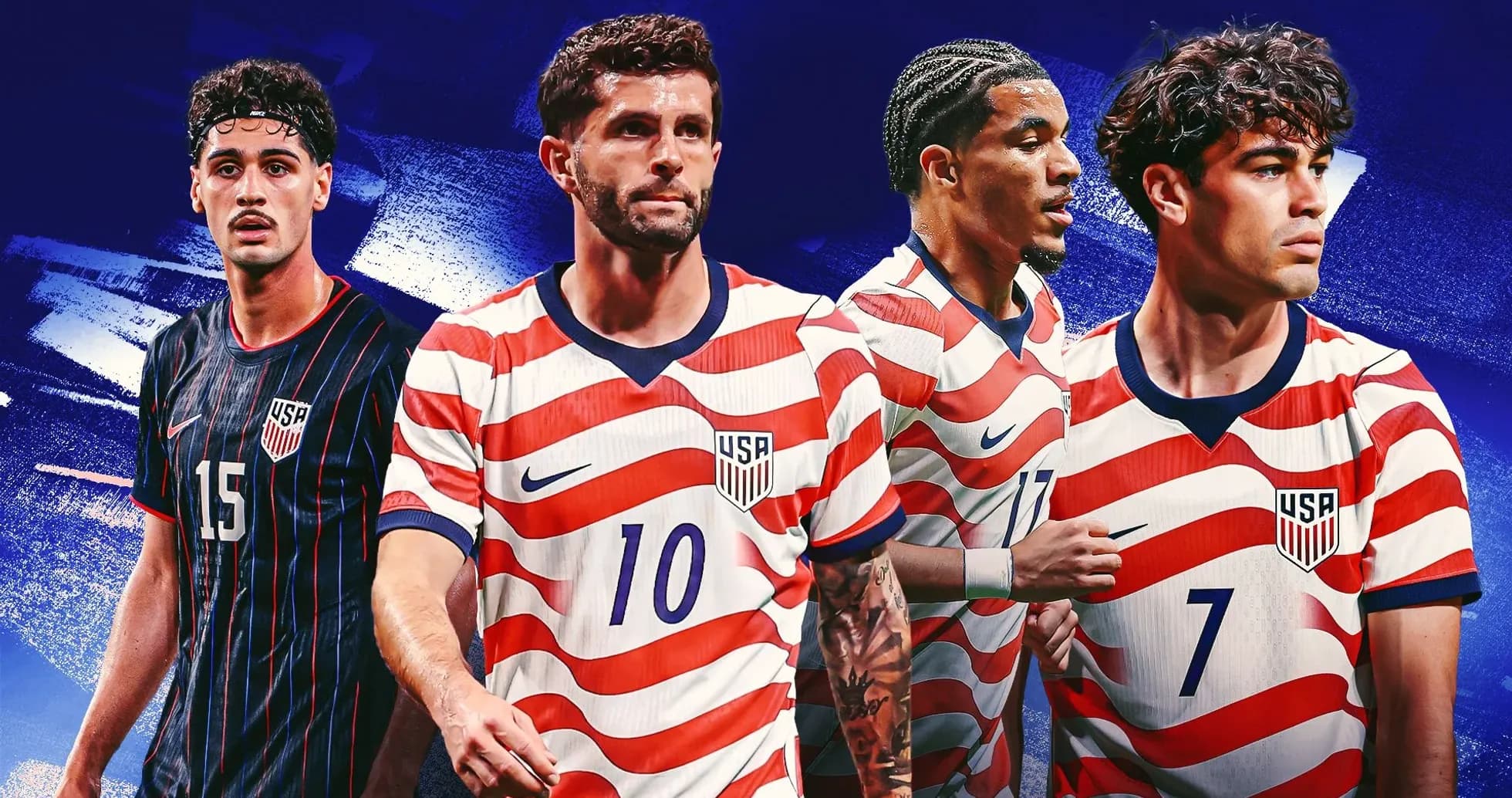
For the first time in a long time, there was a genuine reason to smile about Gio Reyna.
He finally broke his drought at the weekend, scoring his first goal of the season in the dying minutes of Borussia Mönchengladbach’s 3-1 defeat. On paper, it was a consolation strike. In reality, it was a release valve. His first club goal in nearly 18 months, a reminder that the talent everyone talks about still exists in something other than theory.
Reyna has been living off memories for too long. His last real surge of influence came in November with the USMNT, when he once again looked like the player who can tilt a game with a single touch. Since then, club minutes have been sparse, his rhythm shattered. Even in March, when the U.S. faced elite opposition in friendlies, he was limited to cameos rather than being trusted to truly grab the stage.
And yet his name never leaves the conversation.
That’s the power of his profile. Reyna is a game-changer, even when the form guide says otherwise. The U.S. has consistently looked more dangerous with him on the pitch than off it, and the trophy cabinet already carries the imprint of his influence in CONCACAF competitions.
But strip away the romance and you get to the truth of his role. In this version of the USMNT, Reyna is more “luxury piece” than structural pillar. He’s the flourish, not the foundation. If he catches fire, the team’s ceiling spikes. If he doesn’t, the system doesn’t collapse, because there are other options in his spots on the pitch.
And those options come with their own complications.
Tillman’s Talent, Tillman’s Minutes
No one doubts Malik Tillman’s ability. That part of the scouting report is written in ink.
The problem is the clock.
Since the March international window, Tillman has appeared in seven matches for Bayer Leverkusen but logged just 77 minutes. In only two of those games did he even crack the 10-minute mark. When Xabi Alonso looks to the line behind his striker, he has leaned instead on Nathan Tella and the emerging Ibrahim Maza.
The timing could hardly be worse for Tillman.
He remains firmly in the conversation to start for the USMNT, but that case would sound a lot more convincing with regular minutes, goals, and assists behind it. His last strike came on April 4, a sharp contribution in a two-minute cameo against Wolfsburg that nudged his season total to six goals in 1,615 minutes. Respectable numbers. Just not the profile of a player arriving at a World Cup on a surge.
For the U.S., the concern is obvious: can you build an attacking midfield role around someone whose rhythm is being built in fragments?
There is, at least, one major counterweight. Weston McKennie is in form and has the versatility to slide into that more advanced role alongside Christian Pulisic if Tillman’s lack of club minutes becomes too big a risk. It’s not the original blueprint, but it is a viable one.
Pulisic: The Standard-Bearer Searching for a Spark
Christian Pulisic has spoken about it more than once now. No goals in 2026. Frustrating? Absolutely. Panic-inducing? Not for him, at least publicly.
He has been clear: what matters is what happens in the biggest games this summer, not the week-to-week noise in Milan. In his mind, his club form is only one piece of a much larger World Cup puzzle.
But the reality is hard to ignore. When a World Cup looms, you want your stars humming, not grinding. And Pulisic has not been at his sharpest so far this year.
The U.S. will still lean on him. He may not be the sole determinant of how far this team goes, but he remains one of its central figures, both as a match-winner and as a leader. This group has often taken its cues from his energy, his aggression, his willingness to take responsibility in big moments.
They will need all of that again.
There is still time for him to find his rhythm, to turn a cold stretch into a forgotten subplot. But each scoreless week adds a little more volume to the questions surrounding him, even if the context suggests those doubts should not drown out everything else.
Center-Back: Too Many Question Marks, Not Enough Certainty
If there is one area where the alarm bells feel justified, it’s at center back.
Chris Richards looks like the one lock. Beyond him, it’s a maze of caveats and what-ifs.
Tim Ream brings experience, and a lot of it. That’s both the selling point and the concern. At this stage of his career, and with a recent injury in the background, can he still handle the physical and mental demands of a World Cup? Mark McKenzie has been thriving in Ligue 1, but his USMNT résumé includes the occasional lapse that sticks in the memory at the worst possible times.
Auston Trusty has finally found his feet in Europe with Celtic, yet he arrives with just six caps. Is that enough to throw him into the fire at this level? Miles Robinson’s inclusion raises its own question: what kind of form will he bring when the tournament starts?
And then there’s the wildcard factor. Could someone like Noahkai Banks step in late, seize the moment, and force his way into the solution?
Normally, by this stage of a World Cup cycle, the center-back hierarchy is settled. The partnerships are known, the chemistry tested. Right now, the U.S. is staring at a depth chart that may ultimately be decided not by long-term planning, but by who happens to be in the best form when the squad assembles.
Midfield Hit Hard: Cardoso Out, Tessmann Waiting
If the center-back situation is unsettling, the midfield picture carries a different kind of sting.
There was a strong argument that either Johnny Cardoso or Tanner Tessmann could start this summer next to Tyler Adams. That debate has been cut in half.
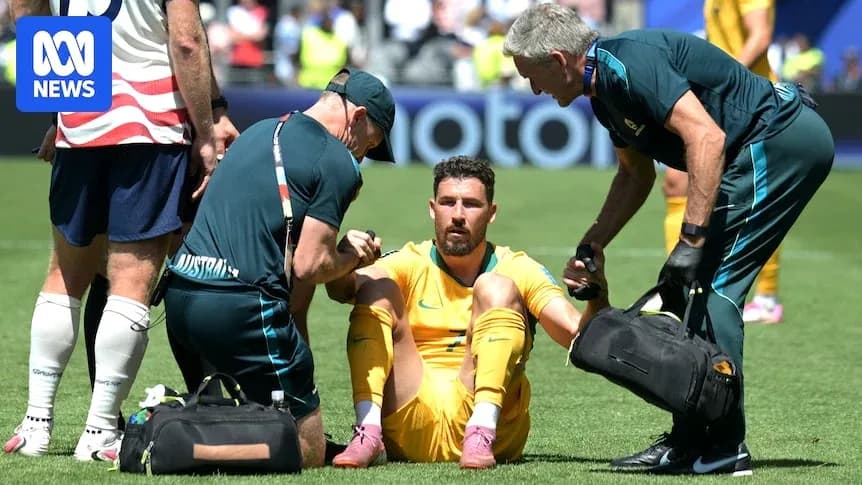
Cardoso, fresh off a Champions League semifinal with Atletico Madrid, saw his momentum shattered when the club confirmed he had sprained his ankle. The timeline was always going to be tight. In the end, it wasn’t tight at all; it snapped. Atleti announced on Monday that he would undergo surgery, ruling him out of the World Cup entirely.
A brutal blow, both for the player and for a U.S. side that badly needed his blend of control and composure.
Tessmann’s situation is less severe but still complicated. Lyon reported a muscle strain that will sideline him for a spell, though he is expected to recover in time for the tournament. Even before the injury, his grip on a starting role was loose. He had been drifting in and out of the Lyon lineup for months, never quite locking down the shirt.
Those two setbacks leave a gaping question at the heart of the team: who starts next to Adams?
Even when both were healthy, Cardoso and Tessmann carried their own uncertainties, but they had shown enough in Europe to at least narrow the field. Now, the USMNT is facing the very real prospect of going into a World Cup with a midfield that looks thin, unsettled, and short on players who are both fit and in form.
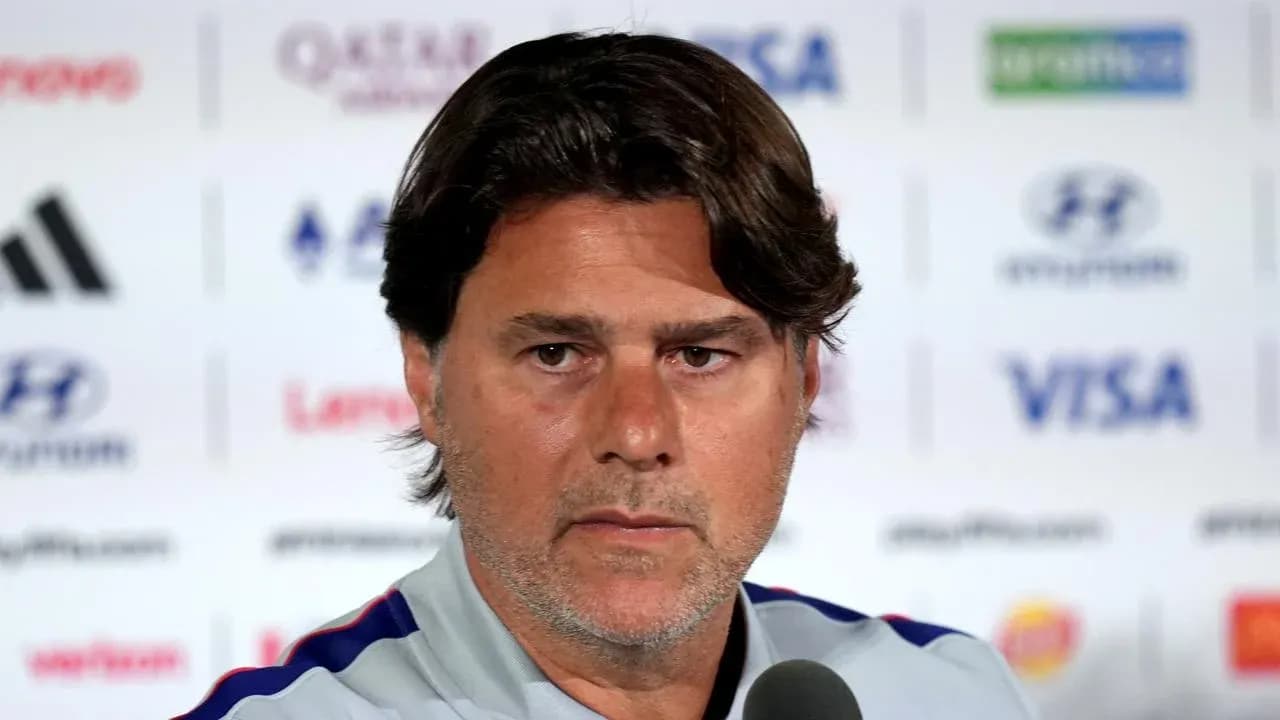
All good teams are built from the middle of the pitch outward. Right now, as Mauricio Pochettino prepares to name his squad, the U.S. is staring at a midfield that could define the entire campaign—for better, or, if the injury list grows any longer, very much for worse.