Luka Modric: A Last Dance at 40
Luka Modric was supposed to walk away that night in Leipzig.
He had dragged Croatia to the brink one more time, at 38, in what felt less like a group game and more like a last-16 play-off disguised on the schedule. He missed the penalty, then buried the rebound. A familiar script: Modric rescuing a nation that has leaned on him for more than a decade.
Then came the 98th minute. Mattia Zaccagni bent in a finish that sent Italy through and Croatia out of Euro 2024. By the time Modric posed for the Player of the Match photo, the award felt like a cruel joke. His eyes said it all: this was not how an international career of that magnitude was meant to fade.
Nobody wanted it to end like that. Not his team-mates, not the Croatian fans, not the neutral supporters who had long since adopted him as their own.
In the press conference, Italian journalist Francesco Repice did what journalists rarely do: he dropped the distance. He thanked Modric for “everything you have shown, not just tonight but in your career” and begged him to “never retire”. It was sentiment, but it was also truth. He was speaking for a lot of people.
Modric’s answer was honest and a little heartbreaking. He admitted he’d like to play forever, but accepted that one day he’d have to stop. “I’ll keep playing on for now,” he said, “but I’m not sure for how much longer.”
That was then. Remarkably, he still doesn’t know when that day will come, because his football refuses to age.
When he left Real Madrid after 13 years and a mountain of trophies to join AC Milan last summer, it looked, on paper, like a final lap. A romantic return to the club he had adored as a boy, drawn in by Zvonimir Boban and the red-and-black stripes. A graceful wind-down in Serie A.
He insisted otherwise. This was not nostalgia. He believed he could help revive Milan. He was right.
The move generated the expected noise. A legend of the modern game landing in one of its great cathedrals always does. Yet the questions came quickly: How much was left in those legs? Did Milan really need him, especially after signing Samuele Ricci?
Allegri answered with his team sheet. Modric played. Ricci waited.
There was no dressing-room drama. Ricci, 24 and ambitious, just watched and learned. He called Modric “the strongest player I’ve ever played with” and spoke with genuine awe about his humility and intensity. When the player threatening your minutes treats every training session like a Champions League final, resentment doesn’t stand a chance.
Italy’s press box fell under the same spell. Columnist Alberto Polverosi joked that if Modric really was 40, someone should clone him. It felt less like hyperbole and more like a desperate wish.
His performances made the numbers on his passport look fictional. He didn’t just keep up with Serie A’s tempo; he dictated it. He ran games, set rhythms, and still found the energy to press, cajole, demand. The body said 40. The football said something else entirely.
Kaka, who knew him from Real Madrid, cut through the mystery. To him, Modric was simply a “force of nature”. The Brazilian laid it out: this was a player who should have been satisfied long ago, who had won everything and more. Yet Modric still burned. He still wanted to teach, to talk, to drag team-mates into his world. He still wanted to fight.
His influence ran beyond match days. Kaka pointed to the training pitch, to the way Modric’s standards lifted those around him, to the way his presence benefitted not just Milan but Italian football as a whole. The enthusiasm, the leadership, the technique – none of it had dulled.
Allegri, unsurprisingly, was captivated. Their relationship grew so close that whispers started: perhaps Modric would slide straight into the dugout beside him as an assistant when the playing days finally ended. It sounded logical. It also hinted at a problem.
Milan became addicted to him.
When Modric fractured his cheekbone in a goalless draw with Juventus on April 26, the entire structure wobbled. He couldn’t start any of the final four league games. Milan lost three of them. Third place vanished. Fifth place and a Europa League spot was the punishment. No Champions League nights at San Siro. No anthem, no lights, no big-stage return for a club that had started to dream again.
The cost was brutal. Allegri paid with his job, dismissed after failing to secure a top-four finish. The future, which had looked like Modric orchestrating from midfield and then moving seamlessly onto the bench beside his coach, suddenly blurred.
Now his own next step is a question without a clear answer. Another season at Milan? A final year elsewhere? Or is this the summer he finally stops?
He has spoken warmly about the club, the city, the sense of belonging. Yet the pull of Madrid lingers. Reports in Spain suggest Real would gladly bring him back to the Bernabeu in a new role if he chooses to retire. The club where he became a legend is waiting, just in case this really is the end.
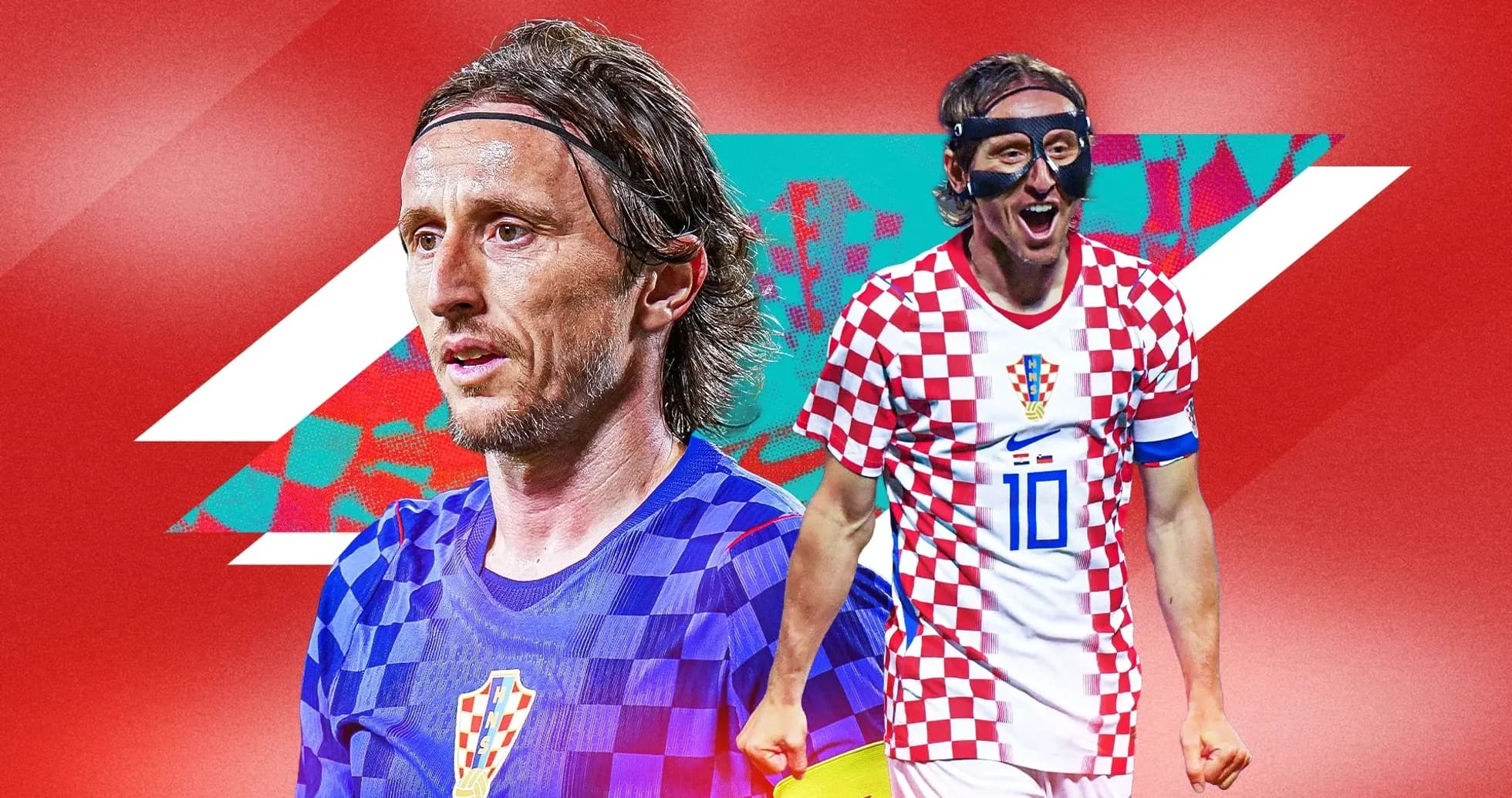
For the moment, Modric is keeping his cards close. What everyone can agree on is that this World Cup will almost certainly be his last major tournament with Croatia. That alone makes the image of him playing in a protective mask, in draining conditions, feel jarring. A 40-year-old conductor, face partially hidden, still trying to bend games to his will.
It sounds uncomfortable. It sounds improbable. It also sounds exactly like the kind of challenge he has spent his career embracing.
“I never really cared what anyone else said, it only further motivated me,” he said recently. It was a simple line, but it explains a lot. The doubts, the questions, the raised eyebrows at every new milestone – they have always been fuel.
So who dares write off Luka Modric now, masked and 40, on what looks like one last world stage? Not in England. They’ve seen this film before, and they know how it usually ends.