Liverpool's Konaté Decision Forces Tough Choices for Hughes and Slot
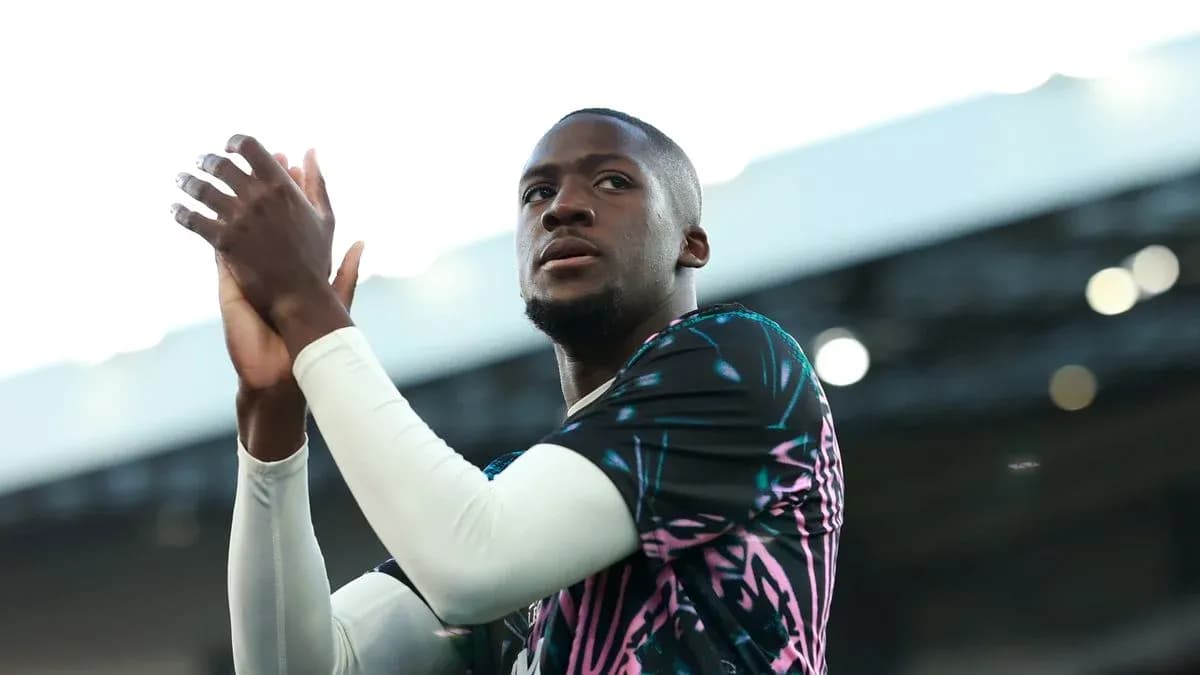
Liverpool have made their decision on Ibrahima Konaté. Or, perhaps more accurately, Konaté has made his on Liverpool.
With no agreement on fresh terms, the French centre-back will walk away when his contract expires, joining the lengthening queue of elite talent leaving Anfield for nothing. Andy Robertson and Mohamed Salah are already heading out this summer. Trent Alexander-Arnold went to Real Madrid last year.
Four pillars of an era. A combined fee of just £10 million.
For a club that once set the standard for selling smart, it’s a jarring statistic. And it leaves new sporting director Richard Hughes and head coach Arne Slot trying to solve the most expensive problem in modern football: finding a top-level centre-back in a market that knows you’re desperate.
Konaté has been Virgil van Dijk’s primary partner since 2021, the right-sided enforcer in Liverpool’s high line. Replacing that profile is hard enough. Replacing it with the whole world aware you have to? That’s something else.
Liverpool’s recruitment team have a few clear lanes they can explore. None are straightforward. All come with risk.
Jan Paul van Hecke – The Familiar Face with Familiar Football
Jan Paul van Hecke will not be a new name to Liverpool’s data department.
The Brighton defender has already been linked from the Netherlands, and stylistically he ticks a lot of Liverpool boxes. He plays in a possession-heavy side. He’s comfortable in both a back three and a back four. He can build from deep, step into midfield, and he has the composure that usually comes from a much older defender.
He also has end product. Three goals and three assists in the Premier League this season is a serious return for a centre-back.
There are echoes of Konaté in the detail. One of the Frenchman’s quieter strengths has been his ability to draw fouls when pressed. Van Hecke has been fouled 1.21 times per 90 minutes in the league this season; Konaté’s at 1.19. That suggests a defender who’s calm under pressure, invites contact, and can help his side beat the press.
Off the ball, van Hecke defends on the front foot. He sits in the 72nd percentile of Premier League centre-backs for interceptions per 90 (1.32), which fits a Liverpool side that wants to squeeze space, not retreat into it.
He’s 6'3", but not as dominant in the air as Konaté. That’s a trade-off Liverpool would have to accept. Yet alongside Van Dijk – and with imposing youngster Jeremy Jacquet joining up in pre-season – van Hecke’s profile still meshes neatly with what Liverpool already have.
The international picture helps his case. Despite competition from Matthijs de Ligt and Stefan de Vrij, van Hecke has 10 caps for the Netherlands and has been called up for the World Cup squad ahead of both. He is expected to feature alongside Van Dijk in North America. That shared understanding would make any transition to Anfield smoother.
Timing is the complication. His World Cup involvement means Liverpool either move early, before the tournament inflates his price and profile, or they wait and risk a bidding war.
His contract situation at Brighton offers a sliver of opportunity. Van Hecke enters the final year of his deal this summer, which should, in theory, make negotiations easier. In practice, it means other clubs are circling too.
Tottenham are interested as Roberto De Zerbi reshapes his squad. Chelsea have also been mentioned. Brighton are expected to ask for around £50 million. That’s not a bargain, but it’s the going rate for a 24-year-old, Premier League-proven, ball-playing centre-back.
Joachim Andersen – The Aerial Enforcer and Short-Term Anchor
If van Hecke is the data-friendly, system-fitting option, Joachim Andersen is the grown-up in the room.
The Dane, now at Fulham after his spell at Crystal Palace, built a reputation as something of an FPL cult hero for his knack of combining clean sheets with the odd attacking return. Underneath that, though, is a defender who does a lot of the ugly work very, very well.
Andersen is dominant in the air, racks up interceptions and clearances, and still looks composed enough in possession, even if he doesn’t carry the same progressive passing numbers as van Hecke.
His profile leans more towards replacing Konaté’s physicality and defensive presence than mirroring his on-ball style. In an increasingly bruising Premier League, that has its own value.
He’s just a centimetre shorter than van Hecke, but brings six years of Premier League experience and 49 caps for Denmark. He sits in the top 10% of Premier League centre-backs for touches and aerial duels won. That combination of involvement and dominance hints at a player who can not only cope with Liverpool’s volume of defending in transition but also take some of Van Dijk’s burden.
Crucially, Andersen could double as cover for Van Dijk himself. The Liverpool captain has played more minutes than any other 34-year-old this season. The club cannot keep riding that output indefinitely.
Andersen cost Fulham £30 million two years ago and would almost certainly be the cheapest name on Liverpool’s shortlist. At 29, he offers a solid, reliable presence without blocking the pathway for Jacquet or Giovanni Leoni.
Jacquet, by the underlying numbers, profiles closest to Konaté among Liverpool’s younger options. That opens up a different strategy: sign a stop-gap, lean on internal development, and avoid overpaying for a like-for-like replacement.
If Liverpool choose that route, there are few better-qualified stop-gaps than Andersen.
Jarell Quansah – The One That Got Away… and Could Come Back
This is where it gets awkward.
Jarell Quansah left Liverpool for Bayer Leverkusen just last summer in a £35 million deal. Now, with Konaté heading out and the market short on quality right-sided centre-backs in Liverpool’s preferred age range, that decision looks increasingly hard to justify.
Quansah was supposed to be the future. An academy product, composed on the ball, physically imposing, and capable of playing next to Van Dijk. He showed real promise under Jürgen Klopp, but his confidence seemed to fracture during Slot’s first season when the new manager hooked him at half-time in his first game in charge.
The move to Leverkusen reset everything.
In Germany, Quansah has grown into one of Europe’s standout young defenders. He’s earned a World Cup call-up with England this summer, a marker of just how far his stock has risen.
The numbers are startling. He was dribbled past only twice in the entire Bundesliga season. His pass completion rate sits at 90.3%. He averages 0.55 successful dribbles per 90. That’s a defender playing with conviction, not caution.
Liverpool, to their credit, did not let him go lightly. The deal includes a multi-tiered buy-back clause and pre-negotiated contract terms, which means they could bring him back this summer for £69.4 million.
The catch is timing again. Reports in Germany, notably from BILD, suggest any return is more likely next year, when that clause drops to £52 million.
Another year in Leverkusen’s environment would not harm his development. It might even be ideal for the player. For Liverpool, though, the optics are brutal: selling arguably their best pure defensive academy prospect since Jamie Carragher, only to contemplate paying double to get him back.
If they believe Quansah is the long-term answer, they may have to swallow that pride – and the fee.
Alessandro Bastoni – The Superstar Swing
Alessandro Bastoni is the glamour option.
The Inter defender is the kind of name that jolts a fanbase to attention. He’s left-footed, elegant in possession, and already regarded as one of Europe’s elite centre-backs. On paper, he doesn’t scream “Konaté replacement” as much as “Van Dijk heir.”
Bastoni can also operate at left-back, which would ease the loss of Robertson and cover any uncertainty around Kostas Tsimikas while Milos Kerkez continues to find his feet. That positional flexibility has obvious appeal.
But Bastoni’s status changes the dynamic. He would not arrive to be rotated. He would arrive to start. That almost certainly pushes Van Dijk over to the right side of the pairing, a significant structural shift for a defence that has long been built around the Dutchman’s comfort on the left.
The numbers underline Bastoni’s quality. He ranks in the top 10% of Serie A centre-backs for assists, successful passes and accurate long balls. He’s in the top 5% for big chances created, overall touches and xG conceded while he’s on the pitch. He dictates games, not just defends them.
At one point this year, a departure from Inter felt more plausible. After his red card against Bosnia and Herzegovina and the abuse that followed, which played into Italy’s collapse and failure to qualify for the World Cup, the relationship with some fans looked strained.
Since then, the tone has changed. Barcelona’s interest has been reported, but Inter president Giuseppe Marotta told DAZN (via Goal) that Bastoni “has absolutely not expressed his desire to leave.” All indications now point to him staying in Milan for at least another season.
If there is any opening, Liverpool have to be in the conversation. Players of Bastoni’s calibre, in that age bracket, almost never hit the market.
Konaté’s exit has forced Liverpool into a corner they would rather have avoided. The club that once turned selling into an art form is now watching era-defining players leave for free and scrambling to rebuild a back line around an ageing but still magnificent captain.
Do they go for the system fit in van Hecke, the seasoned ballast in Andersen, the repentant return for Quansah, or the superstar swing at Bastoni?
Whatever they choose, this next centre-back signing won’t just shape a defensive unit. It will tell the rest of Europe exactly what kind of Liverpool is emerging from the shadow of Klopp.