
Kai Havertz Reflects on Arsenal Triumph and World Cup Aspirations
Kai Havertz remembers the bus.
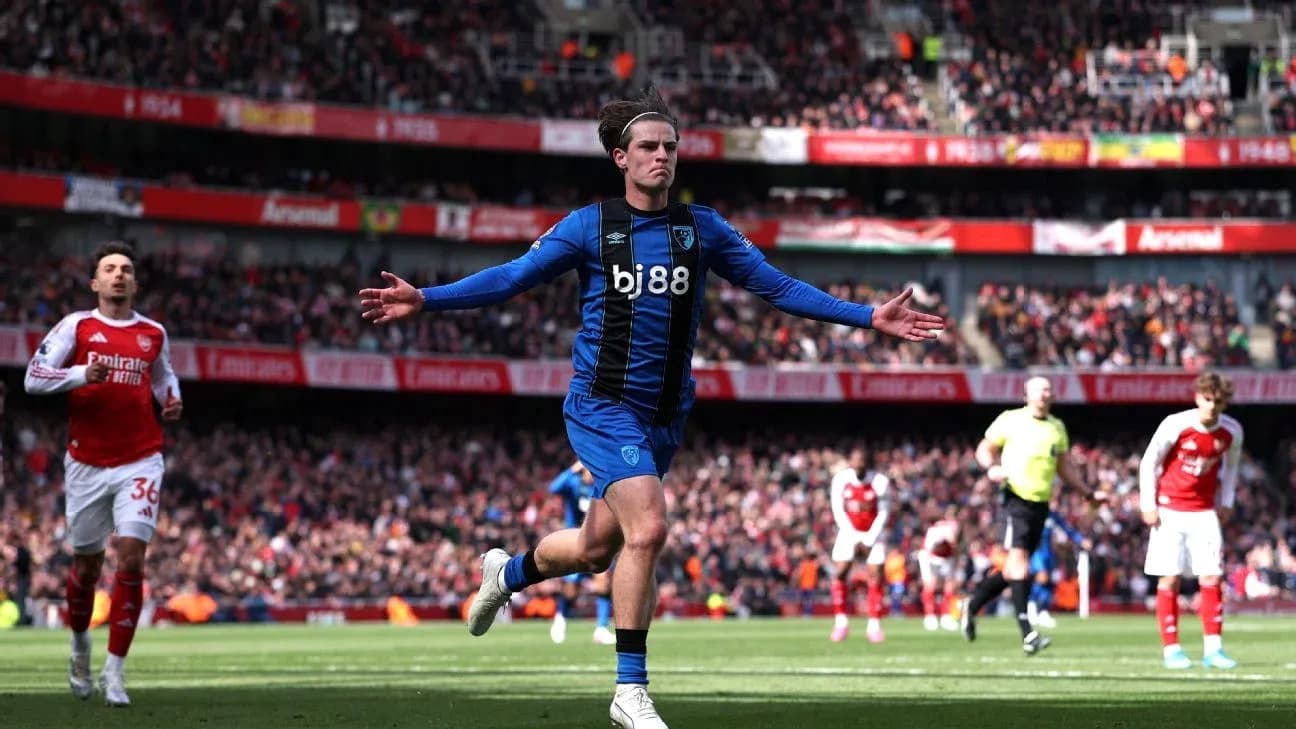
Not the Champions League final in Budapest, not the early goal against Paris Saint-Germain that sat on the scoreboard for almost an hour like a promise. Not even the moment it all slipped away from Arsenal in the cruellest fashion. What lingers is the strange, dissonant feeling of climbing onto an open-top bus 24 hours later, Premier League trophy gleaming, north London streets packed and roaring.
“To be honest, it was tough,” he says. “After the match, I initially thought we would call the whole thing off.”
Arsenal had just seen their European dream ripped away. Yet at 2pm the next day, the parade through Islington could not wait. Title-winning seasons do not pause for grief.
By the morning, Havertz’s perspective had shifted. The city, the colour, the noise made sure of that.
“We had a huge season behind us,” he says. “The club had gone 22 years without a league title so that had to be celebrated properly with the fans. I have to say I’ve never experienced anything like it. So many people on the streets, so many supporting us. It ranks among my top three experiences as a professional.”
Three and a half weeks on, he is hunting for number four.
From Budapest to Winston: a different kind of tension
The setting could hardly be more different now. Havertz is speaking at Germany’s World Cup base in Winston, North Carolina, where the team has taken over the Graylyn Estate, a stately, castle-like retreat that feels a world away from Islington’s chaos.
The mood around Germany has changed too. Group-stage exits in 2018 and 2022 had hung over this squad like a storm cloud. This time, they have already wrapped up top spot in Group E before the final game, a small but significant weight lifted.
“Qatar was anything but successful for us as a team and for me personally,” he says. In that doomed 2022 campaign he scored twice against Costa Rica, only to watch Germany crash out anyway. The scars from that exit ran deep.
Now, though, there is a different pulse. “There’s a different energy in our squad now. I was quickly convinced that things would go better this year. We knew we had a duty not to fail early on again. We are Germany. But now the tournament is really just beginning.”
Nobody is celebrating qualification as a triumph. Two wins over modest opponents – a demolition of Curaçao and a late, nervy victory over Côte d’Ivoire – have steadied the ship without convincing anyone that the job is close to done. Yet 42 shots across those matches tell their own story. Germany are playing on the front foot again.
“We radiate a real joy in playing,” Havertz says. “We move a lot, play offensively and create scoring chances. And we bounce back after conceding goals.”
The fun, at last, has returned.
A “ghost” at centre-forward
Havertz scored twice against Curaçao – one from the spot, one a delicate, late dink – to keep up a quietly ruthless record in the national shirt. At 27, he has 24 goals in 60 caps and, under Julian Nagelsmann, has become the first-choice centre-forward.
Even that status comes with background noise. Deniz Undav came off the bench to score twice and turn the Côte d’Ivoire match, prompting calls back home for the Stuttgart striker to start against Ecuador on Thursday. It fits a familiar pattern with Havertz: the sense that his work is constantly being weighed, doubted, re-examined.
“Probably because I don’t play in the Bundesliga,” he says. “It was the same at times with Toni Kroos and Ilkay Gündogan, who were abroad for years. It is often said about me: ‘Havertz didn’t score again, he’s useless!’. And when I do score, they say: ‘Well, he’s supposed to, it’s about time!’ I don’t hold it against anyone; that’s perfectly normal.”
His answer has never been to shout louder. Havertz is an unusual forward, a player who lives in half-spaces and blind spots rather than in a defender’s eyeline. He describes himself as a kind of phantom.
“Defenders should never know where I am, where I’m going, what I’m planning, or where I’ll be at any given moment,” he says in an interview arranged with Die Zeit. “That’s the worst for them. I try to be like a ghost to defenders.”
His game is built on timing, angles and sacrifice. He runs to open lanes for others, drifts away from the ball to drag markers with him, fills gaps that managers obsess over and fans often barely see.
“I can’t just wait around in the penalty area, I need to be involved,” he says. “I also make runs which I know sometimes look pointless, but I’m creating space for the players coming up behind me.”
It is the kind of work coaches adore. Mikel Arteta rarely misses an opportunity to praise him, and Nagelsmann’s trust has been clear. Havertz has played across the frontline and midfield since his Bayer Leverkusen days, when Peter Bosz first pushed him up as a spearhead. Nagelsmann even started him at left-back in a 2023 friendly against Turkey. Havertz scored after five minutes.
“If he were to ask me to do it again, I would,” he says. No fuss, no complaint, just another role to fill.
Misread body language, real nerves
That understated demeanour can mislead. Havertz often looks calm to the point of casual, especially when games turn frantic around him. It has become part of the criticism when things go wrong.
“I’m aware of the debates that I’m too laid back or my body language is wrong,” he says. “That always comes up when I’m not playing well. But I’m not the sort of person who dwells on it too much. It used to be different. I don’t brood on things any more.”
That does not mean he feels nothing. Far from it.
“I know it doesn’t show from the outside, but I feel it,” he says. “Before a Champions League final, or at a World Cup. Or before penalties. I need that tension to stay focused.”
Those nerves will be tested in the coming weeks. Germany are eyeing a first World Cup crown since 2014, a target that looked distant during the chaotic buildup to this tournament. The possibility of a last-16 clash with France lurks ominously, but Havertz is fit again after a stop-start club season and ready to absorb the strain.
“The last year and a half has gone badly for me,” he says, reflecting on knee surgery that disrupted the early part of the campaign and a hamstring injury in 2024-25. That he still delivered for Arsenal, helping drive their title push, only deepens the sense of a player who refuses to fold when the rhythm of his career breaks.
A bigger stage, a harsher light
Havertz has already tasted the sharp end of a home tournament. He was part of the Germany side that lost to Spain in a feverish Euro 2024 quarter-final, swept along and then swallowed by the emotion inside their own stadiums.
North America, he says, feels even more charged.
“The atmosphere is amazing. I was really excited before the Euros in Germany, too. A World Cup is even bigger. There’s incredible energy in the stadiums.”
So far, the conditions have been manageable. Germany’s games in Toronto and in the air-conditioned arena in Houston have spared them the worst of the heat. That has left Havertz largely unmoved by Fifa’s hydration breaks.
“They’re usually annoying, especially when you’ve just had two or three good situations and feel your flow is being interrupted,” he says. “But others decide that.”
What he can control is his own influence, his own resilience. That, he learned early.
At 17, as his rise at Leverkusen gathered pace, Havertz wanted to quit school and skip the Abitur, Germany’s university entrance exam. Football, it seemed, was all he needed. A staff member at the club told him otherwise, framing it as a crucial test of character.
“At 17, you don’t think you need school any more,” he says. “At that age, you also don’t think about injuries or how things can suddenly take a completely different turn. It was a life lesson for me: seeing things through to the end instead of just quitting.”
The lesson stuck. It carried him through setbacks at club level, through the bruises of Qatar, through the conflicting emotions of that surreal Arsenal parade. It carries him now, into another knockout run with a nation demanding more than just a brave showing.
Germany have their ghost at centre-forward, fit, hardened and quietly burning. The only question left is whether this time, when the bus rolls out for the next celebration, there will be no doubt about climbing on.