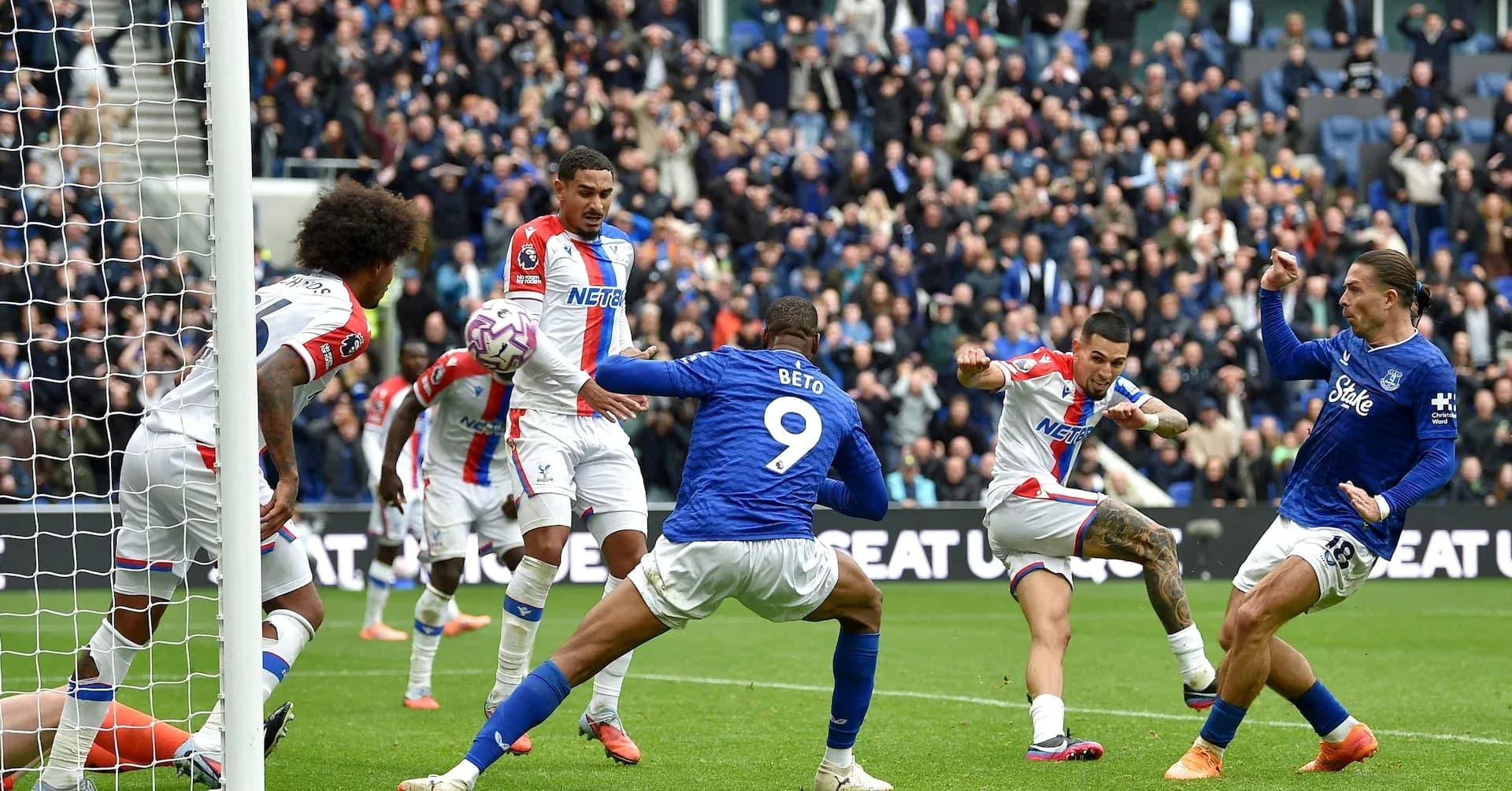
Crystal Palace vs Everton: Premier League Mid-Table Clash
Selhurst Park stages a mid-table Premier League meeting on 10 May 2026 as Crystal Palace host Everton in Round 36 of the 2025 season. With Everton sitting 10th on 48 points and Palace 15th on 43, both sides are clear of immediate danger but still chasing a strong finish and the prize of a possible top-half place.
Context and stakes
In the league, Everton arrive five points ahead, having played one game more (35 to Palace’s 34). A win for Palace would narrow that gap to two with a match in hand, dragging Everton back towards the congested mid-table pack. For Everton, victory would effectively secure a top-half finish and keep faint European aspirations alive, depending on how the upper positions shake out.
Palace’s overall goal difference of -6 (36 scored, 42 conceded) underlines a season of fine margins. At home they have been awkward rather than imposing: 4 wins, 8 draws and 5 defeats from 17, scoring just 16 and conceding 19. Everton’s profile is more balanced: 44 scored and 44 conceded across all phases, with a solid away record of 7 wins, 4 draws and 6 defeats (19 for, 20 against).
Form lines are mixed. In the league, Palace’s recent five-game sequence reads LLDWD, hinting at resilience but also a tendency to stall. Everton’s is DLLDW, a similarly uneven run that blends setbacks with the occasional convincing performance. Both teams are capable of shutting games down: Palace have 12 clean sheets across all phases, Everton 11.
Tactical outlook: Palace
Across all phases, Palace have been a three-at-the-back side almost by default: a 3-4-2-1 used in 30 matches and a 3-4-3 in four. That structure is likely to remain, with the wing-backs crucial to bridging a relatively low-scoring attack (1.1 goals per game overall, only 0.9 at home).
Jean-Philippe Mateta is the obvious reference point. Palace’s top scorer in the league with 10 goals from 28 appearances, he has taken 53 shots (30 on target) and is central to their penalty-box threat. His physical profile (192cm, 88kg) and volume of duels (274 contested, 104 won) make him the focal outlet for direct play and crosses. Importantly, his penalty record this season is 4 scored from 4, aligning with Palace’s team record of 7 penalties scored from 7 across all phases.
Behind and around Mateta, Palace’s creativity numbers are modest. Mateta himself has 8 key passes and no assists, so the onus falls on the two attacking midfielders/inside forwards in the 3-4-2-1 to supply him, plus the wing-backs for width. Palace’s home goals-for total of 16 in 17 games suggests they often rely on narrow wins or draws, leaning on defensive solidity: 7 home clean sheets and only 19 conceded.
Without the ball, Palace’s card distribution hints at where the contest may heat up. A high share of yellow cards between minutes 31-60 suggests aggressive mid-half pressing and challenges in central areas, which will collide with Everton’s preference for a 4-2-3-1 and structured build-up.
Tactical outlook: Everton
Everton’s identity this season has been anchored in a 4-2-3-1, used in 21 matches across all phases, with a brief flirtation with 4-3-3. Their numbers are remarkably symmetrical: 44 scored and 44 conceded, 13 wins, 9 draws, 13 losses. Away from home, they average 1.1 goals scored and 1.2 conceded, close to Palace’s home metrics.
The double pivot is pivotal, and the status of Idrissa Gueye is therefore significant. Listed as “Questionable” with an injury, his availability could dictate how aggressive Everton can be without the ball. If he misses out, Everton may lose some of their ball-winning and positional discipline in front of the back four.
Everton’s disciplinary profile suggests a team that grows more combative as games progress: yellow cards spike between minutes 46-90, and they have had red cards in early and late phases. That can matter against a Palace side that often keeps games tight and looks to exploit late transitions.
In attack, Everton spread the goals: 25 at home, 19 away, with no single scorer listed here beyond the general team stats. Their penalty record is clean (2 scored from 2 across all phases), adding another reliable route to goal if Palace’s three-man back line gets isolated.
The absence of Jarrad Branthwaite (hamstring) is a notable defensive blow, removing a key centre-back option. Jack Grealish (foot injury) also misses out, limiting Everton’s one-v-one creativity and ball-carrying from advanced positions. That may push Everton towards more structured, collective patterns rather than individual inspiration in the final third.
Injuries and selection dilemmas
Palace are hit hard in forward and left-sided depth:
- C. Doucoure – Missing Fixture (knee injury)
- E. Guessand – Missing Fixture (knee injury)
- E. Nketiah – Missing Fixture (thigh injury)
- B. Sosa – Missing Fixture (injury)
The absence of Eddie Nketiah removes a natural alternative to Mateta, increasing the load on the French striker and limiting Palace’s ability to change the profile of their number nine late on. Borna Sosa’s absence may weaken left-sided delivery and set-piece variation.
Everton’s list:
- J. Branthwaite – Missing Fixture (hamstring injury)
- J. Grealish – Missing Fixture (foot injury)
- I. Gueye – Questionable (injury)
- T. Iroegbunam – Questionable (injury)
Branthwaite’s injury could force a reshuffle in central defence, potentially affecting Everton’s ability to defend crosses against Mateta. Grealish’s absence removes a creative wildcard. If Gueye and Iroegbunam both miss out, Everton’s midfield depth and ball-winning capacity are compromised, which could allow Palace’s double 10s more space between the lines.
Head-to-head: Everton edge
The last five competitive meetings (four Premier League, one FA Cup) show a clear tilt towards Everton:
- 05 October 2025, Hill Dickinson Stadium (Premier League): Everton 2-1 Crystal Palace – Everton win.
- 15 February 2025, Selhurst Park (Premier League): Crystal Palace 1-2 Everton – Everton win.
- 28 September 2024, Goodison Park (Premier League): Everton 2-1 Crystal Palace – Everton win.
- 19 February 2024, Goodison Park (Premier League): Everton 1-1 Crystal Palace – Draw.
- 17 January 2024, Goodison Park (FA Cup 3rd Round Replay): Everton 1-0 Crystal Palace – Everton win.
Across these five, Everton have 4 wins, Palace 0, with 1 draw. Notably, the two most recent league meetings in 2025 both finished 2-1 in Everton’s favour, including a 1-2 away success at Selhurst Park.
Key battles
- Mateta vs makeshift Everton defence With Branthwaite out, Everton’s central pairing will be tested by Mateta’s aerial power and penalty-box presence. Palace’s biggest home wins (up to 3 goals scored) and Everton’s biggest away defeats (2-0) show that if Palace can establish territory and supply crosses, this duel could decide the game.
- Palace wing-backs vs Everton wide players In a 3-4-2-1, Palace’s width is everything. Everton’s 4-2-3-1 will try to pin those wing-backs back through their wingers and full-backs. If Everton win those wide zones, Palace could be trapped in a low block and starved of attacking platforms.
- Midfield control without key holders The potential absence of Gueye and confirmed absence of Doucoure (for Palace) shifts responsibility onto secondary midfielders on both sides. Whoever adapts better to those absences may dictate tempo in what is likely to be a tight, low-scoring encounter.
The verdict
The data points towards a balanced, cagey contest. Palace are hard to beat at Selhurst Park but struggle for goals, while Everton are competent travellers with a near-neutral away goal difference. Everton’s recent head-to-head dominance (4 wins and 1 draw in the last five competitive meetings) cannot be ignored, yet their defensive injuries and possible midfield absences level the playing field.
Palace’s structure, home resilience and Mateta’s form, combined with Everton’s disrupted back line, suggest the hosts have a genuine opportunity to tilt this fixture in their favour. However, Everton’s proven ability to edge close games against Palace, particularly by 1-2 scorelines, keeps an away result firmly in play.
On balance, the numbers and context lean towards a tight match with few clear chances, where a single goal either way – or a draw – feels more probable than a high-scoring affair.