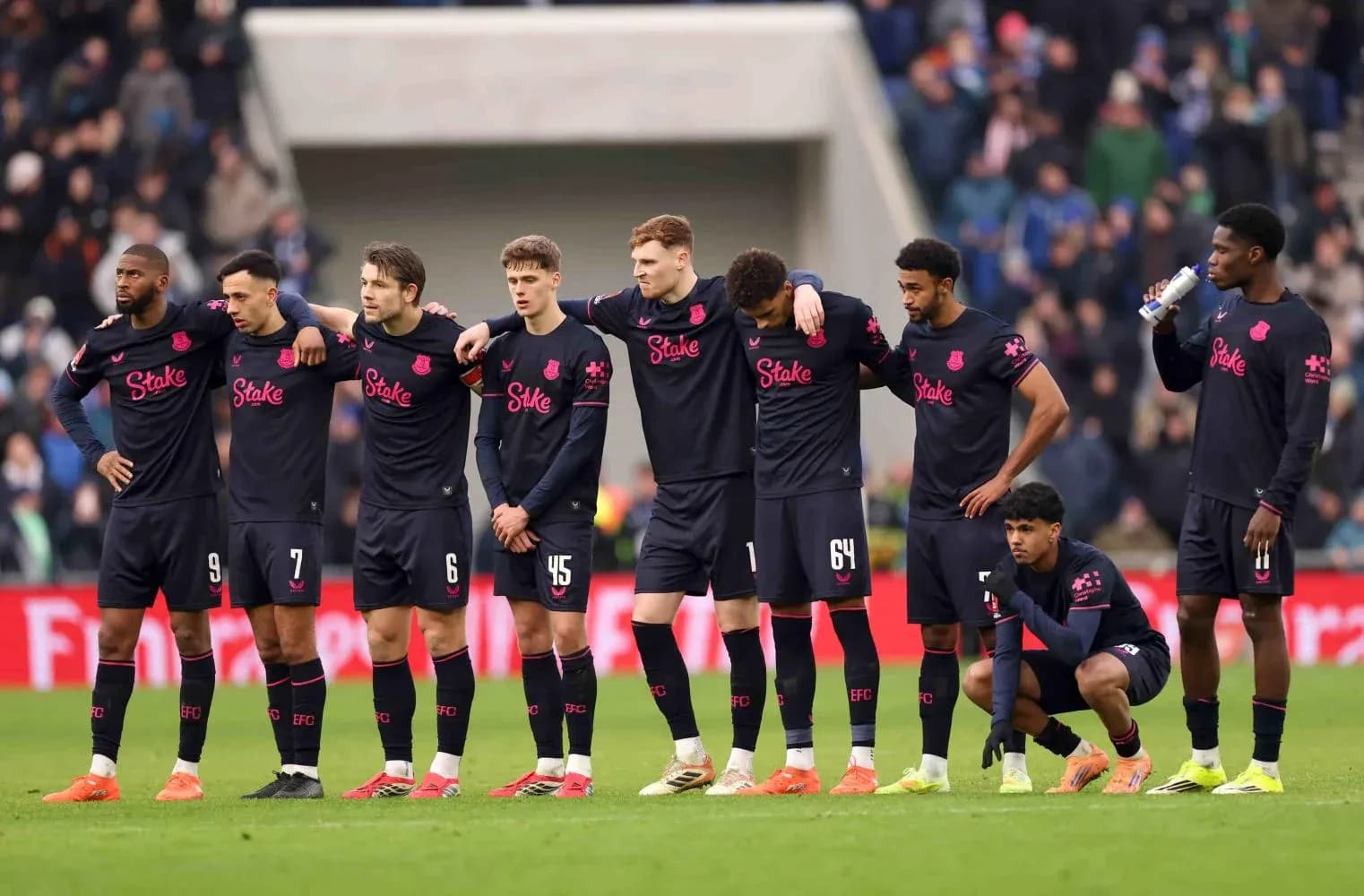
Everton vs Sunderland: Premier League Clash at Hill Dickinson Stadium
On 17 May 2026, Hill Dickinson Stadium in Liverpool stages a tense late‑spring meeting between Everton and Sunderland, with both sides jostling for position in the Premier League’s crowded middle pack. For Everton, at home in front of an expectant crowd, this is a chance to cement a top‑half finish and edge away from an indifferent recent run. Sunderland arrive knowing that a strong result on Merseyside could see them leapfrog their hosts and cap a solid return to the top flight with a statement away performance.
Season Context
Everton come into this fixture sitting 10th with 49 points from 36 matches, having scored 46 goals and conceded 46. That perfectly level goal record (46 scored, 46 conceded) underlines a campaign of balance rather than brilliance, with enough attacking threat to trouble most opponents but just enough defensive leakage to keep them anchored in mid‑table rather than pushing higher.
Sunderland are just behind in 12th place with 48 points from their 36 games, having scored 37 goals and conceded 46. The negative goal difference (37 scored, 46 conceded) reflects a side that has often been competitive but occasionally overpowered, particularly away from home, yet they remain within touching distance of the top half as they head to Liverpool.
Form & Momentum
Everton’s official recent form line reads “DDLLD”, a sequence that captures a stuttering spell (two defeats in five) where they have struggled to turn performances into wins. Over the full campaign, their 46 goals across 36 matches equate to roughly 1.28 goals per game, while the identical 46 conceded (also about 1.28 per match) shows why so many of their contests have been finely poised rather than one‑sided.
Sunderland arrive with the form string “DDLLW”, suggesting inconsistency but also a hint of resilience in drawing two of their last five. Their 37 goals in 36 matches (around 1.03 per game) point to a more cautious attacking profile, while 46 conceded (about 1.28 per match) mirrors Everton’s defensive record and hints at vulnerabilities when the back line is stretched.
Head-to-Head Patterns
Recent meetings between these clubs have produced drama and swings in momentum. In the FA Cup, Everton and Sunderland drew 1-1 at Hill Dickinson Stadium (FA Cup, season 2025, January 2026) before Sunderland prevailed on penalties, a result that will give the visitors confidence returning to the same ground. In league play, the sides shared a 1-1 draw at Stadium of Light (Premier League, season 2025, November 2025), underlining how tight the margins have been in the current calendar year. Looking further back, Everton enjoyed a commanding 3-0 home win at Goodison Park (League Cup, season 2017, September 2017), a reminder that when the Merseyside club find their rhythm, they can overpower Sunderland.
Tactical Preview
Everton’s statistical profile points towards a side most comfortable in a 4-2-3-1, a shape they have used 21 times, giving them structure in midfield and width in attack. With 46 goals from 36 league games (roughly 1.28 per match), they carry consistent though not explosive attacking threat, and the double pivot in front of the defence is designed to protect a back line that has also conceded 46 (about 1.28 per game). In possession, Everton are likely to build through technically capable midfielders such as J. Garner and J. Grealish, both listed as midfielders and both among the league’s leading assist providers; J. Garner has 7 assists and 1665 completed passes (with 52 key passes), while J. Grealish has 6 assists and 40 key passes, suggesting that much of Everton’s creativity will flow through their central lanes and half‑spaces.
Out of possession, Everton’s reliance on defenders like J. O'Brien, who has made 55 tackles and 16 blocks, indicates a willingness to defend aggressively in the front line of their back four. However, J. O'Brien’s one red card and 4 yellow cards show that Everton’s defensive intensity can spill over into risky challenges, something to watch in a match where fine margins could matter.
Sunderland’s tactical flexibility is a defining feature: they have used 4-2-3-1 most often (19 times), but also 4-3-3 and 5-4-1 on five occasions each, as well as 4-4-2 and 4-1-4-1 three times apiece. With 37 goals in 36 matches (around 1.03 per game), their attack is more measured, often built around midfield craft rather than sheer volume of chances. G. Xhaka, a midfielder with 6 assists and 1684 passes, is a key conduit in deeper areas, while E. Le Fée adds a more vertical threat with 4 goals and 5 assists, plus 83 tackles that underline his work rate on both sides of the ball.
Defensively, Sunderland mirror Everton’s 46 goals conceded (about 1.28 per match) but rely heavily on a robust back line. D. Ballard’s 33 tackles and 24 blocks, combined with Reinildo’s 34 tackles and 30 interceptions, show a defence that is proactive in stepping out and contesting duels. Discipline could be a subplot: Reinildo has one red card and 7 yellow cards, while T. Hume, listed as a midfielder here, has 9 yellow cards, suggesting that Sunderland’s wide and defensive players are not shy about tactical fouls when under pressure.
Given both teams’ preference for 4-2-3-1, the central midfield battle should be decisive. Everton’s creative axis of J. Garner and J. Grealish will test Sunderland’s double pivot of G. Xhaka and E. Le Fée, with the home side’s slightly stronger attacking metrics (46 goals versus Sunderland’s 37) giving them a marginal edge in open play.
Statistical Snapshot
- Competition: Premier League, season 2025 — 17 May 2026.
- Venue: Hill Dickinson Stadium, Liverpool.
- Prediction: Win or draw — Double chance : Everton or draw.
- Win Probabilities: Home 45% / Draw 45% / Away 10%.
- Model: Everton 60.0% — Sunderland 40.2%.
Betting Verdict
The prediction model leans clearly towards Everton avoiding defeat, and the bookmakers broadly agree, with home‑win prices clustered around 1.80–1.90 and Sunderland out at roughly 4.00–4.36. Everton’s superior goal output (46 league goals to Sunderland’s 37) and home advantage at Hill Dickinson Stadium support the “Everton or draw” angle, even if their recent form line “DDLLD” warns against assuming a comfortable victory. Sunderland’s ability to grind out results, as shown by “DDLLW” and their FA Cup success on this ground, suggests they can keep it competitive but may struggle to fully overturn the probabilities. In this context, the double‑chance on Everton or draw aligns with both the statistical edge and the head‑to‑head narrative of tight, often Everton‑tilted encounters.