Brazil vs Norway: A World Cup Clash of Eras
Brazil against Norway. Five stars on one shirt, one unstoppable No. 9 on the other. A 24-year drought on one side, a nation tasting knockout success for the first time on the other. It feels bigger than a Round of 16 tie.
Carlo Ancelotti’s Brazil arrive with the usual noise, colour and pressure that comes with that famous yellow jersey. They’ve been imperfect, occasionally shaky, but alive. Very alive. Norway come with drums, decibels and Erling Haaland, the most ruthless finisher in the tournament so far. One of these stories moves on. One stops dead.
Brazil’s tightrope act
Nothing is ever straightforward with Brazil. They topped Group C, but they did it the hard way, and in the most Brazilian way imaginable.
A 1-1 opener against Morocco raised eyebrows, then routine 3-0 wins over Haiti and Scotland steadied the mood. The real drama came against Japan. Vulnerable at the back, flat in phases, Brazil flirted with trouble until the 95th minute, when Gabriel Martinelli arrived with the kind of moment that for decades has defined this team: one flash of individual brilliance, one ruthless finish, one country exhaling at once.
That 2-1 comeback was more than a win. It was their first time overturning a deficit in a World Cup knockout match since 2002, the last time they lifted the trophy. History doesn’t guarantee anything in 2026, but it lingers in the background, a reminder that Brazil have been here before and know how to suffer.
Ancelotti leans on an experienced spine. Alisson in goal. Marquinhos and Gabriel at centre-back. Casemiro and Bruno Guimarães patrolling midfield. Around them, chaos and genius.
Vini Jr is the headline act. He scored in all three group games and has become Brazil’s talisman in everything but name. The Real Madrid star drifts, drives and drags defenders into places they don’t want to go. Stop him, and you only slow Brazil down. You don’t silence them.
Bruno Guimarães has quietly built a tournament of his own. Four assists already, more than anyone else at this World Cup. Only Pelé has ever produced more in a single World Cup for Brazil. When the ball leaves his boot, something tends to happen.
The Neymar question
Then there is Neymar. Always Neymar.
At 34, back at Santos, he remains a divisive presence. Selected despite serious fitness concerns, he has barely touched the tournament: 14 minutes against Scotland, nothing at all against Japan. His name still echoes around Brazilian football, but on the pitch this is no longer his team.
The shift is clear. Endrick, 19, already of Real Madrid and on loan at Lyon, is being nudged towards centre stage. He had half an hour against Haiti, a cameo against Scotland, then the entire second half in the tense win over Japan. That’s not an accident. It looks like trust being built in real time.
With Lucas Paquetá facing the prospect of missing the rest of the campaign after injury against Japan, Ancelotti’s attacking puzzle changes shape. Endrick could now start from the off, operating between the lines or breaking beyond the front line. On the flanks, Bournemouth’s 19-year-old Rayan is pushing hard to start wide, offering direct running and fearless intent.
There is some good news. Raphinha has returned to training, giving Ancelotti another wide option if he wants to lean on experience rather than youthful volatility. But the Neymar era feels like it’s fading in real time, replaced by the raw edge of a new generation.
Norway’s wild ride
Norway have turned this World Cup into a travelling festival. Their fans have been relentless – drums, flags, songs that don’t stop – and their games have matched the noise. Four matches. Eighteen goals. Chaos, often, but the kind you can’t take your eyes off.
Ståle Solbakken gambled with rotation in a 4-1 defeat to France, resting key names with the bigger picture in mind. They paid for it on the night, but the plan came into focus against Ivory Coast in the Round of 32.
Antonio Nusa bent in a stunning curling effort, the sort of goal that announces a young winger to a global audience. Then, late on, with nerves fraying, Haaland did what Haaland does. An 86th-minute winner, brutal in its simplicity, devastating in its timing. Norway’s first-ever World Cup knockout win, delivered by the man who has made a habit of rewriting numbers.
Haaland’s numbers barely sound real. Five goals already at this World Cup. At club level, 112 Premier League goals in 132 appearances for Manchester City in the most demanding league around. For Norway, 60 goals in 53 caps. More goals than games. That’s not form. That’s a phenomenon.
Feeding him is Martin Ødegaard, the conductor. The Arsenal playmaker has assisted in three consecutive World Cup matches, the first man to do so since Dirk Kuyt in 2010. He finds spaces, angles and passes most players don’t even see. When he and Haaland click, Norway look like they can score against anyone.
A rivalry renewed: Gabriel vs Haaland
In the middle of all this sits a duel that Premier League fans know by heart.
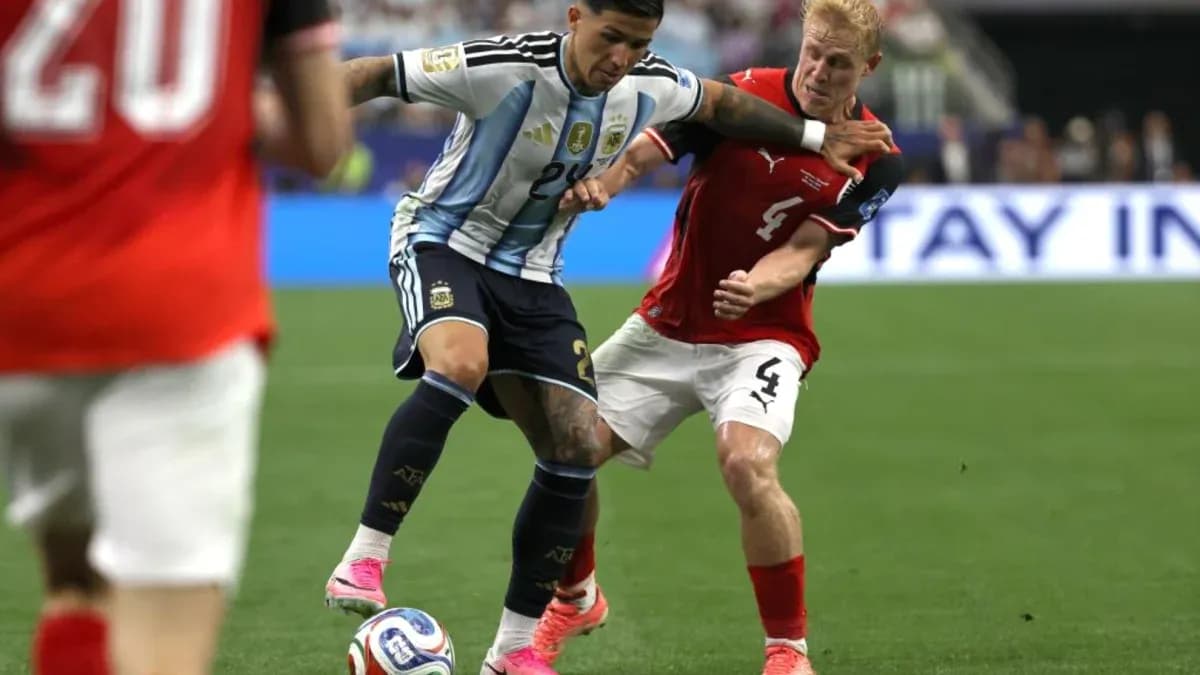
Gabriel Magalhães vs Erling Haaland. Arsenal vs Manchester City, exported to the World Cup.
Their battles in England have been fierce, physical and unrelenting. Gabriel relishes the contact, the one-on-one, the chance to stand up to the most feared striker in the game. Haaland thrives on that same confrontation, using every nudge, every half-yard of space, every tiny mistake.
Now they meet again, with more than league points at stake. This time, it’s survival in a World Cup. Mutual respect will be parked at kick-off. Expect arms, shoulders, words. Expect the referee to earn his money.
How they might line up
Ancelotti’s Brazil are still being shaped by Paquetá’s injury and the late return of Raphinha, but a familiar core is likely.
A probable Brazil XI:
Alisson; Danilo, Marquinhos, Gabriel, Douglas Santos; Bruno Guimarães, Casemiro, Endrick; Rayan, Matheus Cunha, Vini Jr.
Solbakken has kept his cards close, with no confirmed XI yet and no major injuries or suspensions listed. The structure, though, is clear.
A likely Norway XI:
Nyland; Pedersen, Ajer, Heggem, Møller Wolfe; Ødegaard, Berge, Berg; Sørloth, Haaland, Nusa.
Sørloth’s presence alongside Haaland gives Norway extra height and power, while Nusa offers the unpredictability to drag Brazilian full-backs out of position. Brazil’s wide men, in turn, will test Norway’s defensive discipline like few sides have so far.
History offers little, stakes offer everything
The head-to-head history between these two is almost empty. One friendly in August 2006, a 1-1 draw in Norway. That’s it. No scars, no great revenge narratives, no long-running feud to lean on.
The context comes from now, not then.
Brazil arrive as Group C winners, with five titles behind them and a 24-year itch that won’t go away. They’ve shown they can come from behind, they’ve shown they can leave it late, and they’ve shown that their individual quality can still rescue them when structure frays.
Norway come as runners-up from Group I, with their first knockout win in the bank and a belief growing by the game. They have the most destructive centre-forward in the tournament, a creator in Ødegaard at the peak of his powers, and a supporting cast that has started to play without fear.
Kick-off is set for 5 July 2026 at 16:00 EST, 21:00 GMT. One nation chases the weight of history. The other chases the biggest upset in its footballing life.
Is this the night Brazil’s new generation steps out from the shadow of 2002 – or the night Haaland drags Norway into a place they’ve never been before?