World Cup Final Showdown: Messi, Mbappé, and England's Journey
The World Cup is down to its final weekend and the tournament has taken on that strange, weightless feel. One more seismic night in New Jersey, one more game that nobody really wants in Charlotte, and then the floodlights go out. The arguments, naturally, will not.
At the sharp end of it all stand Kylian Mbappé and Lionel Messi, locked together on goals in the Golden Boot race. Messi leads the charts by virtue of a single extra assist, a neat statistical nod to his role as both architect and executioner for Argentina. Mbappé, all straight‑line fury and ruthless finishing, has matched him strike for strike.
The debate has already begun. If Messi scores in the final and Mbappé fills his boots in the third‑place game, should those goals carry the same weight? It is football’s version of an old gag: away Gauls counting double. The numbers will say one thing. The memory of where and when those goals were scored will say quite another.
Rodri’s Redemption Arc
Away from the headline forwards, one of the most quietly compelling stories of this World Cup has been Rodri. The midfielder has not just returned from his ACL injury; he has imposed himself on the tournament.
There were real doubts when he came back. Would he trust his body again? Would the rhythm return? It has taken time, but in this World Cup he has looked like a player finally unshackled from fear, dictating games with the calm authority that made him Manchester City’s metronome.
And yet a whisper hangs in the air: was this his last dance in City blue? The suspicion lingers that he may have played his final game for the club. Nothing is settled, but his form here has ensured that, whatever happens next, he leaves this World Cup with his status enhanced and his options wide open.
Tuchel, England and a Semi-Final That Still Stings
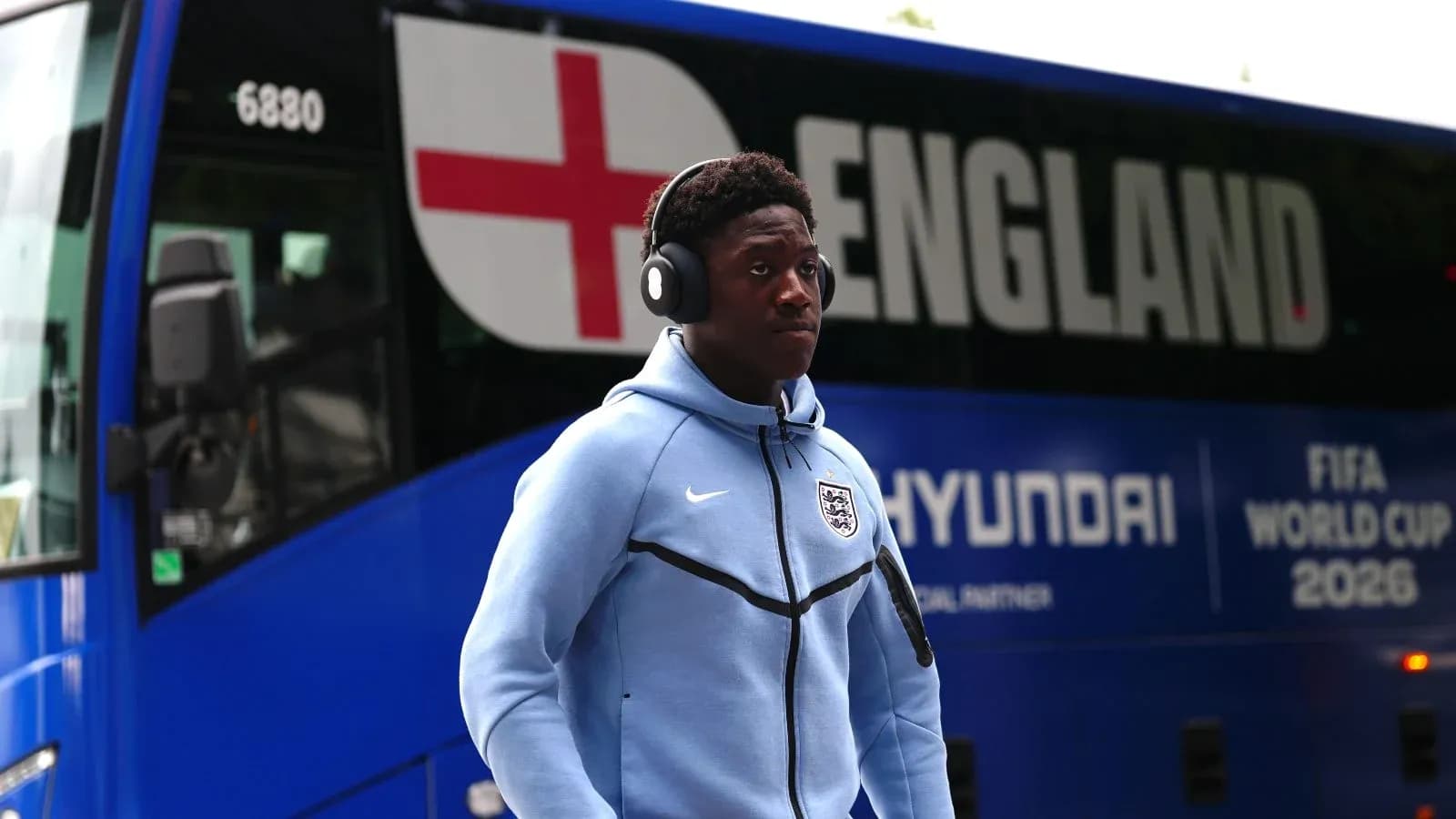
Back in England, the postmortem is in full, exhausting swing. Thomas Tuchel remains in charge despite the tactical chaos that accompanied their semi-final exit. The manager once lauded for his game‑changing substitutions is now being scrutinised for why he needed them so often in the first place.
One reader’s verdict is brutal but hard to dismiss: if your substitutes rescue you every match, perhaps the starting XI is the problem. England, they argue, were the weakest of the four semi-finalists and staggeringly fortunate to get as far as they did. The sense of relief, rather than anger, at being spared a likely humbling by Spain has quietly taken root in some quarters.
Tuchel’s changes against Norway are still being picked apart. In the age of five substitutions, managers talk about “finishers” and planned impact from the bench, but there is a fine line between strategy and salvage job. Even the players, we’re told, were bemused by the approach that saw them crash out.
Now comes the awkward coda: the third‑place play-off. What should Tuchel do? Chase a consoling win or spread the minutes around? The logical route seems obvious – a half each for the goalkeepers, a proper run for Ollie Watkins and Ivan Toney, time on the grass for Kobbie Mainoo. Bronze won’t rewrite England’s story, but it might at least offer clarity on who should be part of the next chapter.
Madrid, Mourinho and Alexander-Arnold’s Second Chance
While national teams wrestle with autopsies and finals, club football is already muscling its way back into the conversation. At Real Madrid, a familiar face is back in the dugout and a once‑restless right-back senses an opening.
Jose Mourinho returned to the Bernabéu in June for a second spell, charged with restoring order after a season that saw Madrid lose LaLiga and fall out of the Champions League in the quarter-finals. Trent Alexander-Arnold, who swapped Liverpool for Madrid last year, has wasted no time in nailing his colours to the mast.
He calls working under Mourinho “a pleasure”, speaks of long‑standing admiration, and describes a regime of high principles and high demands. It is intense, he says, but he is eager to learn, to be pushed, to win.
Alexander-Arnold’s first year in Spain was fractured. Injuries disrupted his rhythm and he rotated in and out of the side, never quite owning the right flank. Dani Carvajal’s departure in May has changed that landscape. The position is there to be claimed, and the 27-year-old knows it.
“I’ve been out of action for a long time,” he admits, but the message is clear: this pre-season is his reset button. Mourinho will not hand him anything. He rarely does. If Alexander-Arnold can marry his creative gifts with the defensive edge the Portuguese demands, Madrid may finally have the full-back they thought they were buying.
Politics in the VIP Box
As ever at a World Cup, the power brokers are circling. Gianni Infantino is cruising towards a fourth term as Fifa president, backed by more than 200 of the 211 member associations. Only a handful of federations – a smattering from Europe, including Germany – have yet to send formal letters of support.
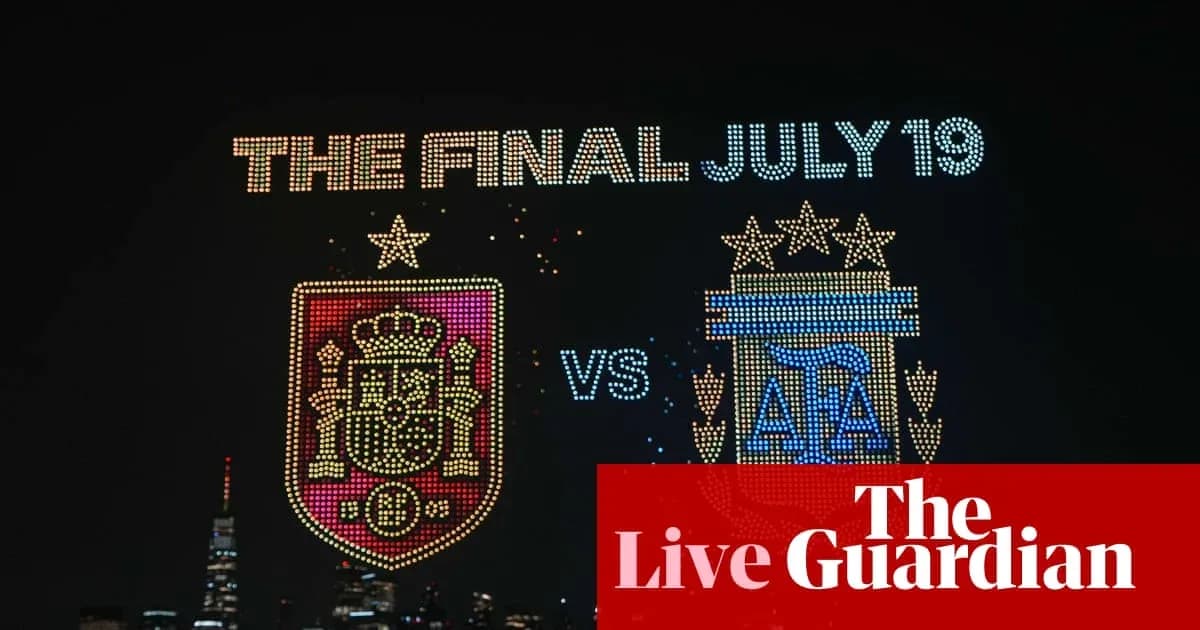
The politics will not stop there. Spanish Prime Minister Pedro Sánchez will be in the stands for the final, watching his country take on reigning champions Argentina. He will share the stage, in a sense, with Donald Trump, who is also set to attend. The White House has already hailed the tournament as a showcase of America’s ability to host the world on the grandest stage.
Beyond the VIP smiles, tension lingers. Keir Starmer, through Downing Street, has backed calls for Fifa to investigate Argentina players who displayed a banner asserting their country’s claim to the Falkland Islands after their semi-final win over England. The World Cup has always been a magnet for geopolitics. This one is no different.
Argentina’s Edge and Spain’s Rising Star
On the pitch, Argentina stride into yet another World Cup final with a familiar blend of grit and stardust. For all the focus on Messi, their spine has been brutally effective.
Cristian Romero, in particular, has embodied the team’s edge. In club football he can be rash, combustible. In the white and blue of La Albiceleste he has been something else: one of 11 relentless hearts, leaving no yard uncovered and no challenge half‑done. Alongside Lisandro Martínez he plays the enforcer, often the last barrier before an attacker meets Emiliano Martínez.
Outside of Messi and the Aston Villa goalkeeper, Romero has arguably been Argentina’s most consistent performer. He has given this side the snarl and certainty that so many of their predecessors lacked.
Waiting for them is Spain, led by the precocious Lamine Yamal. The final sets up as a clash between one very good team and an excellent one; which is which depends on your persuasion. What is not in doubt is the scale of the occasion: Messi chasing yet another layer of immortality, Yamal hurtling towards his own era, Mbappé lurking in the Golden Boot race, ready to punish any slip.
A Game That Won’t Let Go
Around the football, the circus continues. Fox’s World Cup coverage in the United States is taking its final bow, its cast of sideline reporters, feature merchants and fan correspondents drifting off stage. In Europe, nostalgia pieces surface, like a 1966 match report from Villa Park marveling at a new, attacking Argentina and their irrepressible centre-forward Artime.
Even in the qualifying rounds of European club competitions, drama refuses to dim. In Malta, NSÍ Runavík knocked out Hamrun Spartans with a 94th‑minute penalty so contentious that police had to intervene as the referee flashed a red card.
And in living rooms and gardens across the world, fans are already dreading the comedown. Sleep patterns have shifted to accommodate midnight kick-offs and dawn alarms. One supporter jokes that the only solution is to dive into the South American leagues or MLS once the World Cup ends. It is only half a joke.
Because this is the real question as the final looms in New Jersey and the third‑place game ticks along in its shadow: when the last whistle blows and the arguments over Golden Boots, dubious banners and doomed substitutions fade, who will fill the space that this tournament has carved into our days and nights?