US Soccer's Proposal to Keep Pochettino for 2030 World Cup
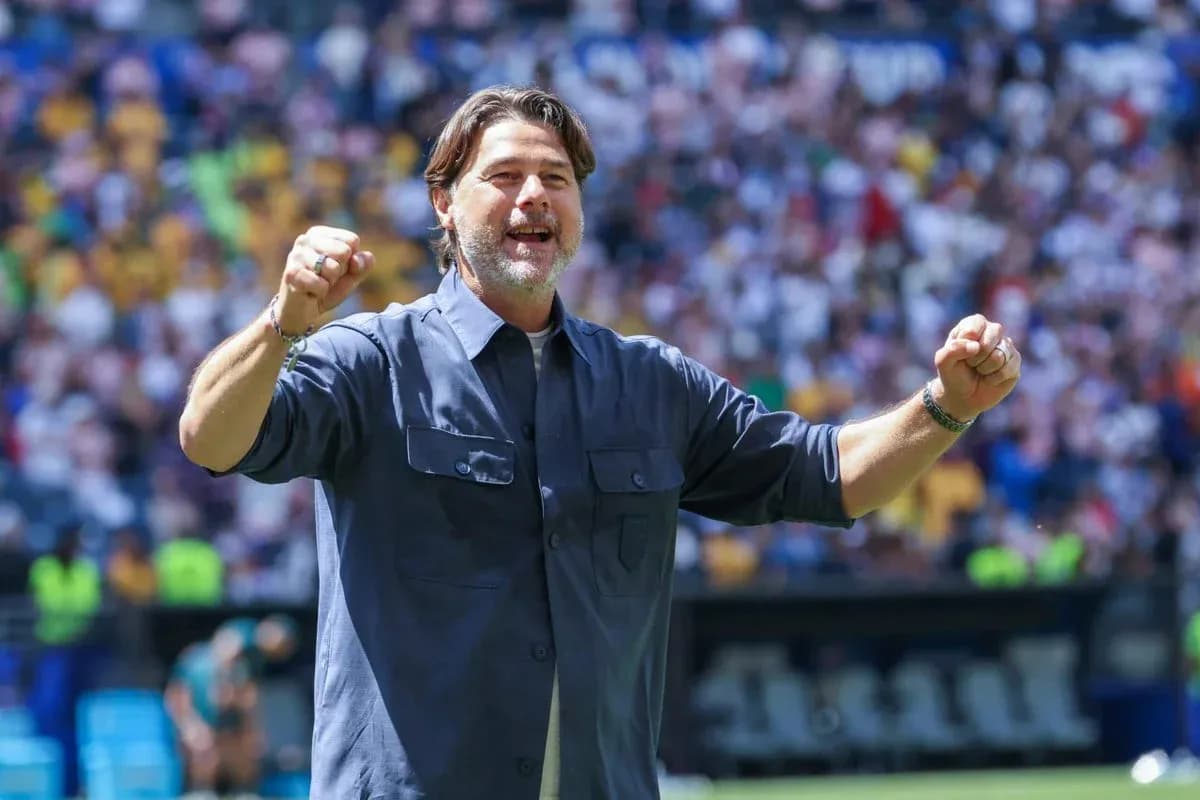
U.S. Soccer has made its move. Mauricio Pochettino now has a proposal on the table to stay in charge of the USMNT through the 2030 World Cup cycle – but no one is reaching for a pen yet.
The offer, presented before a ball was kicked at this home World Cup, would extend the Argentine’s deal by four more years, running through to the next tournament. His current contract is set to expire after the 2026 World Cup, and both sides have agreed on one thing: final decisions will wait until the dust settles on this one.
Results will speak. So far, they’re shouting.
The U.S. has burst out of the blocks, beating Paraguay and Australia to glide into the round of 32, turning Thursday night’s defeat to Turkey into a dead rubber. Performances have been bold, the draw looks friendly, and a country that once measured success in “respectable exits” is now openly wondering how deep this run can go.
Inside U.S. Soccer, that surge has only hardened the desire to keep Pochettino. Conversations between the federation and the 54-year-old have been ongoing for months, according to sources with knowledge of the talks, and the proposal is clear: stay, build, and own the next cycle.
A coach in demand, a federation on alert
There was an assumption in some corners of the game that Pochettino would treat this World Cup as a spectacular layover before heading back to club football. That theory gathered steam in April when sporting director Matt Crocker – the man who once hired Pochettino at Southampton and later brought him to U.S. Soccer – abruptly left for a role in Saudi Arabia.
The logic was simple: Crocker goes, Pochettino follows. Club football calls. Europe beckons.
Yet Pochettino remains fully engaged, and U.S. Soccer has responded by making its intentions unmistakable. The federation wanted him to know, before the tournament kicked off, that he would not be short of a project if he chose to stay in international football.
There is competition. It emerged before the World Cup that Pochettino had spoken with AC Milan in late May. Chief executive JT Batson framed that as the reality of operating “in the big leagues” with a coach whose CV includes Chelsea, Tottenham Hotspur and Paris Saint‑Germain. If Pochettino keeps impressing on this stage, those calls will only multiply.
U.S. Soccer knows that. It is planning accordingly.
A four-year canvas: Olympics, Copa America, and a $250m hub
This is not a standard four-year cycle. The next stretch offers a coach something close to a full sporting ecosystem.
There is the 2028 Olympic Games in Los Angeles. Copa America, also expected to land on U.S. soil that same year, with the USMNT again in the mix. A brand new $250 million national training center rising in Atlanta, designed as a permanent home and statement of intent.
For Pochettino, it is not just about matchdays. An extension would give him greater authority over the direction of the youth national teams, the development of players feeding into the senior side, and coach education – an area he has previously shown a keen interest in. It is a chance to shape not only a team, but a structure.
The federation is banking on that appeal. It also knows it must pay at a level that reflects Pochettino’s status.
Tax filings published in March, covering April 1, 2024 to March 31, 2025, projected his pro-rated base salary at around $4 million, with bonuses and incentives lifting the package into the $5m–$6m range in a non-World Cup year. Any extension would keep him among the highest-paid international managers on the planet, competitive with top-end European club offers, even if still shy of the sums at the very richest clubs.
To sustain that, U.S. Soccer has been in constant dialogue with major donors and sponsors, determined to stay in the market for elite coaches. When they hired Pochettino in September 2024, they had already sounded out Jurgen Klopp, a signal of how aggressively they intend to operate.
The deal that brought Pochettino to the U.S. depended “in significant part” on a philanthropic leadership gift from Ken Griffin, the Citadel founder and CEO, with further backing from Scott Goodwin of Diameter Capital and several commercial partners. That financial architecture will matter again if Pochettino decides he wants the long haul.
Pochettino’s dilemma: legacy in America or a return to Europe?
Pochettino has not closed the door on staying. Far from it.
“It’s difficult to describe or know your future,” he said this week. “But when you are here, I think it’s difficult now to see yourself living in another place, because for sure, we will miss it if one day we don’t stay here in this country.”
“We told the federation we are open,” he added. “But we don’t want to distract when all the energy needs to be with my players.”
He went a step further in another interview, hinting at the deeper pull of the project: “If the American people start to show passion in our sport too, why not be here being part of something that can create a legacy?
“The legacy is not to win the World Cup. Of course, we want to win, but that [connection] is the legacy we need if one day we want to be very successful and be consistent. Why not be part of that?”
That is the crux of it. Pochettino can walk back into the European club carousel, with its weekly drama and relentless churn. Or he can stay where he is, at the heart of a country that is trying to redefine its relationship with the sport, with the rare chance to build something that outlasts him.
U.S. Soccer has played its hand early. The World Cup will decide how strong the temptation is to keep holding the cards.